Receive Our Newsletter
For news of readings, events and new titles.

by Hassouna Mosbahi
After walking half a kilometer from his house, he turned to inspect the crow on the roof. The bird was so black, hideous, and large that he felt it presaged some evil. Otherwise, why had it chosen to land on his house each morning instead of any other one in the village? He had always chased this crow away. Today he hadn’t because he no longer wondered what it foretold. The powerful slap he’d received from his wife when he woke—a blow that so startled him he’d almost fallen to the floor—had left him feeling that no place or hope remained for him in life.
His late mother had been dead right when she told him, the last time he saw her, that a man whose wife humiliates him does not deserve to walk on the face of the earth and should bury himself with his own hands. Today, after that slap, he truly felt he was tainted with everlasting disgrace and worthless. How could he sit with other men in the village again? What tongue could he use to converse with them? What figure would he cut in the market when fingers pointed at him and tongues expressed slanders that previously had only been whispered behind his back? After a slap that had resounded as loudly as a pistol shot through the village, how could he ever mount his wife again? No, he would never be able to do that. In coming days, she would mount him and poke up his butt whatever she wished! In any case, he had not been able to mount her for months. Whenever he had tried, his little buddy had failed him and shrunk till it resembled a small insect dangling between his thighs. His friend Ammar had always said that a woman whose husband does not satisfy her sexually is justified in doing whatever she wants to him and that a man cannot dominate a woman unless he has a penis as firm as copper. The slap he had received from his wife this morning, in the presence of their two young children, was clear evidence his wife had the upper hand now. In the future she might squat on his chest, trample him under foot, or shove a pole up his ass whenever she wished. Previously she had limited herself to verbal assaults like: “You’re not a man! You’re filthy and going downhill fast! You’re no better than a stray dog and stink worse than a corpse! Get away from me! I never want to see your ill-omened face again! I no longer want you to approach or touch me! I’ll become a thorn or scorpion that pricks you and sends you straight to hell! In the future, you’ll receive a series of slaps that will kill you slowly, vein by vein and breath by breath.”
It was a dismal morning discolored by a powerful slap. The sky was covered by clouds like clumps of thick dust. The deserted road descended downhill to the east. On either side, fields parched by the drought looked so desolate they weighed down his heart. Passing by a gloomy house, which seemed to have been abandoned long ago, he tripped on a rock, stumbled, and fell to the hard, dry ground. He kept his eyes closed for some minutes waiting for the intense pains caused by the fall to diminish—especially those at his forehead and waist. When he did look up, he found near him a wizened old man with narrow eyes, black pimples dotting his face, and a broad palm-frond hat. This old geezer was gazing at him with compassion but also suspicion and wariness.
As he attempted to rise, while biting down on his lip, the man asked: “Son, I hope you didn’t hurt yourself?”
“I’m fine.”
“Would you care for a sip of water?”
He nodded yes.
With halting, stumbling steps, the old man headed to the dilapidated house. Then he returned with a plastic water bottle.
He drank half of it.
“Good health, my son.”
“May God grant you health.”
The old man was regarding him again with the same mixture of compassion, caution, and suspicion. Finally, he said, “You look sick, son.”
“No, I’m fine—fine, praise God.”
“God willing, no harm’s been done. May our Lord shelter you from every trial, my son.”
“God bless you.”
He walked off, resuming his trek but biting down on his lip from time to time because of the pain. After crossing a dry streambed, he found on his right a small graveyard covered with dry grass. He stopped to examine the gravestones, which had started to flake. Their white color had begun to reflect tragic neglect, dereliction, and death. He experienced a brief vision of his own bier being carried on the shoulders of the village’s men toward the cemetery while they repeated: “Today, Compassionate God, this is Your servant.” After the funeral prayer, they would tip him into the everlasting darkness and returned to their homes. They would quickly forget him, just as they had forgotten many others before him. A shudder shook his body like an electric shock, and he felt like weeping. Yes, this was the end everyone would face. It was no doubt inevitable, as the village’s imam kept saying.
Absorbed by these dark thoughts, he traversed a distance without noticing anything in front of him or behind, to his right or left. Then he suddenly found himself on the outskirts of El-Ala, fifteen kilometers from his village. The fire blazing in his chest had allowed him to traverse that distance without being conscious of it. Ammar was right, but he himself had added that not even a copper penis would allow a man to satisfy and dominate a woman. Money was also necessary; a penniless man was no more virile than a eunuch. There was no difference between them, not in potency or anything else. He was now both a eunuch and penniless! What curse had descended upon him? What evil prayer had propelled him to this grim fate? For more than two years, he had barely been able to provide food for his small family. To obtain necessities for religious holidays and major events he had been forced to rely on the benevolence of one person or another, on men who still retained some small grain of mercy or compassion for others.
All of Tunisia had experienced turmoil and disorder. Each day’s news was worse than that of the previous one, and nothing on the horizon offered hope. Phooey! A thousand and one curses on the former rulers, who had fled after lining their own pockets, and on the new rulers, who now lounged in easy chairs after winning what they termed “transparent elections”, which they never stopped praising and mentioning on the radio and the TV channels. They were all dogs, thieves, and scoundrels. The real losers were emasculated bankrupts like himself. One ruler was replaced by a new one, but the naked man remained nude, the eunuch remained emasculated, and the hungry person still had an empty belly. He could beg for a bite to eat, but neither heaven nor earth would be merciful to him. At first, he had been a fan of the bearded men, thinking they were pious fellows who feared God and His Prophet, meant what they said, and would be sincere in their deeds. In “the transparent election”, he had voted for them without any hesitation. He had even convinced his older brother, who did not trust them, to vote for them.
But time had revealed that they also loved luxurious chairs and thought about nothing but filling their own pockets and serving their interests and those of their relatives—just as their predecessors had. In fact, they were even more opportunistic. Now his older brother kept blaming and rebuking him—saying that those bearded men, who claimed to be God’s children, were more cunning and wicked than demons!
It was El-Ala’s weekly market day with all its hubbub and noisy clamor. The streets were crowded with people of every age walking briskly through thick dust. Their chapped faces bore the scars of hard times and the fears of a troubled present and unknown future. Vendors’ cries mixed with the recitation of Qur’anic verses, Bedouin songs accompanied by drumming, and flute music. From time to time, beggars’ pleas resounded, embroidered with prayers and requests for pious donations and for God’s mercy and forgiveness.
Desiring to alleviate his fatigue after walking such a long distance, he leaned against the wall of a shop and stretched out his legs. Then he surveyed the market. He recalled a distant past when El-Ala had been a grimy village, more miserable and downtrodden than at present. The shops had been wooden shacks layered with dust and dirt from windstorms. On its weekly market day, large numbers of people had swarmed into it from deserts, nearby and distant, and El-Ala had been crowded with donkeys, which were the only means of transport in those times.
He had been eight when he first accompanied his late father to the market in El-Ala, and visiting its weekly market had become the most important event of the week for him. Other days had been routine and dull. They were characterized by a heavy calm that depressed his spirit, afflicting it with a heavy melancholy that would not lift until he again found himself folded into the market’s tremendous commotion and blended among the boisterous crowds that caused him to forget the frightening torpor of his village and its stillness, which differed little from that of cemeteries.
He felt his pocket. He had four dinars. He would eat kafteji[1] and drink some coffee. After that, God might guide his steps. In any case, he would not return home. He might spend the night with his sister who lived in El-Ala—but it would be better to sleep famished in the wilderness than confront his sister’s barrage of questions or her husband, who liked to badger him with inquiries and mock him.
With slow steps he headed toward El-Ala’s central square, which was ringed by coffeeshops he frequented, and passed by a tent inside which a machine played a recording of the voice of Shaykh Abdul Rahman al-Sudais reciting Qur’anic verses that praised waging jihad and killing infidels. The shaykh’s voice was so melancholy that it left a soul feeling that life was a funeral without any beginning or end.
In front of this tent, behind a plastic table piled with religious books and pamphlets, stood a middle-aged man with a frowning visage and a bushy beard. He was dressed in an Afghan tunic and wore a white skull cap on his head. The black callus on his forehead bore witness to the many times he had touched his forehead to the ground during mandatory and supererogatory prayers. Without pausing the recorded recitations of Shaykh al-Sudais, the man harangued people in a gruff voice as they listened attentively, standing by the tent:
“When a dead man is placed in the grave, two black angels with blue eyes come to him. They have voices like thunder and eyes that resemble lightning bolts scorching the earth. They approach his head. Then Prayer says: ‘Do not approach him here, for he performed his prayers, day and night. So, avoid these areas.’ Then they approach his feet, and his feet say: ‘Don’t approach him here, because he walked on us to congregational prayers. Avoid these areas.’ Next, they approach his right side, but Almsgiving says: ‘Do not approach him here, because he gave alms; stay away from these areas.’ Then they come to him from his left side, but Fasting says: ‘Do not approach him here, because he fasted, not merely in the sense of having nothing to eat but by inuring himself to hunger and thirst. So, stay away from these areas too.’ Then he will awake like a sleeper and ask, ‘What do you want from me?’ They will say, ‘What we want is for you to declare the unicity of God.’ Then he will say, ‘I bear witness that there is no god but God.’ Next, they will ask him, ‘What do you say about the truth of Muhammad, peace be upon him?’ He will reply, ‘I bear witness that Muhammad is His servant and His Messenger.’ Finally, they will declare, ‘You lived as a Believer and died as a Believer.’”
He walked away, trembling and feeling terrified, while behind him the harsh voice of the middle-aged man continued to admonish passersby and the recorded voice of Shaykh al-Sudais recited more surahs of the Qur’an. Then both voices faded into the hubbub of the market.
He entered a crowded fast-food restaurant and ordered kafteji. While he ate, he started to listen to a conversation between two young men who were seated at a small plastic table to his right.
First Youth: “Did you see? The Salafis erected a tent here today.”
Second Youth: “Not just here . . . everywhere. Even in the capital.”
First Youth: “My aunt’s son told me: every Friday on Bourguiba Street, in front of the theater . . .”
Second Youth: “Last Friday they set up on the Boujaafar corniche in Sousse and the beach at Hammamet . . .”
Second Youth: “They’ve chosen Kairouan as their capital and screech and harass women there night and day.”
First Youth: “Each day you hear something weirder!”
Second Youth: “What else have you heard?”
First Youth: “That in Ben Gardane they set up an emirate where they rule by their laws.”
Second Youth, “In the capital, they attacked the American Embassy and set fire to it.”
First Youth: “In Sidi Bouzid, they burned down a hotel and prohibited alcoholic beverages.”
Second Youth: “They’ve become as prevalent as locusts during a severe drought. Where did they come from?”
First Youth: “We don’t know.”
Second Youth: “It’s frightening!”
First Youth: “Don’t think about them. They’re dangerous.”
Second Youth: “We know!”
First Youth: “God save us from them.”
Second Youth: “May He shield us!”
First Youth: “To tell you the truth . . . by God I was thinking of migrating by sea . . .”
Second Youth: “I, my brother, will not do that. Do you want a whale to swallow me?”
First Youth: “I’m not scared. Life sucks in this country!”
Second Youth: “You’re right, but, Brother, taking a leaky ship to Europe is dangerous. Many die that way.”
First Youth: “I know that. But some succeed.”
Second Youth: “Brother, I don’t want to gamble with my life. Not while I’m young. I would like to enjoy life.”
First Youth (exploding with laughter): “Do you think these serpents will let you?”
Second Youth: “You’ll see. The day will come when even they are driven away . . .”
First Youth: “Then keep dreaming of that splendid day.”
Second Youth (looking at his wristwatch): “We need to go, pal.”
First Youth (looking at his own wristwatch): “Oh! We got carried away talking and forgot everything else.”
The two young men rose and headed to the proprietor to pay.
He finished eating, rinsed his hands, and dried them off with the paper napkin. Then he paid and departed.
It was past noon. In front of the district’s administrative office, grown men held a sign that read: “We demand electricity and potable water.” He watched them for a time and then continued toward the square. He entered a coffeehouse where he ordered coffee and a small bottle of water. One of the Arabic channels was broadcasting scenes of the attack on the American Embassy, and some patrons were following this coverage with interest. Others were so caught up in their card games that they were oblivious to everything else. He stirred his coffee with a little spoon while attempting to erase from his memory the rough blow he had received from his wife while he was still befogged by sleep as well as the rude words that she spat at him when he left the house servilely, his head bowed, while his two children wept so pitifully that even a stone would have been affected. What could he do now the knife had cut to the bone?
Should he set fire to himself as many of his desperate Tunisian fellow countrymen were doing in response to the succession of disasters and crises that seemed to suggest a never-ending divine curse? Yes, that might be an appropriate response; besides it was swift and cost nothing. He would just pour a small amount of gasoline over his body and light a match. Then in no time at all he would be reduced to a heap of ashes and his seemingly endless suffering would be over. A few members of his family would weep for him, but not his wife, who might pretend to be sad but would secretly curse him and pray that God would incinerate him in the afterlife, one more time. When she heard the news of his demise, she would say: “God shows no mercy for dogs!” Yes—that’s what she would say, since in her eyes he was now more despicable than a stray dog. What about his two children? Oh, the children—how was any of this their fault? How were they to blame? Hot tears wet his eyes. He pulled a Kleenex from his pocket and dried them.
At that moment someone patted his shoulder. He turned and found his cousin Salih beaming and smiling in his face. It was many weeks since he had seen him, because Salih was always on the road, traveling from one city to another in his truck, visiting the capital more than once a month. One of the few wealthy men in their village, Salih had a comfortable house, and his pocket was always full of money.
Truth be told, he envied Salih the blessings God had bestowed on him. His envy increased whenever his own wife lauded Salih extravagantly, praising his cleverness and “mischief.” When Salih visited their house, his wife displayed such affection for Salih that jealousy burned in his body and drove him crazy, stoking a desire to kill Salih before her eyes while she flirted with his cousin verbally and with signs and winks. Uff! How duplicitous women are!
“Dear cousin, what’s upsetting you?” Salih asked.
His response was little more than a mumble.
“Are you upset that people die in this world and that the winner is always the braggart?”
“How can I love its pus when my pocket is constantly empty?”
Salih took out his wallet, which was bulging with banknotes, and handed him ten twenty-dinar bills, telling him he could return the money whenever he wanted.
Dark suspicions slithered through his brain like vipers traversing hot sand. Why is he being so generous? What’s prompted this? His cousin had never done this before. The few times he had wanted to borrow, even small amounts, had been met with rejection and refusal. There must be some motivation for this generosity. Uff! But he felt obliged to accept the money, which would alleviate the immediate cares weighing down his chest. He leapt from his chair to embrace his cousin warmly.
“Thank you, dear cousin!”
“Listen, valued cousin. I have something for us to do today. I want to make some mischief with you!”
“With me?”
“Yes, with you, my handsome cousin. I want to take you to Naji’s place.”
“Why Naji?”
In a whisper, he told him Naji had turned part of his rural home into a secret bar frequented by men who like beer and red and rosé wine.
The truck left El-Ala and shot off north on the road leading to Haffouz and Kairouan. Before reaching Wadi al-Jabbas, it turned east to take a winding dirt road that had tall prickly pear hedges on both sides. After approximately seven kilometers, the truck stopped near a house shaded by a huge, ancient carob tree. There was an iron door in the wall that surrounded this house.
Salih honked three times. Then, a few minutes later, a slender, gray-haired man with a dark brown complexion, a light beard, and a long neck emerged from behind the iron door. He wore faded blue jeans and a blue-and-white checked shirt. Salih climbed out of the truck, rushed to this man, and embraced him warmly. Then he motioned for his cousin to climb out. After greeting him, the man led them into a spacious room furnished with tables and plastic chairs.
The room reeked of wine, beer, cigarettes, grilled meat, and cooking oil. The TV on the wall was playing a rerun of an old football match between two foreign teams. In the center of the room sat four men with sweaty faces. Their eyes were red, and they were drinking and avidly devouring the grilled meat piled on the table before them. He only recognized the oldest of them—a sheep merchant who was slightly bald and had a thick mustache and a swelling belly. All these men rose to greet Salih and to inquire how he was doing and how his family was faring. They ignored him.
He and his cousin Salih each drank two beers to “arouse the fire of thirst” as Salih put it. Then they transitioned to Tunisian Koudiat red wine. Salih kept requesting more grilled meat accompanied by macaroni and a grilled salad. By the late that afternoon, when wine had affected the minds of the other men, they began to belt out Bedouin love songs in harsh, off-key voices. Naji, though, intervened decisively then and asked them to stop, for fear that inquisitive ears would hear what was happening and men from the National Guard would appear to lead them to prison—or—the bearded men would attack the house, set it on fire, and burn them alive inside. The men reluctantly obeyed him.
The livestock merchant soon launched into a discussion of his sexual adventures, past and present, boasting about the marvels he had achieved with women, even now that he was over fifty. The other men followed suit. Each began to brag about his virility, recounting his exploits with women and emphasizing the wonders he had achieved during intercourse. Salih revealed that he had a new girlfriend who lived in Kairouan. She had driven him crazy with an artistry he had never encountered from any of his previous lovers. He was so enamored of her that he went to her at their every tryst trembling as if he had a fever.
He himself, though, did not participate in this discussion; he was content to listen. From time to time, the slap he had received that morning reverberated through his head, and rage stirred in his breast like a fierce fire.
Eventually the sheep merchant addressed him, asking, “Hey! You, there! You look sad and worried. Don’t you frolic with women like us?”
Salih quickly intervened, replying for him: “He’s my cousin . . . . He’s bashful but a real stud! Hahhhhh!”
The man seated to the right of the sheep merchant turned his head. He was a short, slight man whose mischief and malice gleamed in his beady eyes. He said sarcastically: “He doesn’t look like one!” Then he burst into laughter, and the other men guffawed too.
Salih intervened again, saying, “Listen men. Leave my cousin alone. Please give him a pass. Show him some love for my sake.”
The sheep merchant exclaimed: “Great!”
A heavy silence followed. Salih lit a cigarette, drained a glass of Koudiat, and finally said: “By God, men, let’s stop horsing around. We’ll wrap this up in al-Riyadh.”
Naji rose and told the whole group, “Listen, gang. You know I don’t like quarreling in my establishment.”
“Don’t worry,” said the sheep merchant.
When he asked for another bottle, Naji looked at his wristwatch and replied, “It’s eight, gang. I’m tired, I have a family that needs me, and you’ve been quarreling. So, I ask you to leave peacefully!”
He and Salih were the first to depart. On the way back to the village, Salih stopped the truck and pulled a bottle of beer from a plastic bag. They climbed out and began to drink in silence. The olive groves on both sides of the road were bathed in the night’s darkness. From time to time, dogs could be heard barking in the distance. Salih lit a cigarette and began to smoke, exhaling. Then he turned toward his cousin and complained angrily, “You embarrassed me in front of those men!”
“How did I embarrass you?”
“By not joining in the discussion.”
“What would you have liked me to say?”
“Anything. The important thing was to open your mouth and speak.”
“Would you want me to lie?”
“Yes, of course.”
“Were they all lying?”
“They were! Why can’t you lie like them?”
“I hate lying!”
“Everyone lies in this country! Do you want to be an angel?”
“Were you lying when you talked about the woman who drove you crazy in Kairouan?”
“Why do you ask?”
“Because . . .”
“How ‘because’?”
“Precious Cousin, don’t get angry. I know you’re a stud!”
“Yes, sir: a stud and a half! Just like you!”
“What does that mean?”
“It means God will punish you.”
“Amazing!”
“Yes, and I’m not the only one who knows. People, both the old and the young know. Your wife told all the women this!”
Ahhh! Now, finally, he grasped the secret behind the generosity that his cousin, who was famed for stinginess, hypocrisy, deceit, and bad humor, had lavished upon him. His cousin had obviously honored him only to humiliate him later, now in this darkness, in this desolate field. Moreover, those people who had suggested that his cousin was linked to his wife romantically had been right. That explained the affection she had displayed toward his cousin while he watched and listened. It also explained the secret behind her strange and mysterious absences for a day or two at a time. Someone in the village claimed to have seen her with his cousin in Kairouan more than once. She probably was the sweetheart he had boasted about to those inebriated strangers. Yes, she was that tart! Only a duped fool would doubt such compelling arguments.
He fingered the hunting knife he always carried. Then he attacked his cousin, striking multiple blows to many different places, as his cousin screamed, wailed, and finally collapsed on the ground as the scent of hot blood wafted through the cold air.
He flung the bloodstained knife far away. For some moments he mused about the crow that landed on the roof of his house every morning for a week and then had vanished into a darkness he thought would never disperse.
Hassouna Mosbahi (1950 – 4 June 2025) was a major, contemporary Tunisian author. His novels Solitaire and We Never Swim in the Same River Twice, both translated by William M. Hutchins, are available from Syracuse University Press. His novel A Tunisian Tale, translated by Max Weiss, was published by the American University in Cairo Press in 2011 and re-released in 2016.
This story is translated from the original Arabic by William M. Hutchins and Saloua Ben Zahra, who are affiliated with Appalachian State University in Boone, North Carolina.
[1] This popular Tunisian dish of fried eggs and fried vegetables like potatoes, peppers, tomatoes, or squash is eaten with liver or meatballs and bread.
For news of readings, events and new titles.
An Iraqi in Paris by Samuel Shimon
The Cinderellas of Muscat by Huda Hamed (Banipal Books, 2025)
The Tent Generations
Things I Left Behind by Shada Mustafa, translated by Nancy Roberts
Shadow of the Sun by Taleb Alrefai
Birds of Nabaa, A Mauritanian Tale by Abdallah Uld Mohamadi Bah
The Stone Serpent, Barates of Palmyra’s Elegy for Regina his Beloved by Nouri Al-Jarrah
Mansi A Rare Man in His Own Way by Tayeb Saleh (Banipal Books, 2020)

Tayeb Salih
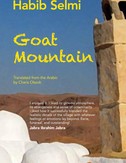
Goat Mountain by Habib Selmi
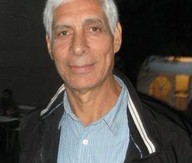
Habib Selmi, author of Goat Mountain and 3 times shortlisted for the IPAF

The Mariner by Taleb Alrefai (Banipal Books, 2020)
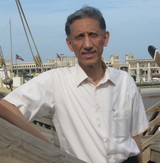
Taleb Alrefai, author of Shadow of the Sun and The Mariner

Fadhil Al-Azzawi's Beautiful Creatures by Fadhil al-Azzawi (Banipal Books, 2021)

Fadhil al-Azzawi

Poems of Alexandria and New York by Ahmed Morsi (Banipal Books, 2021)

Saïd Khatibi

Amjad Nasser (1955–2019)

Digital Banipal the full archive
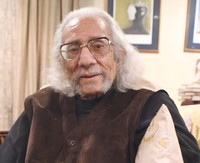
Ahmed Morsi, author of Poems of Alexandria and New York

Sarajevo Firewood

The Madness of Despair


.png)






Link to poems by Mosab Abu Toha, published in Banipal 71 (Summer 2021), available to read online

Link to poem by Liana Badr published in Banipal 74, now available as an online selection
























* * *















 Reprint out now

 GRIFFIN PRIZE SHORTLIST 2023
 Banipal's first audiobook