Receive Our Newsletter
For news of readings, events and new titles.


Four years into the story I turned twenty-two. It ended with me seeing Richard and hearing his advice for the last time, and now it’s reopened with the bequest from Isabel. I will be forty-four years old in a few days’ time.
The light dimmed in the room where I was sitting, and evening was about to fall. I was still sitting there looking at the folded letter and the pound notes. The embers in the brazier died out, the tea went cold and I didn’t budge. In a while my husband Hanna would come. I was hesitant to tell him about Isabel’s letter and the money. But I didn’t want to hide them from him either. I was just apprehensive about the stories that the letter would reopen – stories that Hanna and I had set aside to avoid them, leaving long periods of silence between occasional brief remarks about Richard and Isabel. When Hanna, in that calm way of his that endlessly tries to elicit lengthy explanations from me, said that Richard had died six years ago, I said curtly: “May God have mercy on him.” I didn’t want to take an uncertain journey down memory lane, which might lead to a painful conversation about the past. Who wants to go back, openly and in company, to something that troubles and upsets them? Surely it’s enough for me to go back to the ruins of the past when I’m alone? When that happens, I blame myself for what I did, and imagine what I should have done. Doing that by myself is one thing; making it a joint thing is something else, even if it’s just with Hanna. That’s why, at the time, I didn’t add a word after saying I hoped God would have mercy on Richard. I didn’t say, for example “May he be remembered forever”, because someone like Richard doesn’t need words of that kind. No one will forget Sir Richard Burton, and no one can escape his power and his magic. On that day Hanna looked at me without commenting on my impassive reaction to news of Sir Richard’s death. He went on talking, probing my reactions. “I’ll drop in on the consulate tomorrow to find out more.” He paused, expecting me to ask questions, as if I might say: “And so how did you hear of his death?” But I kept my silence. Hanna left the room and came back two minutes later with a red Damascus rose that he offered to me, saying: “Put it in some water so we can smell it.”
Hanna is still as he was the first time I met him – gentle and handsome, intelligent and wily. He walks like a peacock, but timidly. There’s something birdlike about him – a hidden pride that keeps his shoulders always straight. No one can guess his age or turn down any request he might make. He rarely seems troubled or confused, but if he’s flustered I imagine I can see a stream of cool water in front of me and feel certain that he loves me.
He was thirty-seven when I first met him at the home of Sir Richard and Lady Isabel in al-Salihiya. In fact, we didn’t exactly meet, but he noticed me when I came into the main marble hall. I was walking as if riding a camel because my mother-of-pearl clogs had such high heels and my brass tray was so loaded with fancy, delicate English glasses of rose-water sherbet. I only noticed half a glance from him, but apparently he was watching me rather intently. Somehow I did have a strong sense of his gaze, but that was the end of the matter. We didn’t meet that time.
When we met properly he told me he had noticed me. He said I looked like a wild white flower swaying in a summer breeze. “You came in wearing mother-of-pearl clogs, carrying a heavy tray, wearing white and with a trim waist. Your black hair was like a silk shawl. I froze and forgot about my work interpreting for Lady Isabel and the important guest she was talking to. That was the first time I saw you, Qammour. Your father, my friend Antoun, then asked me to help him by finding work for you,” he said. He paused a moment, anxious not to say that I, the daughter of a kavass, was going to work as a servant to Lady Isabel. “That pretty and clever girl learnt English and went to Britain and travelled, but luckily for me she came back to Syria and then I had ‘the moon’ with me,” he added with a smile, tilting his head back a little. He ran his slender hand over what the English would call his salt-and-pepper hair and said: “Come here”, opening his arms. Hanna never tired of repeating his story about the first time he noticed me, whenever we were having a pleasant Syrian evening. As for me, I would close my eyes in the middle of what he was saying and recall the way he looked at me, the sound of my clogs and the peace of mind that came over me under his gaze.
 My first impression is always the starting point, not the meeting. I didn’t meet my uncle Samir at any particular moment. I had sensed his ample affection for me for as long as I could remember. I didn’t meet my father at any particular moment either: I sensed his weakness when his wife Dallah scolded me and he didn’t say anything. I never knew Dallah properly, but I could sense her aversion to me, which was evident in her glazed eyes. She fixed them on me, without batting an eyelid, and I could only guess the hateful thoughts turning in her head as she scrutinized me in silence and half-knitted her brow. I would run away however I could, because of those piercing daggers that her eyes threw whenever she caught sight of me.
Noticing is what I’m good at. Not speaking. I have opinions and answers spinning in my head but I’m too frightened to express them. The words may be clear and perfectly organised in my mind, but they don’t come out easily. They swirl inside me and are visible in my eyes as soon as I look up. I lower my eyes to hide my thoughts and keep them trapped inside me. Richard noticed from my eyes that I had things to say and one day he decided I should learn English. He said something to the effect that this would be better in practice than Lady Isabel learning Arabic. He gave me a conspiratorial look. He might have winked at me, before rolling his eyes as usual, so much so that his eyeballs looked almost completely white and his face looked wild. His favourite game was to act like a terrifying monster or an enormous ghoul. Everything about him helped – his sharp Arab features, his hennaed hair, the disfiguring scars on his cheeks and his impressive stature. But he was not a monster. According to the sister of Albert Letchford, the man who last drew him, he had “the eyes of a tiger and the voice of an angel”.
I read that last sentence about him in a book that came out three years ago. Hanna came into the room with the book and put it on the small table in front of me. He didn’t say anything. He gave me a look that was partly a reproach and partly something indefinable, then he moved away, slightly flustered. He didn’t ask me later if I’d read the book. Maybe he was also wary of the idea that the book might evoke memories we thought we had laid to rest, violate the implicit pledge of silence in our Damascus house about anything to do with Richard and Isabel.
Now, on this same little table, lie the folded letter and the English pound notes beside it. There’s a slight smell of shisha smoke and the embers are in their death throes. Evening has fallen and I’m still sitting waiting for Hanna in the darkness, which is especially deep because of the heavy curtains. I’m still uncertain whether or not to tell him about Isabel’s death. “The empress of Syria has died. She has followed Richard to his grave.” I say the words to myself in formal Arabic. I thought it was the right way to start writing because the rhythm was strong and compelling and it suited the temperament of the English, who are inclined towards stories about crimes and murder. Something mysterious surrounds that island, producing that dark air laden with ornate and well-ordered sins. Sharply pointed air, with weapons lying under a meadow of lavender flowers. If the English want to emphasise that something is good, they use the word ‘bloody’, as in “a bloody good story”. The common names of English pubs also reminded me of that temperament that’s inclined towards murder and crime: The King’s Head and The Queen’s Head, for example. I imagined an axe roaming the streets and lopping off heads. But to be more precise, it’s me who noticed those pub names. Such things attract me – “bloody good things”.
I imagined Richard and Isabel’s country laid out in front of me. I wondered what Isabel must have been thinking when she decided to take me with her to her country. I don’t know why she did it, but there’s another question to which I know the answer by heart. I know what she was thinking when she sent me back to Syria, which is what I had decided to do myself anyway. I look for the answer to the first question whenever the spectre of Richard and Isabel looms over my head. I’ve looked many, many times.
* * *
I arranged the pages I had written in English and numbered them. Then I covered them with a piece of white paper and put a heavy packet on top of them. As I left the gloomy sitting room, I thought of my first oppressive days in London, which are now more than twenty-two years in the past. A series of “what if” questions occurred to me. What if I had stayed there? What would have happened to me? Would I have achieved what I imagined? In England my imagination came to me only through English, in that I very much liked to eavesdrop. I would listen to Lady Isabel telling one of her friends over five-o’clock tea about two Oriental Christians wandering around parts of London unknown to me, knocking on doors with leaflets about Christians suffering under Oriental persecution, and collecting money to build a church in Britain, which is already full of churches, palaces and parks. I imagine myself being stronger than I am, slamming the door and going out to do the same thing. I go and get lost in the details. And what would I write in my leaflet? And what kind of church would I want to build? I imagine time going backwards a little and that William the priest knew about me travelling to England and was interested in the unknown into which I was venturing, so he trained me to write a letter that would make the English sympathetic and persuade them to give me money and help me build the church. I get lost in the details – over the name of the church and whether it would be advisable to include the word ‘Syrian’ in it, for example. Then I think about how it will be built – the tower, the bell, the altar, the icons and the decorative touches. Will the services be in my language or in English? And where will I live in it? As soon as the word live comes up, I see great difficulty in continuing my daydreams, so I change them for dreams that seem easier at the time. As if one of Lady Isabel’s friends, after seeing how I piece together the loose lace with an embroidery needle, is teaching me to polish up my sewing skills and become a skilled seamstress. I have all this strange and varied collection of broadcloth and even flimsy lace, shiny taffeta and plush velvet, and threads of all colours and all the scissors, needles and pins needed and things that are new to me and that I saw for the first time in a small London shop where Lady Isabel took me to have a new dress made.
When Isabel mentioned me getting my first English dress, I had countless crazy ideas about it, and it took me a long time to understand what was going on in Isabel’s head. But suddenly I realised that my colourful dresses made me look like an actress. “And God alone knows whether that actress would be Indian, gypsy or a fugitive from the debauched Arabian Nights,” she muttered. She asked me to put on a long, dark shawl to hide what she called “this gaudy display”. Then off we went and I saw London.
The city was bustling and vast. Tall church spires towered above us, and there were endless rows of buildings with big windows. Lady Isabel made endless comments too: “Walk on the pavement and not on the roadway”; “Don’t hang around the shop windows and don’t stick your head inside. We’re not in the Damascus bazaar”; “Wait for me here while I buy a newspaper”; “For heaven’s sake, don’t touch the flowers or the trees”; “For God’s sake, stop staring at passers-by. That’s very rude”; “Just follow me, don’t speak, for heaven’s sake. Do I have to look after you and keep an eye on everything you do as well?” The deluge of English comments that poured from Isabel’s mouth showed me that I was too visible and that I should behave like her bag – be hardly visible, but on the alert and at her beck and call.
Before we went into the shop on broad and orderly Oxford Street, she turned towards me and said: “I’m going to have an important conversation with the tailor about a dress for you. You keep quiet and follow his instructions carefully.” I not only followed his instructions, I also lapped up everything I saw in Mr Baker’s tailor’s shop. I remembered the new words; two kinds of material – the dress material and the bonnet material, the name of the dress style, the cut of the dress, the pleats in the dress. I was impressed by the coloured tape he used to take my measurements, and the little ball of sponge stuck with pins with coloured heads, and then the notebook he held, in which he wrote down the measurements. My eyes were wide open and my ears were pricked up. I remembered everything and all the words by heart, but only later did I notice what the word ‘dress’ meant in this case. I learned that by looking. One glance disabused me of my illusions about my first English dress when I saw the servants of Lady Isabel’s friends wearing exactly the same dress, in the same material, the same smock and the same bonnet. Then I understood what dress meant – a maid’s uniform.
Then I found myself walking down the broad, orderly London street, one stride behind Lady Isabel, ignorant of our destination. All the houses are built of small red bricks and seem to be immune from leaning over like the houses in Damascus. The window frames are bright white and as big as doors. I sneak a look at London, as if out of the corner of my eye, as if I’m looking away. I look in the way the land of the English has trained me. I look as if not looking – no staring, no gazing, no peering, and definitely no sustained observation. Just sneaked peeks and cautious eavesdropping to pick up new words and so as not to miss newly issued orders. “I’m going to have an important conversation with the photographer about having your picture taken. Keep quiet throughout and follow his instructions carefully,” Lady Isabel said. So we went into a shop of a nature that wasn’t obvious to me. I looked up and read the words The Queen’s Studio. Inside there were black metal objects of complex design and an Englishman with golden hair in black clothes. Black was also the colour of the maid’s uniform. The Englishman said that my wavy black hair troubled him and he came back holding a large white wrap. Isabel’s eyes looked at my half-frozen figure. She came up to me and said I should cover my shoulders and my chest with the wrap, which was rather like a bedsheet. I covered my black maid’s uniform with the wrap, and the Englishman with the golden hair gestured to me to hide my brown neck as well. He came up to me to adjust the folds of the cloth. He reached out and started to rearrange my black hair. Isabel checked that my little white bonnet suggested the maid’s uniform hidden under the photographer’s bedsheet. A little flash, then a stronger flash, like two stars bursting and then suddenly going out. After the two flashes I remained frozen where I was, until Lady Isabel said: “Come on then!”
Things happen at the right time or not at all. I understood this so belatedly that, when I did remember, I realised I had forgotten that Lady Isabel forgot to let me see the picture of me that she had, even once.
* * *
We arrived in London and all I could think about was when the giftbox would be opened. I longed to open it, while the ‘word devil’ nodded his head and chose for me beautiful words about happiness and gratitude. I hadn’t yet learnt to see beyond the superficialities. I untied the ribbon and opened the box. Inside there was a rosary of pearls with an icon of the Virgin Mary and a cross with beautiful Jesus on it, a copy of the Bible with a tooled leather binding, a whole box of sewing and embroidery accessories, and two pillows and two sheets embroidered with the letter K, my initial in the way the English spell my name. I hadn’t yet learnt how to see beyond the surface, so when Lady Isabel said: “You’re going to come to an important party in London with us next week”, I couldn’t think of anything special to say. And under the influence of that powerful word devil, I had the mistaken impression that after our visit to New Wardour Castle, after the embroidery and the praise it received, I had become part of the British Empire.
One illusion drowned me in fresh water for a few hours, and so I rejoiced, and another illusion drowned me in pointed water for many years, and brought sorrow to my heart. I weigh up the two illusions as I sit in the gloomy room to write.
I dipped the quill in the inkwell and waited for the word devil to appear, but he stayed away and left me in the lurch, turning over the pages of the old first manuscript pointlessly. I was turning the pages over vigorously and holding my eyes shut tight in an attempt to forget what my uncle had said: “But you keep forgetting and imagining stories that didn’t happen, like the story of my father’s pistol on the day of the massacre.” Did I stop crying when I saw your father at the door of Pasha al-Maghariba’s house? Did I see a long pistol hanging from his striped cloth belt?
I looked at the damp patch on my father’s clothes under his belt. I looked up at his face and my eyes clouded over. I rubbed my eyes with the back of my hand and pushed away the tears with my two index fingers as the tears flowed out and the cloudiness increased. Did someone reproach me to silence me? Or did I reproach myself so that I wouldn’t wake up my sister Rita, who was half-asleep in my father’s arms? I don’t remember how the heavy silence fell in front of the door to the house of Pasha al-Maghariba. Perhaps I was the only person who heard it, of all the people there on 9th July . My father didn’t pat me on the shoulder. My big brother Hanna’s shoulders, and then my younger brother Nakhla’s shoulders, received a fatherly patting. I received something else. I received the sharp and fragmented words of my grandmother Helena, asking my father where the pistol was. “Disappeared”, she added, answering her own question as she rubbed her hands together, her eyes pulsing with the pain. The meaning of the word disappeared broke into pieces and dissolved, then came back to life, zigzagged, changed direction, and got lost as it sought something that would complement it. I stood there scrutinising the wet patch on my father’s clothes. I saw with these two eyes of mine the pistol that had disappeared and with my ears I can now clearly hear what Helena Boulad said as she rubbed her hands together: “The man has disappeared.”
I was coming out of the pointed water, the water of many years that had laid sorrow upon sorrow in my heart. The quill in my hand and the white paper in front of me, in my eyes a thick film that slowly disappeared with the falling tears. Two teardrops landed on the white paper, sank into it at once. I shook my head so as not to read the words that the teardrops formed: “There was no pistol and it was your father that disappeared.”
I was coming out of the sweet water, the water of a few hours of joy, anticipating the London party, when Lady Isabel summoned me: “Qammour, there’s some important work for you to do. There are the party clothes. I don’t want a single loose thread of brocade in that beautiful embroidery. Turn the clothes over and check they’re perfect, as good as new. If anything needs sewing or embroidering, I want you to do it properly.” I took the pile of clothes and sorted them out into the clothes of an affluent Damascus woman and the clothes of a venerable Arab sheikh: there was an izar, a sash, a belt, a thoob, an abaya, and a headcover. I patted them with my fingers as if I were silently pointing out types of cloth and the names of the garments. Then Lady Isabel’s voice came, saying: “I hope you haven’t ruined your old Syrian clothes. You have six days to prepare everything properly and on the seventh day I’ll teach you myself how to conduct yourself at the party. Before I forget, you have to clean the Syrian shishas. I want them to be shining like windowpanes.”
As I was cleaning the glass shisha bowls and admiring the gilt decoration, my mind wandered and my imagination failed to come up with even one sentence about how the London party would be. No doubt it would be different from the many dinner parties I had attended with the Burtons. I would be wearing the maid’s uniform and I would be mixing only with other women wearing similar uniforms. We would be “the women packed into the corner”, as I once heard Sir Richard describe us. At first I didn’t understand the expression, which he made as he hurried past on his way out to the garden of some mansion. A brown Indian servant and I were standing like statues in the corner, moving only when the butler told us to. The British consul walked past, smelling of brandy. He scowled out of the corner of his eye and raised his voice a little as he spoke to his friend. “Cankered angular ladies,” he said. I thought the words were directed at me and I was about to step towards him, but one look from the Indian woman held me back. Her sparkling Indian eyes explained that things were different at formal receptions such as this and that we were almost a burden on our masters, so the butler was the only one to give us orders. I thought of explaining to her that I was not just a servant, but the uniform prevented me. Would things be different at the London party? I daydream speculatively and my imagination lingers, as if Milton’s cloud, the one with the silver lining, had suddenly passed by. One of Sir Richard’s remarks rings in my head: “After much wandering, we are almost tempted to believe that morality is a matter of geography.” I turned that remark of his over in my head, but I wasn’t convinced it was true. I told myself that morality meant virtue and that it was the same thing in the Bible and had nothing to do with where the believer was. I now look back on what I was thinking and understand, albeit belatedly, that the meaning has little to do with these superficialities.
Lady Marion Alford’s mansion was so beautiful. The marble pool was amazing. The dense greenery around the mansion was the colour of emerald. She was stunningly beautiful as well. The sight I saw was so magical that I forgot almost half of Lady Isabel’s instructions. I went up the marble staircase with her and Sir Richard. All eyes were on the three of us in our Syrian costumes: a Damascene lady, an Arab Muslim sheikh and me – and who was I?
I was the one who had been asked to wear the clothes that had been in the Salihiya house; I was the one who had been asked to revert to their “original” clothes and thought they had been invited to the London party. People looked at the consul dressed up as a Muslim sheikh and at his wife dressed up as a Damascene woman. People looked at me and didn’t know who I was. My colourful clothes didn’t suggest a uniform and Lady Isabel’s voice rang out as she said: “Our Damascus servant.” “I would like to introduce the Muslim sheikh to English society,” she added. The consul, dressed up as a sheikh, sometimes addressed his wife, disguised as an Arab woman, and sometimes me. The mansion door was wide open. Everyone was impressed by the Muslim sheikh and the Damascene woman, with me in their train, but Isabel’s remark about me being a servant rang in my ears. A glance from the butler and the ringing stopped. Who was I in my beautiful colourful clothes before this gathering of people in servants’ uniforms in the big kitchen? I felt I stood out, that I was a spectacle for them to stare at, as if I were acting in the theatre against my will.
Lady Isabel came into the kitchen herself to check that the Turkish coffee, the shishas and the copper bowls were ready to make their appearance on the London stage. She looked at me and started shouting in English: “Do as I’ve trained you to do. Watch my eyes. Look where I look, and then note my footsteps. Follow me as I’ve taught you. There’s no room for mistakes. The Prince of Wales and the Duke of Edinburgh are in there. They’re the ones to whom you should offer coffee first: the prince and then the duke.”
Lady Isabel led the way with a flourish. Before we went into the big hall, she looked back at me as if to say: “Come on.” I put the copper tray with the cups on my head and walked behind her, looking down so as not to see myself unwillingly on the London stage. I had to curtsey to the prince with the tray on my head and then to the duke in the same way. Lady Isabel spoke in English, Sir Richard in Arabic. I could hear the two languages clearly. I understood the prince, the duke and the other English people, but I ignored all the kind, courteous or laudatory remarks they made. I realised I was beginning to learn the hard way to look beyond the superficialities. I learned well when I heard the British consul telling his wife on the way back: “We wore fancy dress, but Qammour didn’t.” The consul’s words were engraved in my mind, but the big hall with its eleven desks almost vanished from my mind. The consul’s words ring in my head and I get confused trying to interpret his tone of voice. Is it sarcasm or criticism? The word devil pounds my head: “We are almost tempted to believe that morality is a matter of geography.” I agree with the word devil and the meaning has come clear. I plan to win his approval, impatiently anticipating a return to Trieste.
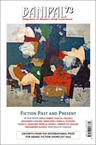
Published in Banipal 73 – Fiction Past and Present (Spring 2022)
Ayna Ismi? (Where's My Name?) is the debut novel of Syrian literary critic Dima al-Choukr, published by Dar al-Adab in 2021 (240 pages)
Where’s My Name was longlisted for 2022 International Prize for Arabic Fiction
About Dima al-Choukr
About Jonathan Wright
Back to Banipal 73 contents
Back to Selections
For news of readings, events and new titles.
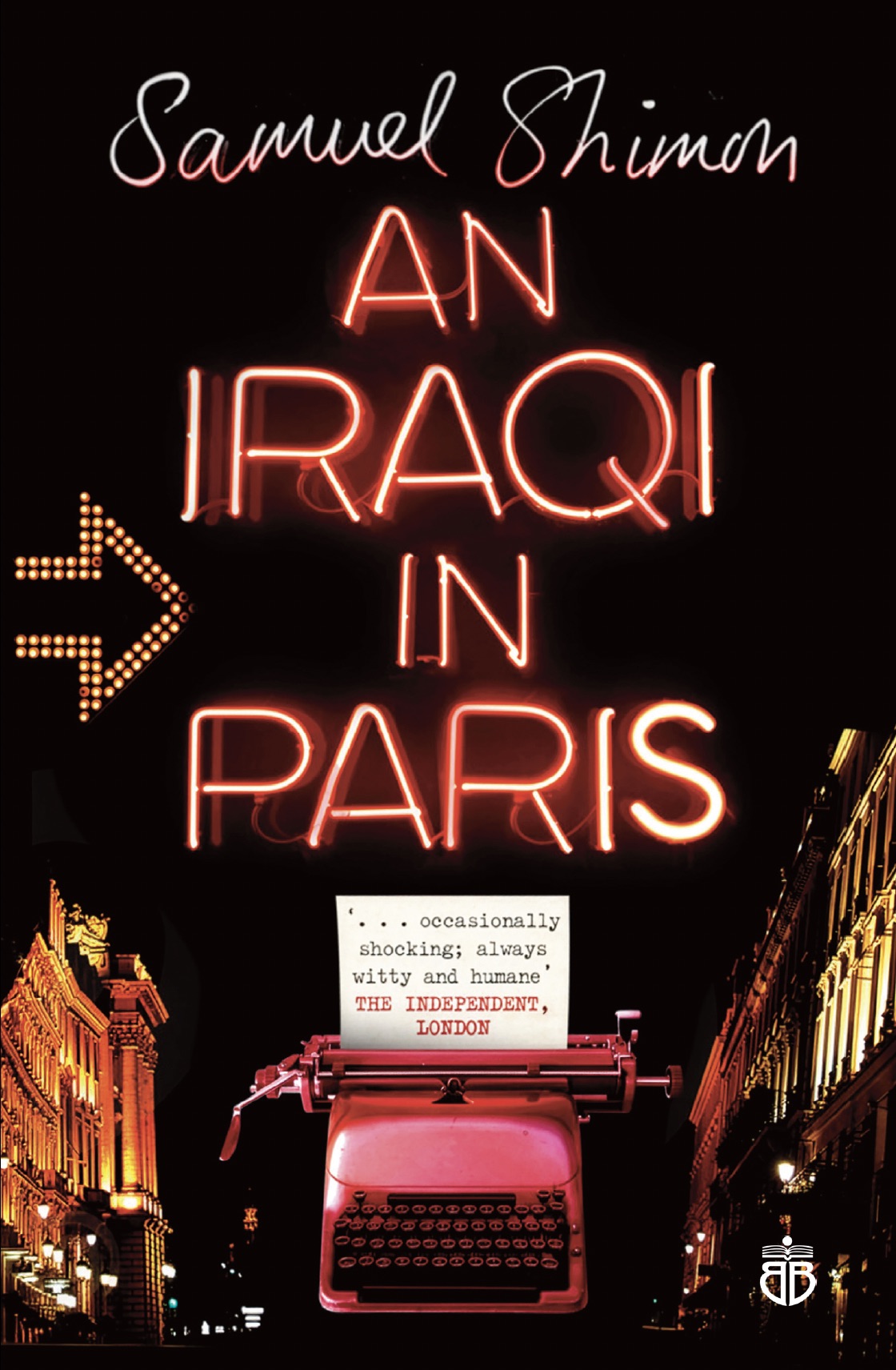
An Iraqi in Paris by Samuel Shimon
The Cinderellas of Muscat by Huda Hamed (Banipal Books, 2025)

The Tent Generations
Things I Left Behind by Shada Mustafa, translated by Nancy Roberts
Shadow of the Sun by Taleb Alrefai

Birds of Nabaa, A Mauritanian Tale by Abdallah Uld Mohamadi Bah
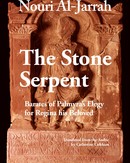
The Stone Serpent, Barates of Palmyra’s Elegy for Regina his Beloved by Nouri Al-Jarrah

Mansi A Rare Man in His Own Way by Tayeb Saleh (Banipal Books, 2020)

Tayeb Salih
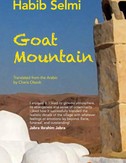
Goat Mountain by Habib Selmi

Habib Selmi, author of Goat Mountain and 3 times shortlisted for the IPAF
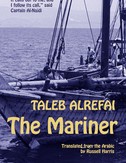
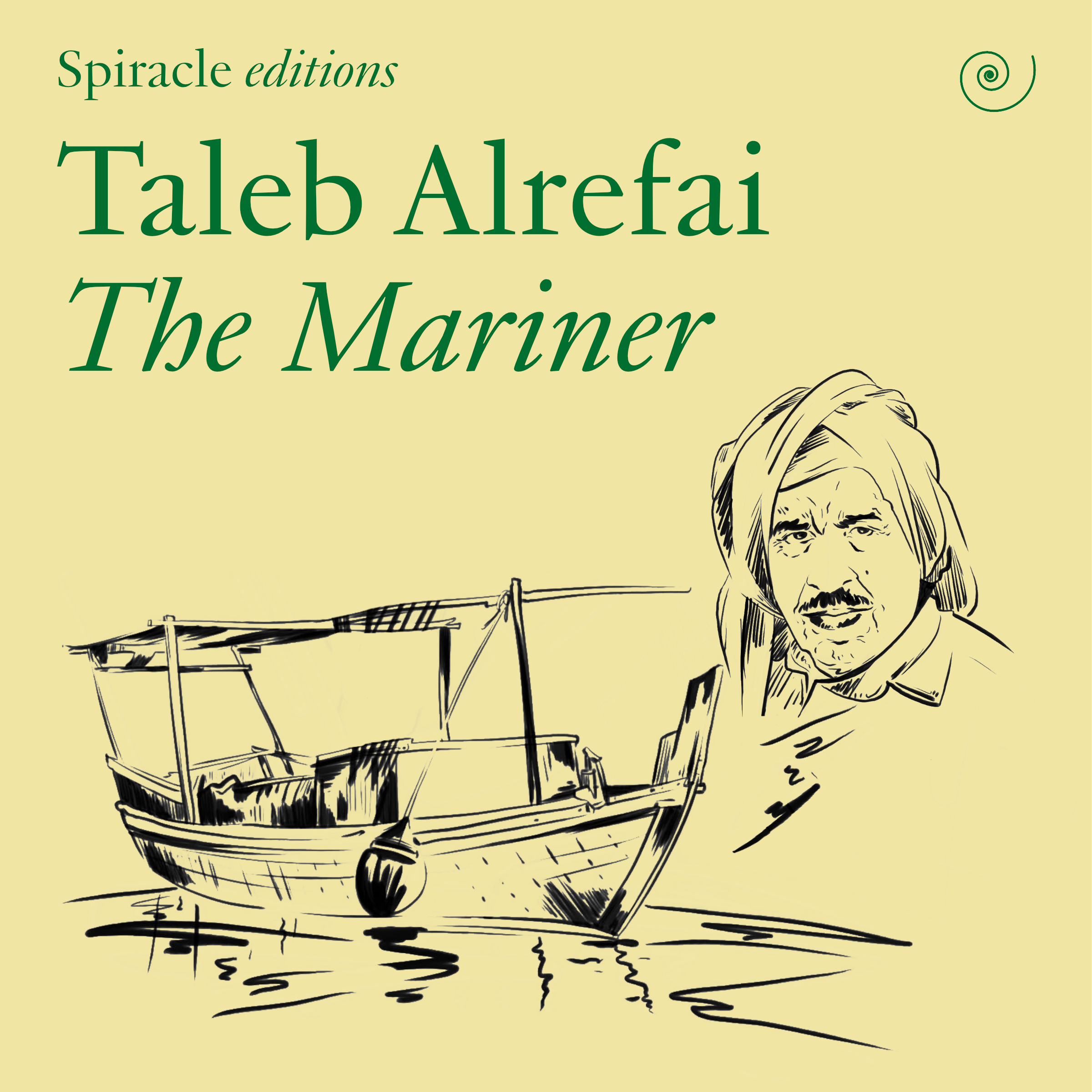
The Mariner by Taleb Alrefai (Banipal Books, 2020)

Taleb Alrefai, author of Shadow of the Sun and The Mariner

Fadhil Al-Azzawi's Beautiful Creatures by Fadhil al-Azzawi (Banipal Books, 2021)

Fadhil al-Azzawi

Poems of Alexandria and New York by Ahmed Morsi (Banipal Books, 2021)

Saïd Khatibi

Amjad Nasser (1955–2019)

Digital Banipal the full archive
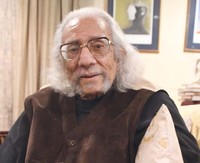
Ahmed Morsi, author of Poems of Alexandria and New York

Sarajevo Firewood
The Madness of Despair


.png)






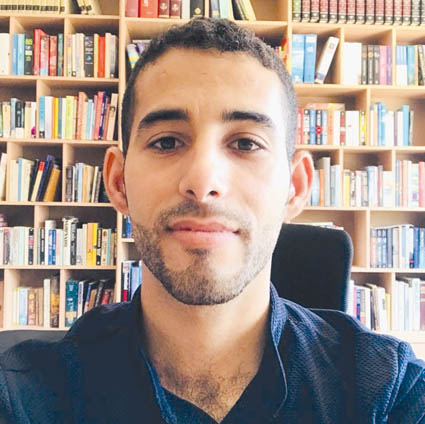
Link to poems by Mosab Abu Toha, published in Banipal 71 (Summer 2021), available to read online
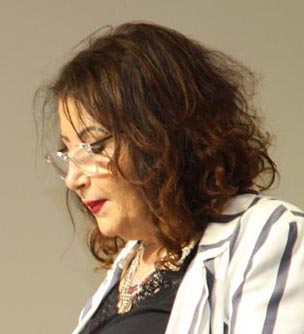
Link to poem by Liana Badr published in Banipal 74, now available as an online selection






















* * *
























 Reprint out now
 GRIFFIN PRIZE SHORTLIST 2023
 Banipal's first audiobook