Receive Our Newsletter
For news of readings, events and new titles.

I
When the bright orange, grey and delicate green colours of the seasons and their physical appearance are brought to mind, when the trembling of bones beneath the ashes of memory reaches its peak, then the hours, days and years turn into a mighty wall of hopeless silence.
That is the way it happened a month ago, a year ago, ten years ago; and it will stay that way for hundreds of years to come. Nothing was new under the vault of heaven except mountains of memories. If only he could succeed one day in overlooking that wall of silence, if he could at least forget it, if only it were just a fairy tale or a temporary flight of the imagination. However, since he was but flesh and blood, he had to fulfil his dying father’s last wish, he had to bid him the last farewell.
II
Some days ago he had heard his father Zair’s voice, quiet and weary. Even the echo was more powerful than the sound of his voice whose timbre seemed weak and fading. About a year ago Zair had asked him in the same faint, but emphatic tone, whether he could send him some money so that he could do his duty and go on the pilgrimage to Mecca.
“My son,” spoke the echo from the world beyond, “I want to visit the house of God before God calls to himself the goods entrusted to him – your father.”
Immediately Ali was indignant at this desperate announcement and in a brusque tone, which he later regretted, replied: “You want to travel that far, to the house of God, whilst people in your country don’t have even enough food to fill their stomachs! What can you find in the house of God other than a black stone?”
“That’s not why I am going, my son. I want to visit the foreign Imam who is buried there, our Imam Hassan.”
At this point the conversation suddenly stopped; maybe the connection was cut off. In any case, Zair could not do his duty. This was the son’s fault also, but God allowed his earthly goods to survive for another year.
A month ago the unambiguous message reached him. Qand, his mother, passed it on to him in a voice full of despair: “My son, we have laid your father in a bed facing Mecca. And he wishes to look upon your face before he passes away.”
But at that moment Ali could not see a way to calm his mother. He had heard this request before and had always found it impossible to comply with. He simply could not go back to his old home. All paths were blocked to him. His father really must have known that. He tried to tackle the problem from another angle: “So, he lies there dying. Aren’t there any doctors, any hospitals?”
“We’ve seen enough of these old people’s homes, those houses of infirmity, they’re no good. And your Uncle Rassan took the most respected of his friends to him to change his mind but he insisted that he wanted to see only you . . . his life is in your hands, my son . . .”
Qand nearly suffocated when speaking these last words. Maybe she was also expressing her own wish to see the banished son once more. Ali remained silent for a moment, listening to the babble of voices in the background and his mother’s crying into the receiver: “What’s happening? Is the connection cut again, Ali?”
Without a doubt, when her mother had mentioned his uncle and the whole family, she did not think that her son might misunderstand what she had said. Even though she had possibly been just chatting, her words had shocked him, because at the time his father would pass away, his close relatives and the respected elders would want to give him a ceremonial farewell with banners and rifles. They would want to shoot into the air in their terrible fury, and lament over his fate for seven days until all the cartridges were used and their tears dried up.
But he, Ali, who would want to mourn him? Who would give him such a ceremonial farewell with the national flag?
After a while he pleaded: “Could I please talk briefly to Father?”
“Talk to him, you say? He won’t speak, he’s keeping his silence until he dies. For three days he’s been hiding under the covers, moaning and groaning like an injured animal.”
“But I am the injured animal . . .”
He dragged the words out and immediately realised how inappropriate and indifferent they sounded. At the same time he understood it was pointless to carry on the conversation in that way. “God is merciful, mother. I will call you in one or two days.” Before he hung up, he asked the obligatory question that was never ever answered positively: “Do you need anything from Germany?”
After he had rung off he repeated that last sentence to himself, as though he wanted to take revenge.
Although it was not he who had erected the high walls which surrounded him, out of sheer self-delusion he himself had also been busy constructing a thorny hedge. He wanted to embrace his mother and father’s love so hard that he could even feel it here, in far-away Germany. He wanted to warm himself in that love, but without contributing to its secure foundation. By so doing he hardly realised the density and impenetrability of his own inner jungle.
The seasons passed whilst he sat in the ruins of his soul, believing that the life now departing from his so-called nearest and dearest was his true life. Sometimes he found consolation from traditional sayings: “If you live all your life anticipating that what you wish for will happen, one day it will come true, but it will then seem minor and worthless. Only when things are unattainable, do they appeal to us.” He always had to remind himself of this unattainability, because by its nature and only a few seconds after it had been attained, everything attainable turned out to be a deception of time which ate away so greedily at all those years.
Suddenly he felt something like a stone in his stomach; he massaged his belly, took a deep breath, opened the door of the balcony, and leant on the iron balustrade. Anxiously he observed the slightly overcast sky, whose slow-moving clouds hovered in the air like huge clumps of cotton wool. The air was chilly, but fresh; he felt awake inside. He struck his fist through the air as though he wanted to smash something into equal pieces.
“Can I do something for you? You fool, I must see him, and he must see me, the Haj!”
Gradually he understood that what had seemed so doubtful to him before was real: contrary to his own conviction, his isolation was not as he had always been thinking just his individual lot; rather it was now threatening to kill his father as well. And he was the only one responsible for that just as his mother had mentioned. But on the other hand, what could his father have done differently had the son never left his side for a single hour? Could he have stopped death?
Now, taking leave of his father appeared as a solemn duty. He should grant him his last small wish; a request no less important than visiting the house of God, or the shrine of the holy Imams. He looked at the sky, whose whiteness was now even clearer and closer, as though he expected something wondrous to fall from it. By chance he remembered the bottle of red wine he still had left. Maybe that could make things easier for him, or at least guide his confused thoughts.
He spread out an old newspaper on the carpet. How often had he taken a glance at the newspaper’s first page, hoping to find the obituary of one of those tyrants, but instead it was the newspaper that died in his hands every morning.
There was absolutely no one with whom he could speak about his dying father far away in Baghdad; no one to whom he could at least tell of his inability to fulfil his father’s last wish. Because that close friend, the fellow countryman as he called himself, the friend with the broken front teeth who smelled permanently of schnapps, called him only if he was in need of a loan that would never be paid back.
“Brother Ali, I swear on your grandfather’s soul that they will throw your belongings into the street. You know the Germans, brother. Only five hundred. I’ll pay you back everything the next Feast Day, God willing.”
But Feast Days came up regularly, one after the other, and yet there was no sign of either the intimate friend or the money.
Otherwise, there was that poet, that supposed companion, whose faint voice pierced the telephone receiver like needle pricks; far too faint for a poet, even more so for a normal person. Once he called at midnight to announce the good news of having finished a perfect poem: “Ali, listen, just now I have written the most distinctive poem, one that indeed marks the beginning of modern Arabic poetry. Do you want me to read it to you? It’s not very long.”
Ali had reluctantly agreed to listen to the drunken midnight twittering.
Or there was a third loyal friend from Mosul, whom Ali had happened to visit one day, and who had boiled an egg for him for dinner, only to spend a whole hour talking to him about locks.
“Dear Ali, this is a real lock. Smooth, doesn’t have any holes, a German invention, operated solely by computer. A lock for nuclear power stations.”
A few days later the friend from Mosul had gossiped about his guest: “I tell you, he came here to my place, I cooked dinner for him and he even stayed the night. The whole time he talked in that southern Iraqi dialect of his. I didn’t understand a word he said. I woke up at daybreak and what did I see: the brother had a pile of books in front him and was reading. My wife’s books, of course. He wanted to impress her, you know, as if to say, ‘I am well read and not a stupid ass, like your fool of a husband.’ ”
He switched on the television, zapped through about twenty channels from all over the world, all broadcasting nothing but trash, and never received the crucial information that could have put an end to his agony in just a few words. There was a commercial: a naked woman moved a piece of barely frothing soap from under her arm to her still firm breasts; she smiled and let the soap slide down to her hips. The second channel showed David Bowie singing an old song. In the video clip, heroin syringes, partly bloody, were scattered all over the stage. The third programme showed a rather corpulent man with a very short neck but a double chin as long as the rest of his face, only the round mouth was moving. He was complaining about a rise in the price of animal fodder and the stagnation experienced in milk and egg production. There were also the news channels, BBC, TNT News, Arab News, MBC, CBS . . . A band, ‘Tempest’ was their name, was playing the dance song ‘What Can we Do’.
And finally there was football, but the game had already finished. Ali listened to the tail-end of a conversation between Chancellor Helmut Kohl and the German national coach Berti Vogts, talking about the final of the European championship cup. The Chancellor seemed very excited; he spoke faster than usual and his eyelids were fluttering like the wings of a bat. But above all, he seemed confident, slapping Berti Vogts on the shoulders and speaking encouragingly to him.
At once Ali seized the telephone, called the exchange, passed on his parents’ number and asked to be put through. A few minutes later, he heard noises from Baghdad. Qand answered: “Who’s there? Ali?
“I want to speak to Father.”
“He’s sleeping,” Qand answered briefly but gently.
Ali urged her to wake him up because it was a serious matter. A familiar sound now mingled with the all too familiar buzzing. At first he heard his mother shouting “Ali, Ali”. Probably the Haj was already holding the receiver in his hands now, but still speaking to his wife.
“I can hardly hear, Qand.”
“It’s Ali, your son!”
“Ali? The devil take me!”
One noticed the effort he made to speak, but nevertheless he sounded relatively lively. Or maybe Ali was suddenly happy, understanding his father’s brief words as being halfway to the realisation of his dream . . . “
“Where are you calling from?”
“From Germany, Father.”
The father answered joyfully in classical Arabic: “Oh, woe is me! If I could, I’d come through the cables and holes as far as you, over there in Germany . . .”
In contrast to his son, the dying man was in the mood for joking, right from the beginning.
“Father, can you hear me? Can you understand me?”
“I can hear you very well, the buzzing has disappeared . . .”
At that moment the line was cut once again.
Even the humming on the line disappeared.
Meanwhile, Dr Helmut Kohl was busy drawing comparisons between the interchangeable roles of chancellor and coach: “There are certain fateful moments that are crucial in the life of a nation; moments that cannot be dealt with by any other than the head of government or the national coach. Both can exchange their roles without much fuss. The difference, however, lies in the fact that in the political field things must be exactly calculated; nothing can be left to coincidence or improvisation. Quite the reverse then happens on the football pitch; here all possibilities and surprises are wide open and the results remain unknown until the very end, just as in a breathtaking thriller.”
As if an answer to Kohl’s confident statement, German telecommunications stepped in and connected to Baghdad again. Zair, the Haj, was right back on the other end of the line:
“Nothing happened, Father!”
“As you hear me, Son, I am not only suffering from longing for you. Seeing your face is an obligation to me, just as the pilgrimage to the holy sites is.”
The father had spoken so clearly and soberly that Ali was encouraged to approach the crucial point:
“Father, you know football, don’t you?”
“What’s up with you, Ali? Don’t you remember the matches against the Kuwaiti team? Even the names of the footballers were ‘Money’, ‘Drachma’, ‘Dinar’ and so forth.”
“Listen. In three days Germany is going to play against England. I will go there to the stadium in London. I will take a flag, a flag as big as the flag of our tribe. Do you understand? The Iraqi national flag with the three stars. I will stand at the German end. And with the flag, I will stamp my feet and shout and scream. The Germans have a special player, his name is Jürgen Klinsmann, do you understand? When he gets the ball, I will stand up immediately and stamp my feet!”
“What’s his name, son? Kess mai?”
“No, not a bag of water: Klinsmann. If his name is difficult for you, then remember Mehmet Scholl. He’s Muslim.”
“Sholl? Where we come from that is when someone goes to relieve himself in the old outside places.”
“Father, you lie dying and you’re joking? So then, when you see Scholl attack England, I will stand there with my giant flag. You have to sit in front of the TV. They’ll make close-up shots of me, for certain, Father. You’ll see my face, I’ll wave to you. You must touch the screen when I come on. The Germans have red, red faces, the English are rather pale.”
“I’ll grab the television.”
Ali was very pleased by his father’s support:
“And then, should everything still be in vain, I will run onto the pitch at the end of the game. You’ll see me, don’t worry about it, we’ll do it . . .”
III
Ali spent several days and nights devising a plan, and cutting out the material to make the Iraqi national flag. He kept extra material in reserve, should the crowd rip the flag apart out of fury. At the last moment he managed to grab a seat on the overcrowded night train to London, where he immediately began to search for a place to stay.
Hardly had he unpacked his holdall than he went to explore the cosmopolitan city, that somehow seemed familiar to him.
It was a warm, sunny morning with no breeze, and the people seemed busy and excited; that must be the rhythm of the city, Ali thought. He noticed many things he had never really perceived during his earlier visits. Now, piles of rubbish lay heaped at every crossroads, empty barrels rolled around in the middle of streets, and the pillars of the antiquated railway bridges were covered in a smelly, sticky sludge.
Ali noticed only late that the sleeves of his light grey jacket were covered with bits of green moss. Beggars and tramps, too, seemed to be more numerous than in German cities – in general, the whole metropolis with all its peoples, especially the football fans, who roamed through the streets with their flags and songs, conveyed a gloomy picture. He stood and asked a group of people in his southern Iraqi dialect:
“What has happened to the wealth of the British Empire, my dears? You’ve plundered the whole world and still remain so miserable?”
Having arrived at Hyde Park, he noticed some men in traditional Arab clothes, white dishdashas with keffiyahs held in place with black agals. All these men had dark brown skin and were extremely fat, as though cast from the same mould. Rather out of curiosity, Ali picked out a particularly conspicuous man, whose underwear could be seen beneath his white dishdasha. He saw a wallet poking out of a long front pocket.
The man walked along dragging his feet, his legs slightly apart, like an ageing swan. He held an Arab newspaper under his sweaty armpits. When the man suddenly stepped back with a jerk for a second Ali panicked. But it seemed the man just wanted to make sure of his wife, who was hurrying behind, wiping the sweat from her half-covered forehead.
Ali smiled at her, waving his flag in her face. “May God have mercy upon you!” he shouted and giggled.
“Get lost!” Her answer came back promptly.
At this point Ali remembered the story of the Afghan man who used to make his wife walk at least twenty metres in front of him all the time. After he had been told this was not Islamic, and that Muslims, naturally and especially at the time of the Prophet, should walk in front of their women, the Afghan had replied: “OK, but in the time of the Prophet they didn’t have land mines.”
After grabbing a sandwich in Edgeware Road, Ali once again went to nearby Hyde Park, where he rammed the flag into the ground. Then he lay down on the dry grass and looked up into the bright sky. He blinked briefly and then fell asleep.
Suddenly he opened his eyes with a start and jumped up to stand face to face with a man with a thick moustache who was addressing him in Iraqi Arabic: “Has our friend been overthrown already?”
Ali immediately took heart and smiled at that strange question: “No, not yet, but Haj Zair lies dying . . .”
IV
For £100 he bought a ticket, and quite early on found a good place at the famous Wembley Stadium. The away supporters’ singing did not sound German at all; too late he noticed that he had come to the wrong end. Should he maybe give up the plan he had devised with his father without further ado and cheer for England instead? Maybe there was a greater possibility of being televised since the English, as it has been said, knew much more about humour than the prim rest of the world.
He inspected the thrilled English fans, who seemed to be superior at least in a scuffle, whilst the Germans remained unbeatable on the football pitch. Bulky masses of painted and wildly tattooed colossi with shaven heads were brushing against each other.
Strange, Ali thought; in order to save his father’s life or at least to grant him his last wish, he had to sacrifice himself. If actually he was to support Germany, he would probably never emerge from the stadium unscathed. But, if he were to play the fan of both teams, he could at least double his chances. For certain the cameramen would capture such an impartiality, the like of which had never been seen in a championship final before. So he raised the flag, chanted something in Arabic and then looked around to see the reactions. If he had understood correctly, he heard a comment in English that sounded roughly like this: “What’s up with this idiot! Is he German? That stupid flag!”
At that moment, he noticed that the words the Iraqi President had personally scribbled on the flag were missing from his flag. Nevertheless, Ali thought, if the cameras were to capture him then his father Zair would praise The Almighty enthusiastically and thus replace the missing “God is Greatest”.
Hundreds of cameras, and tens of thousands of shouts turning into a single ocean of shouting announced the beginning of the match. The concrete grandstand vibrated, the fans began singing their songs, the ball rolled and a tense cloud of shouts hung over the heads of all those cheering. Meanwhile, in this incredible tumult Ali altogether forgot his task. Thomas Hässler, Klinsmann, Mehmet Scholl, then Alan Shearer, Thomson and Wright, and then the godless Iraqi flag rose up. And then, at that moment, the incredible happened. The Muslim Scholl scored the first goal – God is Greater. Ali felt the ground fall away from beneath his feet, there was no concrete left under them. He stamped up and down like a mechanical digger. The cameramen would have to be blind not to see his performance.
Ali was standing in the midst of the events and he was the only one who had come with a clear task: to save somebody’s life. And again Hässler attacked from the wing, passed the ball on to the ginger Sammer, then to Bierhoff, Völler and then the final whistle. But the real game of the cameras had only just begun on the pitch; he could imagine the greedy zooming of the cameras.
Ali forced his way through a small aisle, among the stirred up and angry fray of the English, who somehow seemed despondent too. He arrived at the field that just now had supported the world’s greatest feet.
Apart from the long pole, there was just a small green star adorning the flag. At any rate, he arrived safe and sound and immediately began to chase after the beaming faces of the winners.
V
He was deeply moved, and so did not notice that his shirt and jacket had been torn. Was he really such a hard-hearted person that he could deny such an important wish as his father’s? He had never thought that the long time abroad would wear down his inner strength and suck dry the sap of his feelings to such an extent that in the end he would be thrown to one side as the great loser. Was it possible that other more noble or practical feelings had developed so that he could now present himself in such a strong and tough way even though his father lay dying? Just make sure you don’t show any weaknesses, better bottle up all those indigestible worries and anger. Even so, and without any doubt, his father was to be the winner in the final battle of emotions.
He flung open the front door of the run-down guest house.
The receptionist was shocked at Ali’s appearance but he smoothed over the situation with the traditional humour of the island:
“My compliments to the German victory!”
Ali was happy and even somewhat proud that a German victory could compensate for his outward appearance. Today he was carrying out his plan, the true victory, and he had to thank the German national team for that.
He told the receptionist that in order for the victory to be complete, he had to inform his father in Baghdad who was looking forward longingly to this moment.
“Sorry, impossible, Sir!”
It annoyed Ali a little to be addressed with that cold ‘Sir’.
“Nothing is impossible! I’ll stay here the whole night.”
He fell into the leather armchair in the reception lobby and found the smooth suppleness of the leather on his skin revolting. Inside he was burning with a feeling of having accomplished the impossible. He tried to imagine how his father might have received the picture of his banished son and hoped that his favourite uncle Rassan had been present as well.
After an hour Ali retired to his room. The connection to Baghdad could be established only in the early morning.
There was a rustling in the receiver from the other side of the world. He could hear a shrill whistle like that of a sandstorm, then a hoarse voice emerged from the background.
“Who’s that talking gibberish there?” said the voice, breaking through the desert storm. Ali jumped up with joy. The receiver slipped from his fingers but the connection was maintained. How strong and healthy his father sounded!
“The gibberish of the British, Father!”
“Who’s there?”
“Ali, your son!”
“At midnight Zair gave his last breath of life. Here is your mother!”
Ali held his breath for a second; he did not want to admit that the news of his father’s death could sound so indifferent, so direct.
His mother had taken the receiver from her brother Rassan’s hands.
“You made it!” resounded the last message from Baghdad. “Your face was bigger than the screen. Your uncle Rassan said one would have had to put two TV sets next to each other to see your face full size. Your father jumped up when they showed you again. He pounced on the TV, kissed the screen, clutched at it and collapsed . . . ‘Ali, Ali’ he shouted and died with a wonderful smile in his face . . . Ali . . .”
A short story translated from
the original German by Sophie Richter-DevroeFor news of readings, events and new titles.
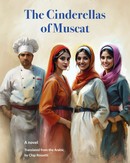
The Cinderellas of Muscat by Huda Hamed (Banipal Books, 2025)

The Tent Generations
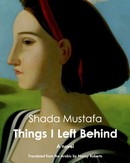
Things I Left Behind by Shada Mustafa, translated by Nancy Roberts
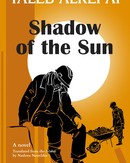
Shadow of the Sun by Taleb Alrefai
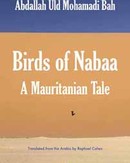
Birds of Nabaa, A Mauritanian Tale by Abdallah Uld Mohamadi Bah
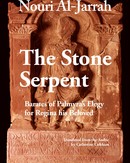
The Stone Serpent, Barates of Palmyra’s Elegy for Regina his Beloved by Nouri Al-Jarrah
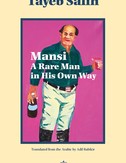
Mansi A Rare Man in His Own Way by Tayeb Saleh (Banipal Books, 2020)
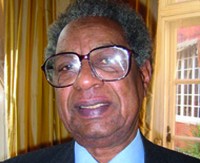
Tayeb Salih
Goat Mountain by Habib Selmi
Habib Selmi, author of Goat Mountain and 3 times shortlisted for the IPAF
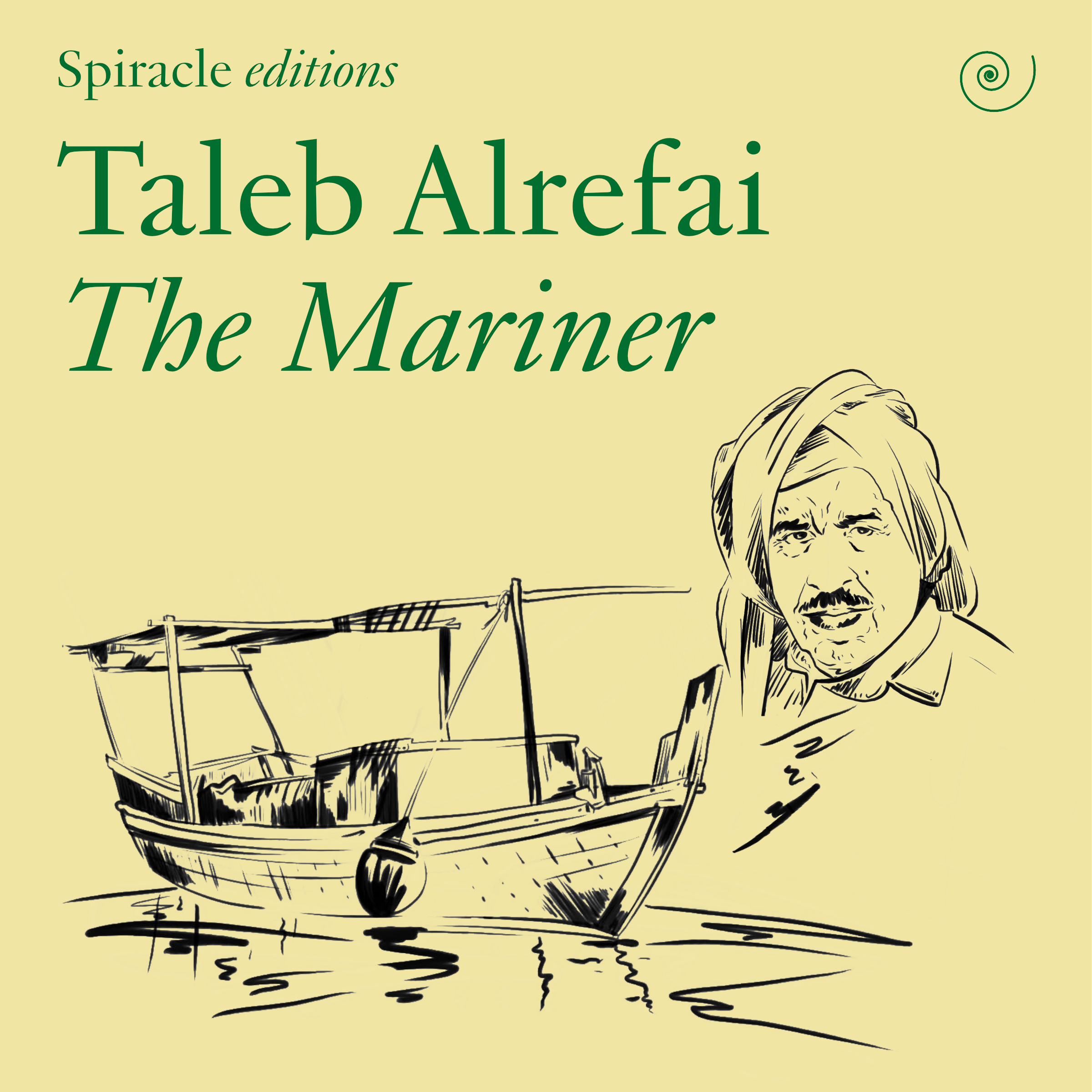
The Mariner by Taleb Alrefai (Banipal Books, 2020)
Taleb Alrefai, author of Shadow of the Sun and The Mariner

Fadhil Al-Azzawi's Beautiful Creatures by Fadhil al-Azzawi (Banipal Books, 2021)
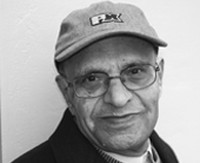
Fadhil al-Azzawi

Poems of Alexandria and New York by Ahmed Morsi (Banipal Books, 2021)

Saïd Khatibi
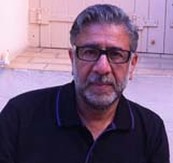
Amjad Nasser (1955–2019)

Digital Banipal the full archive
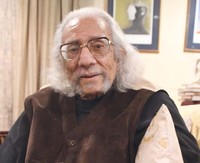
Ahmed Morsi, author of Poems of Alexandria and New York

Sarajevo Firewood
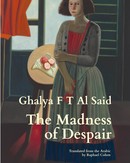
The Madness of Despair


.png)




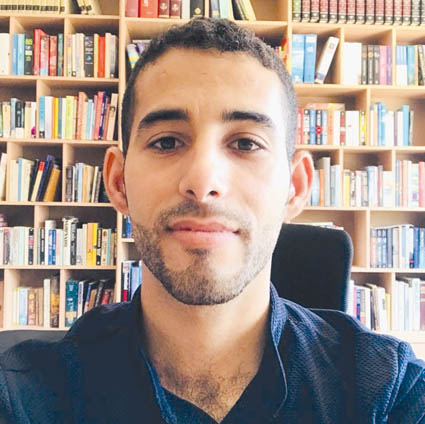
Link to poems by Mosab Abu Toha, published in Banipal 71 (Summer 2021), available to read online
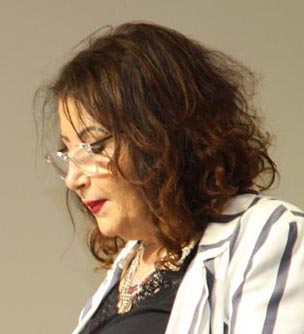
Link to poem by Liana Badr published in Banipal 74, now available as an online selection





















* * *




 Reprint out now
 GRIFFIN PRIZE SHORTLIST 2023
 Banipal's first audiobook