Receive Our Newsletter
For news of readings, events and new titles.

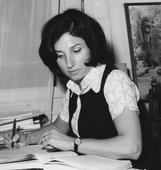
In her debut article, entitled “First Poems” by Adonis and published in the second issue of Shi‘r (Poetry) magazine, Khalida Said demonstrated a unique approach to modern Arabic poetry. This early contribution was a mature approach conveying a clear modernist vision, in which she avoided a resort to “ready-made” critical terminology drawn from traditional criticism, preferring instead to approach the modernist text with fitting modernist criticism.
This brilliant beginning was the spark that illuminated the path of modern Arab criticism, opening a place for Khalida as a powerful contributor to Arab modernity. In this interview conducted especially for Banipal magazine, we focus on prominent way stations in her personal life and career, in the course of which the intellectual and academic have intertwined with the political and the human. With her distinct, elegant presence, her lively mind and her limpid memory, Khalida Said recounts her rich experiences.
DC: You were born on the Syrian coast. Due to family circumstances, you attended boarding schools during your formative years. How do you remember those years, and what was Damascus like at the time?
KS: I was born in a hospital in the city of Latakia. My personal story is somewhat unusual. When my mother passed away, my sister [Saniya Salih] and I were still young. My father sent us to a boarding school in Banias overseen by the Lebanese Sisters of the Holy Family, where we stayed for four years. When my father remarried, we went to the city of Jableh on the coast, where he had a job. After I got my primary certificate, my father applied for me to attend schools in Damascus, this time for a Certificate of Proficiency. I was accepted into two schools: the School of Industry and the Tajhiz School, but I happened to be accepted first into the School of Industry, so that’s the one I enrolled in. I don’t remember much about what Damascus was like then, since I was in a boarding school again, and since I had no family or relatives in Damascus, I stayed at the school. They used to refer to people in my situation as “Friday Girls”, since we didn’t go out on Fridays. There were about sixty boarders at that school, but on holidays and weekends most of them went to see their families in the city or the suburbs, whereas I and a few other girls would stay at the school, so I didn’t get to know Damascus at that time.
I didn’t know the city or anybody in it, but I met the family of Mrs Radhia Shawqi Nassar, a principal who slept at the school, and they were very kind to me. Sometimes she would take me out with her on Fridays. So the first time I went to the cinema was with Mrs Radhia and her family.
I was diligent in my studies. In fact, I excelled. After all, people like me who had no family or relatives, who never went on outings, and had no social life, would make friends with books. I have really nice memories of that period, as I got to know some wonderful teachers: Falak Azma, the Maths teacher, Lamis Mardam Bey, the Arabic teacher, and Laila Al-Sabbagh, the History teacher, whom I wrote about when I became a critic. As you know, Laila Al-Sabbagh is one of Syria’s leading female historians.
That was a lovely world.
DC: Not many people know that you graduated from an industry and arts school. So what can you tell us about that phase? How did you come after that to study Arabic literature in Damascus?
KS: I went from the School of Industry to the Teachers’ Training Institute. By that time I’d obtained a Certificate of General Proficiency through private study. At the School of Industry, I studied the art of decorating, burning and engraving wood and copper, as well as glass painting. Then I transferred to the Teachers’ Training Institute. But during the summers I would come back to Damascus to draw and paint. I was apprenticed to two of the Levant’s best-known artists: Nasir Shura and Mahmoud Jalal. I had been planning to specialize in the arts, but my financial situation wouldn’t permit it, as the arts require a full-time commitment and residency in Damascus without a grant. So I continued at the Teachers’ Training Institute. After that I taught, and was affiliated for a year with the Faculty of Arts at the Syrian University.
DC: By this time you had met Adonis. Would you like to talk about the first encounter?
KS: I met Adonis in 1950. I was about to begin my university studies, whereas he was in his final year. The first encounter was very nice. We belonged to the same social and political circle, but at that time I hadn’t officially joined the Syrian Social Nationalist Party. Coincidence had a hand in the matter. After breaking my hand, I happened to meet the sister of the doctor who’d treated me, the wonderful Mrs Abla al-Khoury, who was a broadcaster on Radio Damascus. There are some wonderful people in Syria. I cry every time I think about it. In any case, it was in Mrs Abla’s living room that I met Adonis for the first time, as he was a friend of hers, and of her brother. We sat together and talked, and when the evening was over, we went out walking together, and we’ve shared the same path ever since.
DC: It was love at first sight, then. Do you remember which streets you walked down?
KS: Yes it was. We walked down the streets of the Al-Qassaa neighbourhood. But I knew a lot about Adonis before I met him. After all, he was well known and had quite a story.
DC: Tell me the story, then.
KS: It’s a story about his studies – a wonderful, even legendary tale. The late Shukri al-Quwatli was the first president of the Syrian Arab Republic after independence. Adonis learned that al-Quwatli would be visiting the coastal region, specifically the cities of Jableh and Latakia, so he composed a poem in a salute to the president. After all, Ali Esber (AKA Adonis) had known nothing but the village school, which lacked even the most basic requirements for a proper education, including classrooms with a regular teacher for each class. And of course, we mustn’t forget the boy’s ambition, visions and dreams.
On the long-awaited day of the President’s visit, Ali Esber went on foot from his village of Qassabin to Jableh and then to Latakia to recite a poem he’d written specifically for the occasion. People were quite impressed with this young boy’s poem, as was the President. Well, President al-Quwatli sent for him and asked what he could offer him, and Adonis replied: “The chance to go to school.” So the President decided to grant him the opportunity to study at his own personal expense. In fulfilment of this promise, Ali Ahmed Esber enrolled in the boarding section of the Martyr Basil al-Asad School in Tartus, one of the most prominent schools in Syria at that time. There he was able to obtain an excellent education. After that he received a state grant and went to the Tajhiz School in Latakia.
DC: Adonis was imprisoned twice, and so were you.
KS: Adonis was affiliated with the Syrian Social Nationalist Party. I was infatuated with him and wanted to do whatever he did, so I joined the party, too. The Party’s ideas were sensible and its members were highly ethical people, so my father didn’t object, even though he never liked political parties. But then something terrible happened that was denounced by Adonis and other party members, including myself. What I’m referring to is the assassination of Colonel Adnan al-Maliki (1919-1955) by a member of the Syrian Social Nationalist Party.
Although we were members of the Party, we had nothing to do with the matter, nor did the general membership or the party officials. The Chair of the Party at that time was the Lebanese George Abdel-Masih, who was sentenced to death in Lebanon in 1949, before seeking asylum in Damascus. When al-Maliki was killed, everyone expected Abdel-Masih to be arrested. As it happened, Abdel-Masih went into hiding. Then one night he came knocking at my door in the Muhajireen neighbourhood in Damascus. He knocked more than three times, but it was 11:30 pm, so I didn’t open the door. But finally, wanting to know who might be knocking at that time of the night, I went to the door, and it was Abdel-Masih.
When I asked him what was going on, he said: “Haven’t you heard about al-Maliki’s murder?”
“Yes,” I said, “But what have we got to do with it?”
“We had nothing to do with it,” he replied, “but the person who killed him is a member of the Syrian Social Nationalist Party, and since I’m its leader, they’ll arrest me and extradite me to Lebanon. I’ve been sentenced to death there, and I’ll be executed.”
I thought to myself: How can I let them arrest him and execute him the way they did to Antoun Saadeh? This is a moral burden I can’t bear. He asked if he could stay for the night. At the time, my sister Saniya1 and I were renting a room in a woman’s house, and renters weren’t allowed to receive guests. But I agreed, and he spent the night, and the next day, his friends came for him. However, I was arrested after that for hiding someone wanted by the authorities. I was tried and sentenced to two years in prison, like others who were arrested and tried on charges of smuggling Abdel-Masih. However, I only served six months of the sentence, which was reduced because I was a student at the university at the time. Everybody was upset over what had happened to me, but there was nothing they could do, since I couldn’t be exonerated. When I think back to prison now, I laugh. I sang the whole time I was there, since I hadn’t done anything wrong. I’d just fulfilled my duty to the Party.
DC: After prison, you and Adonis went to Beirut. But, before we discuss Shi‘r magazine and its Thursday gatherings, I’d like you to tell me about your enrolment in the university and teaching there. Why did you choose this path even though you’d made a strong start at Shi‘r magazine that would have allowed you to devote yourself full-time to literary criticism, for example?
KS: On my life’s horizon, all I see is knowledge. Credit for this goes to my father, who raised me on this mentality. My father held knowledge to be sacred, and he believed that women are important and should be educated. He used to tell me I should never stop learning, and that even if I got my PhD I should keep on with my research.
I think it has something to do with his own personal experience. He was employed, but he was prevented from continuing his education when he was young. His father forced him to marry very early, and I was born while he was still a student, so he had to leave school. But since he loved knowledge, he devoted his attention to me from the time I was a little girl; he did the same for my siblings, who have specialized in everything from medicine to engineering, from literature to the arts. My father used to buy me books. He would find out which new ones had come out, then look for them and do everything he could to get them for me. He would even borrow books for me, and I read everything he brought me. In fact, I read all the time, in the summer and during all the holidays. So it was only natural that I would enrol at university, whether in Damascus or in Beirut. Then I completed my studies in France, even after marriage, and obtained a higher degree.
DC: What did you think of Beirut at the time, I mean, after you left Damascus? What differences were there between the two cities?
KS: There is a difference between the two cities. It isn’t a huge difference, but it is a political one, as you know. The killing of al-Maliki had a great impact on us. Prior to that, we would meet in Damascus within the party’s framework and with a fair degree of freedom. There had been no major problems. But there’s a lot more intellectual and political freedom in Lebanon, and it’s a great treasure. At that time, Lebanon was a paradise of freedom and knowledge despite the chaos there, and I think it always has been.
DC: Had it not been for the killing of al-Maliki, did you think you and Adonis would have stayed in Damascus?
KS: I don’t know. Possibly. Al-Maliki’s killing hurt the country everywhere. It created a state of tension and conflict, and the prisons filled up. But Adonis’s ambition knows no bounds.
DC: Fortunately, though, your going to Beirut coincided with the greatest change modern Arabic poetry has ever known. And here we come to Shi‘r magazine, its famed Thursday gatherings, and your first critical writings. Given that you live among poets, you’re married to a poet, and you have a sister who’s a poet, have you never thought of writing poetry yourself?
KS: Adonis and I arrived in Beirut in late 1956. The idea of writing poetry was in my mind, but I didn’t have any incentive to publish, especially since I was around a great poet, Adonis, as well as other great poets at Shi‘r magazine and its Thursday gatherings. So I felt intimidated. However, my love for poetry stayed with me, so I compensated by writing about it. I became a critic, an analyst of poetry.
DC: Tell me about your first article.
KS: Yusuf al-Khal discovered me, and caused me to discover myself. When Adonis’ collection entitled Qasa‘id Oula (First Poems) was released, Yusuf al-Khal asked some critics around him to write about it. But the articles they gave him weren’t to his liking. So he said to Adonis, “Let Khalida write about it.”
Adonis objected, “Khalida has never written literary criticism in her life.”
“But she will,” al-Khal insisted.
Again, Adonis argued, “She writes sentimental texts. She’s never written criticism.”
“But she can do this,” al-Khal repeated, “and she will.”
“How do you know she can do this?” Adonis pressed.
“I heard her discussing poetry at sessions of the Thursday poetry gathering.”
So that’s how I wrote my first article. I didn’t sign it with my own name, but as “Khuzama Sabri”, which shares my initials. So not only was al-Khal very kind, he was open-minded, a man with a mission. He had a spiritual generosity about him. He was a visionary. I respected him very much, and he was an important poet.
DC: And the second article was about Ounsi El Hage’s collection entitled, Lan (Never)?
KS: The atmosphere at Shi‘r magazine and its Thursday gatherings was inspiring. There was an excitement and a desire to give for the sake of change that outweighed everything else. This modern poetry hadn’t been recognized yet, and some poets faced a kind of challenge, though nobody understood the nature of this challenge. This was the case with Ounsi El Hage. When his book Lan was published, it came in for harsh attacks by critics and poetry aficionados. The “nicest” comment at the time described his poetry as incomprehensible. But in reality, it proceeded from a different vision and understanding of poetry. The book came out in 1960, that is, more than two years after the first publication of Shi‘r magazine.
By this time I’d achieved some degree of success and recognition in the field of literary criticism. And, in the wake of the uproar Ounsi’s book had sparked, and the successive attacks on it, I told him, “I’ll write about your collection.” He started warning me of the predicament I might get myself into, and he brought me a collection of newspapers that had attacked him.
“That doesn’t matter to me,” I told him. “I’m going to write, because whoever criticized you doesn’t know how to read poetry. They’re accustomed to traditional poetry, and that’s all they know.”
I sensed something different about Ounsi El Hage, and the big question being posed at that time by proponents of modernity was: How is it possible to continue writing in the same way we’ve been writing poetry for over a millennium? Aren’t poets entitled to express themselves in a different way? In a way that reflects their presence in history and reality and flows with the “rhythm of the age”? It was a logical question. Moreover, the issue has to do with more than meter and rhyme, since Ounsi El Hage had gone beyond not only meter and rhyme, but even the traditional aesthetics of poetry.
DC: You write criticism of poetry in a special style that is often described as critical intuition. You deliberately steer away from conventional critical jargon and coin special terms of your own such as ‘a tone of concession’ (lahja mutanazila), and ‘the build-up of imagery’ (al-suwar al-musa‘ada).
KS: I try to find whatever will best convey this or that example or text to the reader. It isn’t necessary to use ready-made terms, nor am I bound by pre-existing formulations and judgments. I prefer to use whatever arises out of my own thinking and analysis, and my way of seeing things. I want to find something that expresses this vision. I don’t feel I can stay in the mold, that is, the traditional mold of expression. I want to find the terms that will best communicate my personal vision, and I think it’s the duty of any writer to search out the terms and expressions that best fit him or her and his or her idea.
The same principle applies to both poets and critics. In other words, the poet referred to as a modernist - and not all contemporaries are modernists – has searched for the formulation that best suits his or her idea, image, perceptions or imaginings, and does not want to be confined to a ready-made model. Similarly, I as a critic want to find the expression that best fits my idea, my vision, and my reading of the text. It’s quite simple, and my natural right. At the same time, this doesn’t preclude the use of old terms. We make use of such terms, modifying them and using them in a new way, or enriching them with new content. We also have the right to invent our own terms in light of our analysis. The important thing is the horizon and the vision.
DC: There’s something remarkable about your career as a literary critic. You have kept pace with the most major change ever to be witnessed by modern Arabic poetry, by which I mean the infamous debate over meter, yet you’ve never written about the topic or taken a side in the notorious “battles” between metered and unmetered poetry.
KS: True. I never entered that battle, because my own interest is limited to content and the language used to express it.
Nevertheless, it was a major battle. I supported free verse, or al-shi‘r al-hurr, as we referred to it back then. When I worked on the poetry of Badr Shakir al-Sayyab (1926-1964), I concentrated on content, rhythm and structure. I asked what the poem focused on, and how the poet had charged the poem with meanings while using symbolism to allude to myth? A poem can convey numerous important meanings.
But back to the subject of meter: When I sense ‘dissonance’, that is, a flaw or imbalance in the meter, I simply don’t deal with a poem. Talented poets have a sense of the meter, and if they realize that they haven’t mastered it, they simply dispense with it. For Adonis, meter is special, since he controls it. When Adonis composes metered poetry, he doesn’t tire you out, and you don’t feel the meter is forcing anything on you. Adonis is completely free even within the constraints of meter. Let us not forget that he composed a metered poem for President al-Quwatli when he was a young boy between thirteen and fourteen years of age.
DC: This leads me to a personal question: Does he read his poetry to you out loud? Or does he simply hand it to you and leave you to read it alone? I imagine the poem, “They Said She Walked” was written for you.
KS: No, no, he doesn’t recite poems or give them to me. Usually before publishing, he’ll give me some poems, but he has never read poetry to me. I enjoy hearing him recite it at public events or when it’s being recorded. His delivery is moving, and his voice is warm and beautiful. I have great respect for the poet’s freedom and his intimate relationship with his poetry. If he wishes to read it to me, I’ll be all ears. Otherwise, I enjoy reading it myself, and sometimes I sing it.
And yes, the poem, “They Said She Walked” is one he wrote while we were in prison at the same time.
DC: The “political” orientation of Shi‘r magazine wasn’t compatible with that of Al-Adab magazine. While Shi‘r magazine had a preference for those referred to at the time as “Tammuzi poets”, who elevated myth and frequently adopted it as part of their modern poetry, Al-Adab magazine favored the realistic commitment current with its emphasis on discussions of Arab political issues. What do you think?
KS: First, there is no group that calls itself “the Tammuzi poets”. This is a common mistake.
True, a number of features and issues were displayed in the works of some poets during a certain period, and among different poets who came together around Shi‘r magazine, which was first issued in Beirut in 1957 by Syrian-born Lebanese poet Yusuf al-Khal in cooperation with Adonis, a Syrian poet who had sought asylum in Lebanon.
Yusuf al-Khal had been dismissed from the Syrian Social Nationalist Party, whereas Adonis was still a party member. However, there was no connection between the magazine and the Party. In fact, people in the Party would tell Adonis, “Leave Shi‘r magazine and we’ll publish another one for you.” Of course, Adonis didn’t leave Shi‘r magazine until much later, and for reasons that were purely poetic and artistic.
For all its faults, one of the Party’s notable virtues at that time was its comprehensive view of heritage from earliest times to the present. Currently, by contrast, its attention is focused on Islamic Arab history, with an obvious and deliberate neglect of the history that preceded Islam and the Arabs. In his poetry, al-Sayyab made statements that resonated with the ideas of Shi‘r magazine on the artistic and cultural levels, since he was a reformer who lent proper attention to cultural history, its symbols and its legends, not as doctrines, but as a culture, and as an artistic and popular heritage.
After Shi‘r magazine discovered al-Sayyab, Yusuf al-Khal arranged to have al-Sayyab invited to Beirut, where he stayed for a year and made closer contact with Lebanese and other Arab cultural circles. During that period of time, people of culture from Syria, Palestine, and even other Arab countries sought refuge in Lebanon.
As for the topic of commitment, this raises an important issue that has remained vague or ambiguous, and which has been rendered obsolete by changing circumstances. In my opinion, it has not been discussed calmly and clearly, but has been exploited in the service of literary and political rivalries and struggles. The people responsible for Shi‘r magazine and those advocating for freedom of speech (who were viewed as being anti-commitment) did not reject pan-Arab nationalist or patriotic sentiments and visions of the future. Nor did they reject militant positions or their expression. Rather, what they rejected was inauthenticity, metered rhetoric, or dressing up nationalist positions, however noble, in the garb of poetry without evidence of talent and genuine personal and poetic vision. In other words, they refused to allow noble titles and aims to compensate for artistic weakness. However, these might be hasty, imprecise judgments which are not based on knowledge of the texts or on a careful reading that sees more in the text than mere pep slogans.
I think that in the background of this battle we can discern shadows, or even clear lines of the political-intellectual struggle between the Arabist (Nasserite) and Sartrean in al-Adab, and the liberated and diverse, colored at times by disparate and multidirectional influences (Syrian nationalist intellectually, or surrealistic in terms of style) in Shi‘r.
The designation “Tammuzi poets” refers not to an organization, a current, or a cohesive group but, rather, to poets who, by virtue of chance or cultural kinship, have made use of mythical symbols to express ideas relating to resurrection or rebirth, and renewal, and specifically, the myth of “Tammuz,” which symbolizes the death of nature in winter and its rebirth in spring.
The appellation “Tammuzi” has been used to describe poets who are not artistically similar, and who don’t belong to a single political current. So what is it, poetically or politically, that links al-Sayyab, Youssef al-Khal, Adonis, Ounsi El Hage, and Khalil Hawi, the latter of whom was quite hostile to Shi‘r magazine? What they all have in common is their use of the symbol of Tammuz.
The term “Tammuzi” was first used by a Lebanese researcher by the name of Dr. Asʿad Razzouq, who wrote a thesis in which he presented an analysis or description of both Shi‘r magazine and the poetic production of Khalil Hawi (who, as mentioned earlier, was hostile to Shi‘r magazine). The designation “Tammuzi” then became popularly associated with Shi‘r magazine as a description of its foundational philosophy.
DC: Your most recent books revolve around meaning: Jurh al-Ma‘na (The wound of Signification), Faidh al-Ma‘na ( The Overflow of Signification), and Ufuq al-Ma‘na (Horizon of Signification). In them you deal with the experiences of poets, including Adonis – in fact, one is dedicated entirely to Adonis’ poetry – as well as novelistic works. So, how are these books organized around the term ‘signification’ or ‘meaning’?
KS: My purpose is to focus on meaning as expression. I make no separation between meaning and the language that expresses it. In my view, there is no poetry unless there is elevated, inspiring language. If meaning is lost, the text ceases to be of interest to me.
Signification is an indivisible unit. It is inclusive of both utterance and import, language and meaning, especially those expressions with nuances that open doors and horizons to you. This is very important. The book I’m currently working on, and which is also on poetic criticism, is entitled Sirr al-Ma‘na (The Secret of Signification]. It begins with a theoretical introduction, and includes one study on Gibran Khalil Gibran (1883-1931) and another on Badr Shakir al-Sayyab (1926-1964). Al-Sayyab was a lighthearted human being and an exceptional poet: sensitive, emotional and imaginative. The book also includes a study on Adonis, as well as one on my sister, Saniya Salih. I feel she’s been quite underrated. She was so shy and introverted that you would never know anything about her. She used to write poetry and not show it to anyone. At first I had no idea she wrote poetry, even though she lived with Adonis and me. I used to go with her to the poetry evening and the Thursday gathering sponsored by Shi‘r magazine. Then one day she told me she wanted to show me something, and she let me see her poems. I was amazed. I told her that her work was beautiful, and that she should go on writing and never stop. Then she started sharing her poetry, and she published several collections. She was very delicate and transparent. In any case, there is more than one poet on my mother’s side of our family, although they didn’t achieve fame in their day. My maternal grandfather, for example, was a poet, and had a deep knowledge of language and literature.
DC: The conversation about Saniya brings us back to Syria. If we look at the Syrian contribution to poetry in the twentieth century, we find that it was highly diverse, from Badawi al-Jabal to Nizar Qabbani, to Mohammad al-Maghut and Adonis.
KS: Their importance stems from the fact that each of them had his own specificity, personality and horizon. Badawi al-Jabal (1903–1981) was a classical poet from another horizon, the horizon of our literary legacy. I love to read him sometimes. I also love Nizar Qabbani’s poetry. Qabbani (1923–1998) created a distinct style for himself, a special horizon, a world, relationships, a rhythm, a sensitivity, a texture, and a “lighting” all of his own. As for Adonis (1930- ), he is diverse, because he is constantly evolving and never repeats himself. The kind, delicate, deeply sensitive Adonis is a giant in the world of poetry, a highly intelligent man with a profound knowledge of language and heritage. He has read the entire corpus of Arabic poetry, but created his own language. Having a broad poetic horizon with philosophical depth, he never loses sight of the towering visions that loom above. In the life of Adonis, nothing takes precedence over poetry. That is to say, nothing is more important to him than just thought, luminous intuition, visions, and the ability to transcend circumstances. He has no political, financial, or even social ambitions in the sense of a craving for status and fame. Rather, he has devoted his entire life to poetry, thought, refined human relations, and sincerely spoken, inspired words of truth, and he has lived faithfully to the ideals glorified in his poetry.
DC: Let’s go back to Beirut. You dedicated your book Yutubya al-Madina al-Muthaqqafa (Utopia of the Cultured City) to it, and you’ve devoted a good deal of attention to the theatrical movement there. You’ve published two books on theater, and written criticism of both the novel and poetry.
KS: I’ve followed the theatre in Beirut since its earliest beginnings. Everything beautiful, every expression and everything human is of interest to me, and I demonstrate this interest in practice. That is, I study it, I write about it, and I follow it. I don’t feel there’s anything that separates the criticism of poetry from the criticism of novels, theater or painting, perhaps because I started my life as a painter. Human expression in any field interests me, and if I’m more engaged with poetry now, it’s simply because of the direction my life has taken. Maybe it was coincidence. True, I’ve been interested in poetry since I was young, but I never planned anything.
We mustn’t forget, of course, that my beginning to write criticism coincided with the launch of modern poetry, the development of the form of the Arabic poem, and the adoption of metre and the prose poem.
It was a historic literary and cultural battle. I had faith in its warriors and wrote about them, or most of them at least, since I had found that creativity is inseparable from development. That is to say, it’s inseparable from truthfulness, and the freedom to engage in discovery and renewal. One reason for the modernists’ perseverance and the success of their current is the large percentage of creative individuals in the modernist movement.
I worked for a long time as a translator, for economic reasons. After all, life leads you. In fact, it drives you with a stick. So there are a lot of things I didn’t choose. If I had had the choice, I would have chosen painting. But I don’t regret engaging in literary criticism, because it brings me closer to both poetry and other arts.
As for Beirut (as a symbol of Lebanon), it is an emotional, intellectual and creative world of its own that’s given me a great deal. My two wonderful daughters, Arwad and Ninar, were born there, and it was there that Adonis established his creative presence as an educator, a journalist and a humanitarian with freedom and dignity. Beirut has given me real friendships and introduced me to wonderful people. I’ve also had the honour to work in its institutions: Zahrat Al-Ihsan School, Carmel Saint Joseph School, the Lebanese University, the Lebanese Symposium, and the theatre (Baalbek International Festival). Perhaps credit goes first and foremost to the magazines Shi‘r and Mawaqif (Positions), both of which plucked me out of obscurity, saying: Engage your passion for poetry and creativity. Be a critic and a researcher.
Translated by Nancy Roberts
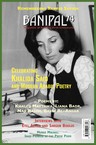
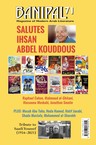
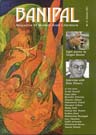
Published in Banipal 74 as part of the special feature on Literary Critich Khalida Said and Modern Arabic Poetry.
For news of readings, events and new titles.
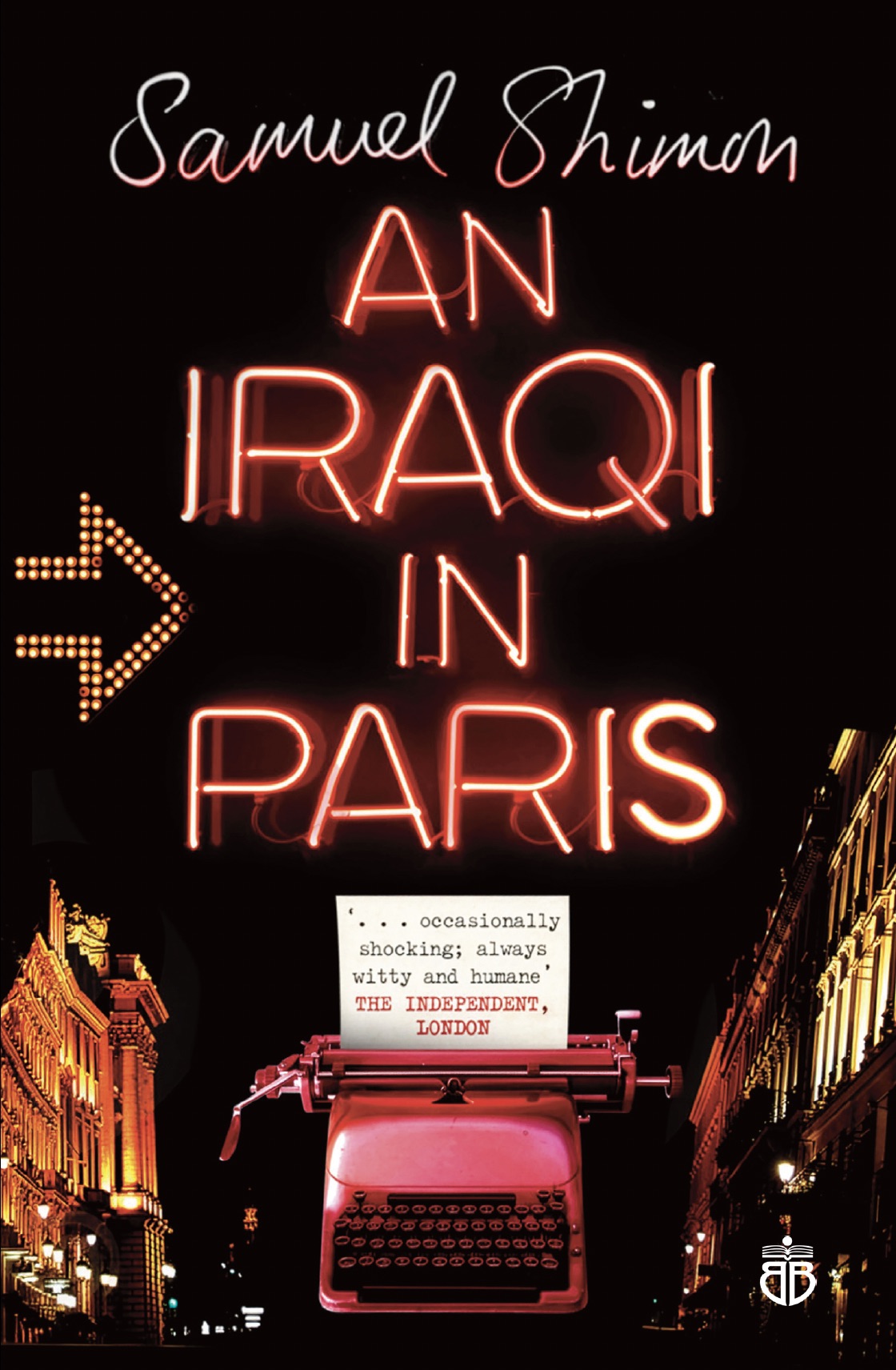
An Iraqi in Paris by Samuel Shimon
The Cinderellas of Muscat by Huda Hamed (Banipal Books, 2025)
The Tent Generations
Things I Left Behind by Shada Mustafa, translated by Nancy Roberts
Shadow of the Sun by Taleb Alrefai
Birds of Nabaa, A Mauritanian Tale by Abdallah Uld Mohamadi Bah
The Stone Serpent, Barates of Palmyra’s Elegy for Regina his Beloved by Nouri Al-Jarrah
Mansi A Rare Man in His Own Way by Tayeb Saleh (Banipal Books, 2020)
Tayeb Salih
Goat Mountain by Habib Selmi
Habib Selmi, author of Goat Mountain and 3 times shortlisted for the IPAF
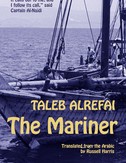
The Mariner by Taleb Alrefai (Banipal Books, 2020)
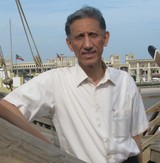
Taleb Alrefai, author of Shadow of the Sun and The Mariner
Fadhil Al-Azzawi's Beautiful Creatures by Fadhil al-Azzawi (Banipal Books, 2021)
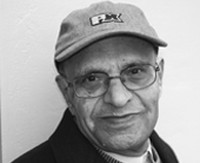
Fadhil al-Azzawi
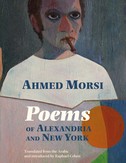
Poems of Alexandria and New York by Ahmed Morsi (Banipal Books, 2021)

Saïd Khatibi
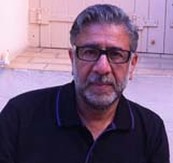
Amjad Nasser (1955–2019)

Digital Banipal the full archive
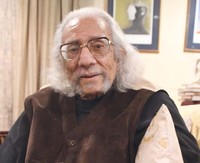
Ahmed Morsi, author of Poems of Alexandria and New York
Sarajevo Firewood
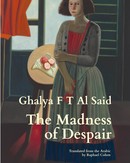
The Madness of Despair


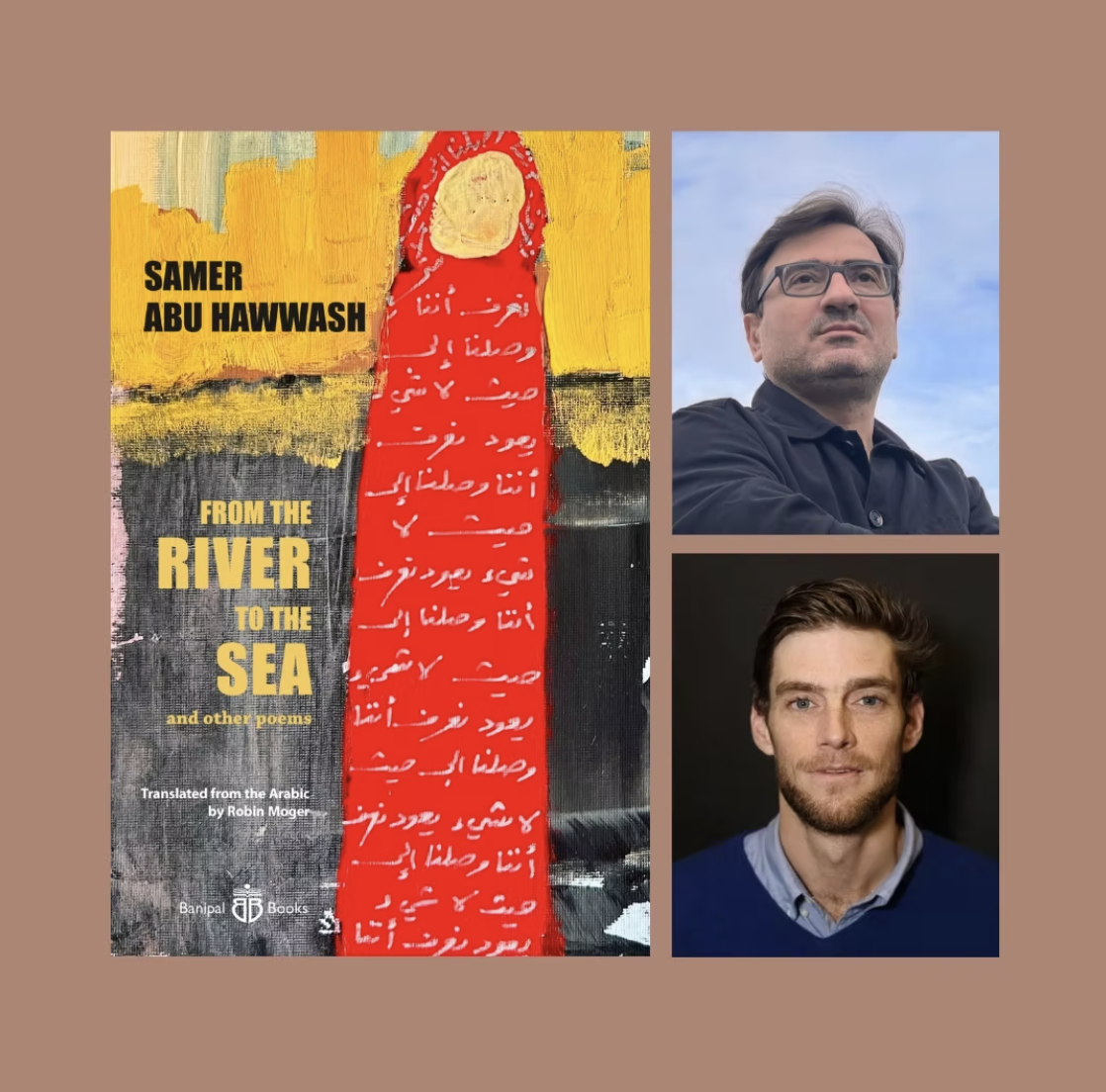
.png)

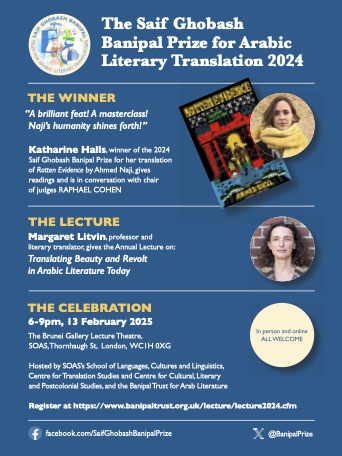

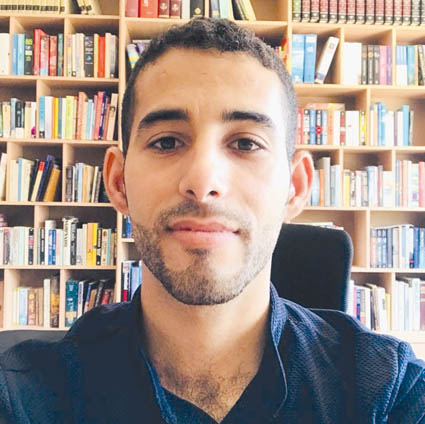
Link to poems by Mosab Abu Toha, published in Banipal 71 (Summer 2021), available to read online
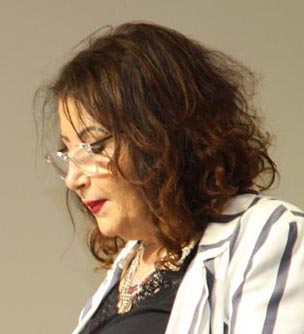
Link to poem by Liana Badr published in Banipal 74, now available as an online selection
















* * *



 Reprint out now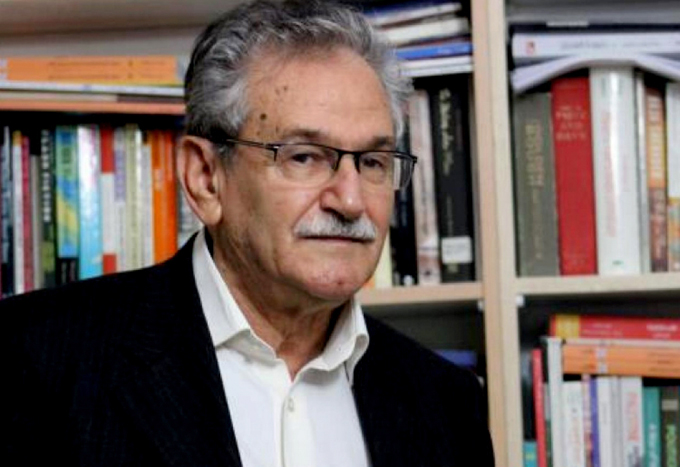
 GRIFFIN PRIZE SHORTLIST 2023
 Banipal's first audiobook