Receive Our Newsletter
For news of readings, events and new titles.


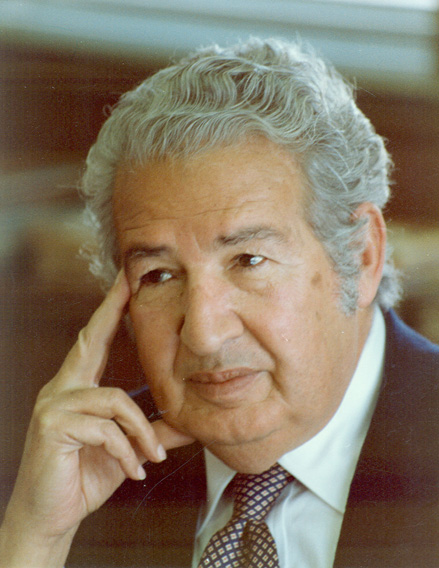
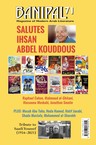
Banipal magazine’s dedication of a special feature to the great Egyptian writer Ihsan Abdel Kouddous (1919-1990) is an admirable and much-needed contribution. It pays tribute to an important writer and a brave intellectual who has suffered neglect and oblivion for decades, just like many others of his generation who carved out the glory of Egyptian culture, and Arab culture as a whole. These writers played a pioneering role not only in the field of writing, but also in the heated battles that were being fought against colonialism, despotism, religious fanaticism and intellectual dogmatism. Like his contemporaries, Ihsan Abdel Kouddous fought, through his writings and his stances, for a progressive Arab culture liberated from the centuries-old legacy of backwardness and decline, and open to noble human values. Yet this frequently came at a heavy price for the writer, both in a practical and a figurative sense.
It comes as no surprise, then, that Ihsan Abdel Kouddous, throughout his long literary career, had been a strong proponent of a new style of Arabic literature both in form and content, and a fervent advocate of freedom in its deep philosophical and humanitarian meaning. Abdel Kouddous’ birth in 1919 coincided with the first national Egyptian revolution, in which the participation of women was unprecedented. Egyptian men and women united not only against British imperial hegemony, but also against ignorance and backwardness in all its forms, and against worn-out traditions that paralyzed half of society, forcing women to live behind closed doors.
In fact, the 1919 revolution unleashed new energies in all fields, particularly in literature and the arts, leading to a real intellectual revolution that characterized interwar Egypt and profoundly influenced cinema, theatre, music and graphic arts. The revolution also saw the birth of a new art form: the novel. A new generation of Egyptian writers began to emerge, who harnessed the novel as a technical and epistemological tool to reflect the concerns of the Egyptian people, to observe changes in society, and to lay bare the secrets and mysteries that had long been concealed by rigid taboos and conservative beliefs.
Among the fruits of this revolution was Ihsan Abdel Kouddous himself. When he was born, he found himself torn between two opposing worlds. On the one hand, he would attend his grandfather’s assemblies with the Azhari sheikhs, listening to debates concerning Islamic jurisprudence, history and theology. On the other hand, he would frequently be present at the salons of his Lebanese-born mother, Fatima al-Youssef (Rose el-Youssef), who had learnt the principles of emancipation from a Christian Egyptian family that had hosted her when she first arrived in Cairo. These gatherings were attended by famous authors, poets and politicians, who would discuss the burning issues faced by the Egyptian society at that time. At first, these two completely contrasting worlds provoked in young Ihsan a feeling of “mental dizziness”. With time, however, he adapted, eventually accepting it as “a reality from which there is no escape”. Through the influence of the intellectual battles being fought by the Egyptian elite in the interwar period, reflected in works such as Taha Hussein’s On Pre-Islamic Poetry and The Future of Culture in Egypt, and Ali Abdel Razek’s call for the separation of religion and state, Kouddous managed to develop an early intellectual maturity. He decided to break with the closed world of his grandfather and embrace his mother’s world, which recognized and engaged with contemporary issues in all areas of society.
From the very outset, Ihsan Abdel Kouddous chose to plunge into the world of sexuality in his novels, a taboo subject generally avoided by most writers – especially during periods which witnessed a strong rise in extremist religious movements, namely the Muslim Brotherhood. Most of the Egyptian writers who had dared to tackle sexual issues in their writings, such as Tawfiq al-Hakim and Ibrahim al-Mazini, quickly retreated from doing so after realizing the extent of the danger they might face as a result. Abdel Kouddous, however, defied all taboos and censorship mechanisms to make the world of sexuality the overarching theme in most of his novels, delving into the enigmatic corners of this forbidden subject against the background of a deprived and suppressed society, which considered love an “unforgivable sin” and a “terrible crime” that defied morality and religion. Yet, despite being imprisoned as a result of his audacity, transparency and frankness, and facing a host of material and moral hardships along the way, Abdel Kouddous never felt frustrated or discouraged, nor was he prepared to compromise his freedom and commitment to exposing the unspoken – both during the royal era, as well as under the regime that overthrew the monarchy in the summer of 1952. It would be no exaggeration to equate Abdel Kouddous’ daring and braveness with that of great writers from the West who challenged all forms of censorship imposed on subjects related to love and sexuality. Among them are Françoise Sagan, author of Good Morning, Sadness (Bonjour Tristesse); D. H. Lawrence, author of Lady Chatterley’s Lover; and Henry Miller, author of The Rosy Crucifixion, a trilogy consisting of Sexus, Plexus and Nexus. When the 1952 revolution censored his collection of short stories al-Banat wal-Sayf (Girls in Summer), Abdel Kouddous would not accept being silenced. Instead, he wrote directly to President Gamal Abdel Nasser, protesting the censorship imposed on him and declaring that the sexual scandals in Egyptian society far exceeded those he had tackled in his novels, which had by this stage been translated into numerous languages. As far as love and sexuality are concerned, one might venture that in the field of novel writing, Ihsan Abdel Kouddous did exactly what Nizar Qabbani had dared to do in poetry.
It is also worth noting that Abdel Kouddous had a deep perception of modernity. For this reason, he didn’t just content himself with novel writing, but also broke into the world of cinema. Like others, he grasped the weight and importance of the picture for our modern times, and the potential it had to impact millions of people around the world. Indeed, the films that were based on his novels or scripts successfully attracted large audiences across the Arab world, diffusing among the male and female youth a spirit of emancipation and liberation from the shackles of taboo and restriction.
Abdel Kouddous’ novels, among them La Anam (I Do Not Sleep), Abi fawq al-Shajara (My Father is on the Tree) and al-Banat wal-Sayf (Girls in Summer), are similarly distinguished by his innovative style: a smooth and fluent prose, free from affectation, pretention or any other influences which could corrupt or depreciate the artistic value of his work. This signature style would go on to have a profound impact on a new generation of female writers from different Arab countries, particularly Layla Baalbaki, author of Ana Ahya (I Live), and Ghada al-Samman.
Personally speaking, I owe part of my literary formation to Ihsan Abdel Kouddous, as well as to many writers of the Nahda period, such as Taha Hussein, Mustafa Lutfi al-Manfaluti, Yahya Haqqi, Naguib Mahfouz, Tawfiq al-Hakim and Salama Moussa. Coming from the stiff and narrow-minded countryside of central Tunisia, Ihsan Abdel Kouddous gave me the courage and bravery I needed to challenge existing taboos and restrictions, and established in me a firm belief that censored writing is not true writing.
I believe that paying tribute to this great writer is an extremely important initiative, especially at this difficult point in history, in which the freedom and very existence of Arab culture is being threatened more than ever before. The ascendancy of radical religious beliefs and inculcation in Arab societies is bringing them back to the ages of fanaticism, violence, decline and inquisition. Remembering his greatness may also help keep in check the arrogance of some of today’s writers who, in efforts to impose their own substandard and superficial writings, are inclined to overlook the legacy of their predecessors. For it is they – Abdel Kouddous and his contemporaries – who were, and remain, the true pioneers of literary creativity.
Translated by Maissa Arfaoui
Written for the Special Feature in Banipal 71 Salutes Ihsan Abdel Kouddous
For news of readings, events and new titles.
The Cinderellas of Muscat by Huda Hamed (Banipal Books, 2025)
The Tent Generations
Things I Left Behind by Shada Mustafa, translated by Nancy Roberts
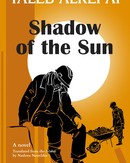
Shadow of the Sun by Taleb Alrefai
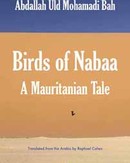
Birds of Nabaa, A Mauritanian Tale by Abdallah Uld Mohamadi Bah
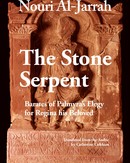
The Stone Serpent, Barates of Palmyra’s Elegy for Regina his Beloved by Nouri Al-Jarrah
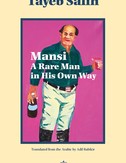
Mansi A Rare Man in His Own Way by Tayeb Saleh (Banipal Books, 2020)

Tayeb Salih
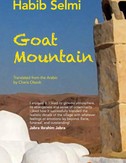
Goat Mountain by Habib Selmi

Habib Selmi, author of Goat Mountain and 3 times shortlisted for the IPAF
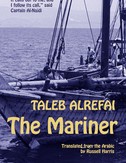
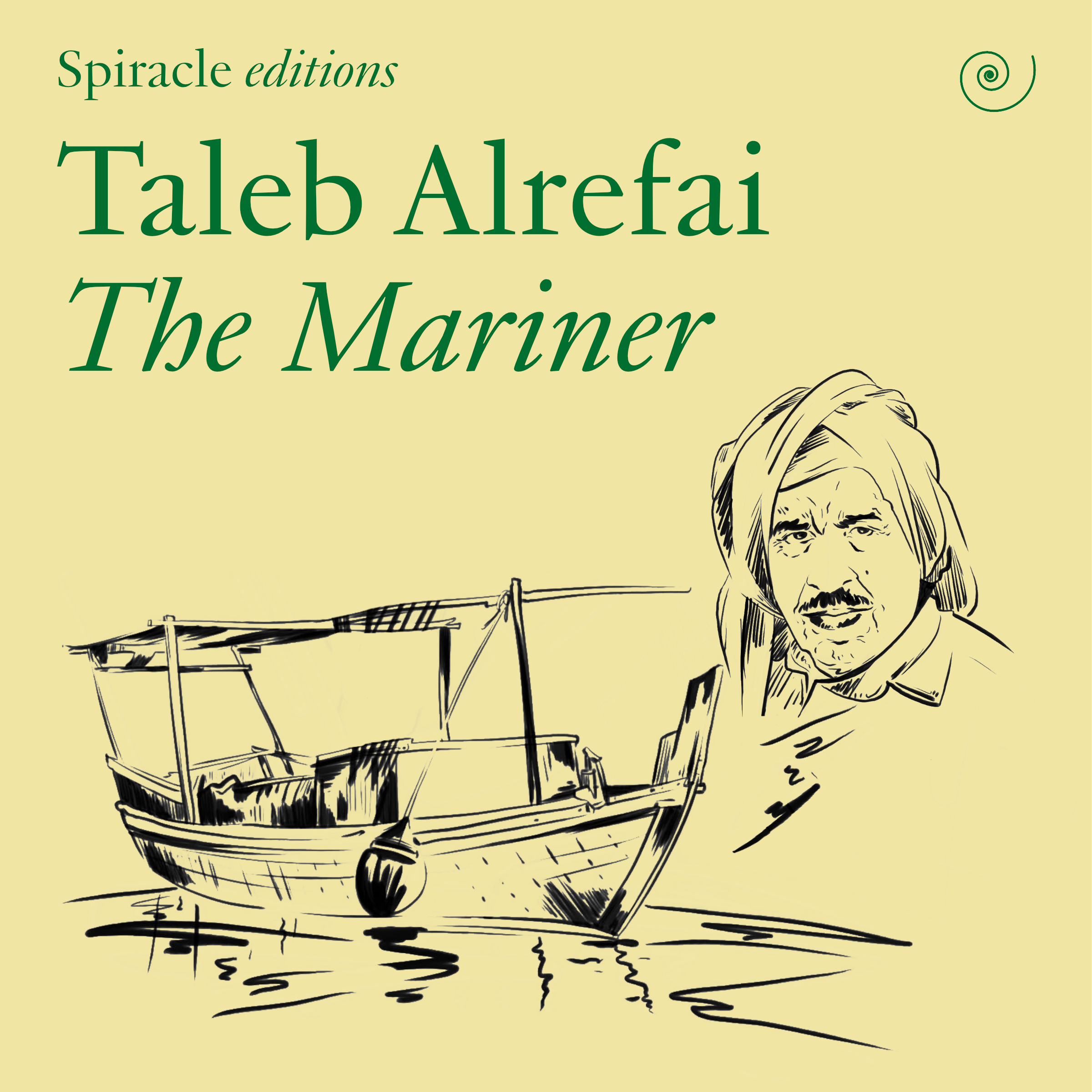
The Mariner by Taleb Alrefai (Banipal Books, 2020)

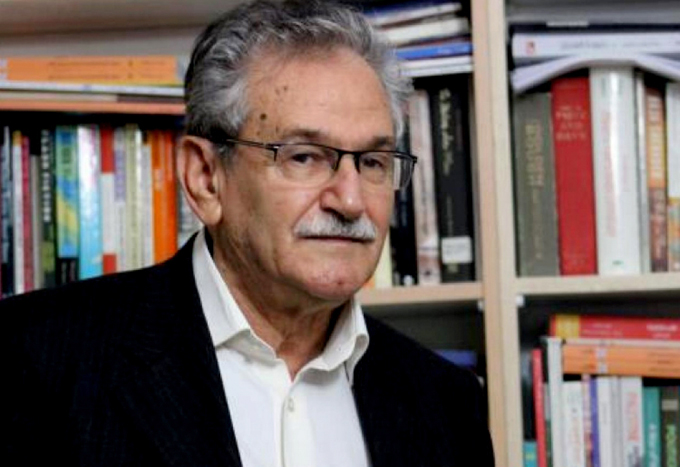
Taleb Alrefai, author of Shadow of the Sun and The Mariner
Fadhil Al-Azzawi's Beautiful Creatures by Fadhil al-Azzawi (Banipal Books, 2021)

Fadhil al-Azzawi
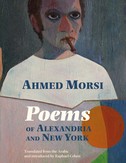
Poems of Alexandria and New York by Ahmed Morsi (Banipal Books, 2021)

Saïd Khatibi
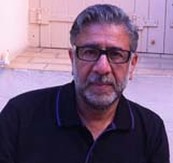
Amjad Nasser (1955–2019)

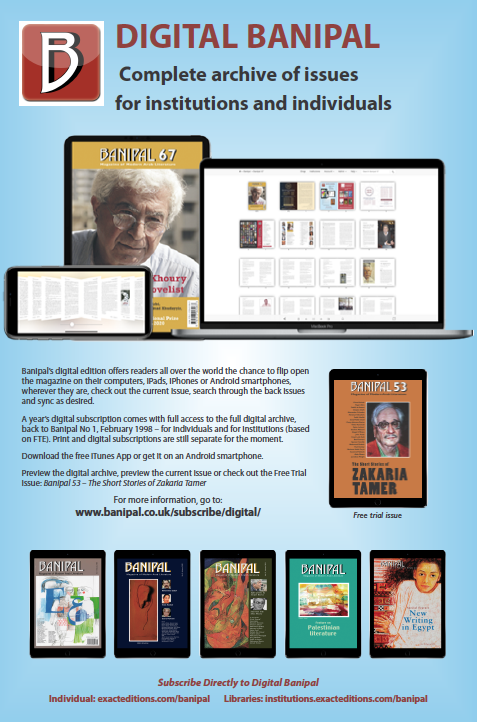
Digital Banipal the full archive
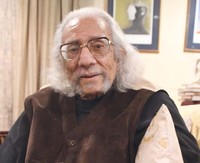
Ahmed Morsi, author of Poems of Alexandria and New York
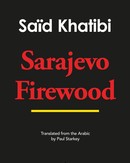
Sarajevo Firewood
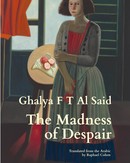
The Madness of Despair


.png)


Link to poems by Mosab Abu Toha, published in Banipal 71 (Summer 2021), available to read online
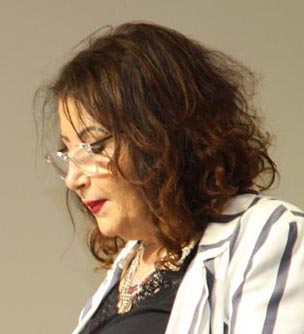
Link to poem by Liana Badr published in Banipal 74, now available as an online selection









* * *

 GRIFFIN PRIZE SHORTLIST 2023
 Banipal's first audiobook