Receive Our Newsletter
For news of readings, events and new titles.

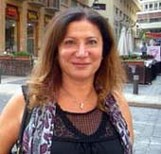
Lebanese novelist Alawiya Sobh is known for her deliberate, unhurried approach to publication and her ability to mould her texts and her characters with leisurely composure. In her artfully created novelistic spaces, Sobh fearlessly tackles issues relating to women, women’s bodies and their thoughts in the context of our patriarchal Arab societies. After an eleven-year absence from the limelight, Sobh presents her readers with her fifth work, An Ta'ashaq al-Hayat (To Love Life) a novel in which, armed with art, love and beauty, she exposes the various forms of religious fundamentalism in which our Arab society continues to flounder. Out of the violence of ISIS and Hezbollah has emerged a meaty novel teeming with symbols and allusions which, making its way past censorship and national borders, delves deep into the stain of violence that sickens the Arab psyche. The novel is based on a conflict between art, love and life on the one hand, and disease, violence and religious fundamentalism on the other. The battleground on which the conflict plays out is at once the human body and the body of Arab society, where deliverance is found only by those who cling to their passion for life, art and freedom.
In this novel, Sobh exemplifies the disease afflicting Arab states that languish beneath the weight of violent religious fundamentalism through the body of her protagonist, Basma. After developing a severe neurological disorder, Basma’s condition deteriorates whenever she witnesses news broadcasts showing the orgies of rape, murder and torture being indulged in by the blind followers of tyrannical, criminal organizations. At one point in the narrative, Sobh compels her heroine to wonder: “Did I make myself ill, or is it my country that’s made me ill?” (p. 20).
Sickened by ISIS-like organizations (Sunni and Shia alike), Arab citizens have been robbed of their passion for freedom, culture and beauty. So long as these sightless, brutal entities exist, there will be no well-being, safety or health for anyone. The Arabs who are sick and imprisoned today are the same Arabs who once enjoyed centuries of flourishing creativity, art and culture. Aimless, displaced, and disease-stricken, life is as much a curse to them as death is. Describing her condition, the protagonist-narrator says: “Sometimes I’m lost to myself. I lose track of when I was born, of how old I am. I even lose track of my here and now. I can’t tell where I am: am I in some wrecked, blood-stained room in Syria, or Iraq, or Libya, or Yemen? Or am I in a country where this room is all that’s left?” (p. 10).
To Love Life is a narrative cry of rage in the face of alien, absurd religious fundamentalisms. It is a novel in search of the Arab soul, and in search of a way to cleanse it of the stains of blood, violence and obscurantism that have taken it over in recent years.
In the following exchange, conducted in Beirut, Katia al-Tawil interviews Alawiya Sobh about her newest novel and the ideas she hopes to convey through its characters and events.
KT: How long did it take you to write this novel? And what are the main difficulties you encountered in the writing process?
AS: This novel took me around ten years to write. In fact, I started it while I was working on another book. Then I developed a neurological illness, and the only thing I felt able to write about was my body and the spasms and pains I was enduring. The first five years of the process were extremely difficult, as it was hard for me to concentrate. I was determined to write every day, but because of my inability to concentrate, I didn’t produce anything coherent. Some time after that, I came across more than thirty notebooks filled with disjointed words and phrases. The novel had been forming itself in my head during that period, and my imagination had been ignited in a powerful way, but it was only later that I wrote what I did.
KT: In his review of your book, literary critic Abdo Wazen refuses to call it an autobiography. Do you agree with him on this point? And to what extent does your heroine Basma resemble you?
AS: Abdo is right. It isn’t an autobiography. Everything beyond Basma’s physical suffering is fictional. I used to wonder to myself: if I’d developed this illness as a dancer, what would have happened to me? Consequently, I chose to have Basma be a dancer who suffered from the same health issue that I had. Everything having to do with the Lebanese war and the Arab wars in general, as well as with Basma’s pain and her struggle with illness, is the outcome of my own experience. The ugly, devastating wars that were ravaging the Arab world had shaken me deeply, and I detected a resemblance between my pain-racked body and the cities collapsing around me.
KT: The sick body in your novel becomes a battlefield between the passion for life and destructive religious fundamentalisms. In other words, it represents today’s sick, exhausted Arab states. Are you drawing a parallel between betrayal by the body and betrayal by political parties, religions, states and societies? Do you intend for the pain of the body to enter into a struggle with the pain we experience in Arab countries?
AS: In this novel, I express my anger at ISIS and Hezbollah equally, since, in my view, these racist, doctrinally bigoted parties are what have brought us to the mess we’re in now. The killing and forced migration that have afflicted moderate Muslims, Christians and Yazidis fall on the shoulders of all these fundamentalists, Sunni and Shia alike. Practices and attitudes that violate women’s bodies, their lives and their mere existence – treating them as public property – not to mention the fatwas that support these practices and attitudes, are bound to make a person angry. I am personally infuriated by both men and women who go along with the fundamentalist way of thinking that’s landed us where we are now.
Bodily pain is a mirror of the pain being experienced by this sick society and its systems. My critique of our current reality is woven into the fabric of the novel. Furthermore, it is a critique of all political associations, from the Syrian Baath to the Iraqi Baath to Communism; similarly, it is directed against fundamentalism, despotic regimes, militant religious systems, Shia Islamic courts and sheikhs whose fatwas shackle Arab people as a whole, and women in particular.
The sick body in my novel is simply the outcome of all the heinous acts committed by these despotic regimes and these parties, whose leaders’ only aim has been to profiteer from this cause or that. I’ve tried not to neglect any of the factors that have contributed to the ruin of Arab people’s lives on the physical, emotional and mental planes alike. All of us are sick, oppressors and oppressed, slayers and slain. We’re a sick society that suffers from serious disabilities and dysfunctions, and the lives of individuals have to be seen in relation to the political, religious and social systems and patriarchal values that surround them.
This novel isn’t some ideological manifesto, but a cry of rage released through the creation of an angry novelistic world. Of course, my country has made me ill, and I say this emphatically. How could I not fall ill when I see Arab society collapsing around me in worn-torn countries such as Lebanon, Syria, Iraq, Yemen and Libya? We live in a state of madness unparalleled in history as Christians, Yazidis, neutral Muslims and others are raped and murdered. Whatever makes Syria, Iraq, Lebanon or any other Arab country ill, makes me ill too.
KT: We’re accustomed to seeing you take up women’s concerns and issues in your writing. In this novel, by contrast, you burden your characters with worries relating to issues of politics, party and religion as well. Why this new direction?
AS: In all my novels there’s an obsession with giving courageous voice to taboos: religious taboos, bodily taboos, and political taboos. I don’t believe there can be any creativity without freedom, and writing is freedom. A novel has to address human concerns. It conveys a vision. It makes a statement. It holds space for preoccupations, fears and worries. Unfortunately, however, most of the novels I encounter read like news reports.
In this novel, I’ve spoken of all the things that cause me pain. However, I don’t feel I’ve weighed my characters down with the things I’ve given them to carry. The political voice in my novel isn’t rhetorical or moralistic. Rather, it’s woven into the fabric of a narrative whose characters are flawed and incomplete. A political preoccupation may be more evident in this novel than it has been in my other works. If so, I see this as a reflection of the political and social experiences of those living in the Arab world, and as a way of criticizing laws, systems and popular beliefs that impact Arabs and the course of their lives.
My novels are banned in most Arab countries. But I can’t write if I try to restrict myself to what the censors would allow past their desks. I don’t even know how to censor myself. My anger in the novel is directed against all systems, especially those that hinder the woman’s freedom, contribute to her enslavement, or disregard the violence and tyranny she endures.
KT: Throughout the narrative, readers encounter the horrific violence going on in Arab countries. There is such cruelty and bloodlust that you even liken the Arabs in one place to prisoners, saying: “At that moment I felt as though we were all trapped in a giant prison whose doors were impossible to open, as though one of the prison guards had thrown the key to the bottom of the sea. And here we are, imprisoned, as though we were dying” (p. 288). Why this narrative violence?
AS: Of course there’s cruelty in the novel. However, it’s a cruelty mitigated by irony and poetic language. This is precisely what I put to use in my previous novels, including, for example, Maryam al-Hakaya (Maryam: Keeper of Stories), or Dunya. Together with the experience of maturing as a novelist, my illness prompted me to tone down the shrillness of the text. My novel has been strengthened, rather than weakened, by poetry; fiction can be especially persuasive when its characters allow for this type of poetic language. I treat all characters and their cultures with the utmost respect, making sure that they have the artistic justification necessary to speak out of their own culture and their own natural inclinations.
As for the presence of violence and illness in the novel, the reason for this is my sense that our society is ill. Consequently, the characters embody the presence of death, imperfection and incompleteness. The body in this novel takes on a different dimension than those highlighted in my other works, since the stories of our bodies resemble the stories of our cities. The individual body and the country bear some resemblance to one another. These are the basic ideas posed by the novel in narrative form. The anger I felt and the pain that would come over me in response to the scenes of violence I used to witness led me to imagine numerous characters, most of whom suffer from some defect or dysfunction while being targeted by the arrows of violence that whizz about them.
KT: Your novel is filled with art. The main character is a dancer and a choreographer, her sweetheart is a painter and a poet, her best friend is a writer, and the man to whom she tells her story is a director. You say somewhere in the narrative that “writing, music and art generally can rescue a person from suicide” (p. 258). Do you actually believe that a return to art can be a kind of salvation?
AS: Art is a kind of therapy that causes us to grow deeper, more aware and more in tune with ourselves. Art is a key to discovering yourself and your surroundings; knowledge and culture enable you to be freer, more beautiful, more conscious. Knowledge changes people, and when they possess the capacity to read their inner states and express themselves, they change. This is why our Arab regimes are afraid of knowledge. They’re afraid of the arts because they confront the brutality of society and, in particular, its brutality toward women and humanity as a whole. Our societies fear knowledge and, instead, promote the vacuous and the trivial. They fear knowledge because it’s knowledge that introduces people to themselves and brings them freedom. That’s why we see them popularizing ‘the dark word’, ‘the blind word’. They promote human blindness because, if our society changed – if knowledge became a part of who people are – they would be sure to reject tyranny and darkness and begin to think about justice.
No entity on Earth fears knowledge more than our dark, tyrannical societies, especially those whose tyranny is directed toward the woman. I deal in my writing with the fact that, despite the ruin that’s been caused by the failure of attempts to struggle against religious and political regimes, there remains a passion for life, for art. I share in my protagonist’s passion for life, in her will and fortitude, and in her adamant determination to overcome illness. The character’s passion for life, her resolve to resist illness and reclaim her body belong to me, too, and these are the things that will rescue us all.
KT: At one point in the narrative, Amina’s character says: “Don’t beautify me. Don’t make me an attractive, sophisticated, strong woman like you. I’m afraid the man will run away” (p. 282). Why does this novel present us with male characters that are so deficient, and with female characters that are both weak and content in their weakness? Why these truncated models?
AS: Amina is aware of the fact that Arab men are afraid of strong women. So, not wanting to risk her chances of getting married, she prefers to appear weak. Women in our Arab societies are raised on the idea that the man’s violence represents protection, strength, and a symbol of manhood. Viewing herself as men have portrayed her, the woman then becomes the fiercest advocate for the very patriarchal mindset and patriarchal social constructs that oppress her. But this terrible fear of women is something I don’t understand.
I’m not against men, and I don’t always portray men as bad in my novels. What I am against is the concept of male domination. Youssef, for example, the sweetheart and the husband, has a positive presence in the novel and in Basma’s life. When he is a painter, and before becoming a member of Hezbollah, he believes in and promotes women’s freedom. He encourages and embraces it. But when, as a reaction to his disappointments, sorrows and losses, he joins Hezbollah, he changes. Youssef is a dramatic character par excellence. He is a painter who, in a dramatic shift, joins Hezbollah. However, given that he is, in fact, a true artist, he must of necessity return to his art. When I describe Youssef’s perception of the bedbugs in his house, this is a symbolic way of saying that a fanatical, closed society (a society of darkness) exudes “bedbugs” and stinking corruption. After his decision to join Hezbollah, Youssef continues to feel alienated from this decision, and love for life still lives inside of him. As a consequence, his final painting turns out more beautiful than anything he has painted before. However, it remains without a signature. Youssef’s end is a symbolic one. Youssef’s involvement with Hezbollah and the way of thinking associated with it is bound to be temporary, its flame bound to be extinguished. This is why I view this work as my most powerful novel in terms of symbolic meanings, imagination, and the issues it addresses.
KT: Why do we never learn anything about the man addressed in the novel – the “you” to whom Basma speaks throughout the book? Who is this unnamed man, this reader concealed behind the second person pronoun ‘you’?
AS: Basma is in need of a neutral, anonymous figure; someone to whom she can reveal everything, pour out her story. What draws her to this person is the fact that he is a producer and a playwright who treats people with art, and because she needs to talk, to be healed. Narration is necessary for her recovery, in order for her body to heal and retrieve its memory.
Consequently, I wanted the person being addressed to be present yet absent: a mere reader, a listener. I wanted him to be a new hope, an open horizon that wouldn’t interfere in events. Expressing things inevitably frees us from those things, draws us closer to ourselves, makes us stronger and more transparent. I didn’t want this novel of mine to be just a personal cry. I wanted to put a finger on the pain experienced by Arabs as individuals, and specifically, the women among them. I wanted to strip bare the regimes of tyranny and the ‘ISISes’, both Shia and Sunni, of anything with a connection to extremist, tyrannical organizations, religious and political alike, within a narrative framework. And the result was this character.
This unnamed listener becomes Basma’s physician, her book, her healing. Basma is transformed into a Shahrazad who treats her pain by telling her own story, just as Shahrazad treated her beloved Shahriyar by telling him other people’s stories. Nevertheless, Basma doesn’t meet her listener in the novel. Will she meet him? We don’t know. The answer to this question would require another novel. As Basma says at the end of the book: “Love holds many possibilities.”
KT: Every one of your novels is a hymn to love, an expression of longing for love and a call to embrace it. Tell us a bit about the title ‘An Ta'ashaq al-Hayah’ – ‘To Love Life’. What’s the secret behind it?
AS: ‘To Love Life’ means being implicated in life, glowing with life, letting life fill you. It means feeling the tremendous power of joy, resisting illness, riding out the bumps in life’s road. Passion for life gives us all this beauty, and a sense of pride in our existence. It makes us feel alive. Nobody with a passion for life can be a religious fundamentalist. But it’s a passion that’s quite costly in our societies. To love life means to pay a price.
If Basma didn’t love life with a passion, she wouldn’t be able to triumph over her illness. Her passion for life is what seals her victory. Likewise, my own passion for life is what has enabled me to write, to recover my memory and my body.
On the personal level, I’m someone who believes in love, and I’m filled with love for all things beautiful. Life has no meaning without love, whether in the sense of romantic passion or of simple platonic goodwill. I believe in love’s ability to heal not just this or that illness, but all of humanity. In this respect, I believe heartily in the expressions of Christianity that focus on the concept of love in the humanitarian sense.
My own experience in life has taught me that anyone who lacks love is incomplete. Love really does heal many conditions. It heals bitterness, hatred, despair, envy, fanaticism and all things ugly. Love changes the details of both the person who loves with a passion, and the object of that love. Love changes everything. In the words of my protagonist, Basma: “I’m a passionate lover of life, a passionate lover of art.”
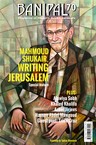
Translated by Nancy Roberts for Banipal 70 – Mahmoud Shukair, Writing Jerusalem
Back to Banipal 70 contents page
For news of readings, events and new titles.
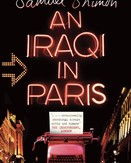
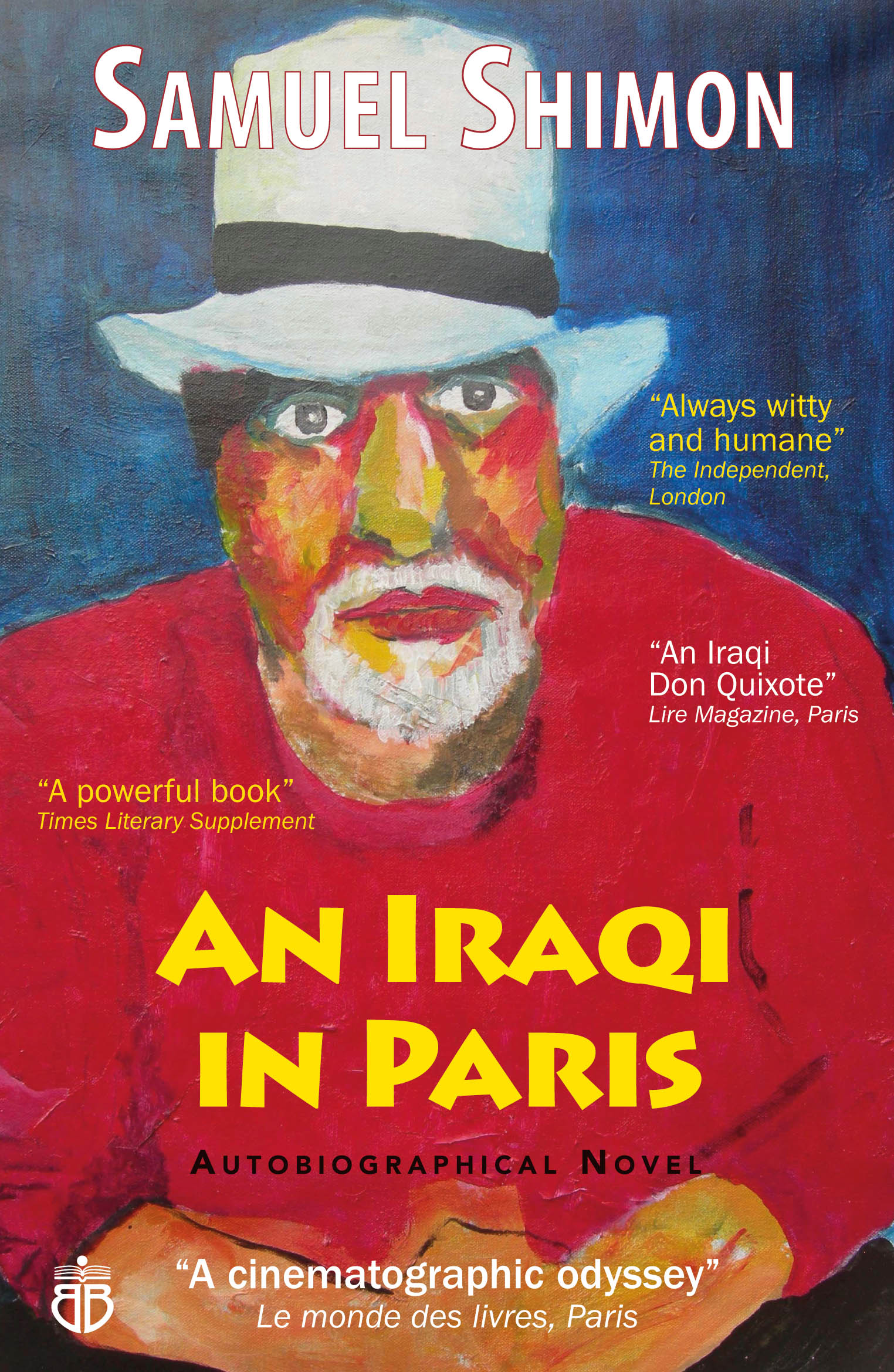
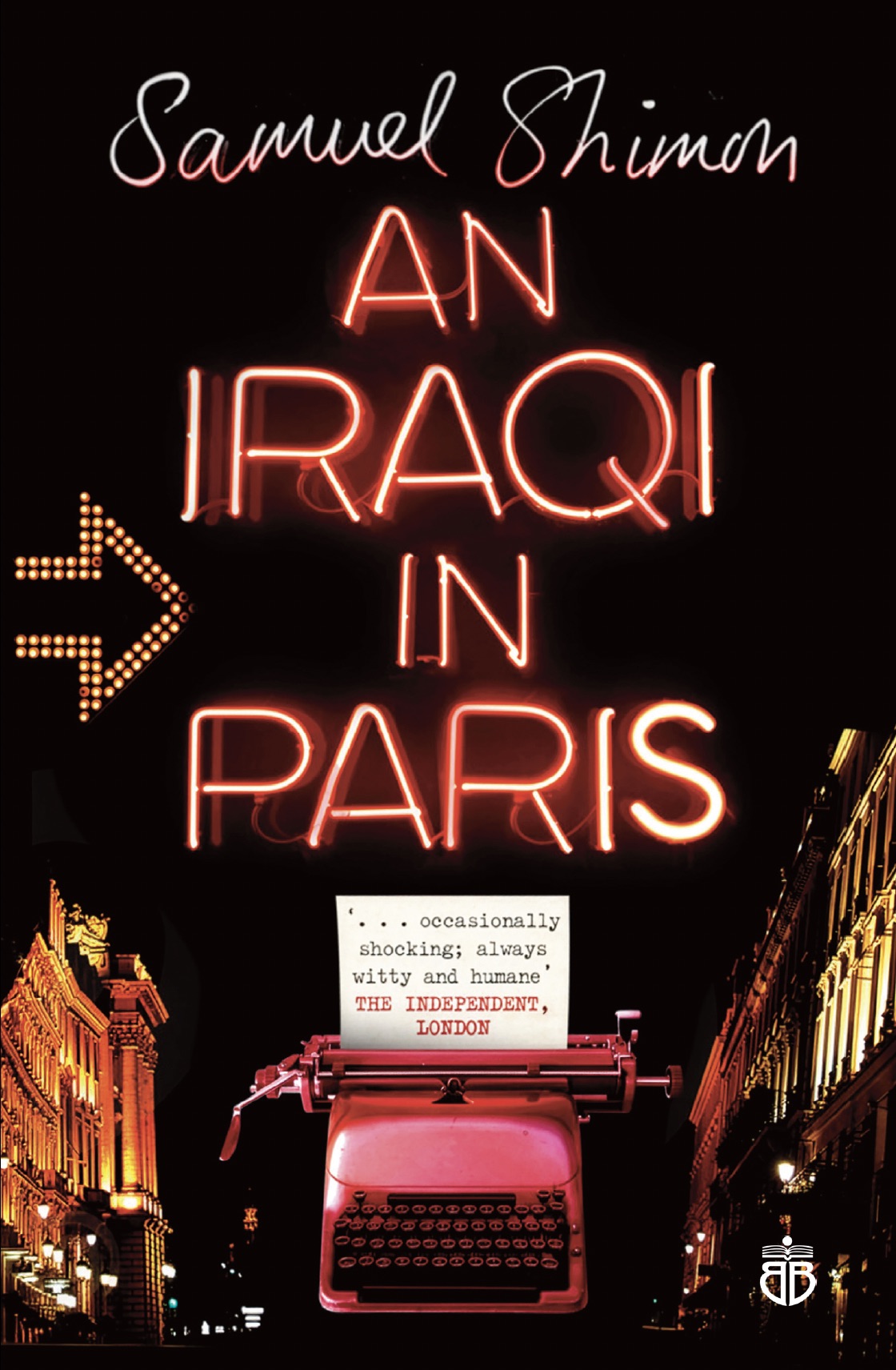
An Iraqi in Paris by Samuel Shimon
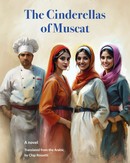
The Cinderellas of Muscat by Huda Hamed (Banipal Books, 2025)
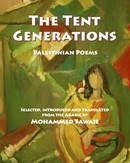
The Tent Generations
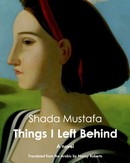
Things I Left Behind by Shada Mustafa, translated by Nancy Roberts
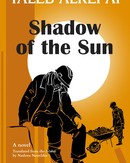
Shadow of the Sun by Taleb Alrefai
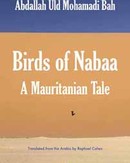
Birds of Nabaa, A Mauritanian Tale by Abdallah Uld Mohamadi Bah
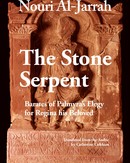
The Stone Serpent, Barates of Palmyra’s Elegy for Regina his Beloved by Nouri Al-Jarrah
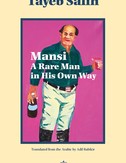
Mansi A Rare Man in His Own Way by Tayeb Saleh (Banipal Books, 2020)
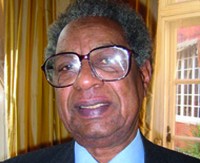
Tayeb Salih
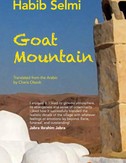
Goat Mountain by Habib Selmi
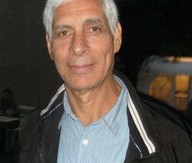
Habib Selmi, author of Goat Mountain and 3 times shortlisted for the IPAF
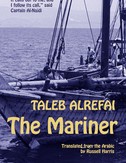
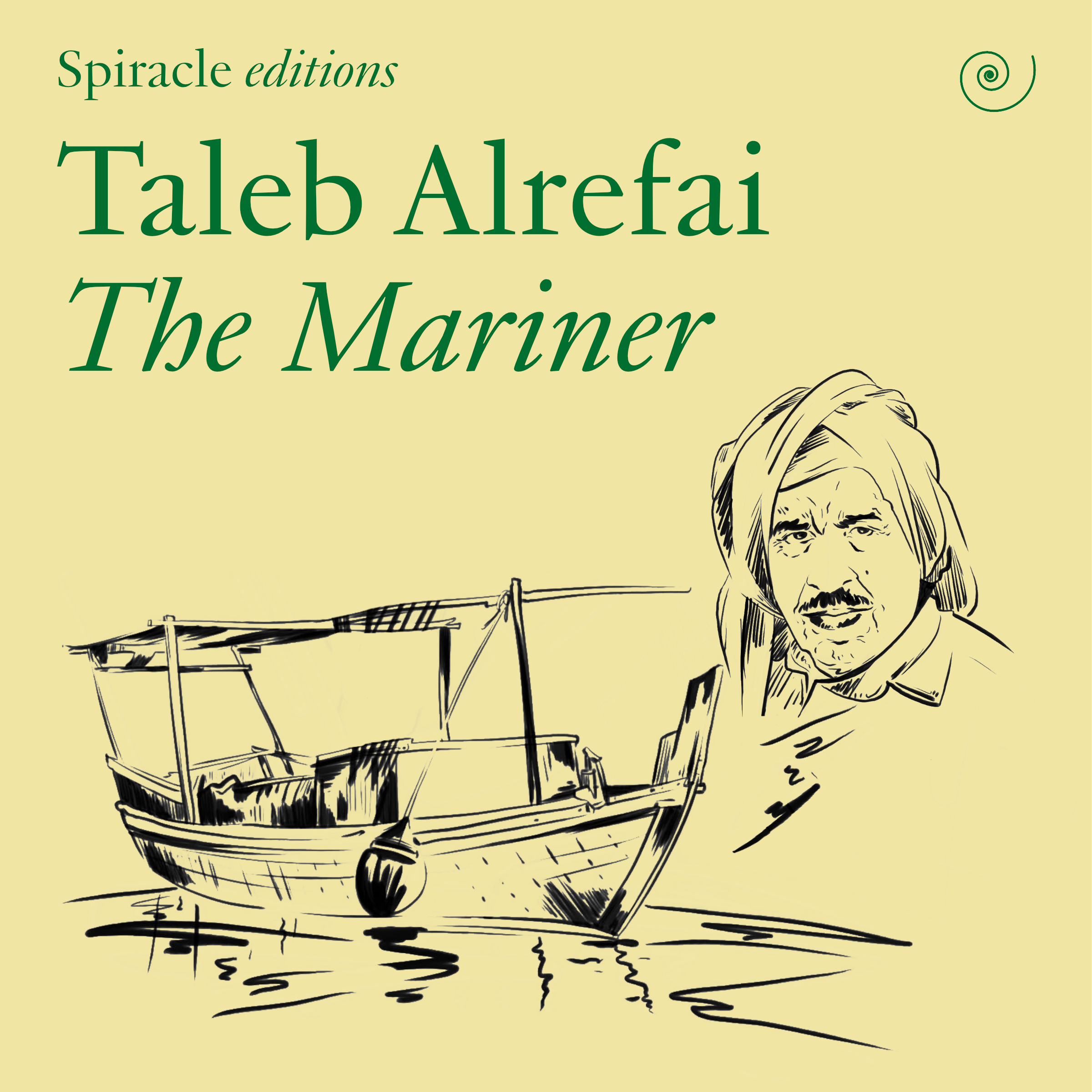
The Mariner by Taleb Alrefai (Banipal Books, 2020)
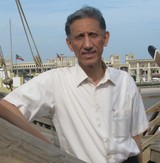
Taleb Alrefai, author of Shadow of the Sun and The Mariner
Fadhil Al-Azzawi's Beautiful Creatures by Fadhil al-Azzawi (Banipal Books, 2021)
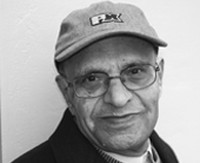
Fadhil al-Azzawi
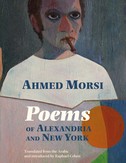
Poems of Alexandria and New York by Ahmed Morsi (Banipal Books, 2021)
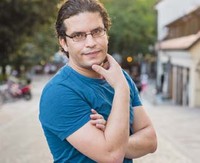
Saïd Khatibi
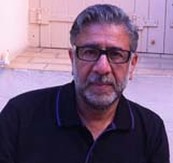
Amjad Nasser (1955–2019)

Digital Banipal the full archive
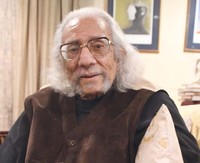
Ahmed Morsi, author of Poems of Alexandria and New York
Sarajevo Firewood
The Madness of Despair

.png)

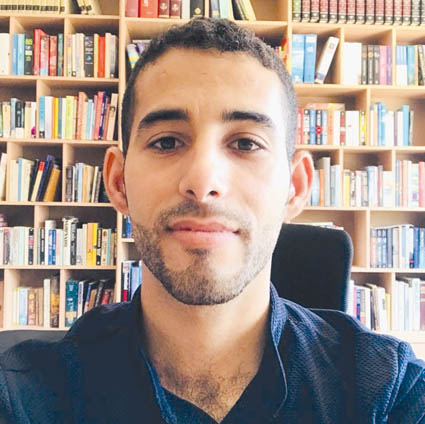
Link to poems by Mosab Abu Toha, published in Banipal 71 (Summer 2021), available to read online
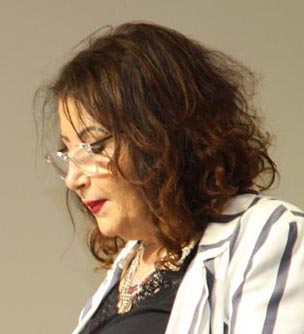
Link to poem by Liana Badr published in Banipal 74, now available as an online selection











* * *

 Reprint out now
 GRIFFIN PRIZE SHORTLIST 2023
 Banipal's first audiobook