Receive Our Newsletter
For news of readings, events and new titles.


Moroccan writer and critic Mohamed Berrada is one of the pioneers of the Arabic novel, and has also authored numerous studies in literary criticism. His many novels include Game of Forgetting (1987, English edition, translated by Issa J Boullata, 1997), Fugitive Light (1994, English edition, also translated by Issa J Boullata, 2002), Like an Unrepeatable Summer (1999), Woman of Forgetfulness (2002), Neighboring Lives (2009), and Far from Clamour, Close to Silence (2014, excerpted in Banipal 54, Autumn/Winter 2015, translated by Mbarek Sryfi, and long-listed for the 2015 International Prize for Arabic Fiction). He was one of the founders of the Union of Moroccan Writers and three times its president. Jonas Elbousty
Jonas Elbousty: What got you into the world of literature?
Mohamed Berrada: I can’t identify the particular reasons for my attachment to literature, and my dedication to writing from an early age. As far as I remember, the beginning of my passion for literature is related to the day when my mother, who could not read or write, requested that I write a letter on her behalf to her brother living in Fez. I was nearly ten years old when I returned to the city of Rabat after spending my early childhood in Fez with my childless uncle. My childhood in that ancient city and its dark alleys was unique, with the freedom that my uncle granted me, roaming the narrow alleys, playing with a ball made from rolled-up socks, and visiting the tomb of Moulay Idriss. At that time I enrolled in a school that taught Arabic, founded by the Moroccan nationalist movement. There I could access all the works of well-known Egyptian and Lebanese writers, such as Taha Hussein, Tawfiq al-Hakim, and Gibran Kahlil Gibran. I was captivated by those works. I made use of the words and beautiful expressions stored in my memory to write the letter my mother requested. During composition class, I would use the words I picked up from reading these books. My literature teacher would praise my style and encourage me to continue reading and writing.
JE: When did you leave Morocco and for what reason?
MB: The first time I left Morocco was in 1955 to complete my education at the University of Cairo. I left because at the time the French colonialists banned the establishment of a senior year high-school program in Arabic, which resulted in my friends and me traveling secretly to Syria, Lebanon, Egypt, and Iraq to complete our Arabic education. French colonialists fought against this nationalist program because, since the occupation of Morocco in 1912, they planned to establish French as the official language of Morocco. In 1960, I completed my education in Cairo and returned to Morocco to teach literature [at Mohamed V University] until I retired. I then joined my wife, who was working in France, and which is where we live, with frequent visits to Morocco.
JE: How did the short story and the novel develop in Morocco?
MB: To understand the developments and changes affecting the short story and the novel, as well as the other literary genres in Moroccan literature, it is crucial to take into consideration the phase of acculturation, that is, the interchange between Eastern Arabic literature and French Literature. This is because modern Moroccan literature emerged in the 1940s at the hands of Moroccan writers who studied in the Arab East and were, therefore, influenced by that region’s literary production. Chief among these writers are Abdelmajid Benjelloun, AbdelKrim Ghallab, and Karim Thabit. As far as Moroccan literature in French, one might make special mention of Driss Chraïbi and Ahmad Sefrioui. Generally speaking, this development comprises attempts at realistic depiction of the transformations in Moroccan society during the age of imperialism and class conflicts inherited from earlier times. Then Moroccan literature experienced a certain openness to innovative movements in France through translation. Hence, many young writers engaged with the Sartrean concept of “engagement”, commitment, which at that time was one of the conflicts between an oppressive regime and national socialist parties. So, literary productions were characterized by their political orientation with a particular attention to content rather than aesthetic forms. That said, since the 1970s, Moroccan literature became increasingly acquainted with the facets of literary modernity, as reflected in the literature of the Arab East, Europe and the world in general. In response, Moroccan literature engaged in experimentation at the formal level and started distancing itself from ideologies and slogans. This current is now the dominant feature in the Moroccan short story and novel.
JE: You are not only an author but also a literary critic. What inspired your involvement in literary criticism?
MB: My involvement in literary criticism is the result of two factors: studying literature and then teaching it at the university. And also, because I love reading, and I follow new publications of artistic creativity, I try to evaluate literature by writing critical essays. It is said that literary criticism is a form of rewriting a text with which we engage. Thus, I do not write about works to uncover their faults. Rather, I write in response to my emotions and thoughts, and in this exercise, I find inspiration from answers to questions that preoccupy me.
JE: What is your message to Arab readers?
MB: I am not inclined to put restraints on readers or to impose what I write upon them. I believe that the relationship between the author and reader must be based on freedom and interaction. For this reason, if I have a message directed to Arab readers, it is for them to exercise their freedom through reading because it makes it possible for us to contemplate what we read, and to agree or disagree with the author. This also allows us to call to mind our experiences and cultural backgrounds and compare them to what authors, poets and thinkers have to offer [in their works]. Reading that relies on the exercise of freedom, in the sense I have indicated, assists in deepening and developing awareness and makes the reader possessor of a critical consciousness which enhances his worth as a citizen concerned about the development of his society.
JE: What is the fundamental role of literature?
MB: First and foremost, the role of literature relates to the richness of its stylistic and thematic substance that readers experience: a new life through language, metaphors, symbolism, and imagination. From their vantage points and critical perspectives, writers attempt to weave and intertwine their worlds, by virtue of which literature helps to free the individual from constrictions of reality, the limits of routine everyday life and from the burden of institutional ordinances, and the principles of ideologies . . .
In other words, through imagination, literature has the power to make the world seem other than it is. And this matter is of utmost importance because it moves the reader to liberate their power of imagination to construct different worlds in search of the imaginable. In addition, literature, along with its various artistic forms and expressions, is able to depict features of the imaginaries in different societies at specific historical time periods. And through these imaginaries, the literary critic, the historian, and the sociologist are able to learn specific values and customs of each society.
JE: What is gained by representing North African novels within the category of Arabic literature?
MB: In the field of literature and creativity one cannot assess benefits in a concrete and materialistic way for the influence of literature is suffused in emotions, ethics . . . hence the novel from North Africa marks its inherent importance by presenting a depiction of people’s lives, problems, and the different struggles to be a member of contemporary society. At same time, it embodies the differences in outlooks and a demarcation from the Arab East. From this angle, novelistic traditions portray the diversity and differences in the Arab world that would otherwise remain hidden due to ideologies, but which are exposed and further explored in literary narratives showing the lives of people in the Arab world in all their ethnic diversity, including Berbers, Kurds, Armenians, Arabs, etc. Thus, the novel can serve historians, in their comparisons of the people of the Arab world.
JE: What will foreign readers find in your literary works and stories?
MB: Foreign readers of my works can familiarize themselves with Moroccan society through a different lens than that of Moroccan mainstream media whose concern is to attract tourists and paint a positive image of the country. In my writings I bring to light the lives of people, their emotions, their problems, and their struggle against what interrupts their freedom. These perspectives are shared by all people regardless of their nationalities or faiths, because of the presence of specific issues related to their identities, culture, and their relationship with history. Furthermore, the societal imagination in our world today shares much in common, especially in that which relates to love, sexual instinct, the values of justice, and unity. My novels do not intend to present a folkloric picture of Morocco. In fact, my work attempts to depict the human side as it is whether it be with strength or weakness or struggles between good and evil.
In The Game of Forgetting (1987) I used events from my personal life in a narrative format, relying on imagination, history, and cinematic montage . . . and during the writing of this novel, over a period of seven years, I realized the importance of aesthetic form and the necessity of its lending semiotic significances and delimiting historical periods through the ties of characters to time, space and the daily vernacular. From then on, in my ensuing novels I paid careful attention to these so as to expose the truth and discuss silenced and neglected topics, both social and intimate ones, that are absent in the official state discourses that permeate society with their ethically frozen values. Fugitive Light is an experiment in delving into the depths of the inner selves of characters living in the city of Tangier, one of the first Moroccan cities to adopt openness towards the incoming European civilization due to the fact that it was under the control of nine foreign states. The story is narrated by more than one character, enriched by excerpts from al-‘Ayshuni’s memoir. This novel showcases the European influence on Moroccans, particularly as it pertains to sex, love, and art.
JE: Why have your stories not been featured in Anthologies of World Literature? What makes your novels important for foreign readers?
MB: I don’t know why my stories are not included in such anthologies, perhaps because I haven’t published more than two books of short stories or perhaps my work does not meet the approval of foreign publishers . . . this matter does not preoccupy me much because I mainly address Moroccan and Arab readers. In regard to my translated novels and the interest they receive from foreign readers, I believe they [foreign readers] find modernist perspectives and themes that deal with common existentialist questions both in “developed” and “underdeveloped” nations. The world today is confronted with challenging and difficult matters that threaten human existence, along with its cherished values; universal values in the West that are presented as the values of the age of Enlightenment. These values, which underdeveloped countries seek to achieve, have been shattered by fascism, colonialism and capitalism; all these are in contrast to the espoused values advocated during the Enlightenment.
Today, the novelist cannot turn a blind eye to these crises that ignited xenophobic rigidity and the espousal of self-centered values. So, the novelist living in the Arab world faces a complicated role because of Arab societies’ failure, for multiple reasons, to both achieve “Renaissance”, and establish democratic societies . . . I believe foreign readers of my novels will contemplate some of the characters I depict, characters who showcase cultural interchanges through their behaviors and lifestyles. This characterization is of great interest to me since Morocco was under French domination for a period of over forty years. Hence, this is unequivocally reflected in the behavior of some educated Moroccans who studied in France. And I believe that the cultural exchange between the two nations is what has caused me to create characters who are torn between traditional and modern values.
JE: You had a strong relationship with the writer Mohamed Choukri. In fact, people consider you to be his first teacher during his early works.
MB: My relationship with Mohamed Choukri was a strong one, and I was not his first teacher because he was self-taught. Through his intelligence and rich life experiences, he was able to shatter the walls of ignorance and practice the art of writing by publishing a daring account that depicts and reveals the lives of the underbelly of Morocco. Choukri and I were in constant dialogue, in addition to the letters we published in a book entitled ward wa ramad (Roses and Ashes).
JE: What is your view of translated works of literature?
MB: I believe that literary works have more than one life and more than one reader. Translations play an important role in giving a text more than one life. Translations may not be precise but in all cases they provide foreign readers with a picture of individuals, relationships and concerns, and the elements that make up the societal imagination in the space depicted by the novel . . .
JE: Do you believe that translations enrich the source text?
MB: Without doubt, translations fulfil an additional objective not found in the source text. This is manifested in the reactions of readers and in the evaluations of critics who adhere to different cultures. Naturally, it is impossible for one to understand translated works in the same way they are understood in the Arab world. This is natural when texts and terminologies circulate from one place to another. Translation is usually an entry point for conversing with foreign readers and forging comparability between different narratives and themes discussed in the texts. In addition to this, there are many international novels translated into Arabic which have led to exchanges and influences among writers. This makes the novel an international project with contributions from diverse cultures. Chief among these works are The Red Pearl, Don Quixote, and One Thousand and One Nights, along with the works by prominent novelists from Asia, America, Europe, and Africa . . .
JE: Do you have any additional insights related to Arabic literature? Can one consider Arabic literature to be international?
MB: Yes, I consider literature to carry a specific knowledge. It brings to life the customs and rituals of human civilization and their history just as it also offers examples that describe specific shared values in spite of the differences that exist between cultures. From this point, literature innovates ways to showcase commonalities among people; these commonalities cannot be expressed in political analyses. Literature reaches the depths of human consciousness to express what is shared between people regardless of their cultures and origins . . .
JB: What is your advice to Moroccan readers and writers?
MB: I do not like to give advice related to literature. What I can do, considering my limited experience, is to stimulate awareness in Arab readers about the unique qualities of Arabic literature, which confronts and challenges the rigid language used by governmental institutions through their official media in order to mask the truth from readers and observers. Thus, the most talented Arab writers strive, in spite of restrictions and censorship, to convey truth and depict life as it is experienced in Arab societies struggling against dictatorship and social injustices. Writers and artists understand that literature is a valuable device for uncovering and exposing the truth and gaining freedom from oppression, tyranny, and humiliation . . . Literature has no value if it becomes distant from the readers’ concerns and the concerns of our current era with its crises . . . Modern Arabic literature reveals the emotions, feelings, and hopes of Arabs who reject the use of religion for political aims. It also rejects all forms of cruelty and seeks freedom which includes freedom of the body, emotions, thought and religion.
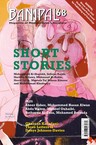
Published in Banipal 68 – Short Stories (Summer 2020).
For news of readings, events and new titles.
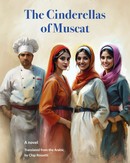
The Cinderellas of Muscat by Huda Hamed (Banipal Books, 2025)
The Tent Generations
Things I Left Behind by Shada Mustafa, translated by Nancy Roberts
Shadow of the Sun by Taleb Alrefai
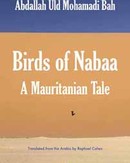
Birds of Nabaa, A Mauritanian Tale by Abdallah Uld Mohamadi Bah
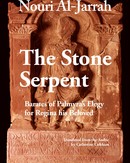
The Stone Serpent, Barates of Palmyra’s Elegy for Regina his Beloved by Nouri Al-Jarrah
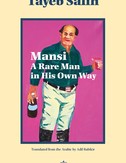
Mansi A Rare Man in His Own Way by Tayeb Saleh (Banipal Books, 2020)
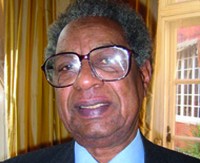
Tayeb Salih
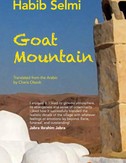
Goat Mountain by Habib Selmi

Habib Selmi, author of Goat Mountain and 3 times shortlisted for the IPAF
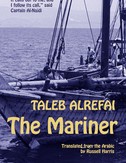
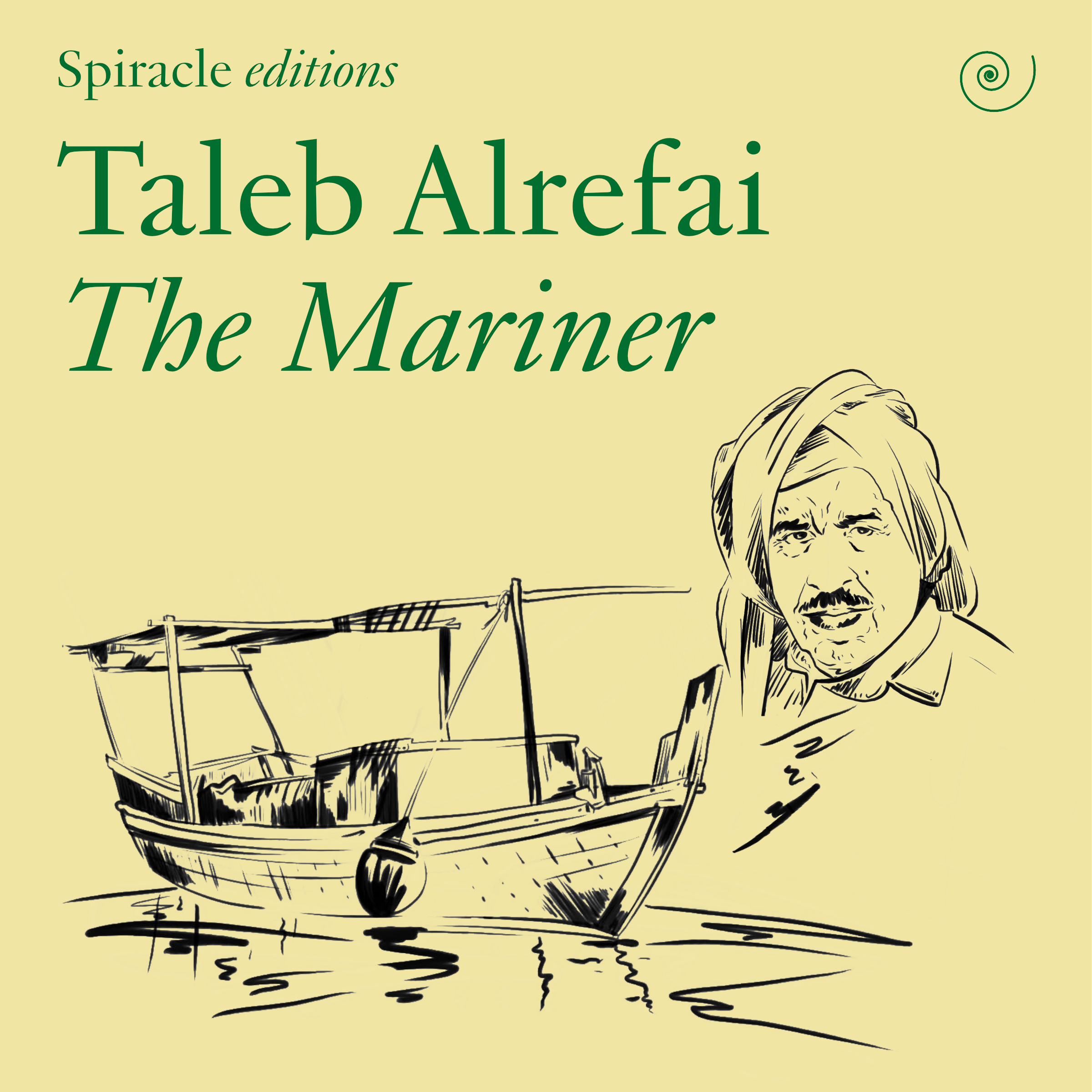
The Mariner by Taleb Alrefai (Banipal Books, 2020)
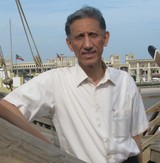
Taleb Alrefai, author of Shadow of the Sun and The Mariner

Fadhil Al-Azzawi's Beautiful Creatures by Fadhil al-Azzawi (Banipal Books, 2021)
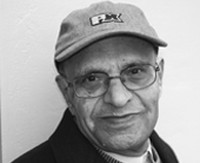
Fadhil al-Azzawi
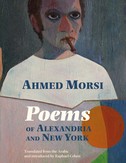
Poems of Alexandria and New York by Ahmed Morsi (Banipal Books, 2021)

Saïd Khatibi
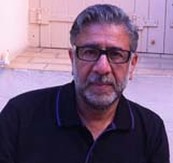
Amjad Nasser (1955–2019)

Digital Banipal the full archive
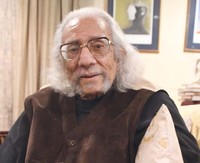
Ahmed Morsi, author of Poems of Alexandria and New York
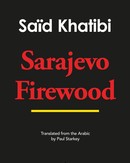
Sarajevo Firewood
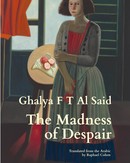
The Madness of Despair

.png)
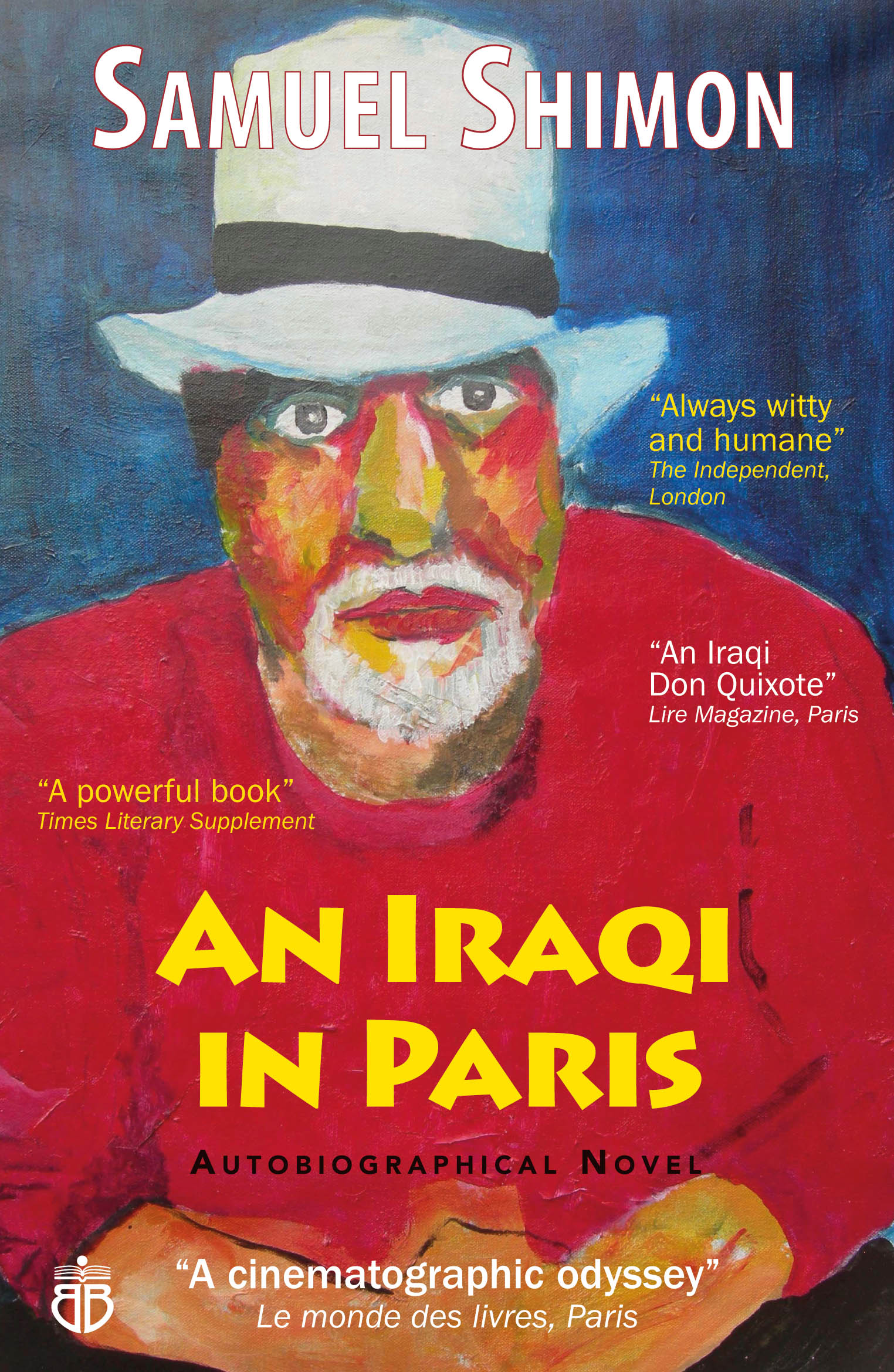


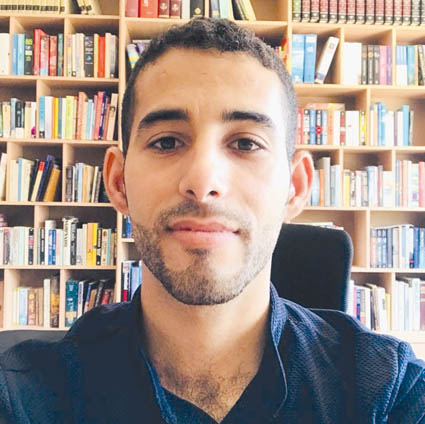
Link to poems by Mosab Abu Toha, published in Banipal 71 (Summer 2021), available to read online
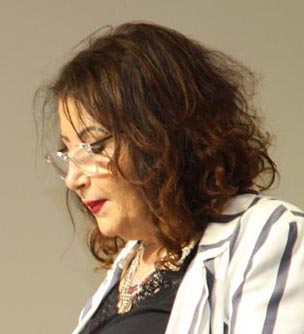
Link to poem by Liana Badr published in Banipal 74, now available as an online selection














* * *

 Reprint out now
 GRIFFIN PRIZE SHORTLIST 2023
 Banipal's first audiobook