Receive Our Newsletter
For news of readings, events and new titles.

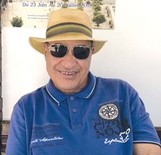

After the blue train had traversed rugged hills and mountains and cut through long tunnels, Andalusia’s sun shone down brutally, and on both sides of the track spread groves of olive and orange trees, vineyards, and fields of sunflowers. Andalusian villages appeared, and their white stucco houses clustered together like huge eggs. Beautiful pots of flowers hung by their doors and windows as the blue train sped toward Córdoba: “far off and solitary.”*
In my orange notebook I wrote: “I am escaping to Andalusia. I feel it is the only land that understands my sorrows and pains. No other land grasps the depth of my tragedies. Elsewhere tyrants scorch the earth and vegetation, stifle hymns of freedom, crucify lovers, and spread loathing and devastation. Only beloved Andalusia can shield me from their evil. Oh Andalusia! I enter by a different route – not that of the ancient Muslim conquerors, who arrived tired, exhausted, and weakened by wounds. I enter it wishing only to penetrate the depths of my soul and perhaps comprehend the devastating pain that has long tormented me, exactly as Ibn Khafaja al-Andalusi complained:
A man like me seeks another man
Who searches in himself for his self.
I want nothing, not memories, not homesick longing, not lamentations over ruins.
Oh, Andalusia, restore composure and tranquility to my troubled soul.
The train reached the station in Córdoba at 3 p.m. The heat had peaked and immediately reminded me of the heat in Kairouan at that time. American tourists with huge backpacks panted in the corridors and waiting room. I recalled Hemingway and his love for the impoverished Spain of his era, a Spain soaked in the blood of its sons during its civil war. I remembered his novel For Whom the Bell Tolls, which I read during a summer as fiery as this one, while I cursed an insignificant Arab author who had told me that Hemingway was a “superficial” writer.
I took a room in the first pension I found on leaving the station. A beautiful woman with wheaten complexion and intensely black hair opened the door for me. She reminded me of women from the old families of Kairouan. I washed and stretched out. In less than an hour, I rushed outside, eager to explore Córdoba. I had not gone far, though, before I felt the sun’s arrows affecting my brain. So, I decided to return to the pension to wait for the evening. Then I would lose myself in Córdoba.
I quickly traversed the modern city, since nothing distinguishes it from other contemporary European cities. It has broad streets, grandiose banks, towering buildings, hamburger joints, and coffee shops that blare noisy, American music. Without my having to ask anyone, my steps led me to the Guadalquivir River, which suddenly glittered before me like a giant sword. In the distance, on the outskirts of the city, I saw windmills that the Arabs left behind them and that Don Quixote later thought were fierce knights challenging him to a duel. They were surrounded by the green plains of Córdoba.
I sat on a wooden bench beneath a tree that offered luxuriant shade and wrote in my little notebook: At times I feel that rivers recount history better than citadels, temples, pyramids, and museums, better than even the books of historians. With their ceaseless movement, rivers inspire in us the idea that they are the strongest link between past and present, that they carry in their waters secret emotions that bygone peoples and nations expressed in festivals and mourning rituals. This is true for the Nile, the Tigris, the Euphrates, the Volga, the Rhine, the Mississippi, and the Guadalquivir.
After a brief rest, I walked along the bank of the river till I reached the old city. The moment I entered, my spirit fluttered like an ecstatic bird. I was overwhelmed by the fragrances of the flowers, the beauty of the Andalusian women, and the ancient history I had longed for. I walked along tranquilly, pausing before honey-coloured doors and blue windows and balconies decorated with garlands of flowers.
On my right, a door suddenly opened, and a woman in her fifties looked out. She wore a summery, flower-print dress. I nodded to greet her, and she smiled. I used sign language to ask if I could see her house. Her smile broadened, and she showed me inside. The house resembled the traditional houses of Kairouan and Fez with its courtyard of rose-coloured marble and the four doors opening onto it. There was a fountain in the centre and a small orange tree. Every wall was covered with pots of flowers. A boy, who wore glasses and who was around ten, was leafing through a book filled with drawings. In one corner of the courtyard, a beautiful girl was weaving something. I felt I was in a little park filled with water, light, and shadows. I remembered reading in a guidebook that the residents of Córdoba, in the middle of every spring, hold a festival they call “The Courtyards Festival,” when rich and poor alike decorate their homes with flowers. At the end of the festival, an award is given to the person with the finest courtyard. It upset me to recall that residents of Kairouan and the Medina of Tunis neglect their ancient dwellings or sell them for absurdly low prices, because they “aren’t contemporary enough,” or so they think. Oh, how deformed and sick modern civilization is!
It isn’t difficult to find the Great Mosque in Córdoba, since all the streets and alleys of the old city lead to it. I entered this mosque through the “Milk” Gate – Postigo de la Leche – and found myself in a vast courtyard filled with palm, cypress, and orange trees. From there I entered the sanctuary and began to roam among its gleaming columns and beneath its domes and arches. I was stunned by the splendour of the mihrab, which is decorated with mosaics, and the minbar, which is made of ivory and precious woods. My humble devotion was exalted then by the beauty greater than I had seen in any mosque before. As the German poet Rilke said: “Beauty is the beginning of terror we can barely endure.” It occurred to me then that the heavy candles mentioned in old history books would have been burning and that three hundred servants would also have lit incense of ambergris and aloes wood and ignited the scented oil of thousands of lamps. Then I felt myself – body and spirit – dissolve into that magnificent spiritual atmosphere and sensed I was just a speck in that awe-inspiring space. When I left the mosque, I was tired, and my soul was exhausted. I plodded along as if I had just trekked a far distance over a rocky road.
I entered a small coffeehouse opposite one of the mosque’s gates and rested my elbow on the arm of the chair. For a time, I remained downcast. Then I realized the young waiter was looking at me with interest. So I asked for a glass of water. After I ordered a second and a third, the young man asked me: “Where are you from?”
“Tunisia.”
“From which city in Tunisia?”
“Kairouan.”
“Oh, Kairouan . . . Fez . . . Córdoba.”
At that moment, as if a ray of light had pierced my mind, I saw the long road that had started in Baghdad and Damascus and then passed through Kairouan, Fez, and Córdoba. It was a route that great adventurers, scholars, and people searching for the secret of existence had followed. It was Ibn Arabi’s route and Ibn Khaldun’s. It had been followed by Ibrahim al-Mawsili, and Abu al-Hasan Ali ibn Nafi‘ (who is known as Ziryab), as well as Lisan al-Din Ibn Khatib, who said:
I feared the heat a little, but refreshing breezes blew from the Guadalquivir as the streets and squares filled with great crowds.
Young women of Córdoba – as rowdy as fillies in springtime – emerged with their hair hanging down, and the air was scented by their perfumed brown bodies.
I sat in a small coffeehouse, swimming in a flood of light and love.
During this Cordovan evening, which caresses my body softly and calmly,
I offer you Cordovan flowers and the laughter of lovesick brown-skinned women.
I offer you these perfumed breezes and this gleaming Andalusian moon.
Then that Cordovan night grew larger and more extensive, and I lost myself in the type of beautiful ramble that captivates me in the cities with secrets and mysteries I love to discover. Now I imagined that all of Córdoba was dancing and singing. As flamenco music was audible everywhere, young men and women began to dance, stamping the ground with their feet. Sweet tunes resounded, and svelte bodies twirled and twirled and twirled, until I felt they were rising and revelling before evaporating into the vastness of space. From time to time, mournful songs were also heard, apparently recounting stories of love and longing in the red land of Andalusia.
In my orange notebook I wrote: I review in my imagination the great people of Córdoba: Abd al-Rahman al-Dakhil, the man who built its power and importance, Abu al-Hasan Ali ibn Nafi‘ who organized its life and dedicated its nights to music and singing, Ibn Zaydun who wandered in its gardens and meadows crazed by love, the passionate and rebellious princess Wilada bint al-Mustakfi, Ibn Hazm who taught its residents the language of passion and love, Musa ibn Maymun and Ibn Rushd who commented on Greek wisdom, and the poet Luis de Góngora, whom Velázquez painted with dramatic alternations of shade and light. On this splendid night, they rose from their graves. Now they were hugging each other in the streets and squares, listening with boundless happiness and bliss. Oh! When will camaraderie return to hearts in Arab lands, which have been depleted of love and peace.
At a certain moment I sensed that the night, like the sea when the tide is rising, was becoming rowdier and brisker. Warm waves dampened flaming bodies that had sung and danced till fatigue exhausted them and dancers collapsed at last on the shore of the dawn, which had begun to scale the horizons with its rose, violet, and gold.
* * *
I arrived in Seville one Sunday morning and found a room in a pension managed by a man in his thirties. The beauty of his bronze-complexioned wife so dazzled me that I tripped twice while climbing the spiral staircase.
The city was almost deserted. Coffeehouses, though, were teeming with American tourists, and I decided to avoid the city centre. I walked down empty streets in the brutal sunshine till I finally reached Seville’s Fine Arts Museum. I passed about an hour there enjoying paintings by great Spanish artists of the Classical Period: Zurbaran, Murillo, El Greco, and Seville’s renowned native son Velásquez.
I ate lunch in a local restaurant that specialized in preparing fish dishes in the Andalusian fashion. Near me sat two very annoying French tourists. The man had a large, bald head and a swollen chin. He chattered nonstop about trivial matters, eager to demonstrate his detailed knowledge of Andalusian history and its historic landmarks. When he noticed that I was reading the French newspaper Le Monde, he raised his voice and began to rehearse his knowledge as if lecturing a dim-witted student. His wife was thin and had a large nose, which resembled an overripe banana because of all the freckles on it. She wore a sun hat and from time to time asked her husband a pointless question to encourage him to continue jabbering.
So, I consumed the fish quickly and returned to my pension.
I slept soundly till five that afternoon when I ventured out into the city again. I took a seat in a small café shaded by trees to wait for night to fall. I wrote in my notebook: Seville is deserted this Sunday. I roamed through it in the blistering sunshine to experience what life is like here. Now I’m sitting in a small café waiting for nightfall.
At approximately six-thirty, evening breezes stirred to sweep away the day’s silence and its lethargy. I walked toward the river and strolled in the Alcázar gardens. There I met a French philosophy student who carried in her bag the poems of Lorca and some novels by Gabriel García Márquez. She told me: “A year ago I decided to learn Spanish and now I speak it fluently. I love the language because of Lorca and Cervantes.” The sun had seared her skin till it had turned the colour of fresh-baked bread. Her face was as small and round as a doll’s face. She added: “I’ve been wandering around Spain for more than a month and have no desire to return to Paris before September. My boyfriend left me in Valencia and went back to Paris. He can’t stand long trips. More than once he got fed up with the Spanish and called them cruel. I think he’s stupid.” We sat near a fountain, and she told me about her travels in Andalusia. “I spent a week with the Roma in Granada. They’re good people. I danced with them. I slept in their houses that resemble caves. I love their sad songs that recount their sorrows and wanderings from country to country. A Romany boy fell in love with me, and I toured Alhambra and the Generalife gardens with him. I may go back there to see him before I return to Paris.”
I found a seat in a café near the church and ordered a small carafe of sangria. A brown-skinned beggar girl who was around eight and had unkempt hair made the rounds with an outstretched hand, saying nothing. She ran her tongue over her lips, and it was clear that she had no idea what she was doing. From time to time she would pause and glance at a woman who leaned against the wall opposite her. When the sun began to set, a short elderly man stood in the square and began to play sad songs on a guitar.
I wrote in my orange notebook: I wander with the herd, penetrating deep into Andalusia. Now my soul strays in worlds I’ve never experienced before. I flee from hardhearted people, from the patronizing voice, from the “heroic” leader, from professional poets, from the pimps of corrupt regimes, from phony critics, from “objective” researchers, from journalists who suffer from verbal diarrhoea, from authors of romance novels, from croaking litterateurs, from academics with bellies bloated with bilious eloquence, from men with bushy beards who promise paradise, from creators of empty slogans, from those who undermine revolutions, from those who pretend to weep for “Lost Andalusia”, from criminals who affect weird styles of dress and appearance . . . I flee from all of them. I escape like a bird fleeing from a metal cage, a poet from the tyranny of a dictatorial ruler, or a pupil from a tedious lesson. I feel that I am seeking the light and ridding myself from the burdens of the past and from a worm-eaten cultural heritage covered with spider webs and that in Andalusia I am born again: as clean and pure as water gushing from a spring.
As night began to spread its flower-scented, star-studded curtain over the city, I was overwhelmed by a desire to sing and dance in the streets while embracing love-sick maidens. I wandered through the ancient district of Santa Cruz, where the streets and squares were full of people. When flamenco music resounded, two girls of about thirteen started to dance. They kept on twirling and twirling until they collapsed in a pool of sweat. I didn’t return to the pension until three in the morning.
* * *
I left for Granada one cloudy, overcast day in a train packed full of American tourists, most of whom were in their twenties. They talked all the time in loud voices, wearing earbuds for a Walkman while holding a bottle of Coca-Cola. I had to change trains in Bobadilla, where I encountered an old woman I had seen at the station in Seville. She was shouting and chattering as her saliva spattered the air. She seemed intent on guiding travellers, but they didn’t understand anything she said. She wore a dirty grey blouse with blue trousers that were torn at the knees. Her face was furrowed with wrinkles, but her eyes were as cold and glassy as a plastic doll’s.
After the Bobadilla station, there were fewer groves of olive trees, and on both sides of the tracks stretched barren, chalky plains punctuated with eroded hills. Cattle were thinner, and houses looked desolate, as if they had been abandoned long ago. The train passed dismal villages devoid of flowers and joy. Then the earth gradually grew green again, and groves of olive and orange trees and fields of wheat and sunflowers were more frequent. The morning’s thick cloud cover cleared, and the train entered Granada station toward noon.
The colour of a ripening pomegranate, Granada rests in a hollow surrounded by the lofty Sierra Nevada Mountains, the mountains of the moon. Something about this setting may remind a visitor of Marrakech, because even when you swelter in the fiery August sunshine you can see snow on the distant peaks. Since I was keen to learn about the city’s kings of the Nasrid (or Ahmar) Dynasty, I left the room in my pension after only about half an hour.
I set out on the Gran Via de Colón, which cuts through the modern city. It was almost deserted. Shaded by trees, old people and African migrants were selling parasols and trinkets. Some of them had grown sluggish from the heat and boredom. I made my way to the historic Carrera del Darro, which was also deserted. I found silent, narrow alleyways and houses decorated with flowers as in Córdoba and in the Santa Cruz district in Seville. The only sound was my footsteps on the stone of the pavement. I saw an intoxicated old man leaning against a wall in a corner. He grasped a wine bottle that was half empty. Spittle dripped over his bushy, dirty beard. His eyes were red and swollen, like pieces of rotting liver. When he noticed me he muttered something, and I approached him. Then his tongue moved, but he didn’t say anything. I handed him a coin and left him. Gradually, beautiful, luxurious houses gave way to low-standing houses devoid of beauty or flowers. They were inhabited by the poor and by Romany people. Suddenly some brown-skinned children appeared and trailed after me inquisitively. When I started to photograph them, they fled. A beautiful woman there was hanging up laundry on a roof. She smiled down on me, and I smiled back. After I walked past her, three adolescent girls wearing summery dresses appeared from a doorway and began to laugh softly and coquettishly. They started to approach me, but a voice shouted at them from somewhere, and they ran away, chirping like happy birds.
Along an alley I discovered a coffeehouse so small it could accommodate only ten patrons. The manager was a woman with large hips, gold teeth, and a broad, brown face heavily coated with makeup. She wore a black, loose-fitting dress, and her eyes were wide and sensuous. She was smoking avidly. A man, in his fifties, wearing a white shirt with blue trousers, sat in a corner. His grey hair was carefully coifed. He was drinking and smoking silently. I ordered a beer, which the woman placed before me. Then she walked a few metres away. After she had studied my face for a long time, she said something I didn’t understand, and I gestured to her that I didn’t know Spanish. She laughed and said something to the man. He didn’t reply, not even a word. Then I remembered a woman called Zuhra in Kairouan. She was a sexy dame who inflamed the hearts of young men who arrived from the countryside hungry for sex. I thought this woman in this impoverished neighbourhood might be Romany. In any case, she certainly knew the secrets of both the old and the young here. When she noticed that I was gazing at her tall body, she laughed naughtily and winked her right eye. Once more she addressed some remark to the man in the corner, but he remained silent, focused on his glass and his cigarette, which was smoldering. When I left that Romany coffeehouse, the Sierra Nevada mountains were drenched with the red of sunset.
I spent my first night in Granada in the Albaicín district. Oh, Albaicín!
On a white marble plaque was inscribed, in blue letters: “Here was the Arab Quarter of Albaicín.” That alone sufficed to remind me of everything that had happened there in the distant past. Equally evocative were the twisting and intersecting alleys fragrant with jasmine and rose blossoms, the trellises for grape vines on the white walls, the sedate old women sitting at their doorsteps, the loving expressions of brown-skinned maidens, my desire to kiss the mole on the cheek of the waitress in the Plaza de Fátima, the young men and women dancing to Flamenco music, the sighs of lovers down a deserted alleyway, the plump man who was ecstatic when he learned I was a “Moor” (in other words an Arab), and the full moon, which looked like a giant jasmine flower. Oh, Albaicín!
Before I went to bed, I wrote a friend: “For the first time, my friend, I can announce that I am one of the happy Arabs. Yes, among the residents of Albaicín, with people who don’t speak Arabic, I have sensed that their spirits, dreams, laughter, eyes, houses, songs, and dances are Arab. I do not feel at all like a foreigner among them. I even think I would like to live the rest of my life among them. Oh! How exquisite a night is in Albaicín, my friend. People dance, sing, and make merry in the plazas and on the streets without fear of censorship or of the police – unlike in our Arab cities. They own their space, my dear, and enjoy it, whereas we are denied our spaces, because the ruler has swallowed everything, leaving us not even a small space to exercise our freedom. We bridle our desires and our dreams. Thus our beautiful plazas have become depressing squares. Albaicín, my friend, seemed larger and more spacious that our entire Arab world, which extends from the Gulf to the Atlantic Ocean. In all our countries we have lost the taste for happiness, joy, and freedom. I wonder whether the last Arabs are the residents of Albaicín in Granada?
One scorching morning I walked to Alhambra Palace, because I didn’t want to take the bus. I ambled slowly through the ancient markets and beautiful gardens, where there was plenty of shade thanks to the clustering and concentration of trees. As I walked along, I revelled in the songs of the birds and the purling of the streams flowing toward the Adra or Darro rivers. When I arrived, I found myself in a long queue of people waiting to buy an admission ticket. The tourists there were of many ages and nationalities, except for Arabs. I began my tour in the maze of Alhambra Palace: the courtyard with the large orange-coloured dome. I toured the Hall of the Ambassadors, where emirs sat to settle disputes between people, beneath the huge hand carved into the boulder and raised skyward as a symbol of justice ruling the physical world and the hereafter; the Court of the Myrtles, the marble pool, the men’s diwan, the flowers painted in the queen’s boudoir overlooking the gardens, the baths of the princes and princesses, the Court of the Lions, the Hall of the Abencerrages, and the Generalife gardens: water, light, roses. A young French girl told her mother: “Maman, il paraît que les Arabes avaient du goût.” (“Mummy, the Arabs seem to have had good taste.”)
At the end of my tour, I collapsed on a chair, and my head spun. As my feet burned, my soul plunged into valleys of despair. A desire to weep overwhelmed me. Hot tears soon rolled down, for I felt a bitter isolation, an extraordinary sense of being orphaned, of being a solitary orphan who had lost everything and who had betrayed the beauty he had created, the beauty of his soul that had once yearned for love, light, and enjoyment, for which he had substituted instead: hideous ugliness, hatred, and a culture of death.
Late that evening I set out again for Albaicín to bury my sorrows there.
Four days later I left Granada beneath the blistering August sun, and headed for the sea.
---------------
* Federico García Lorca: “Song of the Horseman”
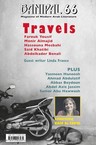
Back to Banipal 66 – Travels contents webpage
Link to Banipal 66 Selections
Link to all Selections
For news of readings, events and new titles.
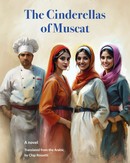
The Cinderellas of Muscat by Huda Hamed (Banipal Books, 2025)
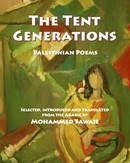
The Tent Generations
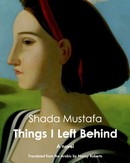
Things I Left Behind by Shada Mustafa, translated by Nancy Roberts
Shadow of the Sun by Taleb Alrefai
Birds of Nabaa, A Mauritanian Tale by Abdallah Uld Mohamadi Bah
The Stone Serpent, Barates of Palmyra’s Elegy for Regina his Beloved by Nouri Al-Jarrah
Mansi A Rare Man in His Own Way by Tayeb Saleh (Banipal Books, 2020)
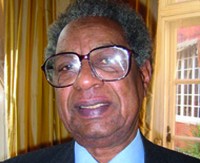
Tayeb Salih
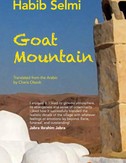
Goat Mountain by Habib Selmi
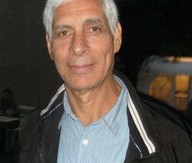
Habib Selmi, author of Goat Mountain and 3 times shortlisted for the IPAF
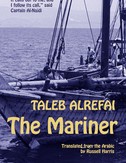
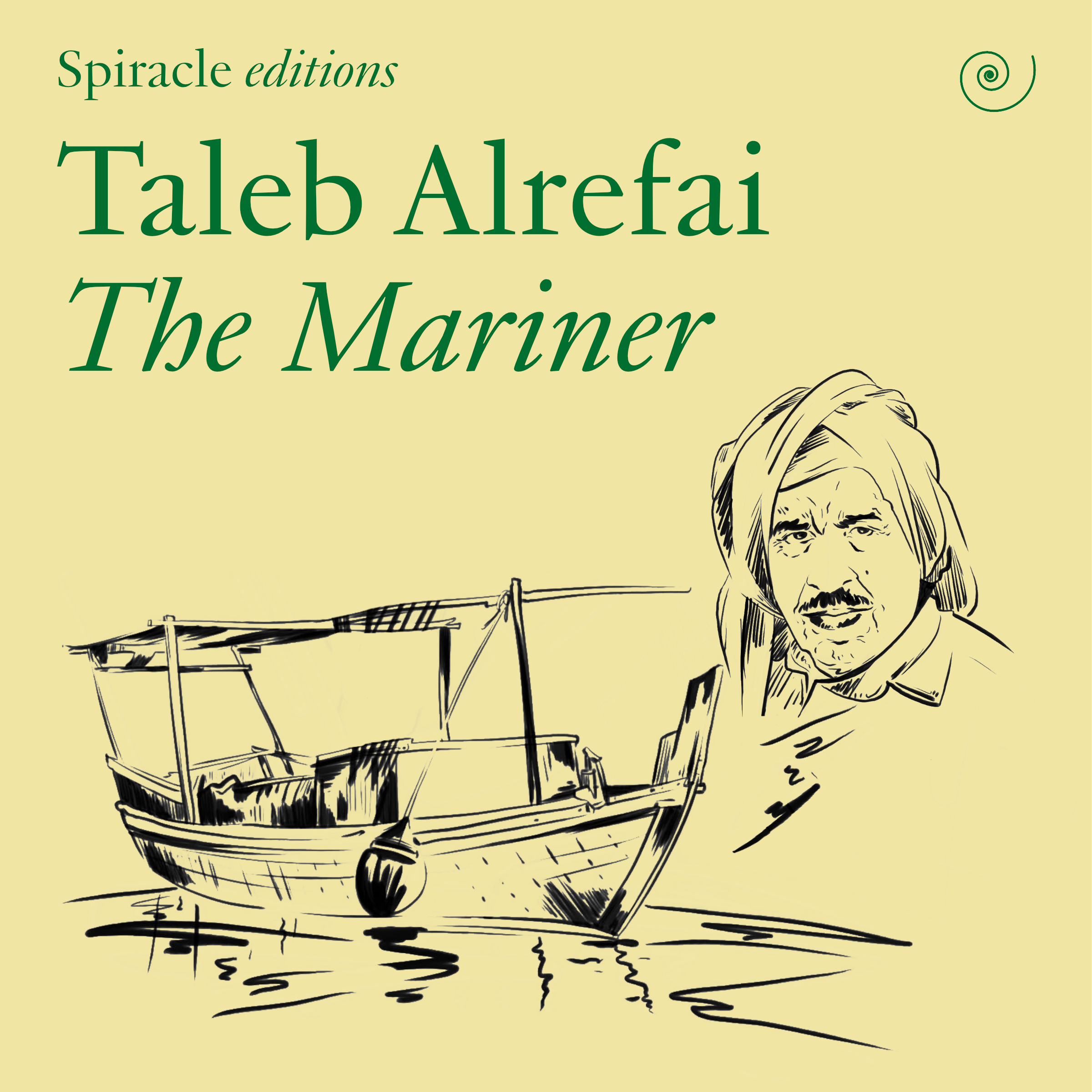
The Mariner by Taleb Alrefai (Banipal Books, 2020)
Taleb Alrefai, author of Shadow of the Sun and The Mariner

Fadhil Al-Azzawi's Beautiful Creatures by Fadhil al-Azzawi (Banipal Books, 2021)

Fadhil al-Azzawi

Poems of Alexandria and New York by Ahmed Morsi (Banipal Books, 2021)

Saïd Khatibi

Amjad Nasser (1955–2019)

Digital Banipal the full archive
Ahmed Morsi, author of Poems of Alexandria and New York

Sarajevo Firewood
The Madness of Despair


.png)





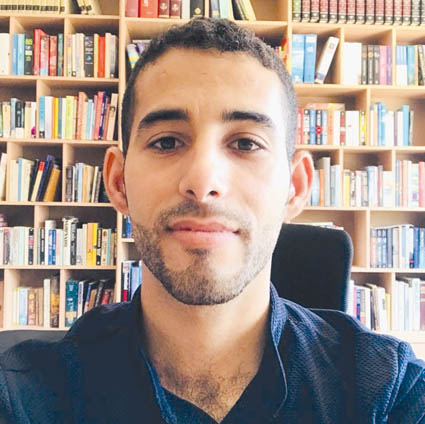
Link to poems by Mosab Abu Toha, published in Banipal 71 (Summer 2021), available to read online
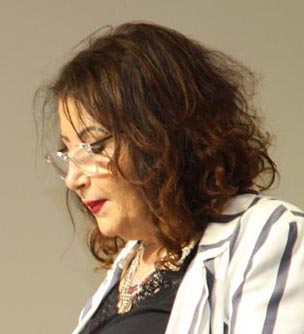
Link to poem by Liana Badr published in Banipal 74, now available as an online selection






















* * *






















 Reprint out now
 GRIFFIN PRIZE SHORTLIST 2023
 Banipal's first audiobook