Receive Our Newsletter
For news of readings, events and new titles.

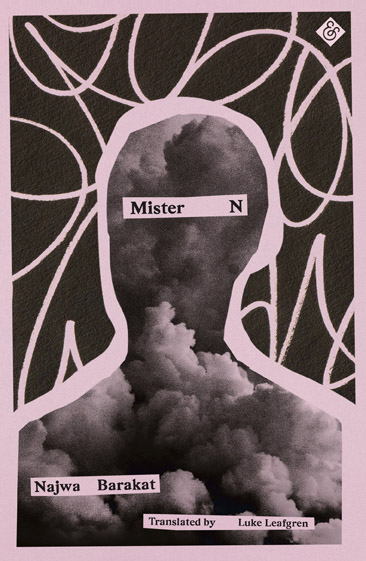
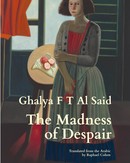
Modern-day Beirut is seen through the eyes of a failed writer, the eponymous Mister N. He has left his comfortable apartment and checked himself into a hotel – he thinks. Certainly, they take good care of him there. Meanwhile, on the streets below, a grim pageant: poverty, violence and fear.
How is anyone supposed to write deathless prose in such circumstances? Let alone an old man like Mister N., whose life and memories have become scattered, whose family regards him as an embarrassment, and whose next-door neighbours torment him with their noise, dinner invitations, and inconvenient suicides. Comical and tragic by turns, his misadventures climax in the arrival in what Mister N. had supposed to be his “real life” of a character from one of his early novels – a vicious militiaman. Now, does the old writer need to arm himself . . . or just seek psychiatric help?
Mister N, an apparently failed writer, is living mostly in a Beirut hotel rather than his fifth-floor noisy apartment with a big balcony where he would spend time just looking out while observing and commenting on everything. He is the narrator – and the writer – of a novel within the novel, both of which pursue the theme of Mister N’s gradual descent into madness and psychosis.
One day he thinks he catches sight of Luqman, who had been a war criminal, a killer let off scot-free in a “general amnesty”. Meeting him again later he tells himself: “It seemed like a suitable time for me to observe him, to follow his actions and his movements, and to hear his voice in case I might be able to rid my doubt that this was my very own Luqman, the person I invented one day to be the antihero of a grim novel – Oh Salaam [an earlier novel by Najwa Barakat also translated by Luke Leafgren] – the events of which took place at the end of the Lebanese civil war. Mister N’s paranoia about Luqman being still “alive” builds to a crescendo and a bloody end.
The novel is a fascinating exploration, eloquently translated, into how the human psyche reacts to and deals with the memories and upheavals of civil war.
Novelist, journalist and film director Najwa Barakat is the author of seven novels and founder of Mohtaraf, a Beirut-based workshop for aspiring writers of novels, plays and scripts. An excerpt from her novel A Busload of Good People was published in Banipal 22 (Spring 2005).
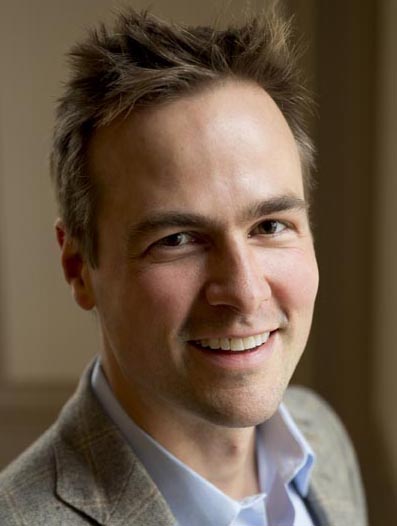 Translator Luke Leafgren won the 2018 Saif Ghobash Banipal Prize for his translation of Muhsin Ramli's The President's Gardens. His other translations include Oh Salaam by Najwa Barakat (Interlink Books, 2015), Muhsin Ramli's Dates on my Fingers (AUC Press, 2014) and The Baghdad Clock by Shahad al-Rawi (Oneworld, 2018).
For news of readings, events and new titles.
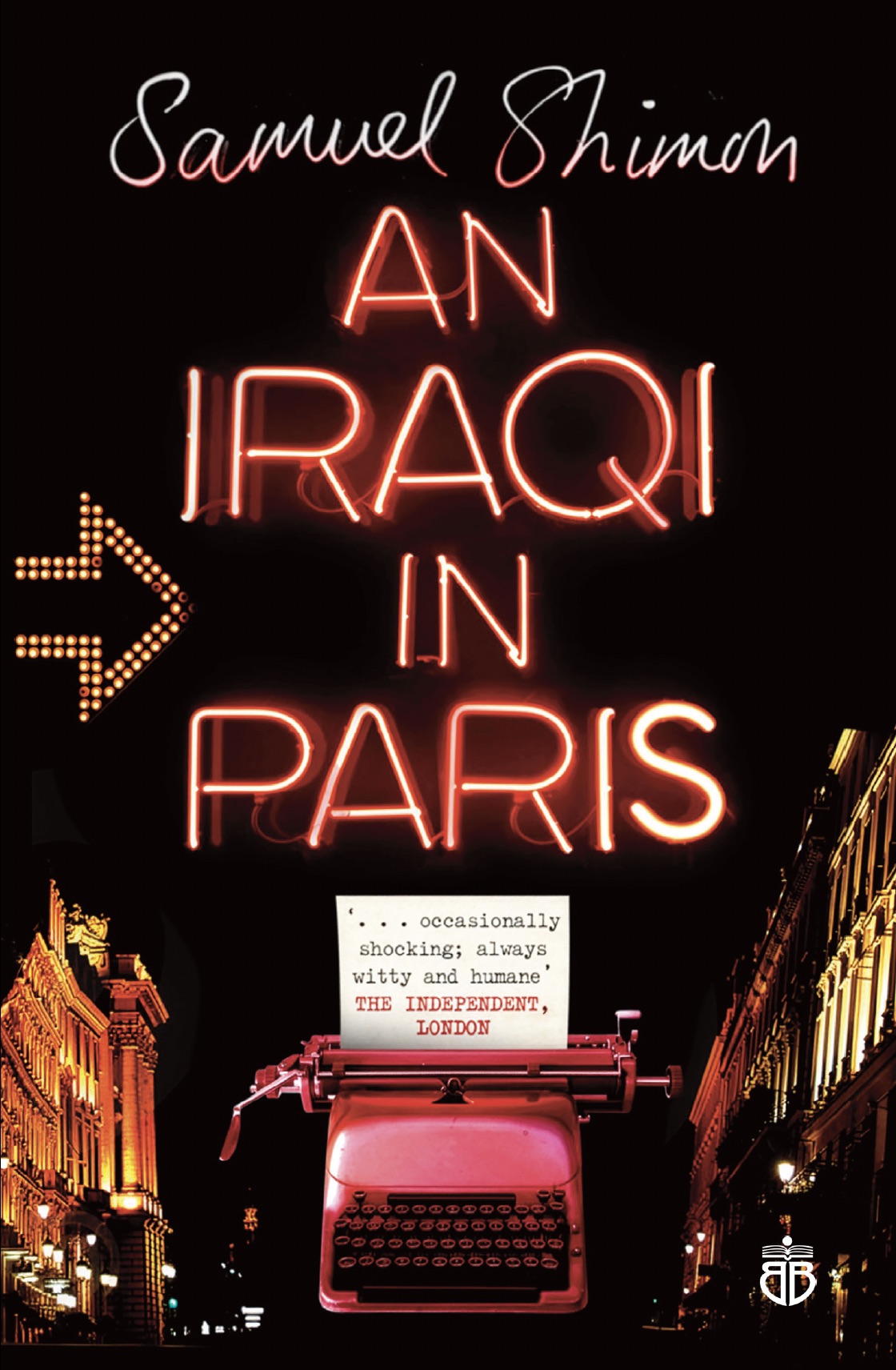
An Iraqi in Paris by Samuel Shimon
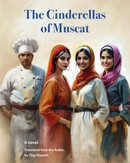
The Cinderellas of Muscat by Huda Hamed (Banipal Books, 2025)
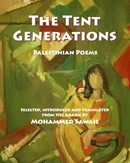
The Tent Generations
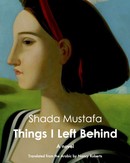
Things I Left Behind by Shada Mustafa, translated by Nancy Roberts
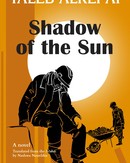
Shadow of the Sun by Taleb Alrefai
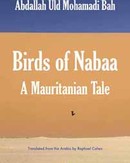
Birds of Nabaa, A Mauritanian Tale by Abdallah Uld Mohamadi Bah
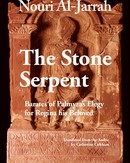
The Stone Serpent, Barates of Palmyra’s Elegy for Regina his Beloved by Nouri Al-Jarrah
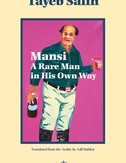
Mansi A Rare Man in His Own Way by Tayeb Saleh (Banipal Books, 2020)
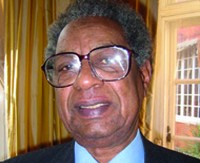
Tayeb Salih
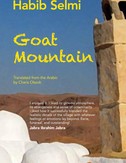
Goat Mountain by Habib Selmi
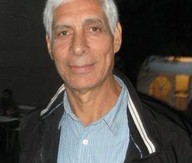
Habib Selmi, author of Goat Mountain and 3 times shortlisted for the IPAF
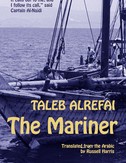
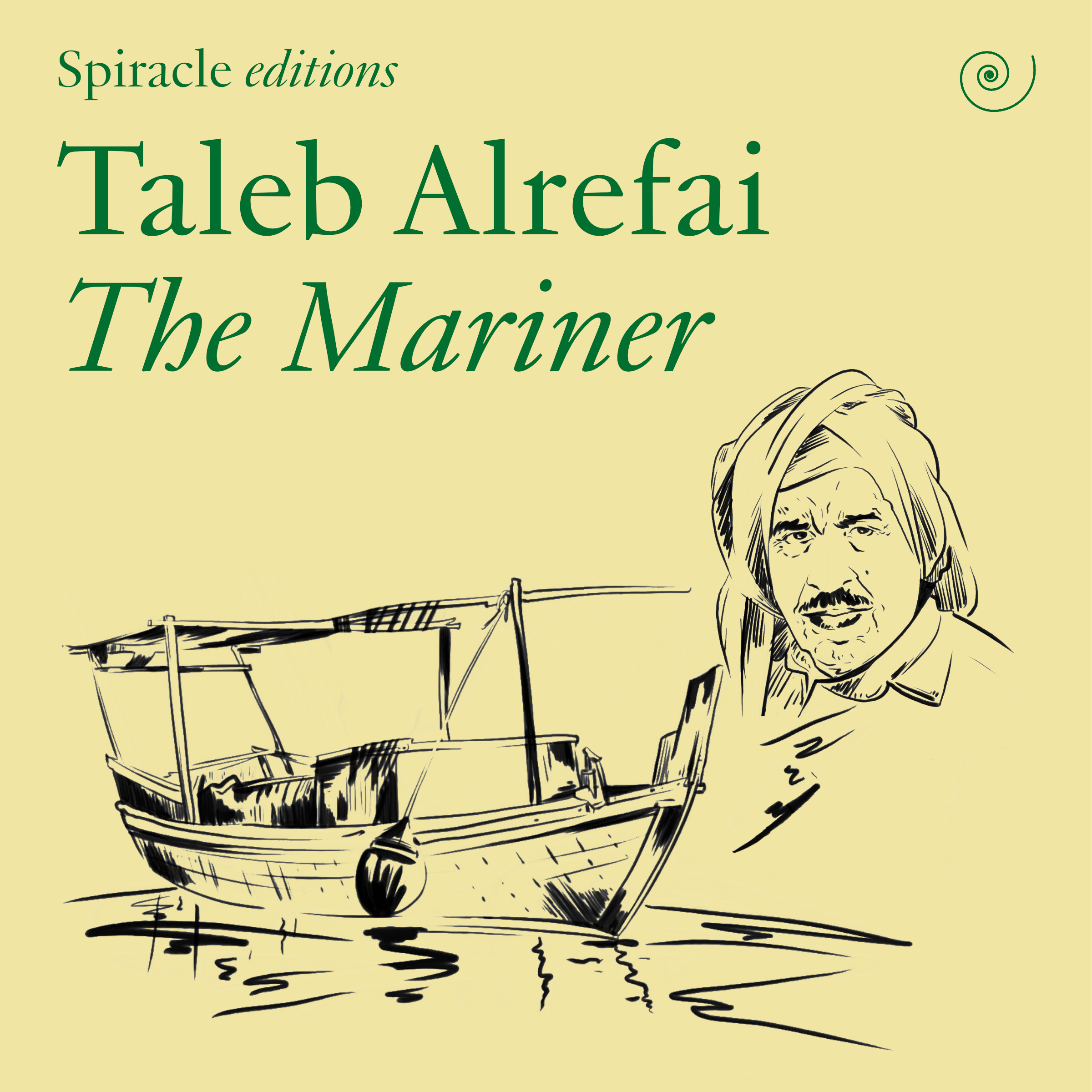
The Mariner by Taleb Alrefai (Banipal Books, 2020)
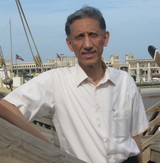
Taleb Alrefai, author of Shadow of the Sun and The Mariner

Fadhil Al-Azzawi's Beautiful Creatures by Fadhil al-Azzawi (Banipal Books, 2021)
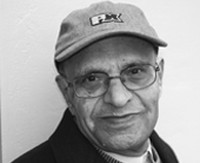
Fadhil al-Azzawi
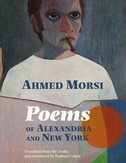
Poems of Alexandria and New York by Ahmed Morsi (Banipal Books, 2021)

Saïd Khatibi
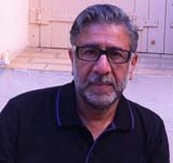
Amjad Nasser (1955–2019)

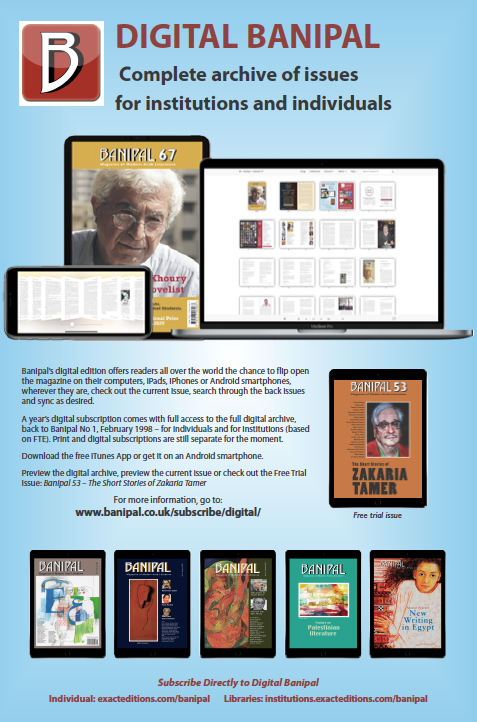
Digital Banipal the full archive
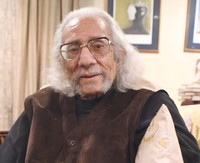
Ahmed Morsi, author of Poems of Alexandria and New York
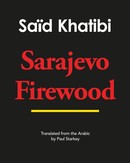
Sarajevo Firewood
The Madness of Despair

.png)



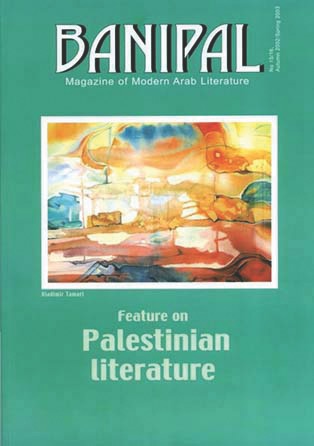
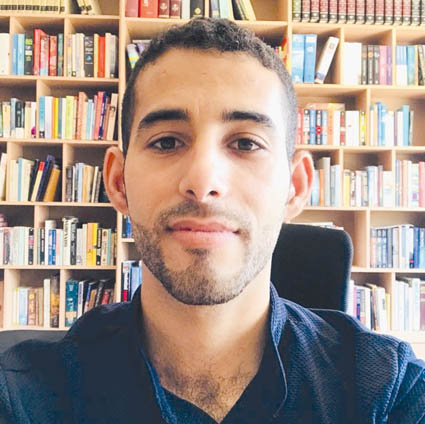
Link to poems by Mosab Abu Toha, published in Banipal 71 (Summer 2021), available to read online
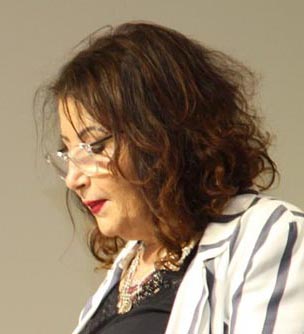
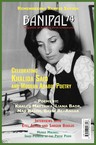
Link to poem by Liana Badr published in Banipal 74, now available as an online selection
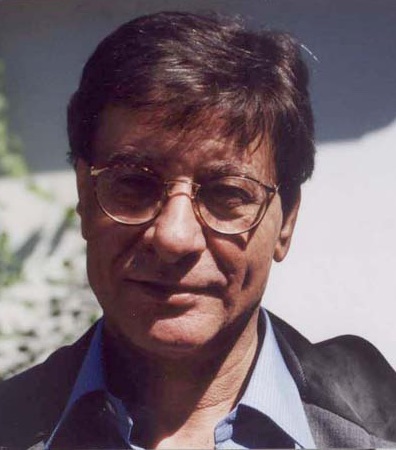




















* * *



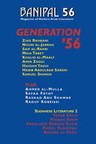
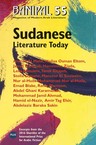
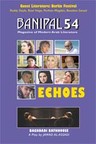
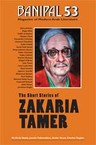

 Reprint out now
 GRIFFIN PRIZE SHORTLIST 2023
 Banipal's first audiobook