Receive Our Newsletter
For news of readings, events and new titles.

I Saw Ramallah
by Mourid Barghouti
Translated by Ahdaf Soueif with Foreword by Edward W. Said
The American University in Cairo Press 180 pp. ISBN 977 424
499 0
The Homecoming of a Poet
The Oslo Accord of 1993 between Israel and the Palestinian
Liberation Organization has made it possible for many Palestinians to go back
home after decades of exile.
Though generally sceptical towards the Accord itself, Palestinian
writers who were permitted to return, or even to visit, saw this as an
invitation which they could not afford to miss or turn down. Now, after years of being occupied with
the task of telling the story of dispossession, displacement and exile, some of
these writers are able to tell the story of the long-awaited return. A number
of works (both fiction and non-fiction), which mainly relate accounts of this
journey home, have appeared in the few years following Oslo.
Of all of these books, I Saw Ramallah, the account by
Palestinian poet Mourid Barghouti, is by far the most noteworthy. It received considerable critical
acclaim when first published in Arabic, and went on to win the Naguib Mahfouz
Medal for Literature, which led to its current appearance in English under the
guardianship of two heavyweights, Edward Said and Ahdaf Soueif , the former
forewording it, the latter rendering it into English.
With meticulous attention to detail, Barghouti describes
step by step his visit to Ramallah and Deir Ghassanah, the town and the village
in which he was born and grew up.
After thirty years of living in exile, the writer is home again in what
must have been for him an exhilarating, yet saddening experience. There are so many things to see, and so
many people to meet – places, relatives and friends from whom he was separated
for many years, and who were reduced into selective images stored in the
memory of the author. It is no
surprise that, on more than one occasion, Barghouti discovers how limited, and
sometimes, inaccurate, his memory has been.
Barghouti is not only making a passage from exile to
homeland, but rather a leap from the land of literary imagination to the actual
land: “It is no longer the beloved in the poetry of resistance, or an item on a
political party program, it is not an argument or a metaphor. It stretches before me, as touchable as
a scorpion, a bird, a well; visible as a field of chalk, as the prints of
shoes.”
Being a poet whose output has emerged and matured in exile,
Barghouti has always relied on both memory and imagination in depicting and
conjuring his homeland, thus abstracting and mythologizing it. But now, confronting the world of fact,
he realises how wide the gap is between the real land and the image in which it
appears in his, and other’s, poems.
Appropriately enough, he wonders whether all along he has been imagining
a totally different country: “I used to tell my Egyptian friends at university
that Palestine was green and covered with trees and shrubs and wild flowers.
What are these hills? Bare and chalky.
Had I been lying to people, then? Did I paint for strangers an ideal
picture of Palestine because I had lost it?”
All through the journey, the writer never loses sight of the
disparity between the literary image and the reality that he explores. And that is not a mere
coincidence. For such disparity
highlights a question pertinent to the poet and to Palestinian poetry and
politics in general. If what was
abstracted and mythologized has now, at least in the eyes the poet himself,
recoverd its real self, then a question such as “Where do we go from here?” or
“How do we write hence?” be-comes most urgent. But Barghouti seems to prefer
evading the question, and up to now, so do most Palestinian writers.
Barghouti has no illusions about the Oslo Accord. For him the Israelis have managed to
have it their own way. However, he
is not there to condemn outrightly the outcome of the negotiations between
Palestinian and Israeli representatives. He is there to confront the reality of
the present. And there is no doubt that this reality is depressing and
disappointing in so many ways and aspects, but there are also things which show
that hope is not beyond the grasp of both those who have remained there and
those who have just returned. One
cannot fail to sense a relentless attachment to the idea of being there.
Barghouti’s journey is not a nostalgic one. Far from
lamenting what has gone for ever, the writer often tends to revive the past in
an amusing and funny anecdotal form. And, as for the things which have remained
intact – and to his astonishment there are so many things which have been left
as they were thirty years earlier – these are not a source of consolation. On the contrary, it is in their very
existence that he sees the enormity of the damage caused by the long Israeli
occupation: “The Occupation forced us to remain with the old. That is its crime. I used to long for
the past in Deir Ghassanah as a child longs for precious, lost things. But when
I saw that the past was still there . . . I wanted to take hold of it, to kick
it forward, to its coming days, to a better future, to tell it: Run.”
Though the journey takes place in 1996, the beginning of the
story of I Saw Ramallah goes back to June 1967, when Barghouti was still a
student in Cairo. It was then,
while doing his final university exams, that he realized that instead of going
back home, where his room had been newly decorated, he had become a displaced
person. The war had erupted and
his home was to become an occupied territory.
All through
the nine chapters of this book, the writer keeps moving from one decade to
another, jumping from one place to the next, tracking back through times and
places in which his life in exile was a fate which befell him and his family,
making it impossible for them to to meet again without painstaking efforts and
always in a foreign country. The misfortunes of exile were not limited to those
which resulted from the Israeli occupation of the West Bank and Gaza, but from
residing in countries where one is susceptible to deportation without any
justification. So it was that in 1977 Barghouti was deported from Egypt, and
for the next 17 years he could only see his wife and child during annual
holidays and largely out of Egypt. In spite of all that, the writer is seldom
bitter or sentimental. In fact, he
is often witty and satirical.
Commenting on the fact that his wife and him had only one child, he
says:
“And then the Egyptian president, Anwar al-Sadat, had a
decisive role in defining our size of the family. His decision to deport me resulted in my remaining the
father of an only child, Radwa and I not having a daughter, for example, to add
to Tamim, or ten sons and daughters.
I lived on one continent and Radwa on another; on her own she could not
care for more than one child.”
The story of exile that Barghouti relates is not an
unfamiliar one, particularly for Palestinians. However it does not fail to be moving – the story of his
eldest brother who died at the age of fifty-one without being able to see his
home again is certainly a heartbreaking story.
Having said that, I must add the painful fact that one
cannot appreciate I Saw Ramallah without a considerable amount of sympathy and
patience. Barghouti quite often tends to become excessively pensive and
philosophical, the result of which a gratuitious successions of rhetorical
questions, unilluminating analyses, and crude metaphors, all which overburden
the pace of the narrative.
Barghouti is not the best of Arab prose writers. And Soueif’s translation makes us well
aware of this fact. For some
reason she has opted to a literal rendering of the Arabic, the result of which
is too many odd and awkward expressions: “I walked entirely normally”; “Her
desire to defy difficulty and fragmentation is so powerful it paints her tired
face with a new vitality”; “His narrow eyes, black, do not reveal his heart
except when he laughs”.
It is rather surprising, and disappointing that Soueif, the
author of colossal novels in English, could only bring out such clumsy
composition. What is more surprising, however, is that this very translation is
praised by Edward Said as “elegant and compelling”. But then again, Said is known to be too complimentry towards
his friends and admirers.
From Banipal 10/11 - Spring/Summer 2001
Back to top
For news of readings, events and new titles.
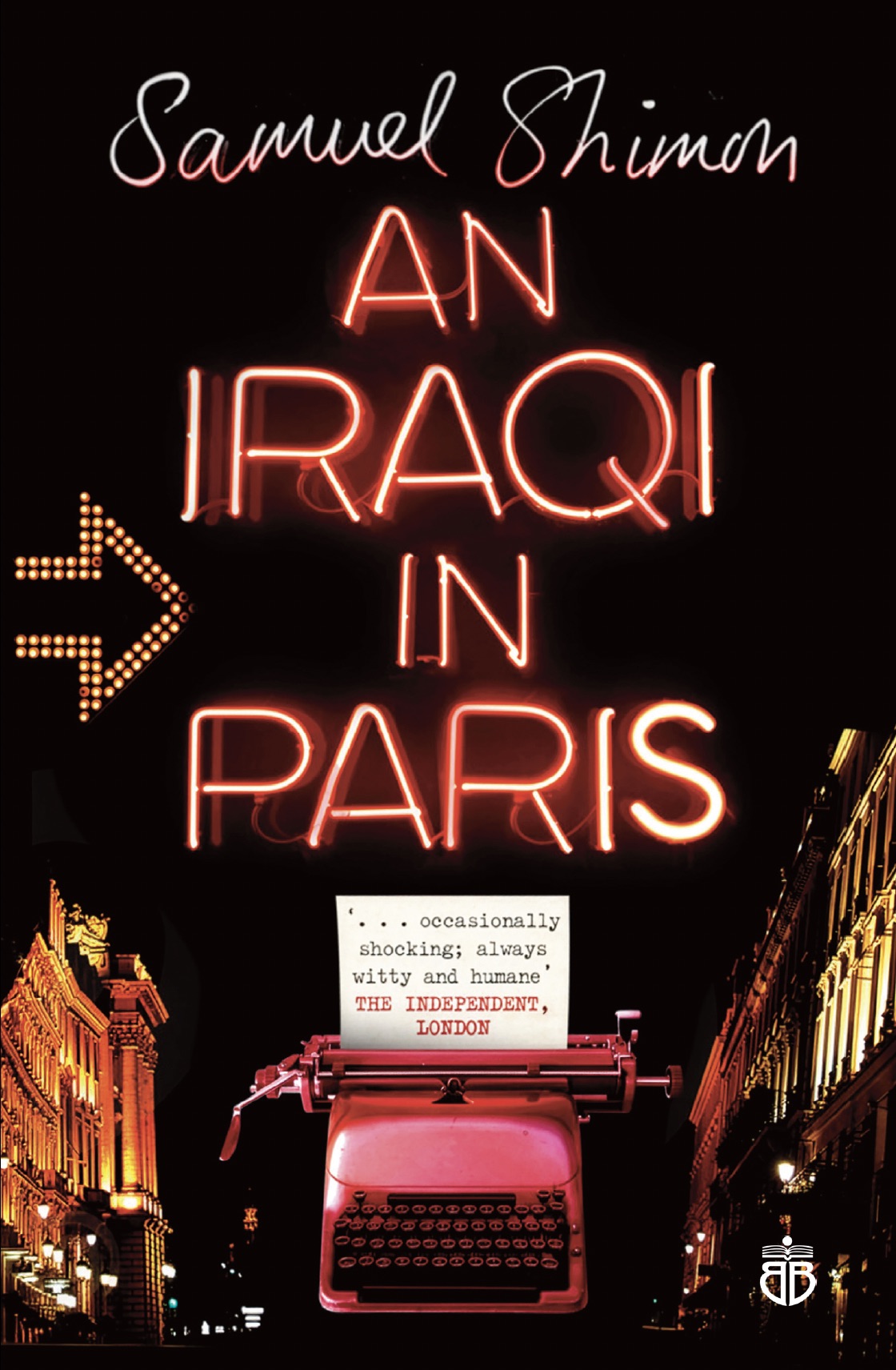
An Iraqi in Paris by Samuel Shimon
The Cinderellas of Muscat by Huda Hamed (Banipal Books, 2025)
The Tent Generations
Things I Left Behind by Shada Mustafa, translated by Nancy Roberts
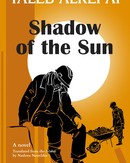
Shadow of the Sun by Taleb Alrefai
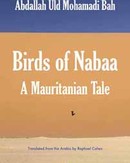
Birds of Nabaa, A Mauritanian Tale by Abdallah Uld Mohamadi Bah
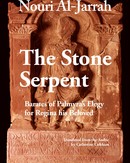
The Stone Serpent, Barates of Palmyra’s Elegy for Regina his Beloved by Nouri Al-Jarrah
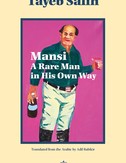
Mansi A Rare Man in His Own Way by Tayeb Saleh (Banipal Books, 2020)
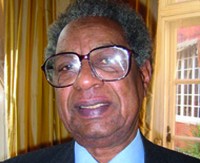
Tayeb Salih
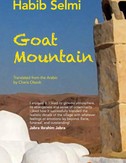
Goat Mountain by Habib Selmi
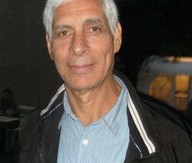
Habib Selmi, author of Goat Mountain and 3 times shortlisted for the IPAF
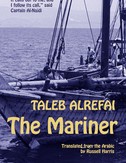
The Mariner by Taleb Alrefai (Banipal Books, 2020)
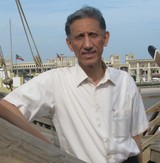
Taleb Alrefai, author of Shadow of the Sun and The Mariner

Fadhil Al-Azzawi's Beautiful Creatures by Fadhil al-Azzawi (Banipal Books, 2021)
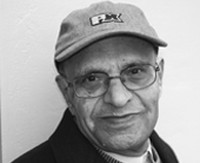
Fadhil al-Azzawi
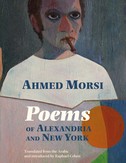
Poems of Alexandria and New York by Ahmed Morsi (Banipal Books, 2021)

Saïd Khatibi
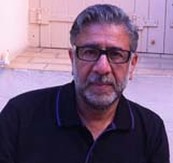
Amjad Nasser (1955–2019)

Digital Banipal the full archive
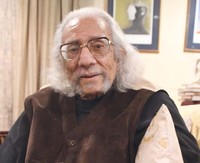
Ahmed Morsi, author of Poems of Alexandria and New York
Sarajevo Firewood
The Madness of Despair


.png)


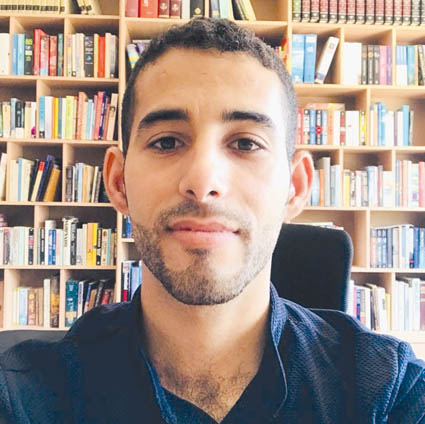
Link to poems by Mosab Abu Toha, published in Banipal 71 (Summer 2021), available to read online
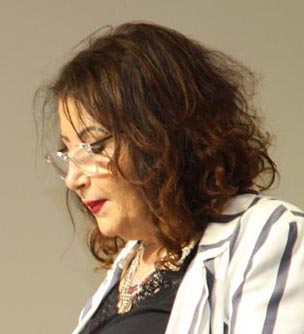
Link to poem by Liana Badr published in Banipal 74, now available as an online selection
















* * *



 Reprint out now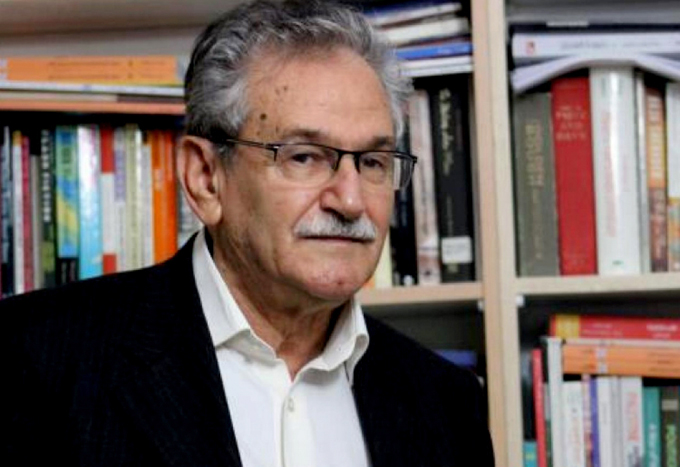
 GRIFFIN PRIZE SHORTLIST 2023
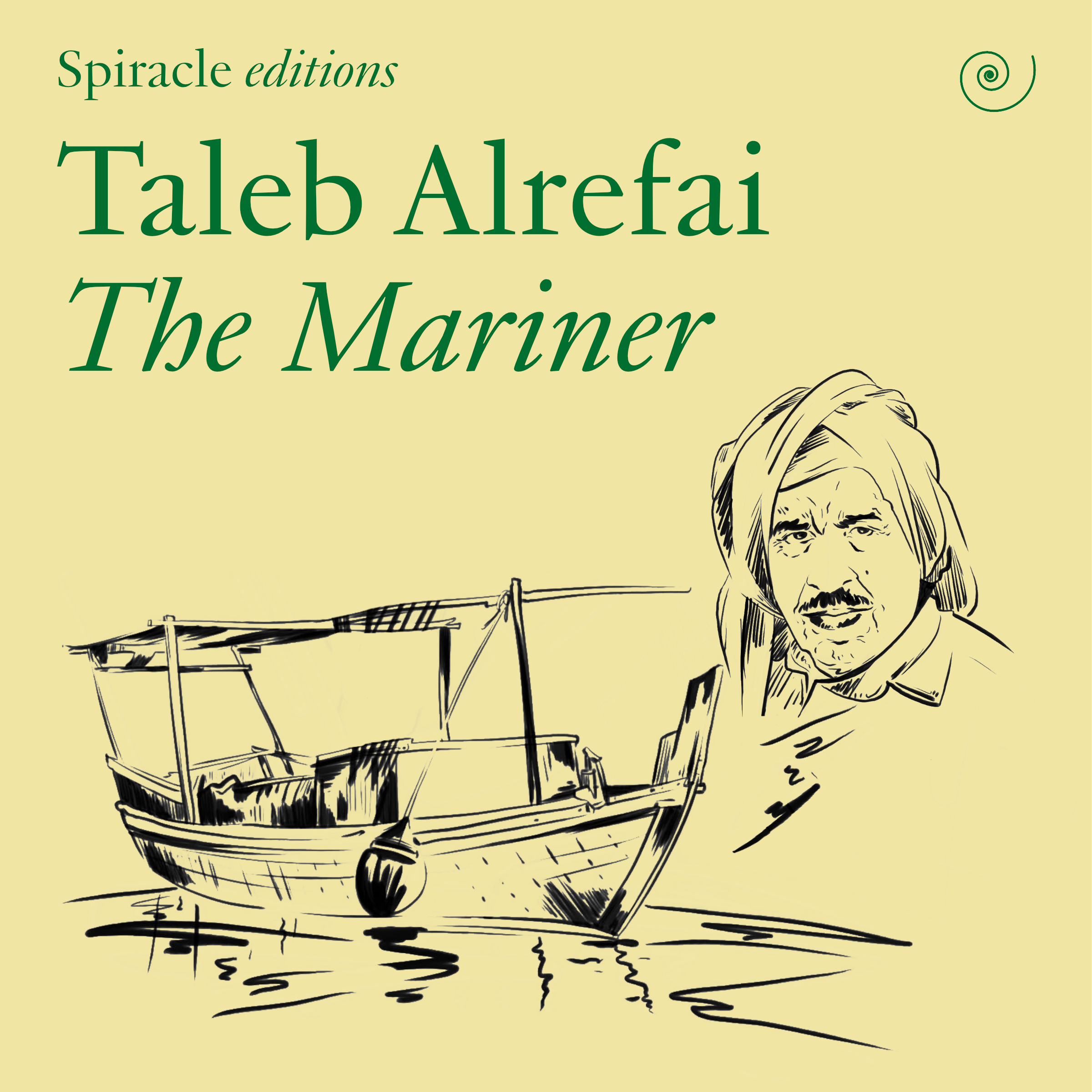 Banipal's first audiobook