Receive Our Newsletter
For news of readings, events and new titles.

 Ammar Almamoun reviews
Published by Dar al-Adab
Beirut, 2020
ISBN: 9789953896717
The novel Al-Ishtiyaq ila al-Jarah (Longing for the Woman Next Door) by the Tunisian writer Habib Selmi, that was published last year, contends from the outset, beginning with the title itself, that the object of desire is unattainable. Longing presupposes distance, separation, or an inability to reach the neighbour, which explains the paradox of the title itself, since the said neighbour is nearby physically yet metaphorically far away from the one who longs for her and who indulges his imagination to attain the object of his affection.
The man longing for his neighbour is Kamal Ashur, a Tunisian maths teacher in his sixties, who is married to Brigitte, a French bank employee. The object of his desire is Zahra, a neighbour in her fifties, who works as a domestic maid, is married to a man with a turbulent past and has a handicapped son. Zahra and Kamal are separated by three floors in a Parisian building, and the scene of their first encounter is the building’s foyer.
Our narrator’s love story begins when he saw Zahra “several times a day”. These opening lines set the scene for the love fantasy that has entrapped Kamal and restructured his monotonous life and the “adult” relationship he has with his wife. An adolescent love is born in Kamal’s heart for Zahra, or to be more exact, Kamal starts, after meeting Zahra, to reconsider the routine of his life and the coincidental meetings with the neighbour in the building, meetings which he sums up as a timid game of seduction that entices him and compromises his reserved behaviour.
This fantasy exists only in Kamal’s head and cannot be attributed to Zahra in any way. Kamal’s composure and his view of this mild game of innocent seduction change after Zahra starts working in his apartment, where she is subjected to his gaze and his fantasising. Kamal starts to pass harsh patriarchal judgment on Zahra, judgment which sounds strange coming from a university professor in France, as if his encounter with Zahra – a Tunisian, a compatriot – has awakened the oriental patriarch in him and stirred his desire to “discover the Arab woman’s world in all its secrets”.
The greater his desire for Zahra becomes, the harsher his judgment of his fellow citizen. Kamal is astonished that Zahra and her husband own an apartment; he is afraid of being alone with Zahra; and his patronising tone comes through at times coupled with his conservative views on “women needing husbands to fulfil their emotional needs and support them while sharing life’s burdens. Furthermore, the Arab woman cannot live alone, especially in a foreign country . . . or else her behaviour would be highly questionable . . .”
These patriarchal views betray the real Kamal and his conceptions of the other, who is kin. Zahra’s enthusiasm, naivety, diligence at work, and dedication to studying Arabic with Kamal reveal the fallacy of Kamal’s role as a maths teacher and the image of professionalism he presents of himself to the French other. This is best seen when Kamal repeats to himself the merits of his integration into French society and how well he follows traditions and customs. He explains to his wife the difference between the French and the Arabs in everyday life, dropping the mask of “maturity” to reveal his prejudices when it comes to Zahra and his homeland, which he has not visited for many years.
Kamal repeatedly refers to the “seduction game” with which he occupies himself in his free time, a game set within the architectural structure of the building in which he resides. He finds himself doing silly, unbefitting things and in so doing surprises himself. For example, he is jealous of the Spanish neighbour in the building and creeps up during the night to the fifth floor to eavesdrop on Zahra from behind her door. Interestingly, his behaviour becomes more foolish the more free time he has, until one day he harasses Zahra when her husband is away, thus overstepping the boundaries between playfulness and harassment. Kamal then takes advantage of Zahra’s naivety, putting his reserve aside to become Zahra’s “guardian”, checking on her and her relationship with her husband, and behaving differently towards Zahra than towards his wife.
Kamal’s imprudence and patriarchy reveal his ignorance of his own identity and cultural formation. He speaks of foreignness, the other, and the Arabic language repeatedly but all that has no effect on his relationship with Zahra. He claims to love her innocently but ends up being humiliated and kicked out of her house upon trying to kiss and grope her.
Readers will sense in the novel the dominance of the narrator’s free time on his imagination, free time being economically unproductive time, the opposite of work time. It is during this free time for Kamal that Zahra appears to upset the rhythm of his boredom, opening the door to introspection in his private space that has no defined boundaries, unlike the borders of physical private space (door, building entrance, hallways) that define Kamal’s actual relationship with Zahra. Appearing in his private space, she dominates his thoughts, replacing his boredom with fantasy as he analyses his and her every move and their hidden meanings like a teenager. He thinks deeply about each laugh, each handshake, each look, giving them imaginary importance. Meanwhile, he is self-conscious. He tries to keep his cool but fails to abide by the rules of good behaviour when he visits Zahra in her house and becomes another person completely.
The death of Madame Albert, who lives across the hall from Kamal, where Zahra used to work as a maid, deepens his bond with Zahra. They both find themselves in front of the old French woman’s dead body, stunned, and later go to the funeral. Kamal uses the occasion well, to meet Zahra outside, where he touches her for the first time by kissing her cheek. After that he fills his time indulging himself with fantasies of lust and sex and breaks the rules of his “seduction game”, becoming simply a man who wants only Zahra’s body, while keeping it all unspoken, secret to himself.
Kamal moves cautiously within the space of the house and building, afraid of becoming the subject of gossip and disgrace, those being the two powers governing the “game of seduction”. The other neighbours appear to pose an imminent threat to him in this game, for perhaps they – like Kamal – have their own private fantasies about those around them. In addition, Zahra’s presence in the building threatens Kamal’s status when he is seen in the same category as her, as if he is no longer the maths professor but instead the Arab Tunisian, who alone can understand his fellow national.
Spying, embarrassment and shame seem ultimately to control Kamal’s mind and behaviour, though not his imagination or his desires. The fear of destroying the image he has projected of himself to his neighbours, whom he meets for mere minutes, is what holds him in check. What is more, Kamal’s neighbours are also brought into his fantasies when he starts to fear that they do as he does and imagines, but then he dismisses that fear as only his imagination. In the end Kamal’s fantasies about Zahra nearly get the better of him, when on day, in the foyer, he tries to listen in on her, when he thinks she is alone with another man, who cannot be her husband as he is away in Tunisia. Kamal’s jealousy and secret longing for the woman next door can finally only be kept in check by his fear of social exposure.
Translated by Susan Saad
Published in Banipal 71 Salutes Ihsen Abdel Kouddous
Back to other book reviews
For news of readings, events and new titles.

The Cinderellas of Muscat by Huda Hamed (Banipal Books, 2025)

The Tent Generations

Things I Left Behind by Shada Mustafa, translated by Nancy Roberts

Shadow of the Sun by Taleb Alrefai

Birds of Nabaa, A Mauritanian Tale by Abdallah Uld Mohamadi Bah

The Stone Serpent, Barates of Palmyra’s Elegy for Regina his Beloved by Nouri Al-Jarrah

Mansi A Rare Man in His Own Way by Tayeb Saleh (Banipal Books, 2020)

Tayeb Salih

Goat Mountain by Habib Selmi

Habib Selmi, author of Goat Mountain and 3 times shortlisted for the IPAF

The Mariner by Taleb Alrefai (Banipal Books, 2020)

Taleb Alrefai, author of Shadow of the Sun and The Mariner

Fadhil Al-Azzawi's Beautiful Creatures by Fadhil al-Azzawi (Banipal Books, 2021)

Fadhil al-Azzawi

Poems of Alexandria and New York by Ahmed Morsi (Banipal Books, 2021)

Saïd Khatibi

Amjad Nasser (1955–2019)

Digital Banipal the full archive

Ahmed Morsi, author of Poems of Alexandria and New York

Sarajevo Firewood
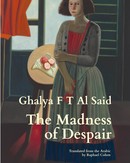
The Madness of Despair




.png)







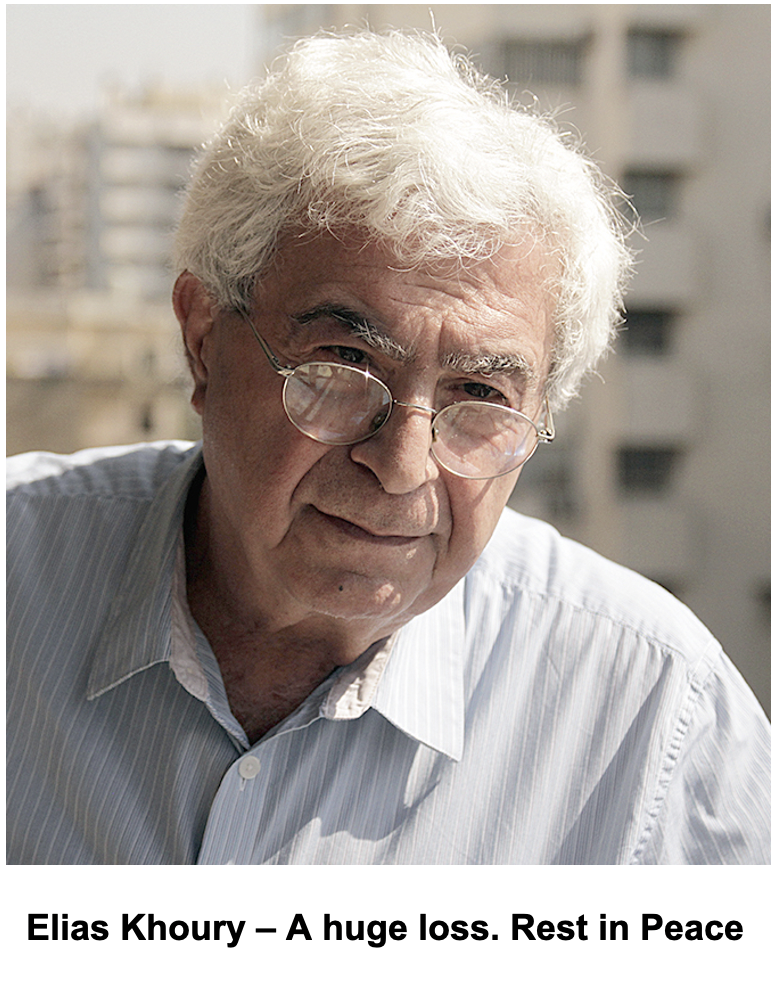



Link to poems by Mosab Abu Toha, published in Banipal 71 (Summer 2021), available to read online

Link to poem by Liana Badr published in Banipal 74, now available as an online selection

























* * *












































 GRIFFIN PRIZE SHORTLIST 2023
 Banipal's first audiobook