Receive Our Newsletter
For news of readings, events and new titles.

 Katia al-Tawil reviews
Published by Naufal, Beirut, 2020
ISBN: 978-614-469-543-2
Pbk,120 pages.
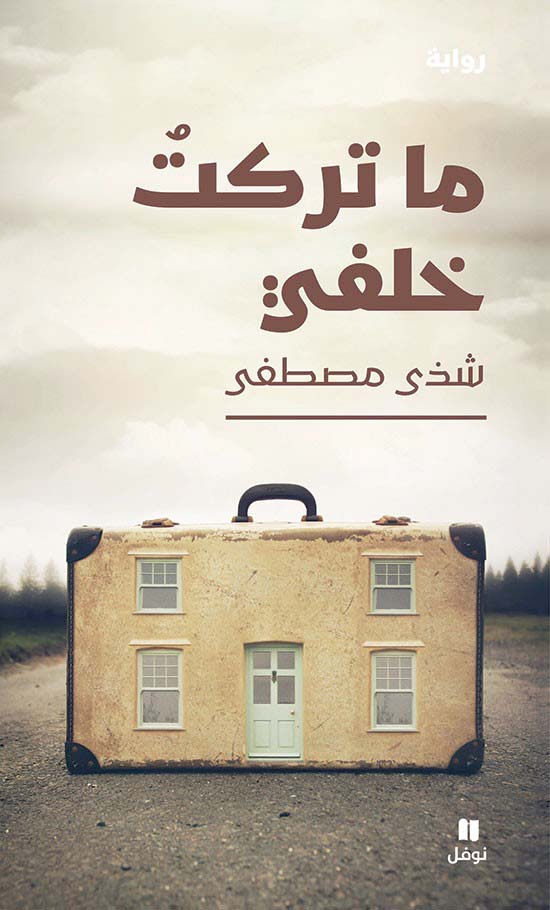
Hardly had the promising young Palestinian writer Shada Mustafa published her debut novel entitled Things I Left Behind (Ma Taraktu Khalfi) (Dar Naufal, 2020) than she was shortlisted for the 2021 Sheikh Zayed Book Award for young authors. The Judging Panel was right to single this novel out from others despite its brevity. For although it numbers only 120 pages, they are pages in which the young writer masterfully casts description and flashbacks into a vibrant, flowing fictional self-narration. In some places one detects the influence of Lebanese writer Rashid Al-Daif, whom the young writer thanks in the beginning of the book.
Despite this novel being her first published work, Shada Mustafa surprises readers with her honesty, awareness and depth. She expresses herself in brief, fast-paced sentences that might be categorized as belonging to the art of ‘white’, or neutral writing associated with Western authors such as Albert Camus. These short sentences fuse with the actual subjective meanings to present a cohesive novelistic work that flows from the writer’s fingers with delightful ease.
Arab and Western readers alike may be surprised to find that Shada Mustafa seems to avoid the Palestinian cause and its labyrinths. For despite the appearance of words and phrases such as “occupation”, “checkpoints”, “occupation authorities”, and “occupation prison” within the novel, they form the background to the narrative. As such, they serve as a secondary factor that impacts the characters without being the primary focus of the writing. Mustafa dares to pose a question that may well haunt many, yet without their voicing it aloud. She says, “Sometimes I wonder: What’s the value of the cause as compared with a person’s life? Or the life of a family? Which carries greater weight – the individual human being, or the cause? I want to care about the cause, but I can’t. All I can think about when somebody talks about the Palestinian cause is that it stole my father from me.” (p. 11)
Everybody talks about ‘big’ values and complex political, historical and legal problems. But what about ‘small’ families, children who pass through checkpoints, and fathers who come home from Israeli prisons? How do they fare? How does the cause impact them? How do they pack their tragedies into suitcases to try to leave them behind? Do they succeed in actually leaving them behind?
Shada Mustafa dares to give voice to her pain over the Palestinian cause. She dares to expose the tragedy of the Palestinian who suffers from geographical barriers that turn into emotional barriers that then live inside her, change her and govern relationships among individuals. So, what are the things that Shada Mustafa wants to “leave behind”?
The narrator’s father leaves the occupation prison a defeated, broken, violent man who bears no resemblance to the man who married and formed a family. So, choosing to protect herself and her children from a pain from which there is no escape, her mother asks for a divorce and leaves her husband. Although such a decision would generally be viewed as reasonable and acceptable in other societies, the situation of the divorced woman in Arab societies is highly sensitive. Aside from the battle every individual woman has to wage to obtain her rights, society does not readily accept the divorced woman. On the contrary, we see it condemning and shaming her for remarrying, and calling her to account for everything she does and says. Shada Mustafa draws attention to such matters through her narrator who, in a veiled manner, makes readers feel guilty in the realization that they themselves may be among those who unfairly hold others to account and put them on trial. She says, “My mother was never spared those comments. It was as if people wanted to punish her for being divorced”. (p. 48) “Why were they so determined to make her feel like some alien, bizarre creature, just because she was divorced and taking care of her children?” (p. 49).
The narrator even goes so far as to confess that, as a child, she shared in society’s harsh judgment against the divorced woman, especially in relation to her remarrying and going on with her life, saying, “It’s a known fact that the father can remarry, whereas the mother should stay with her children.” (p. 93)
Alongside the short, quick-paced sentences in the narrative and the alternating use of first-person narrative and second-person address for added dynamism, Shada Mustafa bases her narrative technique on numbers, which she makes into a kind of secret code shared by her and the reader. In contrast to Paul Auster who, in his novel, 4 3 2 1 makes numbers into a symbol of various trajectories his character’s life might take, Shada Mustafa treats numbers as a guide to the characters and successive phases of her life.
The short chapters or passages, none of which is more than ten lines in length, are numbered from 1 to 4, where each number is associated with a phase in the life of the narrator and her relationship with one of the characters around her. The chapters with the number 1 go back to the narrator’s mother, her relationship to her mother, and the phase of her life that she spent with her. Given the fact that her parents are divorced, the number 2 refers to the chapters that fall within the framework of the relationship with the father and the memories in which he plays a role. As for the chapters that fall under the number 3, they are associated with the friends the narrator made at the university in Beirut – Ismail, Dunya, and Nay, their relationships, their classes, and their evenings out. And as for the chapters headed with the number 4, they shed light on the Swedish boyfriend, her relationship with whom the narrator traces by the year, the month, the day and the very minute.
These numbers turn into an enjoyable narrative game that allows readers to identify the topic of a given chapter before they begin reading it based on the number introducing it. What makes this narrative play all the more artistic is the absence of a set rule determining the ordering and frequency of the numbers. Hence, there might be five consecutive chapters preceded by the number 1, associated with the narrator’s relationship with her mother, before she moves on to another number and another narrative thread. The number 4, for example, appears late in the novel and takes up a relatively small portion of the book, as the relationship with the Swedish boyfriend is short-lived by comparison with the relationships with the mother or the father, chapters about whom dominate and frame the narrative. For this masterfully-placed artistic numeration to be directly connected with the title, we might ask: What are the things that Shada Mustafa has left behind? What memories has she packed into the ‘suitcase’ of writing and been freed from? They are the numbers, faces, relationships and life stages now concealed behind her.
Things I Left Behind is a quiet, light, interesting novel which Shada Mustafa has chosen to write as a means of freeing herself from the things that she has “left behind”. In so doing, she has restored narrative writing to its original, cathartic function, in which the author writes in order to cleanse his or her soul, to be liberated from his or her past, and to give free reign to his or her true self. Are these things always possible? Is it possible to be liberated from the things we’ve left behind? This question is answered elegantly by Shada Mustafa’s narrator, who says, “I still don’t write the whole truth. It’s a hard thing to write your truth. There are some things you don’t want to admit to yourself.” (p. 81)
Translated by Nancy Roberts
Published in Banipal 71 Salutes Ihsan Abdel Kouddous
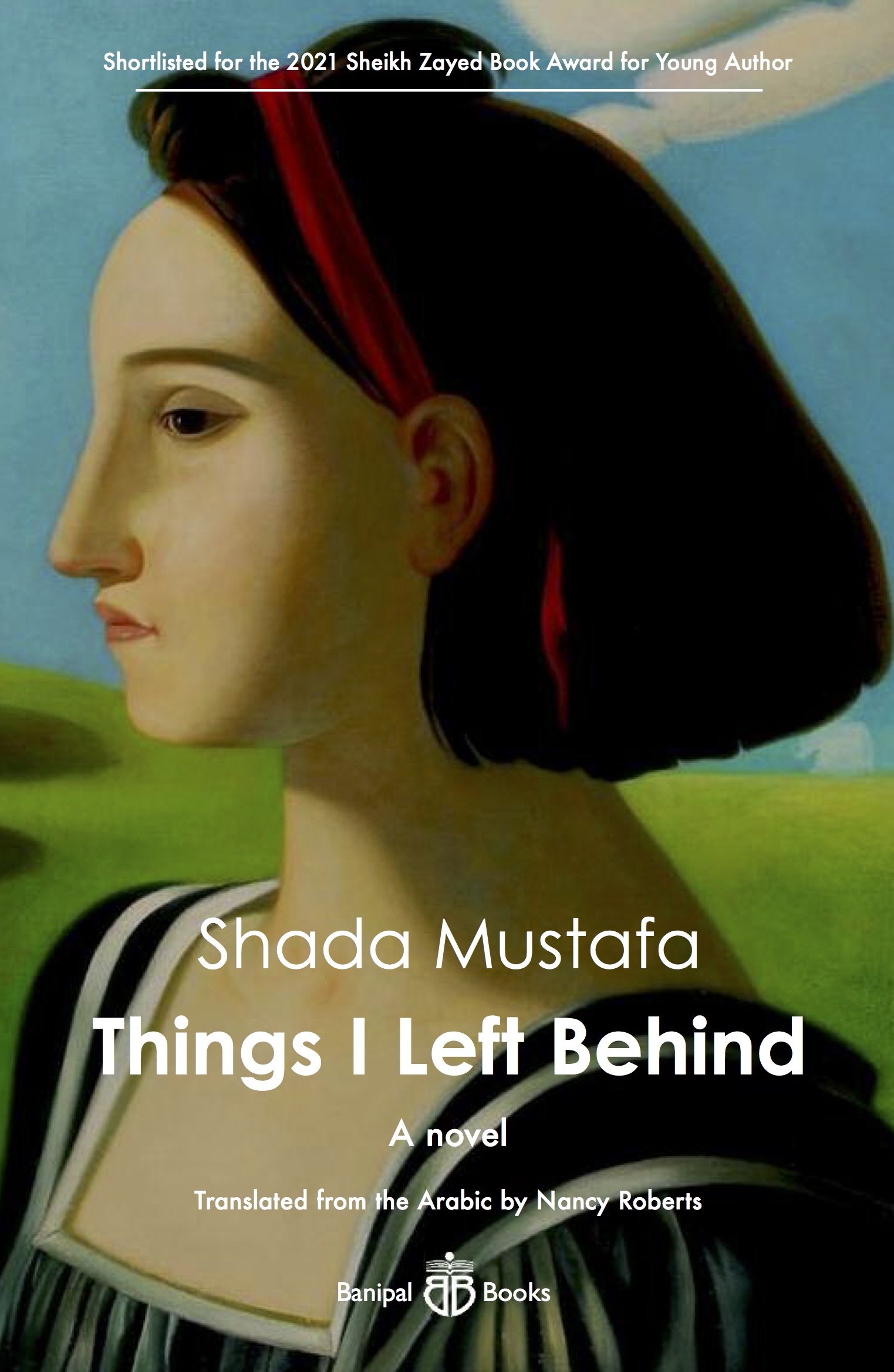 Things I. Left Behind was published in English translation by Nancy Roberts by Banipal Books in May 2022. For more about the book click here
For news of readings, events and new titles.
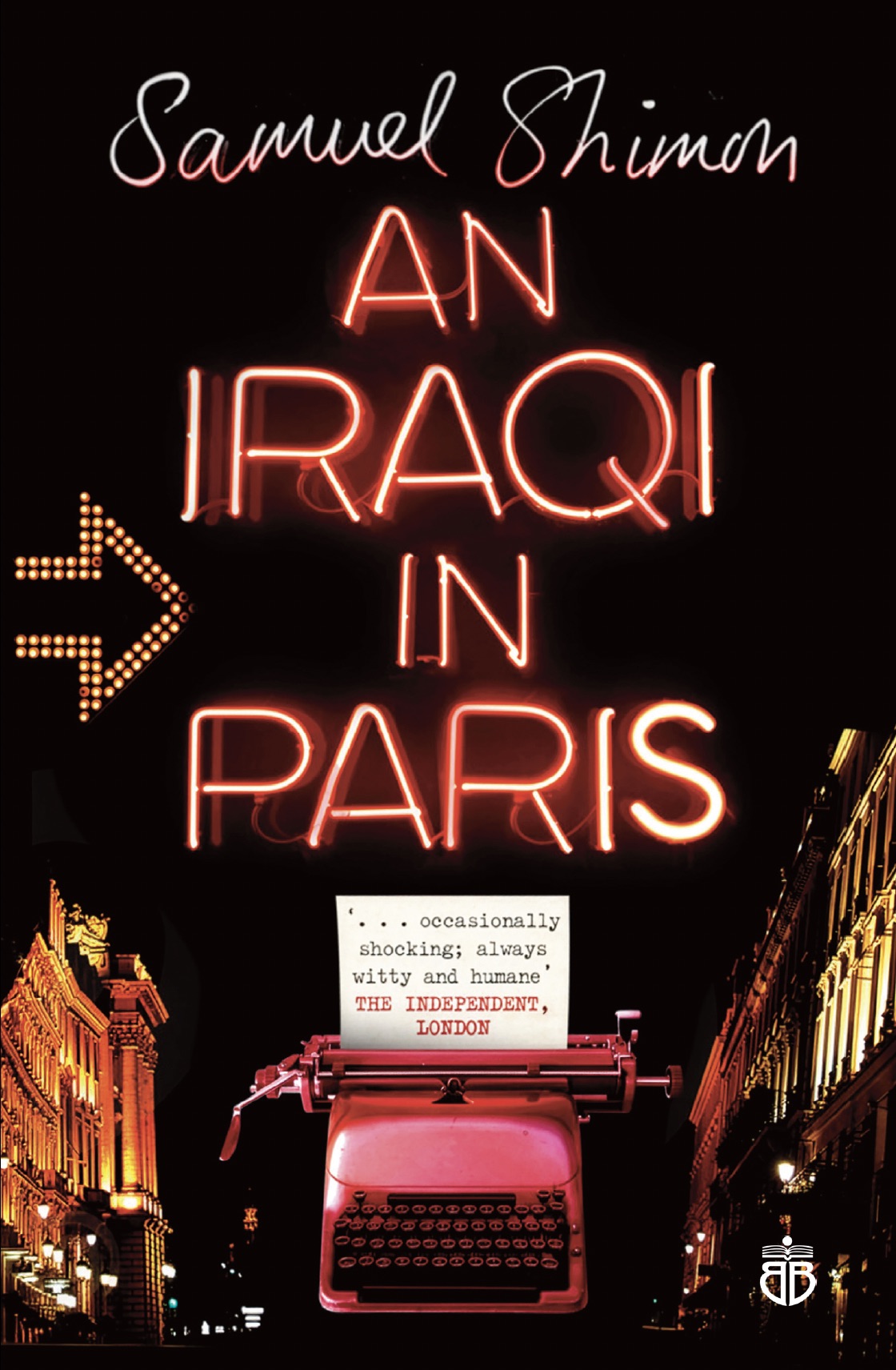
An Iraqi in Paris by Samuel Shimon
The Cinderellas of Muscat by Huda Hamed (Banipal Books, 2025)
The Tent Generations
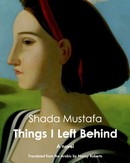
Things I Left Behind by Shada Mustafa, translated by Nancy Roberts
Shadow of the Sun by Taleb Alrefai
Birds of Nabaa, A Mauritanian Tale by Abdallah Uld Mohamadi Bah
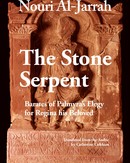
The Stone Serpent, Barates of Palmyra’s Elegy for Regina his Beloved by Nouri Al-Jarrah
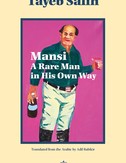
Mansi A Rare Man in His Own Way by Tayeb Saleh (Banipal Books, 2020)
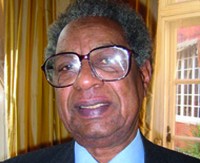
Tayeb Salih
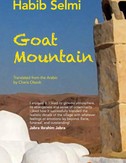
Goat Mountain by Habib Selmi
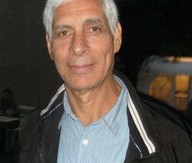
Habib Selmi, author of Goat Mountain and 3 times shortlisted for the IPAF

The Mariner by Taleb Alrefai (Banipal Books, 2020)

Taleb Alrefai, author of Shadow of the Sun and The Mariner

Fadhil Al-Azzawi's Beautiful Creatures by Fadhil al-Azzawi (Banipal Books, 2021)
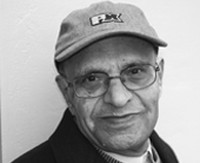
Fadhil al-Azzawi

Poems of Alexandria and New York by Ahmed Morsi (Banipal Books, 2021)

Saïd Khatibi
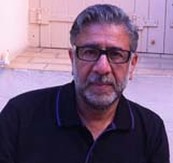
Amjad Nasser (1955–2019)
Digital Banipal the full archive
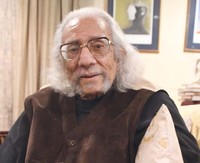
Ahmed Morsi, author of Poems of Alexandria and New York

Sarajevo Firewood
The Madness of Despair


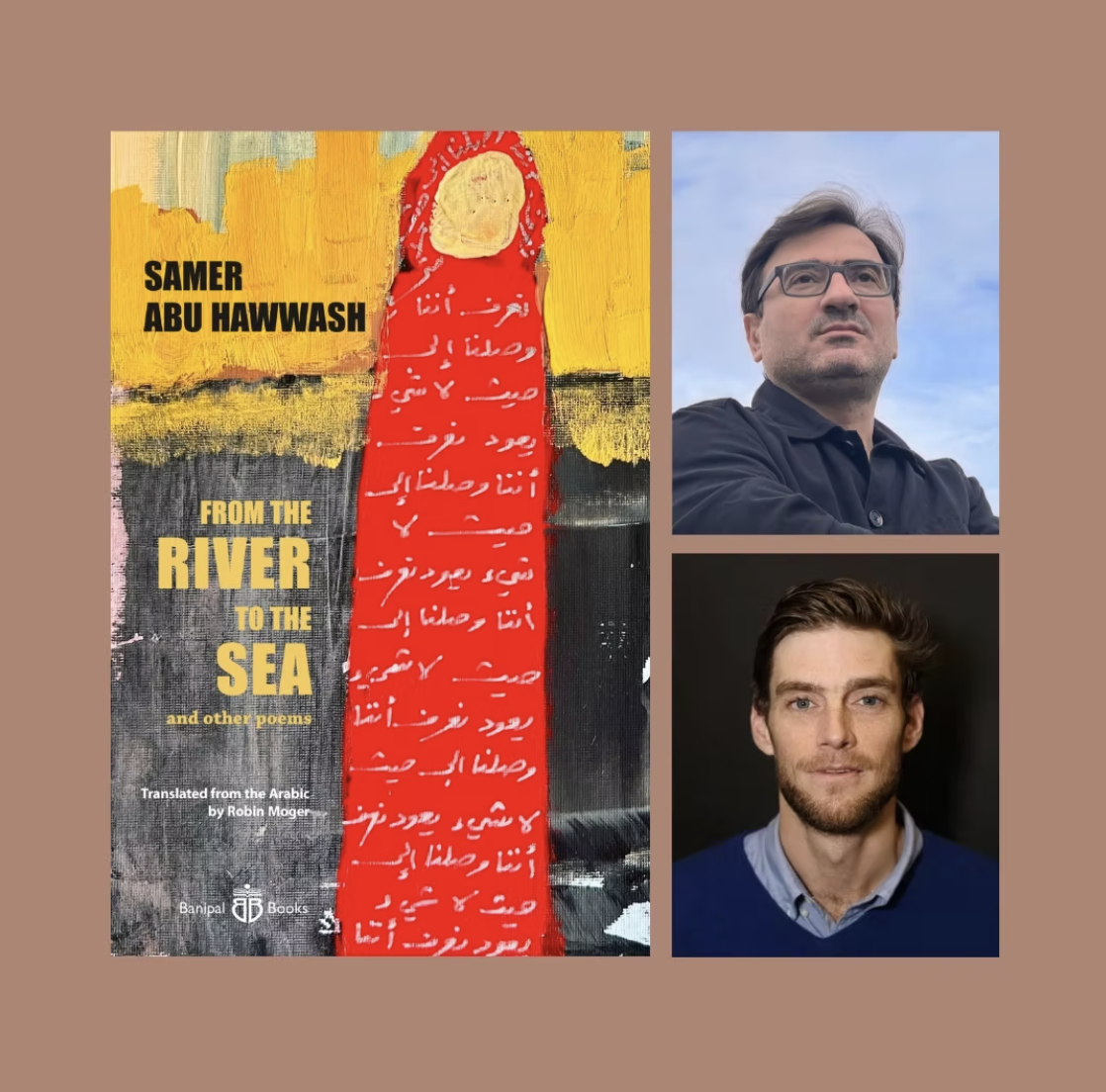
.png)

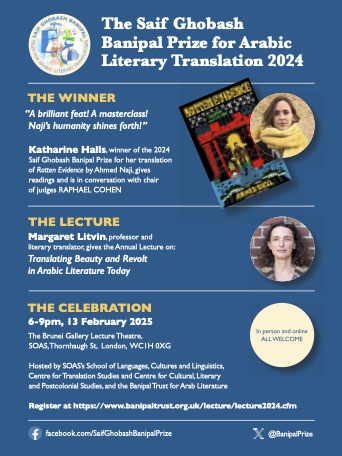

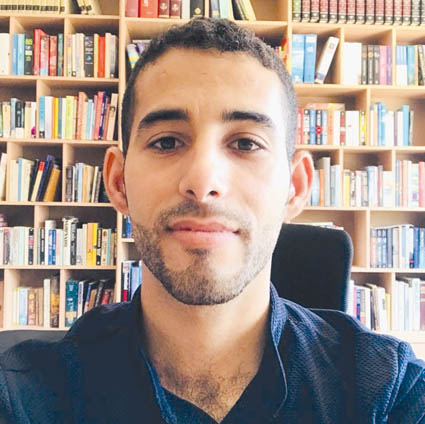
Link to poems by Mosab Abu Toha, published in Banipal 71 (Summer 2021), available to read online
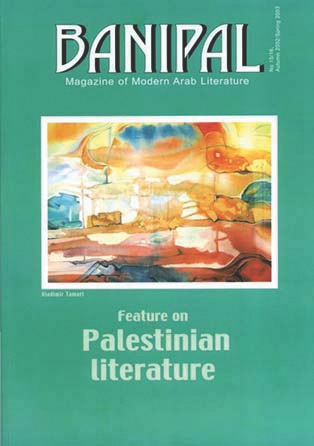
Link to poem by Liana Badr published in Banipal 74, now available as an online selection
















* * *


 Reprint out now
 GRIFFIN PRIZE SHORTLIST 2023
 Banipal's first audiobook