Receive Our Newsletter
For news of readings, events and new titles.

 Fayez Ghazi reviews
Published by the Egyptian General Book Organization,
Cairo, November 2021
In his latest novel, A Crime That Agatha Christie Didn’t Write, Iraqi author Yousif Abu Al-Fawz weaves a together two main narratives into a mystery crime story, breaking the timelines between them as it progresses. He uses several techniques, such as emails, and Facebook messages, and does not content himself just with the two main storylines, but also includes many shorter ones organically linked to the characters’ past and present. Present events take place on Finnish soil, with some past events on Iraqi ground, as well as on the death line of the asylum journey between Baghdad and Helsinki.
The first story, which begins 14 years before the book opens, is that of a young Iraqi refugee girl in Finland, who wanted to regain her life after being sold by her parents to a hateful husband she did not love. She divorced him and started to build her life again, working and studying at the same time to obtain the necessary certificates to go to university. Her family accused her of becoming European, abandoning her Eastern roots, and crossing their red lines. They sent the cousin who had helped her reach Sweden to find her and, conniving with her ex-husband, he killed her, justifying his crime as an “honor crime”!
“Won’t these horrible people stop killing their daughters just because they are falling in love? Or they are exercising their freedom and human rights?”
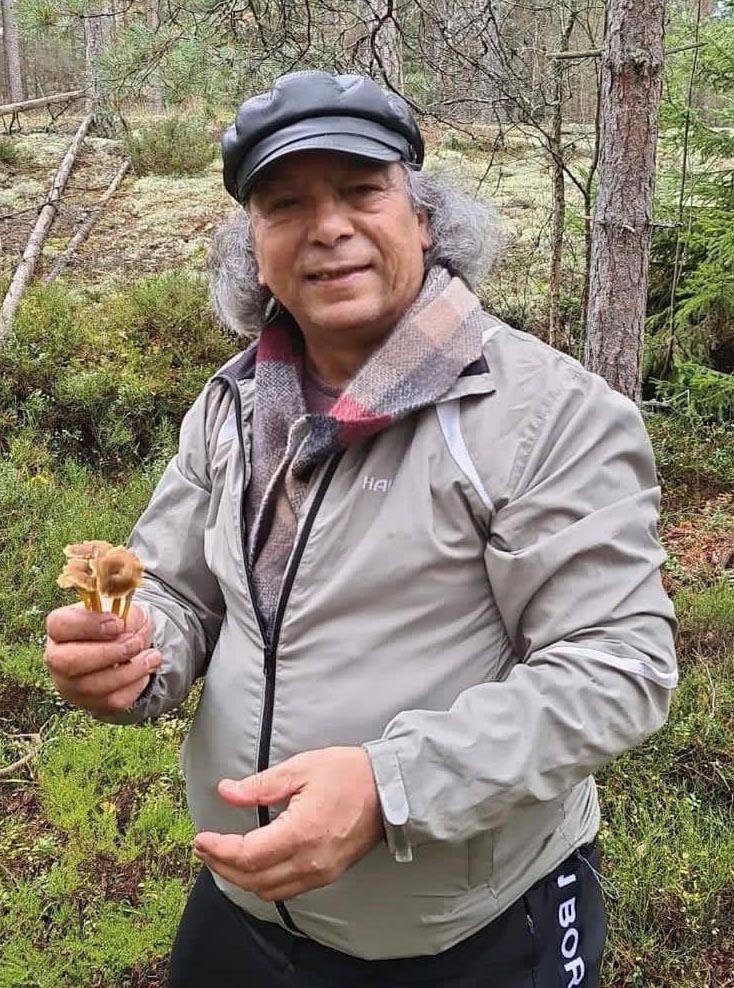 The second story, which takes place in the present, is an intertwined and complex police story punctuated by many surprises. Most of the characters of the novel are involved in it. It is about the unintentional murder by a Finnish citizen of his girlfriend, after which he wraps her body in a carpet and places it beside a lake. Faleh Alwan, the protagonist of the novel, who is on a date with Fatima, discovers the body. Fatima finds herself in an awkward situation as she is already married to someone else, Abdul-Zahra, who, if he knew his wife was with another man, would kill her. Here, the ingenuity of crime-fighting detective Albu Felkman and his friend Faleh intersects to spare her from potential danger.
The two stories are not written in a traditional manner: the author fragments the developments in each one over the pages, which makes them interesting and enthralling, before adding a happy surprise towards the end.
As for the many other storylines in this novel, they were the true body of the text, which carries many ideas and clear implicit critical remarks, and reveals a past of sorrow and torment, a reality of fragmentation, confusion, suffering, and a conflict between two cultures.
Faleh Alwan, an Iraqi refugee who escaped Saddam Hussein’s dictatorship during the 1991 uprising and became a translator with the Finnish crime control agency, has quit because of his disgust at the amount of hatred in the fabricated tales that asylum seekers told and their foolish denial of their roots, in addition to the proliferation of Ba’athists among them. After that he got a job as a guide in an asylum seekers’ reception center. Following the death of his wife, Siham, he submerged himself in following the news on Facebook and other sites, and his friend Zuhair Ramadan named him Fal-pedia (like Wikipedia).
Faleh criticizes some refugees for violating the law and behaving with the reactionary mentality they brought with them from their countries, as well as other irresponsible people who harass passers-by, evade taxes, launder money, sell drugs from their shops, promote prostitution, buy expired foodstuffs at cheap prices and mix them with good produce. Faleh not only criticizes refugees but also racists from the extreme right and neo-Nazis who oppose immigration, asylum, cultural pluralism, and Islam, which had led to repeated violence and attacks that began to worry the residents of the country. “Abiding by the laws of the country is what gives the immigrant’s life positive meaning and facilitates integration into Finnish society,” he says.
As for Zuhair, a virtuous man who escaped Saddam’s dictatorship after being arrested for his communist affiliations, the Ba’ath regime arrested his young sister Awatif and imprisoned her in retaliation for his escape. He works hard to guide and assist new refugees, to provide what he can and also collect clothes for them with the help of his Finnish wife, who loves and sympathizes with immigrants. In 2012 he returns to Baghdad to be with his sister’s family after a sectarian armed group kidnaps her son Joseph and demands a ransom for his release. Joseph manages to escape with the help of a girl who has been enslaved by the group to satisfy their sexual fantasies. It turns out that the group is headed by one of the religious figures supported by political parties in the new regime in Iraq. Zuhair helps his sister’s family emigrate from Iraq to Finland and rides the death boats with them on their journey between Turkey and Greece. Later Joseph gets to know that leader of the group when he is among the asylum seekers with him.
“They talk about honor and morals, those pimps and criminals, and they wear the cape of religion to cover their crimes.”
As for Abdel-Zahra, he and his family, along with thousands of others, are deported to Iran at the hands of Saddam Hussein’s forces during the Iran-Iraq war because of his sectarian affiliation. He marries Fatima and they emigrate to Finland on a long, tormentous journey, via prison in Estonia. Abdel-Zahra is an arrogant, backward person who sees in women’s freedom the way to sin and prostitution, which causes him difficulties dealing with his daughter Balqis, who runs away from home. He also beats his wife, Fatima, which on one occasion caused her to miscarry. Balqis is taken care of by a Finnish family after her escape, and Faleh knows her as Rima, who helps his wife Siham in his absence. When her mother later tells her about her relationship with Faleh, she encourages her mother to divorce Abdel-Zahra and tells Faleh her mother loves him.
In the text, there are also symbolic figures, such as the journalist Hamid Al-Husami, who writes newspaper articles exposing the corrupt ruling junta in Iraq today and the criminals who steal from the people without anyone being able to stop them. He was kidnapped by powerful militias and his voice permanently silenced after speaking about the Camp Speicher massacre of June 2014.
The novel blends East with West, and several Western characters appear in the novel, such as Yana, Officer Beca Quentin, Officer Christina Laina, and Heidi, who is murdered by Sakary Terhu, and Hilda . . . But the most prominent is the detective Albu Felkman. He is similar to Hercule Poirot (the fictional Belgian detective created by British writer Agatha Christie), being an energetic officer dedicated to his work who spends his nights working to solve the mystery of crimes. He has a good relationship with Faleh and is deeply acquainted with Eastern culture, its customs and traditions, which helps him solve many crimes, mainly those designated as “honor crimes”, and he understands many taboos.
There is one character in the novel who shows their opportunism in the clearest way, and it is the character of Hajj Abu Ali. During Saddam Hussein’s time he was an investigation officer by the name of Abu Orouba and after the fall of Saddam and the American occupation of Iraq he moved his revolver from one shoulder to the other and became the head of a kidnapping group by the name of Abu Israa.
The Finnish News Agency is present as a base for information obtained by the author, whether in terms of statistics or local and international news.
The novel is full of ideas and opinions; its events are presented in an interesting way, and in good language. It is an attempt to look objectively at the problems afflicting Iraqi society after the fall of the Saddam Hussein regime that turned it into a society of exiles, as well as the refugee crisis, smuggling methods, and the growing reactions of societies in Europe to supporters and opponents of migration and the impact of this migration on the structures of those societies.
An interesting novel with two sides to it, one Finnish, the other Iraqi.
“It is necessary to believe and work for a concept that considers civilizations to be born for dialogue, not clashes. The East is not extremist Islam as some Western media are trying to portray.”
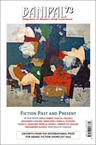
Published in Banipal 73 – Fiction Past and Present (Spring 2022)
About Fayez Ghazi
Back to Book Reviews
For news of readings, events and new titles.
The Cinderellas of Muscat by Huda Hamed (Banipal Books, 2025)
The Tent Generations
Things I Left Behind by Shada Mustafa, translated by Nancy Roberts
Shadow of the Sun by Taleb Alrefai
Birds of Nabaa, A Mauritanian Tale by Abdallah Uld Mohamadi Bah
The Stone Serpent, Barates of Palmyra’s Elegy for Regina his Beloved by Nouri Al-Jarrah
Mansi A Rare Man in His Own Way by Tayeb Saleh (Banipal Books, 2020)
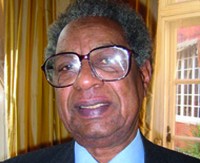
Tayeb Salih
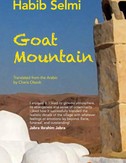
Goat Mountain by Habib Selmi
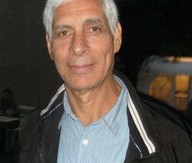
Habib Selmi, author of Goat Mountain and 3 times shortlisted for the IPAF
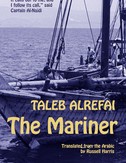
The Mariner by Taleb Alrefai (Banipal Books, 2020)
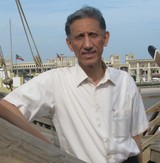
Taleb Alrefai, author of Shadow of the Sun and The Mariner

Fadhil Al-Azzawi's Beautiful Creatures by Fadhil al-Azzawi (Banipal Books, 2021)
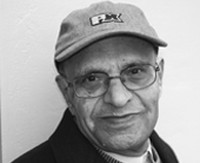
Fadhil al-Azzawi

Poems of Alexandria and New York by Ahmed Morsi (Banipal Books, 2021)

Saïd Khatibi
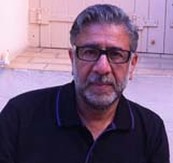
Amjad Nasser (1955–2019)

Digital Banipal the full archive
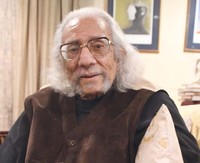
Ahmed Morsi, author of Poems of Alexandria and New York

Sarajevo Firewood
The Madness of Despair


.png)



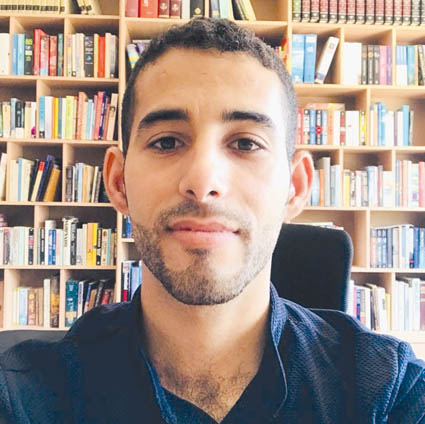
Link to poems by Mosab Abu Toha, published in Banipal 71 (Summer 2021), available to read online
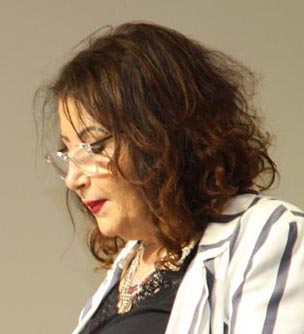
Link to poem by Liana Badr published in Banipal 74, now available as an online selection





















* * *










 Reprint out now
 GRIFFIN PRIZE SHORTLIST 2023
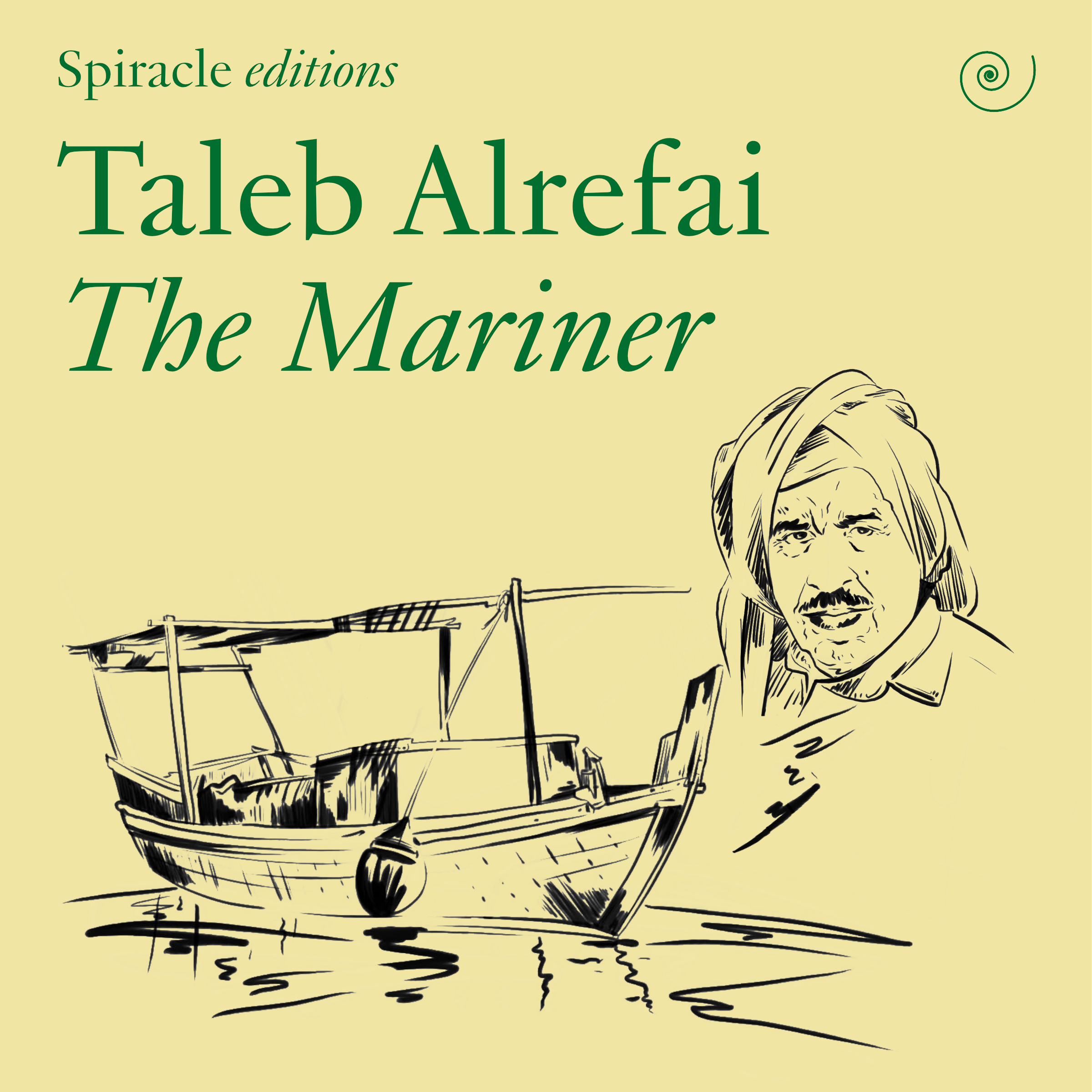 Banipal's first audiobook