Receive Our Newsletter
For news of readings, events and new titles.

 Susannah Tarbush reviews
Daughter of the Tigris by Muhsin Al-Ramli
translated by Luke Leafgren
MacLehose Press, London,
November 2019
ISBN: 9780857056825 Pbk 384 pp
Pbk: £14.99 / $18.77
ebook: 9780857056832 £9.99 / $12.98
When the English translation of Iraqi author Mushin Al-Ramli’s 2012 epic novel of war and love The President’s Gardens was published by MacLehose Press in 2017, it was acclaimed by critics and readers alike. The translation, by US scholar Luke Leafgren, won the 2018 Saif Ghobash Banipal Prize for Arabic Literary Translation.
The success of The President’s Gardens encouraged MacLehose to ask Al-Ramli to write a sequel, with Leafgren once again as translator. The translation of the sequel, Daughter of the Tigris, was published at virtually the same time as publication of the Arabic, Bint Dijla, by Dar al-Mada of Baghdad.
 Al-Ramli has lived since 1995 in Madrid, where he is a professor at St Louis University. The President’s Gardens and his 2009
novel Dates on my Fingers were both longlisted for the International Prize for Arabic Fiction (IPAF). His latest novel Abna’ wa Ahdhiya (“Sons and Shoes”), published by Dar al-Mada in 2018, is one of 13 books on the Sheikh
Zayed Book Award 2020 literature longlist.
The President’s Gardens depicted Iraq under the dictatorship of Saddam Hussein. The sequel carries various plotlines and characters into the post-invasion years. Al-Ramli is a remarkable storyteller, and in Daughter of the Tigris he creates a dynamic, intricately plotted narrative, brimming with stories and a host of memorable characters.
The invaders claimed to be bringing justice and democracy to Iraq, but the country descended into insecurity, violence, hostage-taking and rampant corruption. Al-Ramli has an acute sense of irony, and he lightens the darkness of the situation with humour and fantasy. He brings us characters from different parts of society, paying special attention to the common people – the “salt of the earth” – and their endurance.
 Luke Leafgren is Assistant Dean of Harvard College where he taches Arabic and translation. His translation of Daughter of the Tigris has clarity and naturalness and reads very well. He has an assured touch in translating a text that ranges in tone from nightmarishly visceral to lyrical, and in finding English equivalents for Arabic idioms and earthy language, and snatches of poetry and songs.
The President’s Gardens opened with nine severed heads, each in a banana crate, being sent to the village of Nakhila beside the river Tigris. One of the heads was that of middle-aged Ibrahim. From this gruesome beginning the novel looped back in time to the boyhood of Ibrahim and his two best friends, Tariq and Abdullah, relating their personal histories as time passes in turbulent Iraq.
The President’s Gardens ended with Ibrahim’s widowed daughter Qisma travelling with her baby son by car to Baghdad in search of her father’s decapitated body. She was accompanied by her father’s longtime friend Tariq, a religious sheikh whom she had agreed the previous evening to marry as a second wife. Burdened with anxieties and feeling nauseous, she asked Tariq to stop the car.
Daughter of the Tigris begins: “After vomiting by the side of the road on the way to Baghdad, Qisma felt hungry and decided to eat Iraq.” Later, when Tariq asks what she wants to eat, she says “Iraq”, adding that “she would eat this country that was eating its children, that had eaten her father, her husband, her childhood and her future, that had eaten all her dreams. She had decided, therefore, that she would take it as fodder for a new dream. She had no idea how, but she would search for a way.”
The novel chronicles Qisma’s odyssey through a changed Iraqi in the company of Tariq. Her search for her father’s headless body is the main axis of the plot, around which Al-Ramli weaves an expansive, digressive saga rich in sub-plots.
Qisma is a defiant character with a regal quality, and en route to Baghdad she stands up to US soldiers at a roadblock who are humiliating Tariq. She swears at them, and the American General Adam tells her that Iraqi vehicles must keep at least 100 metres from US vehicles, or risk being shot at. Qisma remembers the rape of 14-year-old Abeer al-Janabi by US soldiers, who murdered her and her family. Images of rape, whether of women or of Iraq itself, recur in the novel.
Qisma’s quest for her father’s remains contains an element of repentance. As recounted in The President’s Gardens she had as a young girl recoiled from her father when he returned to the village minus his right leg, which he had lost in the US aerial bombing of Iraqi troops as they withdrew from Kuwait in 1991. She rebelled against her father’s fatalistic approach to life and his naming her “Qisma” meaning “fate”.
Qisma shunned her father, marrying an officer in the president’s Republican Guard and changing her name to Nisma. The couple mixed in the highest echelons of society and lived in an impressive house in Baghdad. And then calamity befell Qisma when, during a party, the president summoned her and raped her. She did not tell her husband of the rape, and when she gave birth she did not know if her baby was his or the president’s. Her oblivious husband actually named him after the president. In Daughter of the Tigris Qisma changes her son’s name to Ibrahim, in tribute to her dead father, and changes her own name back from Nisma to Qisma.
Ibrahim was actually the quiet hero of The President’s Gardens. He had a job working in the president’s gardens where he was ordered to bury victims of the murderous regime. At great risk to himself he started to record in hidden notebooks details of the bodies and the torture they had suffered, in the hope that one day families would be able to find the remains of their vanished loved ones and give them a proper burial.
One of those whose details he recorded after a particularly grisly torture and death turned out to be Qisma’s missing husband, killed for having been involved in a coup attempt. Qisma realises how bravely Ibrahim has behaved, and her search for his headless corpse is in part fuelled by remorse.
For Qisma, her marriage to the much older Tariq is a practical matter for as a single widowed woman she would be unable to travel alone. But Tariq longs to consummate the marriage to the bewitchingly attractive young woman, and there is comedy in his constant lusting after Qisma while she fends him off. He had planned to tame her, but she proved untameable.
During the journey to Baghdad, Tariq suggests a detour to visit his friend Sheikh Tafir al-Shakhabiti, head of the Shakhabit tribe. He is amazed by how well Tafir is doing under the occupation, and the luxury in which he is now living. Tafir tells him: “We are living through a historic opportunity. It is the dawn of democracy, and anyone can do what he wants and attain the riches he desires.
“Don’t you see how many nobodies and scoundrels have suddenly become rich and are now men of power and influence? Even the foreigners! Why have they appeared from every nook and cranny if not to plunder our wealth? It is certainly not to liberate us, as they claim, but rather for the sake of oil.”
As for the fund for reconstruction, it is “a great swamp from which billions are ladled out. Countries, companies, political groups and individuals take from it such plunder as has never been seen in the history of the world”.
During the visit to Tafir, there is a public debate between Tafir and Qisma on women’s rights. Tafir argues that a woman could never be like a man, giving as conclusive proof the inability of women to piss while standing. Qisma challenges him to a pissing contest: he agrees that if she wins he will grant her three wishes.
To the astonishment of all, Qisma wins the wager. Not only does her powerful jet of urine extend to a wall which Tafir’s efforts failed to reach, but she manages to write the word “Woman” on the wall with it. Tafir and Tariq are left uneasy about this feat, and start to doubt that Qisma really is a woman.
Tafir urges Tariq to take advantages of the opportunities offered by the new situation in Iraq, as does another key figure in the novel. He is aged Sayyid Jalal al-Din, son of long-ago mayor of Nakhila. He had left the village as a teenager and gone to Iran where he joined the opposition, but following the invasion he returned to Iraq where he has a high rank in a big party involved in power sharing.
Unbeknownst to Qisma and Tariq, Jalal is in fact the biological father of Abdullah, the old friend of Tariq and Ibrahim. At the age of 17 Jalal had impregnated Zakiya, a mentally disabled orphan girl who was living with his parents. The scandal was hushed up and Jalal’s parents sent him away from the village in disgrace. Zakiya was hidden in a cellar and after giving birth she was murdered by the mayor and Tariq’s imam father.
In The President’s Gardens Abdullah learned the truth of his parentage from the mayor’s elderly dying widow wife after he returned from 19 years as a prisoner of war in Iran. Daughter of the Tigris finds him full of hatred for his biological father, and in the early pages of the novel he vows to kill him. Jalal is desperate to visit the village in order to try and make amends with Abdullah, and tries to use Qisma and Tariq to engineer a meeting with him. Abdullah furiously refuses to countenance such a meeting, but Jalal continues with efforts to arrange it.
Jalal tells Qisma and Tariq that they should get involved in shaping their country’s future. His suggestion that they form a party of their own ignites their ambition. The novel traces, at times amusingly, the steps they take to put their plans for power in motion, together with a rascally dwarf named Rahib from the Shakhabit tribe and his Bohemian poet brother Bara.
While Qisma pursues her aims, there are sinister signs that her life is in danger. A masked man in a car looks at her as he draws his finger threateningly across his throat. A booby-trapped whole stuffed lamb explodes in the kitchen of Qisma’s house when Jalal comes to call. She is fascinated by the various corpses she is shown in her search for Ibrahim, and by knives. “Qisma’s desire to slaughter or be slaughtered like her father grew until it had taken hold of her entirely.”
Today, Iraq remains an unstable and corrupt country, as shown by the ongoing anti-government demonstrations held by young Iraqis in protest at unemployment, corruption, a breakdown in public services, and meddling by foreign powers. Daughter of the Tigris helps explain their anger, and deserves to be read not only by lovers of literature but by anyone seeking to understand the predicament of Iraq.
_________________
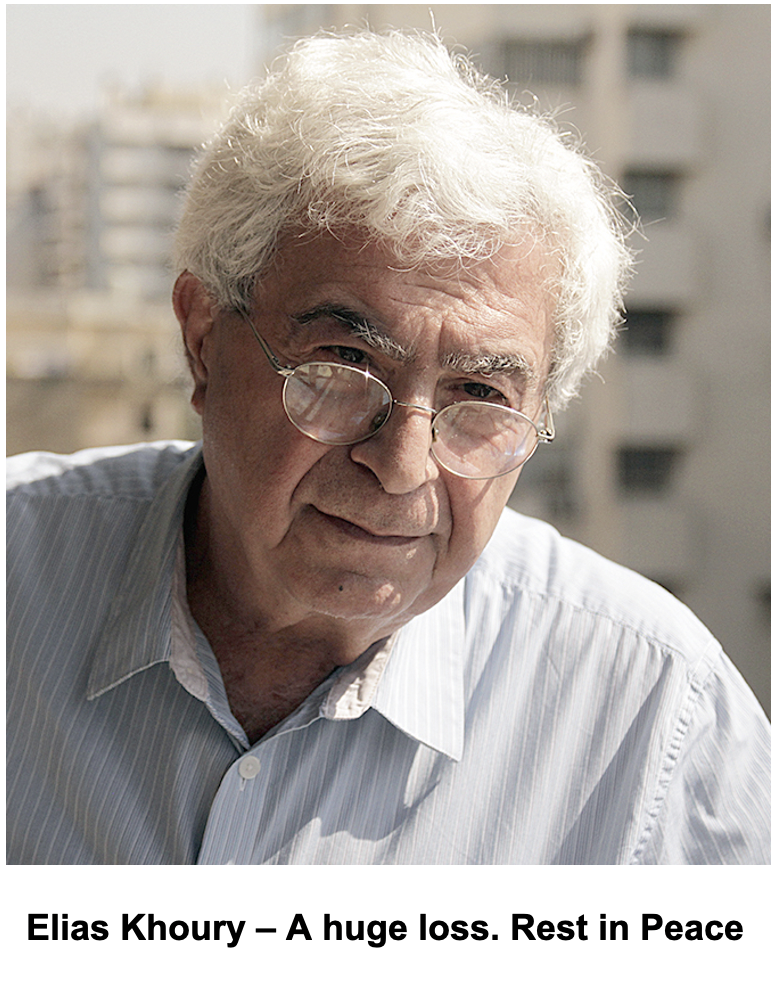
Back to the contents list of Banipal 67 – Elias Khoury, The Novelist
Back to all Book Reviews
For news of readings, events and new titles.
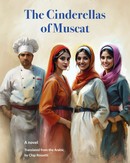
The Cinderellas of Muscat by Huda Hamed (Banipal Books, 2025)
The Tent Generations
Things I Left Behind by Shada Mustafa, translated by Nancy Roberts
Shadow of the Sun by Taleb Alrefai
Birds of Nabaa, A Mauritanian Tale by Abdallah Uld Mohamadi Bah
The Stone Serpent, Barates of Palmyra’s Elegy for Regina his Beloved by Nouri Al-Jarrah
Mansi A Rare Man in His Own Way by Tayeb Saleh (Banipal Books, 2020)
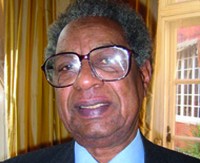
Tayeb Salih
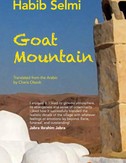
Goat Mountain by Habib Selmi
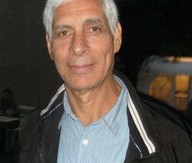
Habib Selmi, author of Goat Mountain and 3 times shortlisted for the IPAF
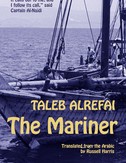
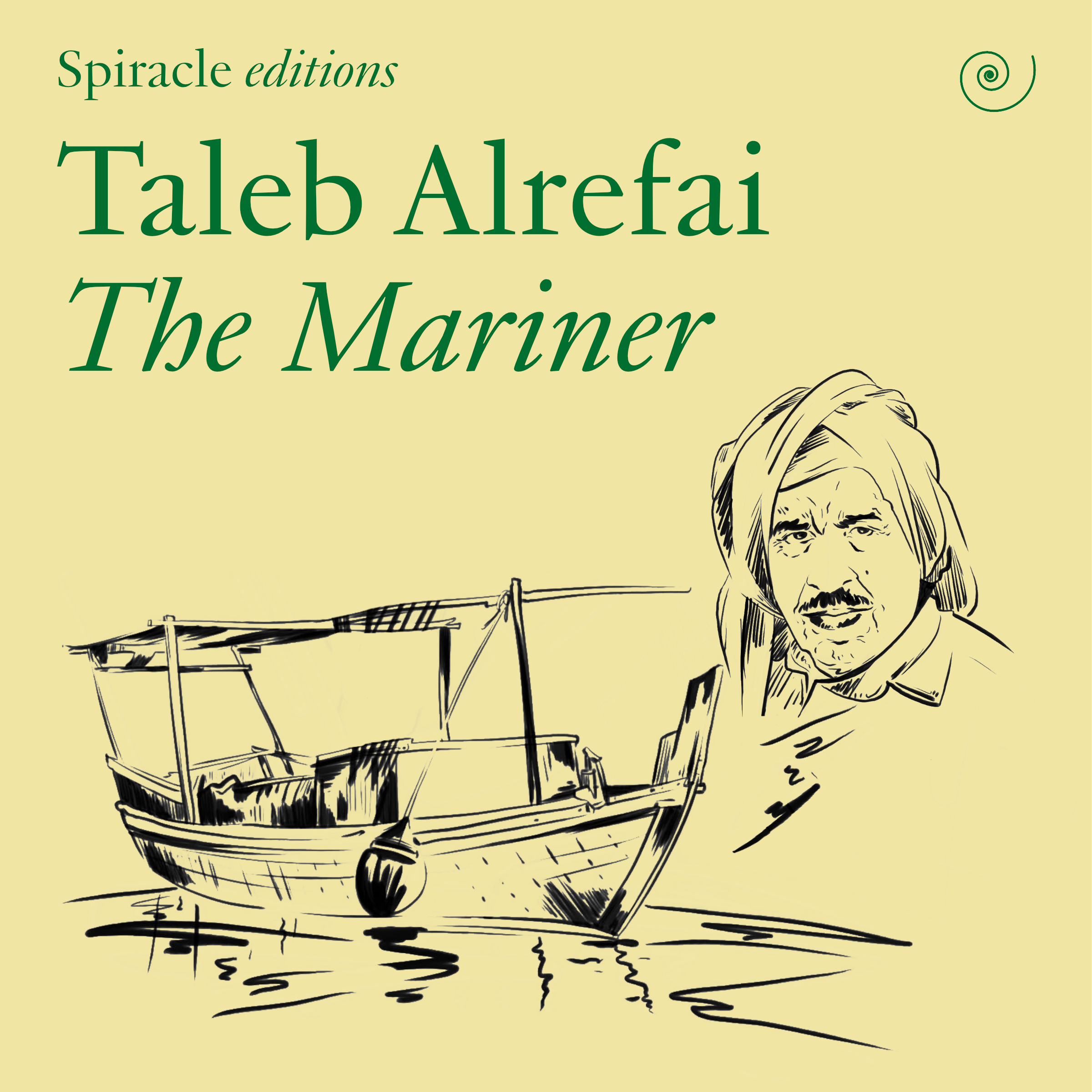
The Mariner by Taleb Alrefai (Banipal Books, 2020)
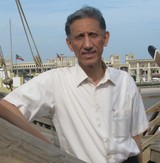
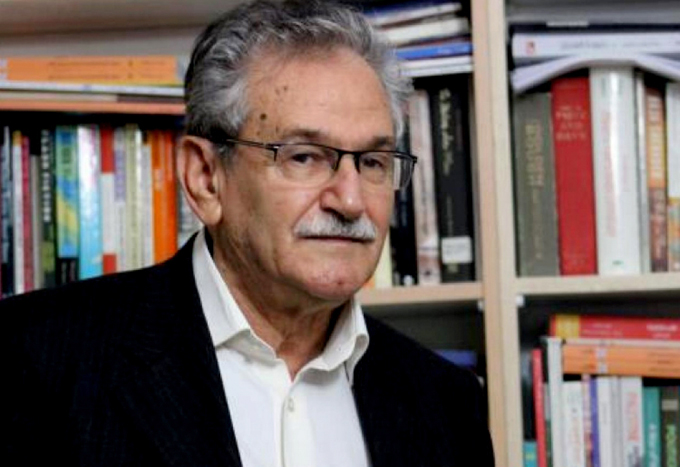
Taleb Alrefai, author of Shadow of the Sun and The Mariner

Fadhil Al-Azzawi's Beautiful Creatures by Fadhil al-Azzawi (Banipal Books, 2021)
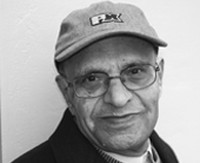
Fadhil al-Azzawi

Poems of Alexandria and New York by Ahmed Morsi (Banipal Books, 2021)

Saïd Khatibi
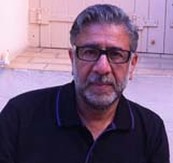
Amjad Nasser (1955–2019)

Digital Banipal the full archive
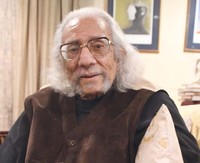
Ahmed Morsi, author of Poems of Alexandria and New York

Sarajevo Firewood
The Madness of Despair



.png)



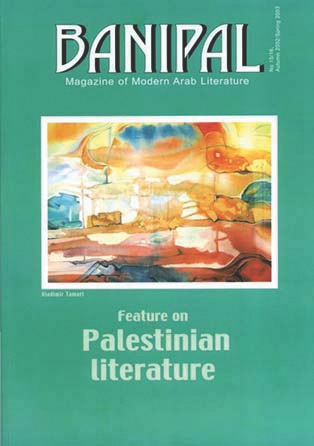
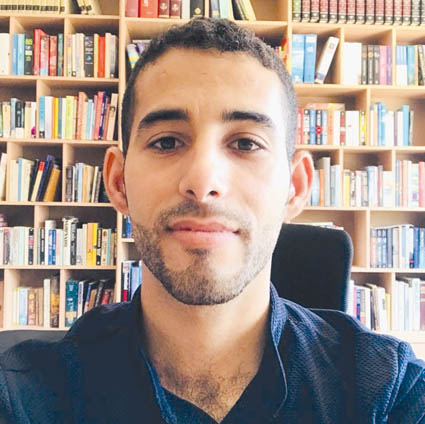
Link to poems by Mosab Abu Toha, published in Banipal 71 (Summer 2021), available to read online
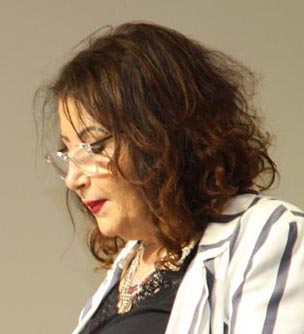
Link to poem by Liana Badr published in Banipal 74, now available as an online selection




















* * *













 GRIFFIN PRIZE SHORTLIST 2023
 Banipal's first audiobook