Receive Our Newsletter
For news of readings, events and new titles.


I woke at ten with the phone disturbing me, ringing in my ear: it was the waiter asking me if he could bring breakfast in. I turned around looking for Sa’doon but found myself all alone. I found a small note from Sa’doon and keys beside it. The note read: “Same place in two months.” I remained silent and I quickly left the place; I kept walking, aimlessly. I could not decide on any particular direction. I thought of going to the university library; I would surely find Ahmed Abdelkader sitting there, but I was hesitant. Why should I seek him now? And what should I tell him? I then thought of going to the headquarters of Al-hurreya newspaper where Feirouz was working; she is the one who would sympathetically listen to me; she would be interested in getting all the details. I then considered going to B’s at Belcour, but finally decided not to go anywhere. It never occurred to me to go home; I had no desire to meet my elderly father or my bed-ridden mother or any of my brothers. I no longer felt anything for them. As I was walking, distracted, I found myself in front of the flat at Didouch Mourad.
The flat was spacious and luxurious. It was nice and clean and the furniture was elegant. It was one among the many flats he had in the capital and in other cities. I envied him and my envy gave way to a feeling of hatred. Once inside the flat, I started dancing with frenzy. The spacious flat made feel proud and happy: from now on, I shall be free and shall enjoy power and prestige. I felt as though fortune were at last bestowing its favours upon me. My mood suddenly changed and I felt distressed at the remembrance of his last words: he was talking to me as if I were a whore. The word “whore” several times echoed in my mind. I felt the walls, the doors and the windows were all condemning me: “Whore! Whore!” I had a terrible headache and the pain inside my head kept clamouring in protest and condemnation. I left the flat.
This time I was positive about my destination. I went to the university library, meaning to meet Ahmed Abdelkader. There he was in the corner, sitting and reading some literary or philosophical work as is his wont. Before approaching him, I stared at him for a while. When I sat beside him, he was not aware of my presence; then he caught sight of me and could not take his eyes off me as though the surprise had stunned him; I could guess what was, at that moment, going on in his mind. He must have been saying to himself: “For more than a year I have been dreaming of you sitting beside me, why should it happen now?”
Without waiting for him to voice any questions, I answered: “I need you.” There was a silence, then I went on: “I need someone to talk to, I am really confused and I feel miserable. I know nobody in this world, you are the only person I can talk to.” He did not utter a word. He remained silent, shocked and stunned, as if he meant to say: “I am at your disposal.”
I went on: “I know that I have mistreated you for ages. But surely you can appreciate my feelings for you, though now this is not important, because what I’m feeling at the moment is not unlike what you’ve felt. I have met a guy called Sa’doon. We’ve been meeting once or twice a week for the last three months. I thought at first that he was in love with me, but to my disappointment, I have now realised that I mean nothing to him but a convenient body that he casually makes use of. Was I wrong when I thought he loved me?” Then I burst into tears. I cried and cried before I felt his hand on my shoulder comforting me, shaking me to my senses with deep affection.
When I finally raised my head, he said: “I shall always be at your disposal, I would never let you down, whatever mistakes you make. I shall remain indifferent to all your errors, my love for you can forgive all your sins.” I ought to have felt hilarity at every word he said, but this was not what I expected of him. He was still weak, as weak as he’d always been. This is perhaps what made me detest him: his weakness, his apprehension, his solicitation, and his excessive gentility. I suddenly felt that he, too, had disappointed me; I got up and left without saying a word, leaving him in utter confusion. He surely could not understand what I was thinking. I went out, almost running, and returned to the flat. I closed the door and surrendered myself to an overwhelming sense of loss and deprivation.
2
What to do, then? I did not expect much of life. I merely rejected the destiny allotted to me by my family background. My expectations were not different from those of any other girl – to have my fair share of happiness. Is this not legitimate and simple? Very simple indeed. Then, why isn’t that appreciated? Why do people think of it as deviation from morals and traditions? What have we gained from all those traditions? My sister Halima got married to an idiot at the age of seventeen. All he could teach her was to give birth to children, cook, launder, and sweep the floor. She never had a clue what life could mean. I am not going to be like her, I am not going to be like them, I shall persevere forever, in my fashion, forever.
3
But why does Ahmed Abdelkader persist in viewing me in the way he does. On several occasions I’ve told him I was not his type of girl, told him he was far superior to me since he was a refined poet, but he prefers to remain weak and insecure, why is this man so helpless? When will he ever free himself from me and from his helplessness? I don’t know. One day he will wake up to this devastating reality and he will regret enormously having wasted his time loving a girl like me.
4
Today, I met B--- and Hamidi Nasser. I liked Nasser better than B--- because at least he had the courage and openness to express himself freely, and with no inhibitions, and he had a definite sense of purpose, whilst B--- was introvert and weird; whenever I looked at him I got the impression he was planning some conspiracy. He said he was writing an extraordinary novel about us, a novel he claimed would immortalise us all. So far as I am concerned, I don’t care whether he completed that novel or not; that’s not important. What really concerned me was how to live my life and fulfil my dreams. B--- invited us to Jugurtha for lunch. We had plenty of broiled fish and two bottles of white wine. We enjoyed the lunch. Nasser kept flirting with me while B--- kept scolding him. Why did B--- think that I was Ahmed’s property? He always behaved as if that were true, despite my repeated attempts to explain that I would never be Ahmed’s girl. He would always react to my attempts to explain, saying: It’s all right, this could merely be an impression initiated by a writer’s intuition.
5
Sa’doon returned after I suffered two months of loneliness in his flat at Didouch Mourad. As soon as he arrived he made love to me, he said that he’d been thinking of me all the time and that his desire for me was permanent. In the evening he left me, saying that he had to honour his “marital obligations”. I felt a terrible emptiness after he’d gone. I felt lonely and desolate, and I was afraid.
6
I was now alone. The window was closed but chaotic noises from the street invaded my ears. All I could do was stare at my reflection in the mirror. I could spy an arched back and wrinkles on the face. I looked like an elderly woman in her sixties. I shed a few tears and then went to wash my face with cold water; I regained my ecstasy and my soul was a little relieved. In vain I kept waiting for a call from Sa’doon. I called Feirouz to ask her to come over, but I was told that she was away in Egypt.
7
Stillness. The night was as cold as the plague at the time of war. The horrifying peril was crawling towards me as though it were a serpent at close distance staring at its prey, watching its slow movement and viewing defeat and panic in its eyes. This was the moment for me to scream as loud as I could. It was also the time to remain inert and silent. How long would it take me to contemplate my situation and understand my inner self. As the hours went by, unrelenting loneliness overwhelmed me. My self-possession and my confidence in the world waned. My world collapsed, as did my brilliance and self-esteem. What absurd fate is this that keeps chasing me and suddenly deprives me of the energies I have been building up for years? What has happened to all my aspirations and dreams? How can a fellow like Sa’doon conquer me so, treat me with such insensitiveness – as if I were a whore? Nevertheless, I feel I love him and that I will cling to him till the end: I simply can’t live without him. How can I have fallen into this trap? Why did it have to be me, rather than someone else? Wouldn’t it have been possible to avoid all this? But, no. Nothing could have been avoided: it was my own blind choice, one to which I have been unconsciously and consistently loyal. How right Feirouz was when she advised me to remain quiet, to reflect a little before committing myself to any course of action. But Feirouz was different: she was in full control of her destiny, she did not allow anybody to violate her privacy or her dreams. Because of my poverty I was weak and oppressed.
Why won’t Sa’doon come back to me? He’s been away, staying with his wife, for a whole week. Has he forgotten me or is he just humiliating me more? This systematic torture horrifies me and destroys my dignity. I can’t blame anybody but myself for what’s happening to me. I was really very frivolous and gave him everything a man could desire; I could have denied him a few things, but I didn’t; I allowed him to do everything his whims dictated. I am to blame, I am to blame . . . I was supposed to . . . I was . . . it’s too late, nothing can now be undone . . . And . . . Let me stop this now, I’m exhausted and I need some sleep . . .
Translated by Hassan Hilmy
from Al-Maraseem wal-Jana’iz, [‘Ceremonies and Funerals’], published by Manshurat Rabitat al-Ikhtilaf, Algiers, 1998
Click here to see other Selections from Banipal 7
For news of readings, events and new titles.

The Cinderellas of Muscat by Huda Hamed (Banipal Books, 2025)

The Tent Generations

Things I Left Behind by Shada Mustafa, translated by Nancy Roberts

Shadow of the Sun by Taleb Alrefai

Birds of Nabaa, A Mauritanian Tale by Abdallah Uld Mohamadi Bah
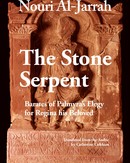
The Stone Serpent, Barates of Palmyra’s Elegy for Regina his Beloved by Nouri Al-Jarrah

Mansi A Rare Man in His Own Way by Tayeb Saleh (Banipal Books, 2020)

Tayeb Salih

Goat Mountain by Habib Selmi
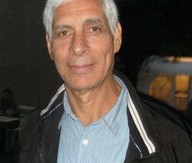
Habib Selmi, author of Goat Mountain and 3 times shortlisted for the IPAF

The Mariner by Taleb Alrefai (Banipal Books, 2020)

Taleb Alrefai, author of Shadow of the Sun and The Mariner

Fadhil Al-Azzawi's Beautiful Creatures by Fadhil al-Azzawi (Banipal Books, 2021)

Fadhil al-Azzawi

Poems of Alexandria and New York by Ahmed Morsi (Banipal Books, 2021)

Saïd Khatibi
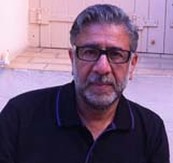
Amjad Nasser (1955–2019)

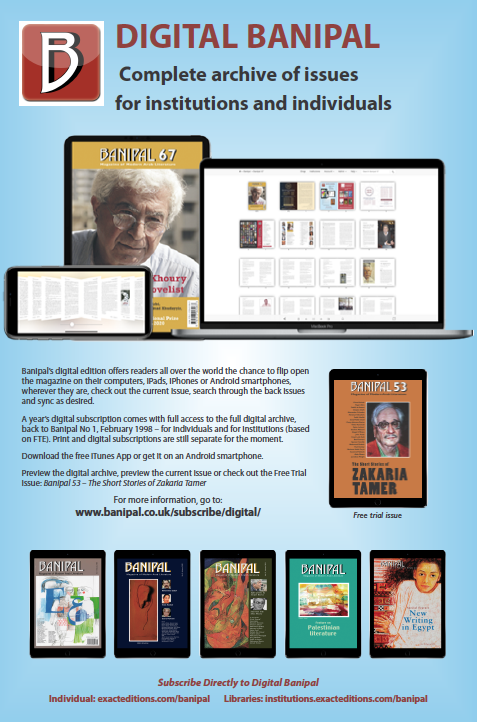
Digital Banipal the full archive
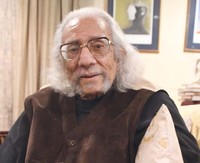
Ahmed Morsi, author of Poems of Alexandria and New York

Sarajevo Firewood

The Madness of Despair




.png)







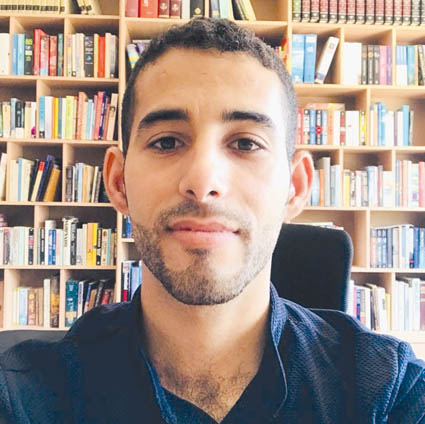
Link to poems by Mosab Abu Toha, published in Banipal 71 (Summer 2021), available to read online
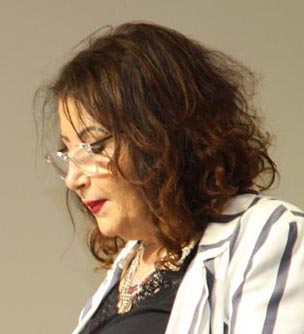
Link to poem by Liana Badr published in Banipal 74, now available as an online selection























* * *











































 GRIFFIN PRIZE SHORTLIST 2023
 Banipal's first audiobook