Receive Our Newsletter
For news of readings, events and new titles.


“He’s living on the fat of his heart” was my mother’s expression to describe someone who eats very little and grows thinner and thinner, burning up the fat deposits they have built up, until eventually they end up consuming the most precious of those deposits.
“Reading on the fat of one’s heart” is my term for a kind of reading that is so strange it would hardly occur to anyone: it means reading in the absence of anything to read, the kind of reading detainees do while enduring long periods of interrogation – intense, severe torture at the start, and then the possibility that the torture might resume unexpectedly at any moment. No books, no newspapers, no magazines, no paper, no pens. All such things become distant memories, things from another galaxy and another epoch. The mind starts to live off its reserves and finally comes to the choicest part of those reserves, like an organism taken by surprise by some wild beast and trapped, possibly forever. So it brandishes the only weapon it has at hand: culture, the humanity of man, the fact that man has transcended and escaped from his bestial origins.
It was raining that midday in mid-November 1987 when I was arrested at the university in my home city, Latakia, because of my leftist connections. It was raining, and in those days, just like now, being arrested meant you did not know if you would remain among the living, for how many decades you would disappear, or in which cell or desert prison you would waste away. It meant saying goodbye, possibly forever, to everything you left behind – your distant and recent past, the ones you loved, the colour of the sky and the feel of grass. You stood on the edge of a bottomless chasm.
Thinking about even a part of all this is enough to break you down and defeat you, and for your troubled imagination to conjure up the worst possible outcomes. It’s at just that moment, in the act of resisting the beast and the abyss, that reading on the fat of the heart begins. As soon as I climbed into the back seat of the secret-police vehicle, blindfolded between two armed guards, fragments and images from books about experiences of detention and interrogation began to run through my mind. I remembered advice from Victor Serge’s writings on police oppression in Tsarist Russia – he was an anarchist who embraced Bolshevism and the Russian revolution and remained a Trotskyite after Stalin’s rise to power. I remembered incidents and characters from Bare Feet: Egyptian Communists – Five Years in Prisons and Torture Camps by Taher Abdel Hakim, especially the part about letting dogs loose in the cells. I remembered the scene where the torturers waterboard the prisoners in L’Arbitraire by Bachir Hadj Ali, and how Bachir trained himself to catch a breath in the fraction of a second when they brought his head up out of the water and how he let the air out slowly when they put his head back under. But the image that recurred throughout the journey from the university to the torture fest that began as soon as we reached the secret-police office was from Notes from the Gallows by the Czech communist Julius Fučik, who was executed by the Nazis. A warder provided Fučik with paper and a pen and what he wrote in prison was smuggled out page by page:
Three o’clock. Early morning moves in from the suburbs. Truck-gardeners drive toward their markets, street-sweepers go out to work. Maybe I shall live to see one more day break.
They bring in my wife.
“Do you know him?”
I swallow the blood from around my mouth so that she will not see . . . but that is foolish because blood oozes from every inch of my face, and from my fingertips.
“Do you know me?”
“No, I don’t.”
She said it without betraying her terror by even a glance. Pure gold. She kept her pledge never to recognize me, although it is almost unnecessary now. Who was it gave them my name?
They led her away. I said farewell with the most cheerful glance I could summon. Perhaps it wasn’t cheerful. I don’t know.1
I reread all that from the fat of my heart. And I made up my mind not to break down, not to help them bring anyone else to this slaughterhouse. Who could break my resistance after I remembered Fučik? Recalling Fučik was enough to recharge my resilience whenever the torture hammered away at my defences, which began to break down one after another, almost to the point of total collapse. This was never book talk. It was a strength that permeated the flesh that they whipped and the joints that were paralysed by the horrible “German chair”. The mind repaid its debt to the body and renourished it with extracts from all the things the mind had stored by reading.
It really wasn’t book talk. This wasn’t just revolutionary romanticism that disappeared as soon as we were detained, as we had all expected and feared. On the contrary, I remember a moment in the “German chair” when my torso was bent back as far as it could bear and I was about to give up the ghost, and the muscles in my legs and arms were tensed to breaking point and I could no longer feel them. I remember that I then came off that instrument of torture, I don’t know how, and walked out of the detention camp on legs that seemed to be paralysed. I walked home, and when I knocked on the door and my father opened it and spread his arms in a way that filled the doorway, I remember that behind him I caught sight of my favourite writers and thinkers and fellow militants, Arabs and others. I caught sight of Gramsci, Shuhdi Atiya al-Shafi‘i, Farajallah el-Helou, Mahdi Amel, Rosa Luxemburg, Che Guevara and others. From all that I understood that if you have done harm to any of your comrades then this is no longer your home, and when I found myself in the chair again, I felt that my mangled, paralysed body could muster enough strength for me to decide that my house was my house, was and would remain so, with its inhabitants, its guests and everything in it.
In moments when you were not being interrogated, moments alone in the cell, you could prepare at your leisure to resist the next bout of torture. You could persuade yourself, not just to bear the pain, but also to hold out for years that no one could count, and maybe even to bear death. From what you had read, you could find reminders that time is not the present moment and that impatience to win the moment might mean losing the whole of the future. But the most memorable and most influential text that my mind evoked at such moments was a poem by the Turkish poet Nâzim Hikmet, Some Advice to Those Who Will Serve Time in Prison:
and always remember
to eat every last piece of bread—
also, don’t forget to laugh heartily.
And who knows,
the woman you love may stop loving you.
Don’t say it’s no big thing:
it’s like the snapping of a green branch
to the man inside.
To think of roses and gardens inside is bad,
to think of seas and mountains is good.
Read and write without rest,
and I also advise weaving
and making mirrors.
I mean, it’s not that you can’t pass
ten or fifteen years inside
and more—
you can,
as long as the jewel
on the left side of your chest doesn’t lose its lustre!2
It was hard for them to extract any information from me once I had read all these writers, but the very fact that I was forced to go through this ordeal seems now, after all this time, both shocking and shameful.
It’s shameful that such practices continue, despite my discovery long ago that detention memoirs and novels are right when they say that torturers respect victims who hold out and despise those who break and abandon their cause.
It’s equally shameful that in this day and age people are still required to undergo torture because of their opinions. Shocking, too, that people in detention are forced to relate the events of whole novels from memory in order to alleviate the physical pain and loneliness of evenings spent hidden away in dungeons, cut off from the bustle of people and cities. We were in cell number 9 in the Palestine Branch gallery, where fifty-five prisoners were gathered in a room no more than four metres square, listening to novels as remembered by the comrades reciting them. Some of us became so skilled that we could recount the same story and hold the interest of the audience for days on end, like modern versions of a medieval storyteller, in this case with stories by Tolstoy, Garcia Marquez, Chekhov, William Faulkner or others. We even played charades, where the participants had to guess the title of a novel from a mimed performance. Things got complicated after that and we would mime fictional and historical characters.
In this case our heart fat was burned up in the form of gestures. We would waste away in gestures, with the time and the pain and the loneliness.
Besides gestures, we played an abridged version of Twenty Questions, a game that requires general knowledge and precision questioning. Someone would think of a well-known person or character, and the others could ask just ten yes/no questions to find out who it was. Then we decided to play the game with two characters that went together, such as Laurel and Hardy, or Sidney and Beatrice Webb of the Fabian Society in England, or the Egyptian murderers Raya and Sakina, or the Syrian actors Duraid and Nihad. After that we moved on to book titles, and our questions grew sharper and sharper with time, as well as the accuracy and speed of the answers.
It was a cause for celebration when we discovered a simple way to write. In fact we didn’t really discover it. One of us had learned it during a previous period of detention and we almost killed him for keeping it a secret for so long. But he justified that by saying he hadn’t needed to write till that moment when we started performing very short comic plays and thought it would be a good idea to write them down.
We gathered around our comrade and watch him carefully as he flattened out a cigarette packet, pressed out the folds and then removed the outer cover from the aluminium foil on the inside. He then folded over the foil many times until it formed a triangle with a sharp point like a pencil. He then rubbed the aluminium foil through his hair repeatedly, to pick up some of the oil, before writing a few faint letters on the cigarette packet. So now we could write a short poem or jot down some thoughts or a scene in a play, or an idea we wanted to bring up in our evening discussions.
Major changes came about when the Palestinian detainees mutinied on the day the Israelis assassinated Abu Jihad (Khalil al-Wazir) in Tunis on September 16, 1988. On that day the Palestinians almost destroyed the Palestine Branch cells on both floors – the basement and the ground floor. We heard that the guards locked the gates to the underground gallery and fled, and that some of the Palestinians drank scabies ointment in an attempt to kill themselves in mourning for Abu Jihad and in protest at their detention. The punishment for the Palestinian detainees on the upper level was to be moved downstairs and take our places, while we were moved upstairs.
We were put in a big room with other comrades, making a total of 86 detainees, including a few Palestinians. Things were very different. There we got hold of a pencil and an old copy of the Kuwaiti magazine al-Arabi. With the pencil on cigarette packets, I wrote out two complete plays that I remembered by a Russian writer called Grigori Gorin. The first play, Forget Herostratus!, was about a Greek plebeian who wanted to win fame by burning down the temple of Artemis in Ephesus. The second, The House That Swift Built, was about the great Anglo-Irish satirist Jonathan Swift and the characters in his best-known works. I had translated it from English just before I was arrested and had sent it to the Kuwaiti book series International Theatre. I later found out, while still in prison, that it was going to come out in the same month that Saddam Hussein invaded and occupied Kuwait, so publication was delayed until after the United States and its allies liberated the country.
We performed the two long plays out of sight of the warders, with as much skill as we could muster. They would be performed again in Sednaya prison under rather better conditions. When The House That Swift Built was republished after I came out of prison, I included a dedication to “the troupe that performed this play on an improbable stage”. I read that issue of al-Arabi again and again, letter by letter, as if it were a precious treasure. Then we were moved to join most of our comrades, old and new, in the new Sednaya prison.
In Sednaya there were two libraries: a prison library for the use of staff, from which we could sometimes borrow books, and the library of books that my comrades had collected over time and passed around among them. There, with books, paper and pens available, reading and resistance took on different forms.
Notes:
1 English translation published by New Century Publishers, New York, 1948, pages 5-6 (translator unnamed)
2 This translation into English is by Randy Blasing and Mutlu Konuk, published by Persea Books. Copyright © 1994, available on https://poets.org/poem/some-advice-those-who-will-serve-time-prison. I couldn’t find the original Turkish, despite many search attempts
Translated by Jonathan Wright
Published inBanipal 75 (Autumn/Winter 2022) – Celebrating 25 Years of Arab literature
For news of readings, events and new titles.
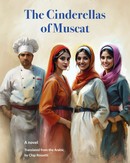
The Cinderellas of Muscat by Huda Hamed (Banipal Books, 2025)
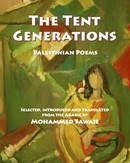
The Tent Generations
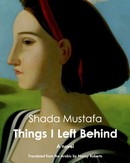
Things I Left Behind by Shada Mustafa, translated by Nancy Roberts
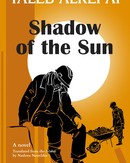
Shadow of the Sun by Taleb Alrefai
Birds of Nabaa, A Mauritanian Tale by Abdallah Uld Mohamadi Bah
The Stone Serpent, Barates of Palmyra’s Elegy for Regina his Beloved by Nouri Al-Jarrah
Mansi A Rare Man in His Own Way by Tayeb Saleh (Banipal Books, 2020)
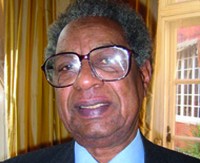
Tayeb Salih
Goat Mountain by Habib Selmi
Habib Selmi, author of Goat Mountain and 3 times shortlisted for the IPAF
The Mariner by Taleb Alrefai (Banipal Books, 2020)

Taleb Alrefai, author of Shadow of the Sun and The Mariner

Fadhil Al-Azzawi's Beautiful Creatures by Fadhil al-Azzawi (Banipal Books, 2021)
Fadhil al-Azzawi

Poems of Alexandria and New York by Ahmed Morsi (Banipal Books, 2021)

Saïd Khatibi
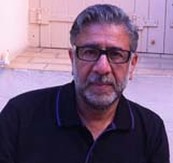
Amjad Nasser (1955–2019)

Digital Banipal the full archive
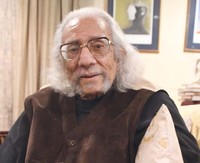
Ahmed Morsi, author of Poems of Alexandria and New York

Sarajevo Firewood
The Madness of Despair



.png)





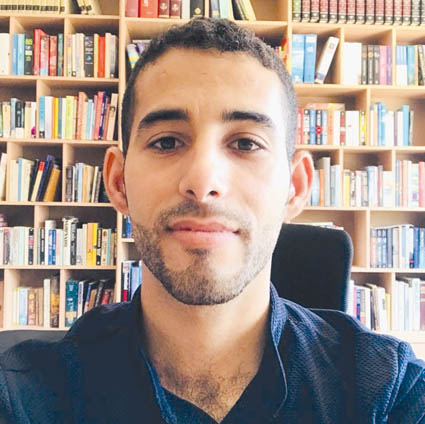
Link to poems by Mosab Abu Toha, published in Banipal 71 (Summer 2021), available to read online
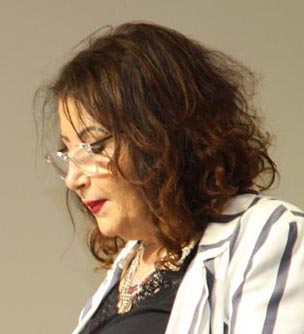
Link to poem by Liana Badr published in Banipal 74, now available as an online selection






















* * *












 GRIFFIN PRIZE SHORTLIST 2023
 Banipal's first audiobook