Receive Our Newsletter
For news of readings, events and new titles.


In late April of 1991, while looking for a specific detail in Alf Laylah wa-Laylah, the book of The Thousand and One Nights, I remembered a question I’d wanted to ask Emile Habiby some ten years before, when I was struggling with translating his untranslatable Al-Mutashā’il (The Pessoptimist) into Hebrew. I didn’t pose the question to him then because I wasn’t quite sure of my suspicion and, more importantly, because I hadn’t yet had that infamous self-confidence of translators. And I didn’t know then, in late April of 1991, that Habiby would pass away five years later.
My question had to do with a brief section in Al-Mutashā’il, at the beginning of Chapter Eleven of Part II, entitled “An Astonishing Inquiry into Oriental Imagination and its Ample Benefits”, which Habiby asserted was quoted from The Thousand and One Nights:
What would you think of that poor farmer who, wishing to protect his new bride from people’s malicious slander, put her inside a box and carried that box on his back while ploughing his field, day in and day out. When Prince Badr al-Zamān ran into him one day and asked him why he was carrying that box on his back, he told him the reason, but the Prince wanted to see with his own eyes. The farmer put down the box and opened it, and lo and behold – his bride was lying there in the box, next to young Aladdin.
Being an avid collector of different editions and versions and translations of Alf Laylah, I ploughed the book back and forth, looking for that tale, to no avail. Then other boxes distracted me, and for a while I forgot all about that particular one. But in late April of 1991, and for reasons I’d rather not divulge, I found myself looking again into that motif of “woman in the box”, as folklorists would say, and that farmer suddenly grabbed me by the collar.The “woman in the box” motif makes its first appearance of course in the frame story of Alf Laylah, and then resurfaces in the six hundred and second night according to the Bulāq edition, “magical among all the nights”, as Borges puts it in his charming essay “Partial Magic in The Quixote”. That night, Shahrazad recounts to King Shahrayar a tale similar to his own tale as told in the frame story, when he and his brother Shahzaman leave the palace, after being betrayed by their wives, and roam the world looking for a man whose misfortune is greater than theirs. They encounter a jinni carrying a large box, with his bride inside it. When the jinni falls asleep, the young woman notices the two kings hiding up a tree, and talks them into sleeping with her, or else she’d wake up the jinni who’d kill them. And they obey.
On April 25th, 1991, in a whimsical, rash moment, feeling all of a sudden no longer in awe of the original’s “aura”, as Benjamin would have put it, and in the wake of a yet another attempt at finding that tale in the different editions of the magical book, I didn’t know where I found the courage to send a nightly Fax to Emile Habiby, asking him bluntly: “Where the hell did you find that tale in Alf Laylah about the farmer and his box and Prince Badr al-Zamān?” Hardly an hour had passed before I received a counter-Fax from him:
I should have known that you, of all Allah’s creatures, would be the one to catch me red-handed in this literary crime. Truth be told, that tale about the farmer carrying a box on his back I found in one of Tolstoy’s short stories, and not in Alf Laylah. He said it was an Arab or an Oriental farmer, and I thought it would be proper to attribute it to Alf Laylah, thinking that Tolstoy must have found it in one of its editions . . . And since our ancestors added tales to the corpus of that book over the centuries, I decided to do the same with the Tolstoy tale. Mind you, I don’t consider this a plagiarism but, rather – a “literary bonus” of sorts. Much to my chagrin, I forgot where I found the tale in Tolstoy, but all you have to do now is to stop looking for it in Alf Laylah and start browsing the works of Tolstoy. And if you wish to publish this confession of mine, you are free to do so, since I don’t see any reason why you shouldn’t. And I’d like you to know that I’ve been afraid of you in the past, so you can imagine how I feel right now.
In a totally different context, while discussing Kafka, Borges argues that contrary to the prevalent belief, exceptional writers create their precursors, and not vice versa; “their work modifies our conception of the past, as it will modify the future.” Therefore, Alf Laylah, in addition to the major works of classical Arabic literature, are no longer read the same after reading Habiby, and maybe that is where his genius lies.
In his weekly, political-satirical column, which he published under the pseudonym “Juhaynah” (his daughter) over many years in al-Ittihād, the newspaper of the Communist party which he edited, Habiby invented a unique, inimitable Arabic style, which he later used in his literary works. That was the style that would keep all his translators into different languages, me included, awake at night, at the edge of their translator’s seats. The multi-layered Habiby sentence is a funambulist, walking a tight-rope between the classical Arabic writers of the ninth century, through the eleventh century maqāmah and risālah, then through the style of Aḥmad Fāris al-Shidyāq and other 19th century revolutionaries, and through the style of the Protestant and the Catholic Arabic translations of the Bible – at one end, and the style of modern Arabic journalism, in whose creation he personally took part, and the colloquial Palestinian Arabic, at the other end. In this context, it would be fair to consider him a genius “collaborator” in his relationship with the Arabic literary heritage. For he is the loyal son, enjoying safety inside the box, and the sly, rebellious, resistant fighter outside the box, at the same time. The novel, as a western genre, never interested him, luckily for him and, especially, luckily for us. For he – if we exclude his creative reading of classical Arabic literature, and contrary to the rumors which he personally helped spread about himself – read very few works of world literature, and fewer still of modern Arabic literature. That’s how he managed, unlike any of his contemporaries, to keep intact the storyteller inside him. And that could be his other great achievement.
In the years before his death in 1996, Habiby often complained that contrary to the choices he had made, it was no longer possible for him “to carry two watermelons in one hand” – the watermelon of politics, and that of literature. Two decades as a member of the Israeli Parliament, and a total dedication to the interests of “the Palestinian masses in Israel”, since the Nakbah of 48, and a highly demanding profession as an editor of a newspaper – all these kept him away from his writing desk. I too, during all the years of following his works, as a devout reader and translator, used to agree with those who believed that all the years that this sage spent in politics were a total waste, not to mention the two decades he spent in that barren wasteland called the Israeli Parliament. But I no longer believe this was the case. For the writer who created for us the fairytale of Saraya is, at the end of the day, the total sum of his past, and the selfish reader inside me refuses to see a different writer, with a different past, take his place.And now I can see him, as I’ve never seen him before, like that farmer who spent the prime of his life ploughing the political field, carrying a box on his back, promising himself that the days will come when he’ll devote himself totally to his Saraya, to his writing inside yet outside the box he’s carrying her in. And those days did come, but they were so brief. And I see him now, like I haven’t seen him before, carrying the homeland on his back, promising us and himself that the days will come . . . Will they really? And will the Palestinian Badr al-Zamān bring us a state?
Lamentations and eulogies only will come, because Emile Habiby was always writing mournfully – from his short stories of the fifties, through Saraya of the nineties, he wrote one long magisterial, heart-wrenching, all-encompassing eulogy, unsettling his readers and comforting them at the same time. Eulogies to the lost Haifa, the place of his birth, and the city where he remained, as written on his tombstone; a eulogy to his vanished homeland – its brooks and shores, and fish and rocks and stones, its soil, trees, and shrubs, its buildings and homes, streets and alleys, and its visible and invisible landscapes; to its cities and villages, destroyed and still standing; and especially to the erased names of those destroyed villages. Be that as it may, his writing, in the end, granted the Palestinians a “national home” of sorts, far more magnificent and glorious and indelible than all the alleged homes they have been “promised” throughout their erased and vanished history.Two lines from classical Arabic poetry, composed in the 7th century, always served him throughout his writing life as an emotional and ideological mantra:
May the anguish that engulfed you
be soon followed by reprieve.
May the fearful find safety, the captive be ransomed,
and the faraway stranger come home to his relief.
In April of 1996, his cruelest and last on earth, he wrote, rather bitterly, in the editorial of Masharef, the monthly literary magazine he’d founded in Haifa the previous summer, about his shock and disbelief that a famous Hebrew writer, S. Yizhar, whom he had respected for his conscientious writings in the past, accused the Palestinians of being cannibals with whom no Israeli government should negotiate. In his cruelest and last April on earth, he witnessed the massacre in biblical Qana in south Lebanon, when the Israeli army fired artillery shells at a UN compound, killing 106 civilians who had taken refuge there, turning blood into water this time. In his cruelest and last April on earth, he witnessed the starvation siege imposed on the occupied Palestinian territories, and how the soil of the homeland never sprouted any glimmer of hope for a promised Palestinian state.
As for the anguish that engulfed him, he exchanged it for the clods of Mount Carmel’s earth, which he knew grain by grain.
As for the faraway stranger whom he loved, Mahmoud Darwish, he came home for a couple of fleeting days, to attend his funeral in May of 1996.
As for the faraj, the reprieve that was supposed to follow soon – we Palestinians are still here, patiently waiting for it, and we’re not going anywhere.
Posted from Banipal 75 – Celebrating 25 years of Arab literature (Autumn/Winter 2022)
For news of readings, events and new titles.

The Cinderellas of Muscat by Huda Hamed (Banipal Books, 2025)
The Tent Generations
Things I Left Behind by Shada Mustafa, translated by Nancy Roberts
Shadow of the Sun by Taleb Alrefai
Birds of Nabaa, A Mauritanian Tale by Abdallah Uld Mohamadi Bah
The Stone Serpent, Barates of Palmyra’s Elegy for Regina his Beloved by Nouri Al-Jarrah
Mansi A Rare Man in His Own Way by Tayeb Saleh (Banipal Books, 2020)
Tayeb Salih
Goat Mountain by Habib Selmi
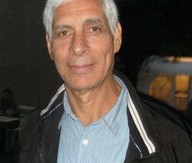
Habib Selmi, author of Goat Mountain and 3 times shortlisted for the IPAF

The Mariner by Taleb Alrefai (Banipal Books, 2020)

Taleb Alrefai, author of Shadow of the Sun and The Mariner

Fadhil Al-Azzawi's Beautiful Creatures by Fadhil al-Azzawi (Banipal Books, 2021)
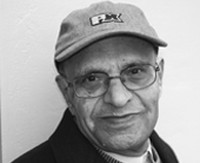
Fadhil al-Azzawi
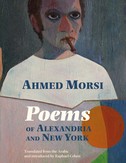
Poems of Alexandria and New York by Ahmed Morsi (Banipal Books, 2021)

Saïd Khatibi
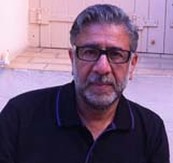
Amjad Nasser (1955–2019)

Digital Banipal the full archive
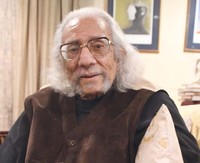
Ahmed Morsi, author of Poems of Alexandria and New York

Sarajevo Firewood
The Madness of Despair



.png)



Link to poems by Mosab Abu Toha, published in Banipal 71 (Summer 2021), available to read online
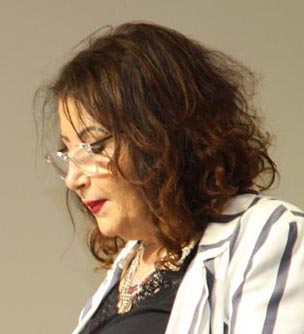
Link to poem by Liana Badr published in Banipal 74, now available as an online selection




















* * *


























 GRIFFIN PRIZE SHORTLIST 2023
 Banipal's first audiobook