Receive Our Newsletter
For news of readings, events and new titles.


“Are you Shlomo Kitani al-Kurdi?” the policeman asked.
“Yes, I am he,” I replied.
Everyone knew me, and I said my name proudly. Nothing prevented me from saying it loud and proud. I had never ever done anything wrong. I had never tricked someone in business, money, or bargains. I was not in debt to anyone. To be clear, people owed me money. With all that in my mind, the commanding voice of the policeman shocked me.
“On your feet quickly and come with me,” he ordered.
I did not hear an answer to my question about why he was ordering me to accompany him. But with my usual calm, I stood up and walked away with him.
In the National Security Headquarters, I found most of my Iranian Jewish brethren. I quickly came to realise that it was not about me alone. It was, instead, far more serious than I had thought. Everybody was concerned and told me that an order had come down from above to deport all Iranian Jews to Iran. That was when I lost my cool and shouted at the officer.
“I’ve been here for more than thirty years,” I shouted in protest.
But he interrupted me with composure: “And yet you didn’t give up your Iranian nationality nor ask for Iraqi citizenship.”
“My children are Iraqi citizens. Doesn’t that say something about their father?
“Of course! They became citizens through marriage or because they had applied for Iraqi citizenship. Where are they now?”
“They left. One emigrated to the US and the other two to Israel,” I told him.
“Traitors!” was his reply. “That is what you are. This good country gave you shelter, and with your feet, you kicked at what it offered you,” he retorted indignantly.
“But I’m here. I served the country that sheltered me. I supported its economy. Ask about me in the marketplace,” I explained emotionally.
But the officer’s rage heightened, and he shouted at me: “Do you really think you are capable of tricking this entire nation of good people?”
He went on: “You devoured its bounty, transferred its funds to your safes, and now you talk about its economy and how you supported it?”
I sensed evil. I lowered my voice and suppressed my Kurdish anger.
“If we must leave, let us wait a while so we can sell our businesses and collect the debts that our customers and clients owe us,” I pleaded.
My last statement was like a joke that aroused the officer’s mockery.
His reply was firm: “You have nothing here.” And he added: “Isn’t it enough that we allowed you to dwell here for nearly four decades, and let you live in luxury, in a way your grandfathers didn’t dare to dream of in their regressive, filthy Kurdish villages?”
That was a sharp stab in the heart! It was not only his toxic mouth, honed like an unsparing sword. It was the bigoted prejudice and hatred behind those words. These two could burn down the entire world. Had I deserved to be afflicted with prejudice and hate, it would’ve been much easier. As God is my witness, I had never once thought of throwing a stone into this pure well that quenched my thirst. And despite my loneliness after Asmar, I had never thought of leaving Baghdad – not even after its dignified Jews had left. Iraq was my second homeland; it welcomed me in the darkest times and returned to me my bygone glory and self-esteem. As for Asmar, my grief over her death remained solid, lodged deep in my brain. She was buried here. How could I leave my buried love behind? How could I leave everything on this good land, and Asmar?
Alas! I waved a flag of love and kindness, but I spent most of my life facing that human monster: prejudice. It was the catalyst of two World Wars, the Farhud of Baghdad, the hunting down of its Jews before the exodus, and finally this serious stab in the heart. I would be lying if I said I did not care for money. I learned the hard way that money had value, especially after I cleaned English and Indian toilets for a living. After hard toil and sweating blood, I saved up my money.
During these moments, I wept over more than one thing in Baghdad – my established business that was as steadfast as the Sidra tree that shaded our house in the Karrada district,7 the house itself, my money, whoever remained in Baghdad of my friends and brethren, and, finally, Asmar’s grave – the most loyal of my loyalists in this world.
I had stashed some money in my house for when I most needed it. The sum was about a quarter of my entire assets in Baghdad. Um Aziza, not Asmar, used to hide the fils in tightly knotted sacks. Asmar’s jewelry was not to be Um Aziza’s. I knew that I replaced loyalty with betrayal, selflessness with selfishness, integrity with dishonesty. I hid everything that belonged to my Asmar from Um Aziza. I hid from her about ten thousand dinars as well, for a time just like this.
My heart was now grieving. And yet it did not subside, for I’d become accustomed to the betrayals of Time. I knew I would be sent back to my birthplace. Hope in my heart never abandoned me, even though years had passed since I had been deported. I was hopeful that things would change in the end, and that the day would come when I would return to my second home in Baghdad – the source of my second glory and my sanctuary.
I awoke from my fantasy and distraction. My “storeroom” in the caravanserai was behind me, and so were my commodities, my friends, my house, and the grave of my beloved Asmar. They allowed us to enter our houses to take anything we liked before we crowded into the buses. Um Aziza was carrying her girl and whining. Her lips did not quit cursing and name-calling. She did not stop wishing evil on everyone, either. I was the first she cursed. In her view, I failed to abort the deportation. I rode the bus without second thoughts over my money and possessions. And that, in her mind, made me unworthy of life. I was simply devoid of the enormous amounts of money which she saw as the amulet to protect her from the evils of life. In this frame and according to her laws, I deserved only the death penalty.
My head was spinning, and the fleet of buses was moving towards Iran. Some Jews had already left for Iran, and others for Israel. All the impoverished Jews had already arrived there, such as Rabbi Michael and the young men who were excited with the idea of a Jewish State. And in the hearts of another group of young men, the wounds of the Farhud had not yet healed.
Most likely, we were all merchants on that bus. Some of my colleagues had lost everything for the second time following Siblakh, I believed. These men put their trust in life and in rulers, and their heads did not absorb the lessons of life. As for me, Shlomo al-Kurdi, I laughed, notwithstanding the serious stab in my heart, which I felt was still bleeding. No disaster that had befallen me so far had been greater than the loss of Asmar, the mother of my boys, as well as the demise of my second wife Aster and the two boys in Siblakh. Fountains of tears welled up in my eyes, but not as they had during these two tragedies. My fountain of tears would never again explode after those.
The convoy of buses carrying those who were ejected from Iraq was headed toward Iran, away from things that were cherished.
Um Aziza did not stop complaining, even on this speeding bus. And she continued her grumbling in Iran.
I abhor what I chose for my life – the fall of a smart, knowledgeable man. Um Aziza muddled my chuckles, my melancholy, my longing, and the anxieties over an unknown future. She mixed up even the state of mind that I found myself in during this “situation”, which I hadn’t chosen. A situation into which I was dropped, just as I was thrown into more decisive and more dangerous situations before. Um Aziza deprived me of seeing even this situation. She would not let me live it out as a new experience. Her idiotic babbling infested my ears, crowning my head with blabbering and blathering, decorating it with the diamonds of cursing and backstabbing. May God curse you forever, Um Aziza!
As for you Asmar, may God envelop you in His kindness. May He make for you an abode in His spacious gardens. May God help me surmount Time – and Um Aziza.
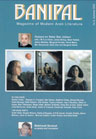
Selected and translated for Banipal 72 – Iraqi Jewish Writers
from the novel by Samir Naqqash Shlomo al-Kurdi wa ana wal-Zaman (Shlomo the Kurd, Myself, and Time), published by Manshurat al-Jamal, 2003. Paperback, 360 pages.
For news of readings, events and new titles.

The Cinderellas of Muscat by Huda Hamed (Banipal Books, 2025)

The Tent Generations
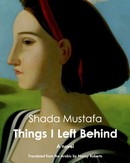
Things I Left Behind by Shada Mustafa, translated by Nancy Roberts
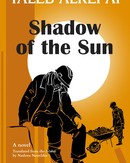
Shadow of the Sun by Taleb Alrefai

Birds of Nabaa, A Mauritanian Tale by Abdallah Uld Mohamadi Bah
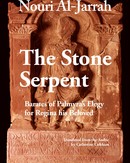
The Stone Serpent, Barates of Palmyra’s Elegy for Regina his Beloved by Nouri Al-Jarrah
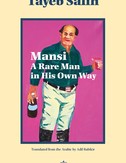
Mansi A Rare Man in His Own Way by Tayeb Saleh (Banipal Books, 2020)
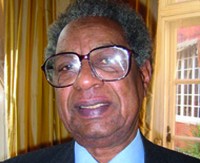
Tayeb Salih
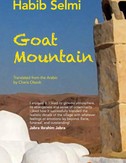
Goat Mountain by Habib Selmi
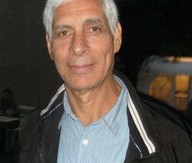
Habib Selmi, author of Goat Mountain and 3 times shortlisted for the IPAF

The Mariner by Taleb Alrefai (Banipal Books, 2020)
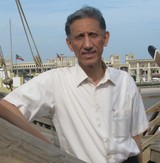
Taleb Alrefai, author of Shadow of the Sun and The Mariner

Fadhil Al-Azzawi's Beautiful Creatures by Fadhil al-Azzawi (Banipal Books, 2021)
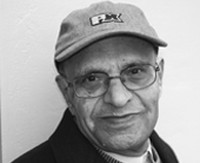
Fadhil al-Azzawi

Poems of Alexandria and New York by Ahmed Morsi (Banipal Books, 2021)

Saïd Khatibi
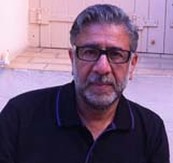
Amjad Nasser (1955–2019)

Digital Banipal the full archive
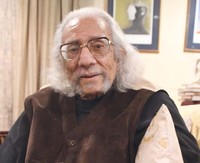
Ahmed Morsi, author of Poems of Alexandria and New York

Sarajevo Firewood

The Madness of Despair



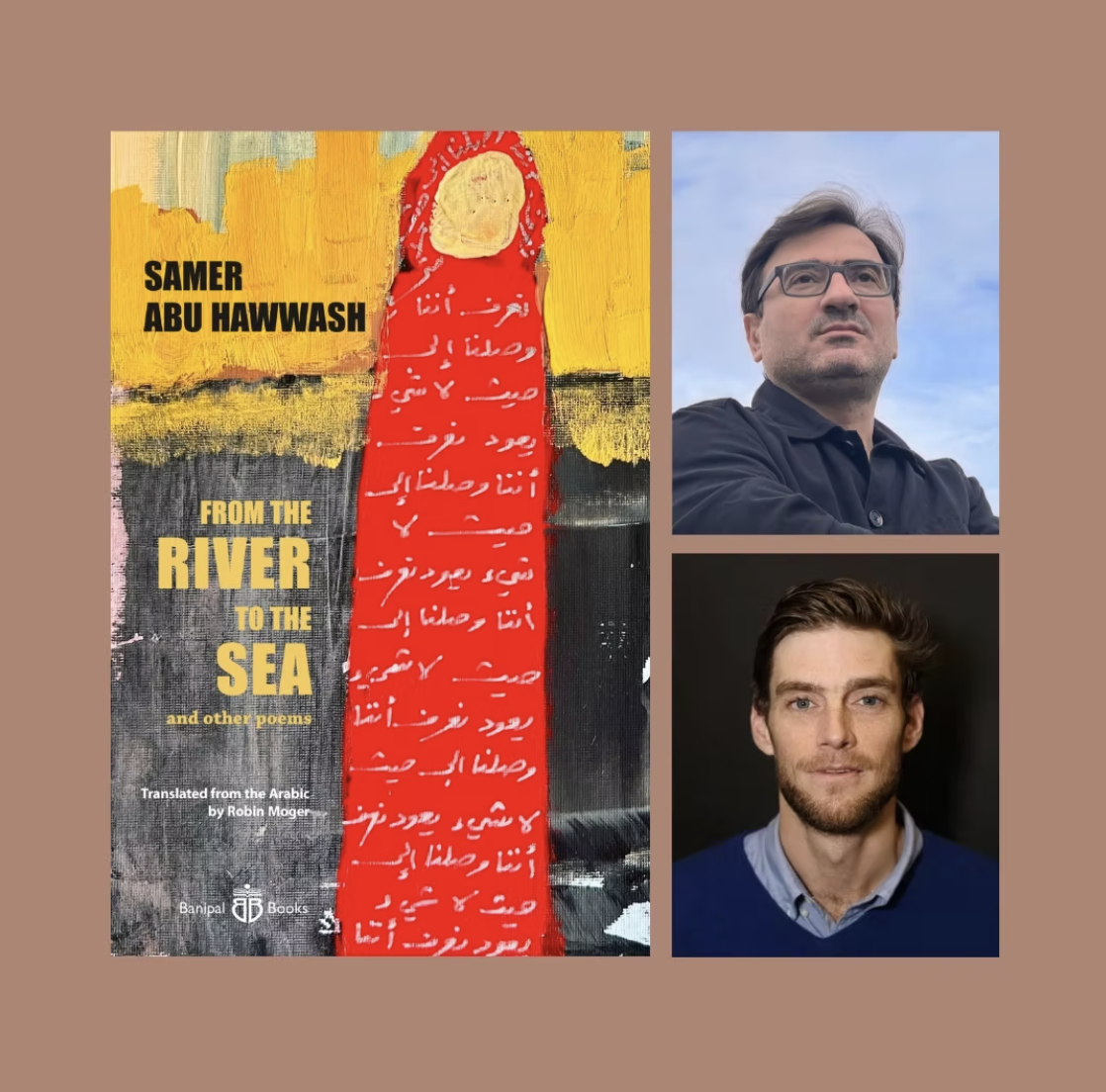
.png)




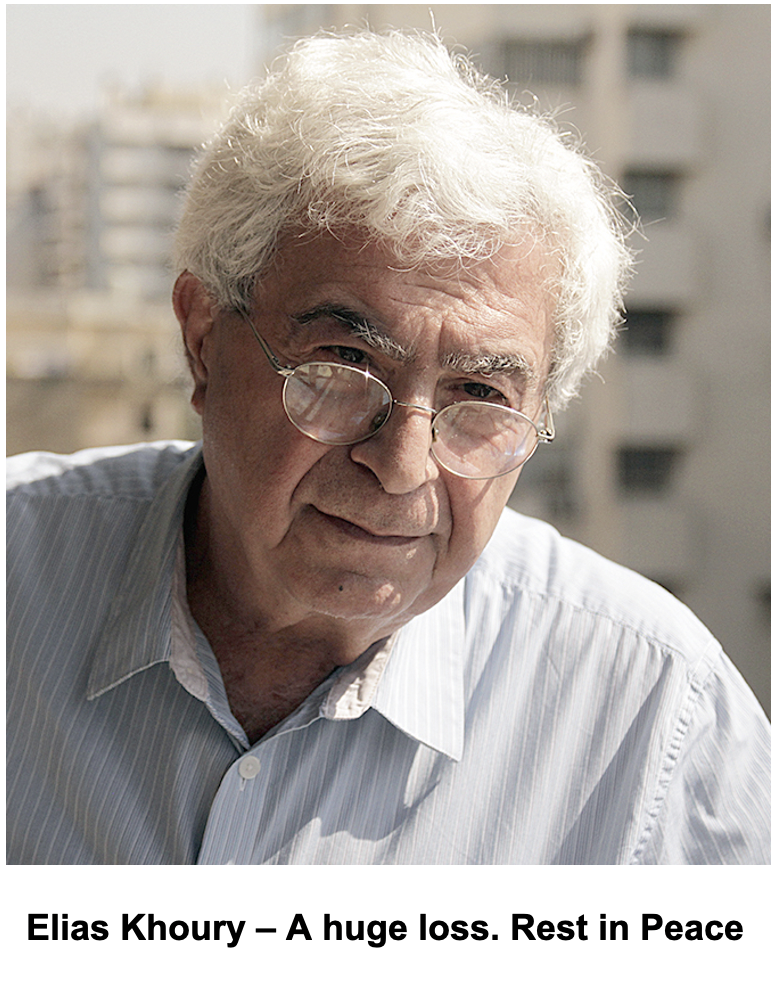

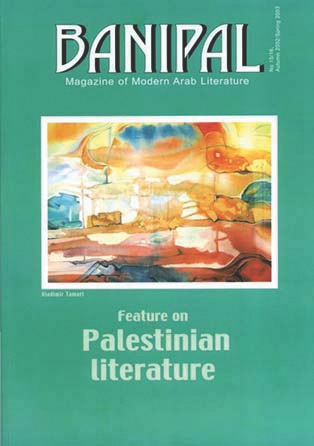
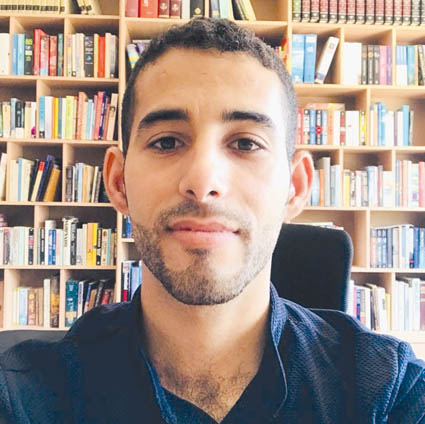
Link to poems by Mosab Abu Toha, published in Banipal 71 (Summer 2021), available to read online
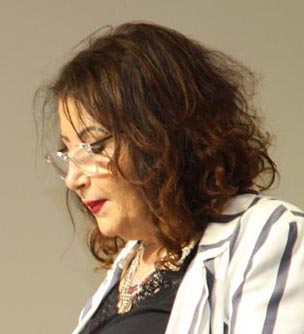
Link to poem by Liana Badr published in Banipal 74, now available as an online selection
























* * *


















 GRIFFIN PRIZE SHORTLIST 2023
 Banipal's first audiobook