Receive Our Newsletter
For news of readings, events and new titles.

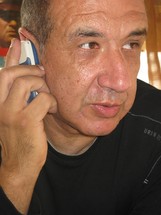
by ALMOG BEHAR
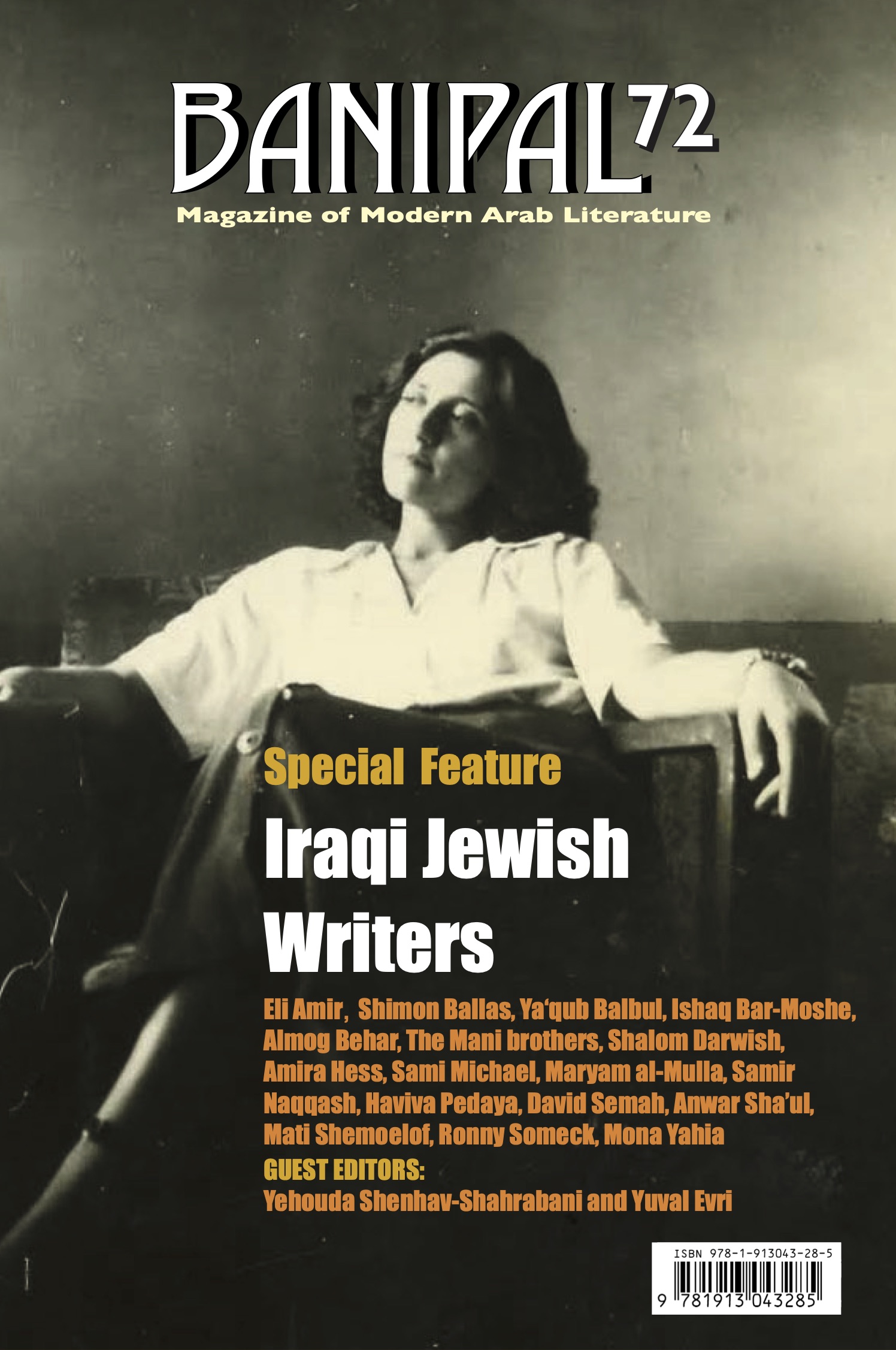
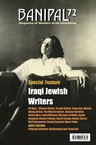
Due to lack of space the version of this essay that was published in Banipal 72 was an edited version of a shorter length. Below is the full version
It would seem that Ronny Someck may well be one of Israel’s most popular and best-read living Hebrew poets of the last twenty years. His popularity, of course, has nothing whatsoever to do with two factors that in years past would have carried tremendous weight in determining a poet’s popularity: the verdict of prominent literary critics on his body of work (quite possibly owing to the absence of critics with sufficient gravitas or king-making abilities in the last two decades); or the musical adaptations of his poems (although Israeli musician Yair Dalal has composed beautiful arrangements for both “Arak Solo” and “Rice Paradise”). As it stands, Ronny Someck’s popularity has that much more to do with the poet’s willingness to act as a kind of “travelling agent” – whether it be of his own poems or of poetry as whole – wherever it is required; be it a library, school, café, prison, or care home, and to a variety of audiences. Above all else, Someck’s wide appeal is inextricably tied to his deep-seated belief that poetry is an art form that must be in a state of constant dialogue with as wide-ranging an audience as possible, as opposed to a niche demographic of 300 to 400 poetry devotees: a belief that a great many of his own and the following generations have long since abandoned.
For instance, “Left Foot Goal,” which Someck wrote in memory of Hungarian footballer Ferenc Puskás, first appeared in a daily paper’s sports supplement instead of the literary one before its later inclusion in the collection Algeria (2009). Meanwhile, another poem in the same collection, “When You Find Me Stuffed in a Suitcase”, was inspired by the harrowing murder of four-year-old Rose Pizem, whose body was stuffed in a suitcase that was later pulled from Tel Aviv’s Yarkon River; the poem was read out on national television whilst the search for her remains was still underway. Whilst the poet, of course, has no intention of replacing journalists in writing on current affairs and the news, nor should he avoid the present or seek to distance himself from it, either, in favour of some ever-elusive vision of eternity. The poet is immersed in his own time and exists in conversation with his contemporaries; therefore, in his books, Someck also makes a point of quoting overheard conversations, such as a fellow female bus commuter in the poem “Cellular Gunshot Blues on the no. 30 Route” (featured in Algeria). He juxtaposes her words with verses from Song of Songs, whilst dialoguing with other poets including Sargon Boulus and Max Jacob.
In Someck’s earliest writings, his use of pop culture was nothing short of groundbreaking in that it essentially heralded the arrival of a new generation into the world of poetry, a generation whose members would dedicate whole poems to Marilyn Monroe. Of course, the many references to Marilyn Monroe (see “For Marilyn Monroe” in Someck’s debut release, Exile), set him apart from any twenty-first-century poetry about the late icon. Someck’s first book included an elegy on the death of the actress: “Oh so many sleeping tablets scatter / from Marilyn’s torn eyes” (Exile, 19). Then, in his follow-up book, Monroe also makes a brief, tongue-in-cheek cameo: “Those who love Marilyn Monroe will always ponder blonde thoughts” (Solo, 6). The next time Monroe appears is in Algeria, when a teenage conversation is recalled just before a kiss at the agricultural school and her iconic dress appears as a symbol, when “Beneath / one’s feet you could hear the water / in the irrigation pipes sharing confidences / with the Earth” (7). The boy in the poem shares with a girl the secret that were they to plant a fan in the ground, then “Within the minute, Marilyn Monroe’s flying dress will come shooting out” (same).
Algeria’s opening poem, “Third Kiss Blues,” no longer denotes the infiltration of American films into Hebrew poetry as in earlier poems in poems like “Arak Solo,” in Someck’s debut collection, where he writes “bursting to be a man just like Clark Gable” (p. 14); or as he states in The Milk Underground (2005): “I was born the day film was invented, in a previous life / I was Charlie Chaplin’s stick” (28 December, 19). Rather, films embody one’s longing for fleeting, long gone youth.
The poet’s extraordinary capacity for infusing a sense of longing with irony is evident from the beginning of the corpus of Someck’s poetry, as “Longing Poem” indicates: “I miss the circuslike jumps / granddad would make to cross over / from one pavement to the next. / There. On the freezing cold paving slabs / at the Herbert Samuel dock . . . where granddad would speak / and dream, dream and speak. Now / I do not remember of what . . . where we would each speak in different tongues about the same girls” (Exile, 5). In a later book, Someck writes the following: “My granddad was born in the lands of Arak” (“Lions’ Milk”, in Bloody Mary). With time, Someck’s longing moves on from his grandfather to his father, who “wore a lock of silence / on his lips, / Since his death, I follow him on the backseats / of the no. 61 route" (“Blues for the Life that was Nearly my Own” in The Revolution’s Drummer, 9). Next, in Algeria, the father speaks “a new immigrant’s Hebrew” (“Wagtail”, 34), whilst the poet longs for his daughter’s childhood, declaring how “I am packing the farewell suitcases / to your childhood” (“Sixth Piece of Advice to a Dancing Girl”, 18).
Someck is suddenly faced not with the end of his own childhood but rather with his daughter’s, who is on the cusp of adulthood, and so, he delivers “A Father’s Speech to his Daughter’s Suitors” (15), where he informs them that her hand is “An equilateral triangle / whose sides are: Kareem Abdul-Jabbar, Mozart / and God” (same), and resigns himself to the fact that, “So it goes. You have a girl by the groves’ remains / in Petah Tikvah, raising her by the yawning beasts / of the Ramat Gan safari, and desert carpets are rolled out / there beneath her feet” (“Camels”, 16). That moment, an urge awakens in him at the thought of another daughter which he explores in the poem titled “Algiers”: “If I had another girl / I would name her Algiers, / And you would tip all your colonialist hats off to me / and address me as Abu Algiers” (14). The poetry is able to contain the father’s pleading with his second, yet-to-be-born daughter to come home as a soothing call of sorts to counter the first daughter’s departure from the nest: “Won’t you come home, Algiers, and watch me paint the Eastern wall / with the sun brush” (same).
Music has always underscored Ronny Someck’s poetry – whether it be Arabic tunes from the likes of Umm Kulthum, Mohammed Abdel Wahab, Fairuz, and Salima Mourad or Western pop hits from Elvis, The Beatles, Bob Dylan, and various blues musicians. Someck dedicates one of his poems to the memory of Iraqi oud player, Yusuf al-Awad (aka Yosef Shem Tov) who was a musical legend in life and passed away just outside Tel Aviv in the city of Ramat Gan; the evocative poem “Taqsim” compares the oud to a woman’s beautiful derrière (26). In previous poems, Arab music was also a secret which he knew how to explain: “It might not bear repeating / but my mother wept when suddenly she heard / Cleopatra. / So who are you, Mr. Abdel Wahab, to lift an Egyptian queen / off the history books and translate her into tears in my mother’s / diarised memories. / And you, Cleopatra, breaking hearts in nostalgia’s game of poker / on a small Ramat Gan side street, do you recall . . . the throats you had choked up / in Bagdad cafés, and the wind that lashed at the doors/ whose hinges creaked against a belly harbouring a secret” (“Secret” in The Revolution’s Drummer, 29). However, Someck also always adds a disclaiming word of caution: “One must not ascribe to music / merely the prospects of longing or pain” (“The Heart’s Prey” in Asphalt).
When Someck revisits Iraqi poet Sargon Boulus’s poem “Insomnia”, set in the city of Lodève in the south of France, he concludes by saying how, “The petrol that set dreams alight carried on coursing / through the engines of the aeroplanes that were bombing / his father’s tomb, / there on the ground from whence / his life took off” (27); and of course, one cannot forget that Someck’s life also took off in Iraq, which he described in the poem “Baghdad” [featured in Banipal 72, p90-91]: “With the same chalk a policeman marks a crime scene corpse / I mark the boundaries of the city where my life was shot. I interrogate witnesses, squeezing drops of Arak / from their lips, and mimicking the dance moves of / pita bread over a hummus bowl with some hesitation. / When I am caught, / they will take one third off my sentence for good behaviour / and incarcerate me in the hallway of Salima Mourad’s throat. / . . . Memory is but an empty plate, scarred with a knife’s / scratch marks on its skin/” (in The Milk Underground, 40). The memory from which the poet extracts the events worthy of commemorating in verse is steeped in scars, haunted by the violence of a knife in a poem that began with murder and gunfire.
Someck writes how “I am the world champion of inconsequential details / therefore I will not write about how I was there” (“On the Eye of the Storm”), offering a vision of how he defines both the poet and the poetic act itself: the poet knows all the irrelevant details, and realises what others, i.e. the historian, news anchor, military commander, or prime minister, might dub as ‘inconsequential details’, may very well be the most crucial details concerning life itself. The poet will not uncover a scientific truth, nor will he write about the major events, or decide whether thousands get to live or die – instead, he will only turn his verbal torch onto those seemingly trivial details which someone may or may not have left in the shadows. The poet can also mix up timelines, events, and characters in the name of reviving those so-called irrelevant details as symbols, or reimagined possibilities for his readership. The poet, unlike the author and politician, knows how to tame the urge to elaborate, to win every last dish, treat, button, and word; for it is when one sifts through and streamlines them that a poem is born. Therefore, poets who “hang line headers off pillars of foliage” (“Sonnet of Those who Make Do with Little,”), know that “One tree is enough to narrate the whole wood” (same).
Translated from the Hebrew by Eran Edry
Back to Banipal 72 contents list
For news of readings, events and new titles.
The Cinderellas of Muscat by Huda Hamed (Banipal Books, 2025)
The Tent Generations
Things I Left Behind by Shada Mustafa, translated by Nancy Roberts
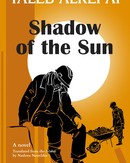
Shadow of the Sun by Taleb Alrefai
Birds of Nabaa, A Mauritanian Tale by Abdallah Uld Mohamadi Bah
The Stone Serpent, Barates of Palmyra’s Elegy for Regina his Beloved by Nouri Al-Jarrah
Mansi A Rare Man in His Own Way by Tayeb Saleh (Banipal Books, 2020)
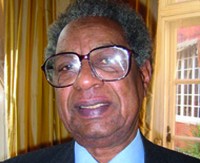
Tayeb Salih
Goat Mountain by Habib Selmi
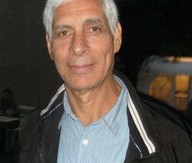
Habib Selmi, author of Goat Mountain and 3 times shortlisted for the IPAF
The Mariner by Taleb Alrefai (Banipal Books, 2020)
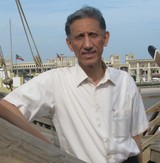
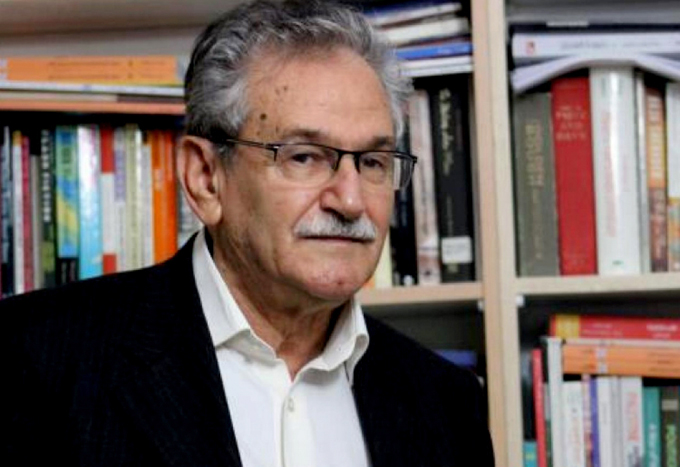
Taleb Alrefai, author of Shadow of the Sun and The Mariner
Fadhil Al-Azzawi's Beautiful Creatures by Fadhil al-Azzawi (Banipal Books, 2021)
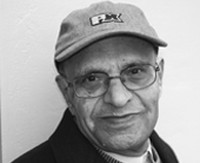
Fadhil al-Azzawi
Poems of Alexandria and New York by Ahmed Morsi (Banipal Books, 2021)

Saïd Khatibi
Amjad Nasser (1955–2019)

Digital Banipal the full archive
Ahmed Morsi, author of Poems of Alexandria and New York
Sarajevo Firewood
The Madness of Despair



.png)


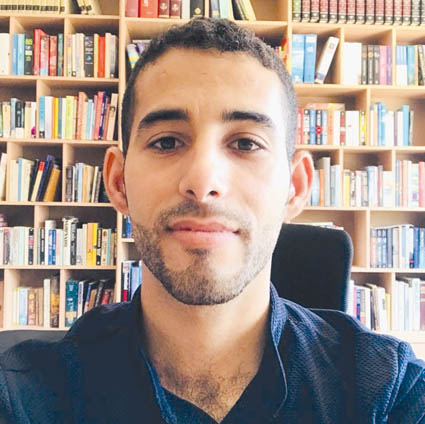
Link to poems by Mosab Abu Toha, published in Banipal 71 (Summer 2021), available to read online
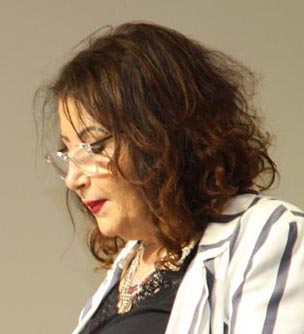
Link to poem by Liana Badr published in Banipal 74, now available as an online selection



















* * *

 GRIFFIN PRIZE SHORTLIST 2023
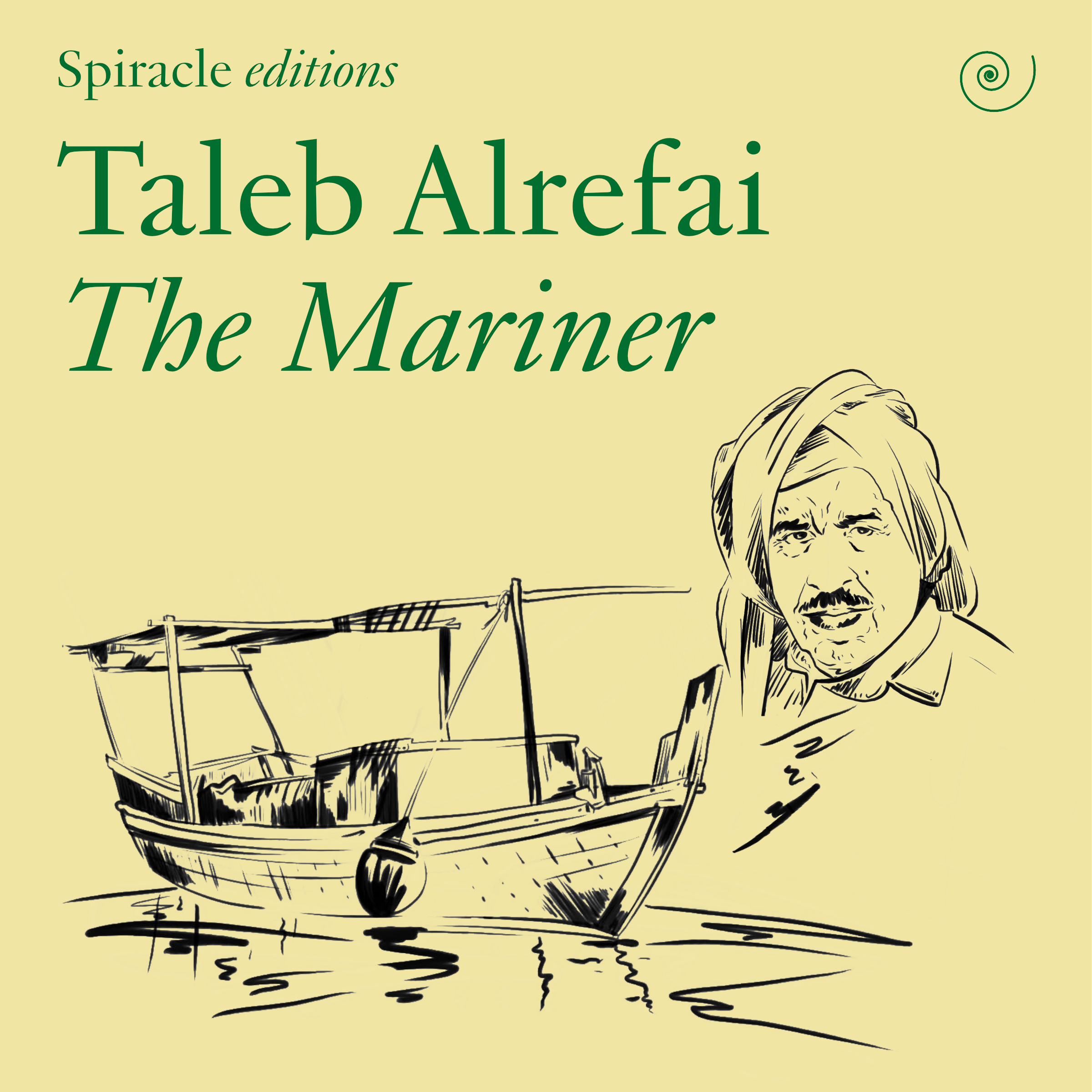 Banipal's first audiobook