Receive Our Newsletter
For news of readings, events and new titles.

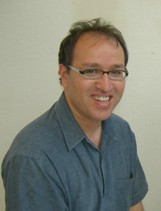
I was living in southern California in the San Fernando Valley having just started to teach at a California State University, Northridge. Northridge – in 1994 – was the site of one of the worst earthquakes and one of the costliest natural disasters in American history. The epicenter of the earthquake was Reseda, the town where I lived that year. My apartment was a spare post-graduate-school dwelling, with just books and more books, some still in boxes, an old TV and two old comfy chairs, alongside a working table. In that tiny apartment I think I ate most of my meals standing. I knew no one in the LA area then and the nearest coffee shop was a 15-minute drive. Although I was on a full teaching load of four courses a semester, I still had plenty of time to read. In that semi-nomadic period of my life, my books were like a line of ants that crawled out of their boxes finally congregating near the bed as if my brain was something that they found to feast on.
It was on a night after a heavy teaching day that I went to bed, having picked up Fadhil al-Azzawi’s diwan Fi Kul Bi’r Yusufun Yabki (In Every Well a Joseph is Weeping) to read. As I read, I was astounded by the poems – their pathos, irony, precision, and humor were unlike anything in Arabic I’d read until then. Suffice it to say, no Arab poet has ever made me laugh before or after Fadhil. No doubt it was the irreverence and daring that drew me. If memory serves me right, it was right after I finished reading the poem “Ru’ya fi bus” (A Vision in A Bus) that I sensed a movement of the bed. And looking up, I noticed the ceiling fan directly above me was swaying this way or that as if it were a giant brown-winged moth about to pounce on me. I had never experienced an earthquake before, but also, I had not read Fadhil al-Azzawi until then.
I have no doubt that the aftershock was an expression of divine anger at my reading of Fadhil, and I imagine that every time Fadhil’s books are opened, the angels are indeed scandalized. Having survived the attack of the ceiling fan and the quaking bed, I resolved to translate Fadhil’s poetry. I began working right away, and luckily within a year, the late Theodore Weiss accepted the manuscript as part of his Quarterly Review of Literature book series. A few years later, I had another chance to translate Fadhil and those poems were collected in Miracle Maker: Selected Poems. It was not an easy task to choose from Fadhil’s poetic oeuvre, nor was it easy to track his transformations as a poet, beginning with the poetry collections Salaman ayatuha al-mawja [Greetings O Wave] and moving into the mythical landscapes in Ashjarahtu al-sharqiya [Eastern Tree] and then into the disorienting experiences of exile explored in the latter half of his career. Fadhil al-Azzawi is a poet who has amassed an evolving set of lyrical and conceptual tools, accompanied by a canny capacity to reach far into the imagination, snatching revelation from the mouth of horror and despair. What is incredible about Fadhil’s poetry, even as we see the great ambition in the poems and the technical gifts they demonstrate, is that the poems flow seamlessly, musically, as if the poet is a magician of ordinary speech turning its water into wine.
When Fadhil and I went on a mini-tour of the UK in 2003, it was wonderful to track the audiences’ faces as they shifted from profound sadness, to surprise to gleeful laughter. Fadhil’s poems are always striking a nerve, or the watar al-hassas (the sensitive cord, or the raw nerve) as we say in Arabic. We find ambivalence sometimes, but even there, in Fadhil’s hand, ambivalence is arching, a cross where the poet is being pecked by his yearnings, by his visions of a kinder and more tolerant world.
At a reading that Fadhil gave a few years ago, a delegation from an Arab country occupied the front seats. But in the middle of one poem, the whole group, the ambassador, the military attaché, the consul general, and their wives, all stood up and left the reading in a great huff. They were scandalized by the “offensive” and “blasphemous” nature of one of the poems. No one got up to bring them back. I imagined that Fadhil’s poem literally blew them right out of the hall because I could see other diplomats holding onto their chairs, afraid of being blasted as well. It was a wonderful thing to witness poetry, like a storm, making a bunch of stuffed shirts quake in their bones.
However few the valuable assessments we have of Arab poets they are perhaps buried in the cumbersome density of academic dissertations and in the often extemporaneous pronouncements of journalism. Neither go out far or in deep, to use Frost’s terms. But some day it will become clear to all that Fadhil al-Azzawi is one of the most daring of modern Arab poets, one who tells truths that get under our skins, and who does so by making us laugh or compelling us to tears, and often by making the earth shake under our feet and the ceiling above our heads sway.
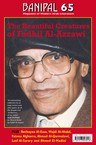
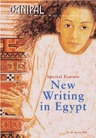
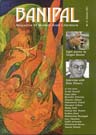
This was published in Banipal 65 – The Beautiful Creatures of Fadhil Al-Azzawi (Summer 2019)
About Khaled Mattawa
For news of readings, events and new titles.
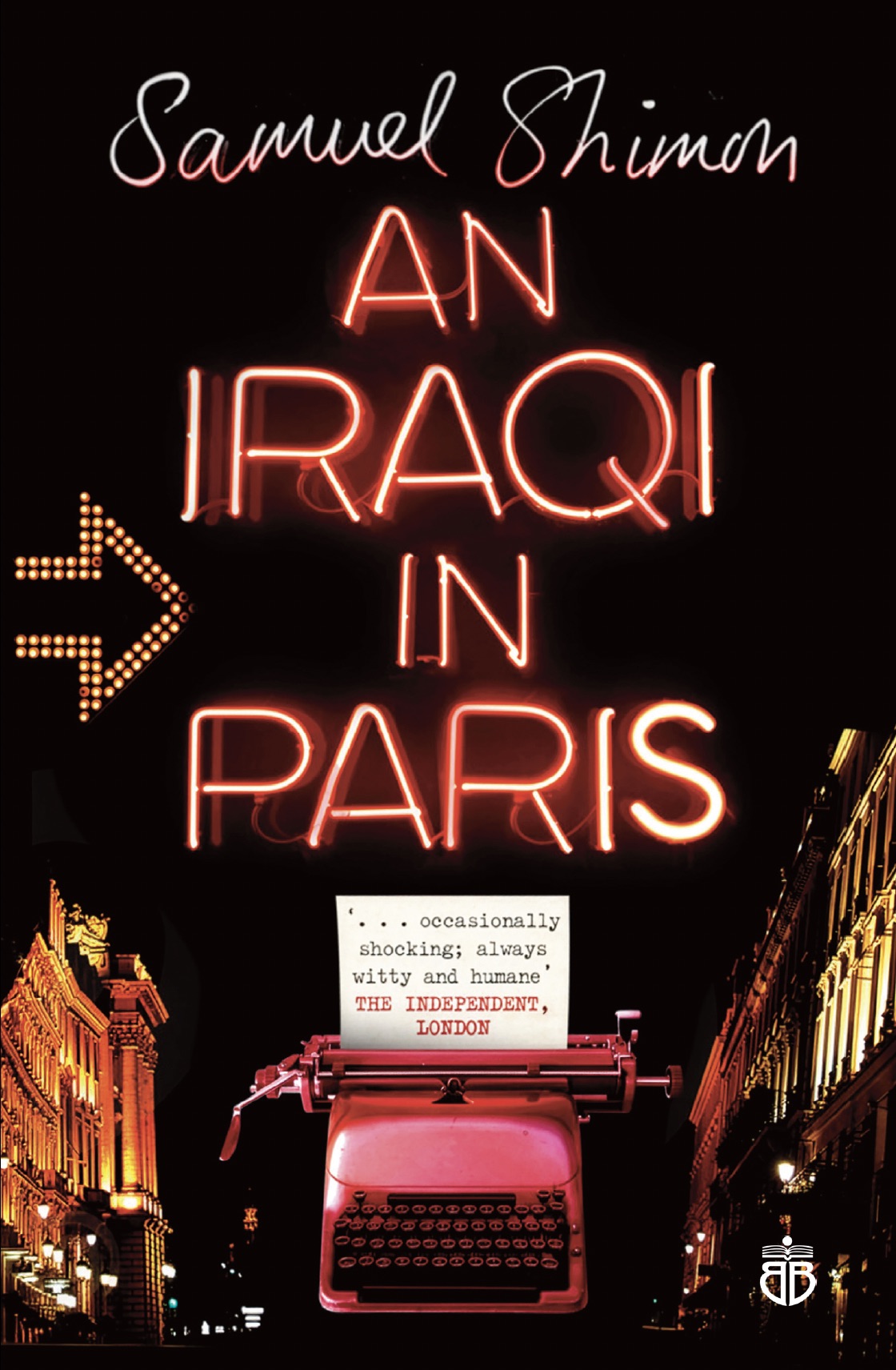
An Iraqi in Paris by Samuel Shimon

The Cinderellas of Muscat by Huda Hamed (Banipal Books, 2025)
The Tent Generations
Things I Left Behind by Shada Mustafa, translated by Nancy Roberts
Shadow of the Sun by Taleb Alrefai
Birds of Nabaa, A Mauritanian Tale by Abdallah Uld Mohamadi Bah
The Stone Serpent, Barates of Palmyra’s Elegy for Regina his Beloved by Nouri Al-Jarrah
Mansi A Rare Man in His Own Way by Tayeb Saleh (Banipal Books, 2020)

Tayeb Salih
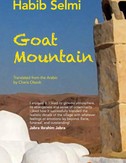
Goat Mountain by Habib Selmi
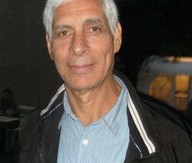
Habib Selmi, author of Goat Mountain and 3 times shortlisted for the IPAF
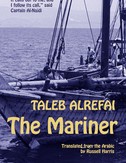
The Mariner by Taleb Alrefai (Banipal Books, 2020)

Taleb Alrefai, author of Shadow of the Sun and The Mariner

Fadhil Al-Azzawi's Beautiful Creatures by Fadhil al-Azzawi (Banipal Books, 2021)
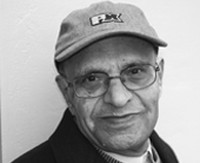
Fadhil al-Azzawi
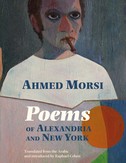
Poems of Alexandria and New York by Ahmed Morsi (Banipal Books, 2021)

Saïd Khatibi
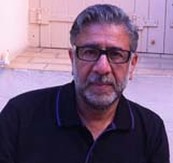
Amjad Nasser (1955–2019)

Digital Banipal the full archive
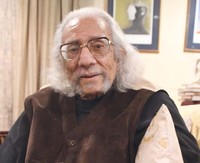
Ahmed Morsi, author of Poems of Alexandria and New York

Sarajevo Firewood
The Madness of Despair


.png)



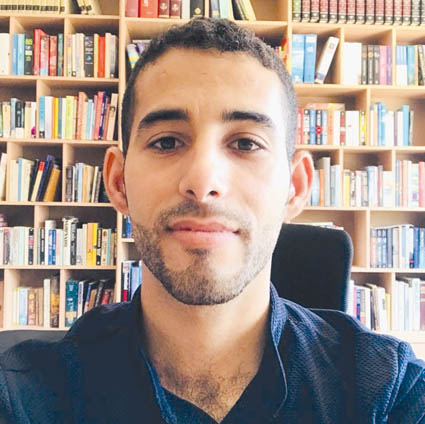
Link to poems by Mosab Abu Toha, published in Banipal 71 (Summer 2021), available to read online
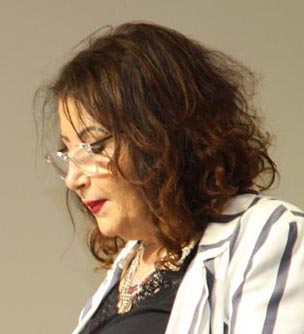
Link to poem by Liana Badr published in Banipal 74, now available as an online selection




















* * *













 Reprint out now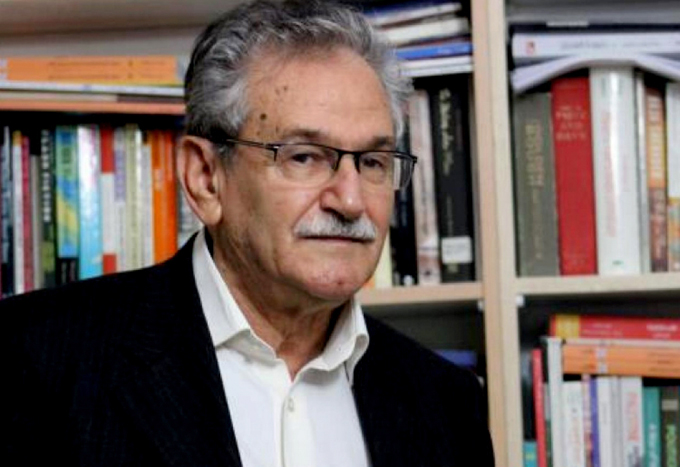
 GRIFFIN PRIZE SHORTLIST 2023
 Banipal's first audiobook