Receive Our Newsletter
For news of readings, events and new titles.

The Traveler and the Innkeeper
by Fadhil al-Azzawi
Translated by William Hutchins
AUC Press, 117 pp., £8.99, May 2011, ISBN 978-9774164620
The Mind of the Torturer
There are few contemporary novelists I know of who are as
engagé and lyrically succinct as Fadhil al-Azzawi. His favourite form seems to
be the ironic allegory, where he draws on his varied – at times brutal – life
experiences to condense his larger-than-life themes into exquisitely-crafted
miniatures of recent Iraqi history. Readers will remember his elegy to 1950s
cosmopolitan Kirkuk in The Last of the Angels and his examination of one man’s
senseless anguish in Cell Block Five. Yet before I begin to discuss the novel
under review, I thought it appropriate to take the publishers to task for a
small, if not wholly insignificant, short-sight: namely that of printing
al-Azzawi’s note – composed thirty-four years after the novel was originally
written, and where he goes on to elaborate on the novel’s personal, social and political
background – as a preface instead of as an afterword. Note how the “preface”
concludes:
Until we achieve a better grasp of the age in which we live and liberate ourselves from every type of ideological, religious, and nationalist extremism, and first and foremost from dictatorship (whatever it may call itself), we will continue forever and a day trapped inside a closed circle where the interrogator destroys his victim and the victim his interrogator, with no hope of escape.
Coupled with the fact that al-Azzawi used an actual childhood-friend-turned-police-inspector as the inspiration for Qasim Husayn, the central character of The Traveler and The Innkeeper, I for one certainly imagined the victim would be as much of a presence as the torturer, and instead, Jalil Mahmud – alias for al-Azzawi – is but a proxy for Qasim’s self-exploration, he is there to be cuckolded (Qasim later has an affair with Jalil’s wife) and to form part of the wider tableau, but never one of its more interesting motifs.
But back to the novel itself, or rather its plot. This third
and latest novel of al-Azzawi’s to appear in English is – like the previous
two, translated by William M Hutchins – set in Baghdad and opens in 1967, not
long before the June war. Qasim, “Inspector of the First Board”, finds Jalil
Mahmud, an old friend, being tortured by his colleagues. It’s not long before
we realize that Qasim is only a small cog in the machinery of horror. When
Jalil asks him, “It’s your dungeon. Didn’t you know I was here in the hands of
your cops?” Qasim can only offer a few questions of his own in return. Yet
readers expecting the slightest shred of sympathy for the victim are rapidly
disappointed; after all, Qasim and his hated colleagues were “trained to devour
those closest to them. There is little sympathy to spare in al-Azzawi’s
portrait of this particular moment in history – and it is all concentrated on
Qasim, the torturer. Eventually, tired of drifting from one bar or café to
another, Qasim finds relief in the arms of Huda, Jalil’s wife. But Qasim lives
in such a stifled world – confined by the duties he compels himself to carry
out – that we hardly feel he is invested in the affair: he cannot even sense
the encroaching disaster of the Six-Day War. He is a blind man reproaching
others for their own blindness. The novel ends with a quasi-reversal of roles
as Qasim becomes suspect in the eyes of the very Law he has so loyally served
when he attempts to cover up his affair with Huda.
With
an ability to transmit a sense of compassion through the most sordid of
characters, al-Azzawi proves masterful at recreating the interior of Qasim’s
mind: the obsession with order prompted by a maniacal fear of uncertainties,
the ability to sniff out an opponent’s weaknesses, as well as, perhaps
surprisingly, the existential hollowness that lurks in the corners of his mind:
“My God, I feel like such an invalid even though I am in the best of health.
Someone inside me is screaming, but I can’t locate the source of the scream.”
Unlikely words for a torturer one might think, but this is part of the joke.
Like The Last of the Angels and Cell Block Five, The Traveler and The Innkeeper
has a dark comedic undertone that accumulates to the point where it hovers on a
cloud of farce before descending into utter defeat – but this, of course, is
the allegorical point: Qasim’s defeat is also al-Azzawi’s, and Iraq’s, and
ours.
From Banipal 43 - Celebrating Denys Johnson-Davies
Back to top
For news of readings, events and new titles.
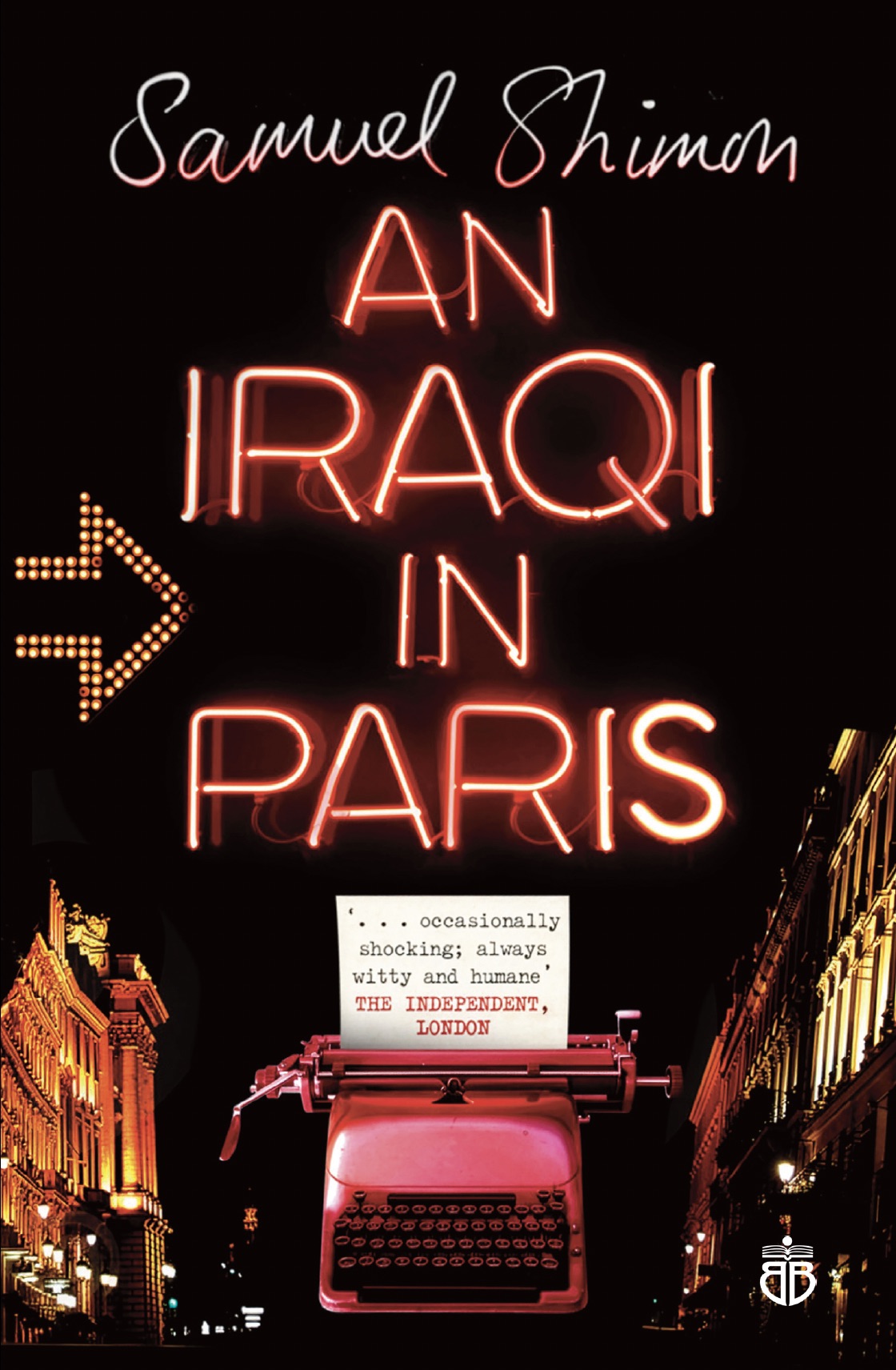
An Iraqi in Paris by Samuel Shimon

The Cinderellas of Muscat by Huda Hamed (Banipal Books, 2025)

The Tent Generations

Things I Left Behind by Shada Mustafa, translated by Nancy Roberts
Shadow of the Sun by Taleb Alrefai
Birds of Nabaa, A Mauritanian Tale by Abdallah Uld Mohamadi Bah
The Stone Serpent, Barates of Palmyra’s Elegy for Regina his Beloved by Nouri Al-Jarrah
Mansi A Rare Man in His Own Way by Tayeb Saleh (Banipal Books, 2020)

Tayeb Salih
Goat Mountain by Habib Selmi

Habib Selmi, author of Goat Mountain and 3 times shortlisted for the IPAF

The Mariner by Taleb Alrefai (Banipal Books, 2020)

Taleb Alrefai, author of Shadow of the Sun and The Mariner

Fadhil Al-Azzawi's Beautiful Creatures by Fadhil al-Azzawi (Banipal Books, 2021)

Fadhil al-Azzawi

Poems of Alexandria and New York by Ahmed Morsi (Banipal Books, 2021)

Saïd Khatibi

Amjad Nasser (1955–2019)

Digital Banipal the full archive
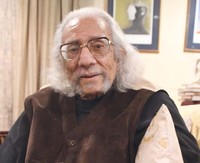
Ahmed Morsi, author of Poems of Alexandria and New York

Sarajevo Firewood
The Madness of Despair



.png)





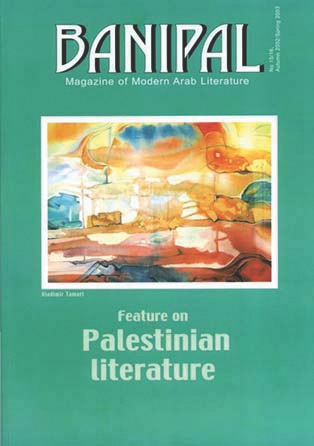

Link to poems by Mosab Abu Toha, published in Banipal 71 (Summer 2021), available to read online

Link to poem by Liana Badr published in Banipal 74, now available as an online selection
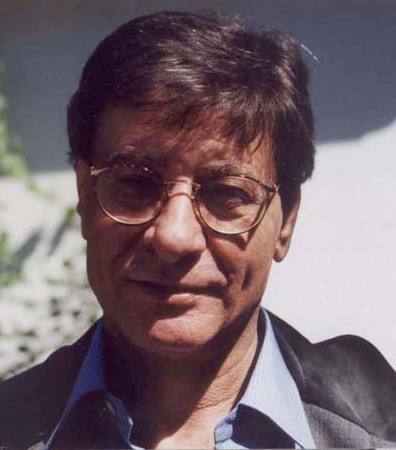
























* * *


























 Reprint out now
 GRIFFIN PRIZE SHORTLIST 2023
 Banipal's first audiobook