Receive Our Newsletter
For news of readings, events and new titles.

Susannah Tarbush reviews
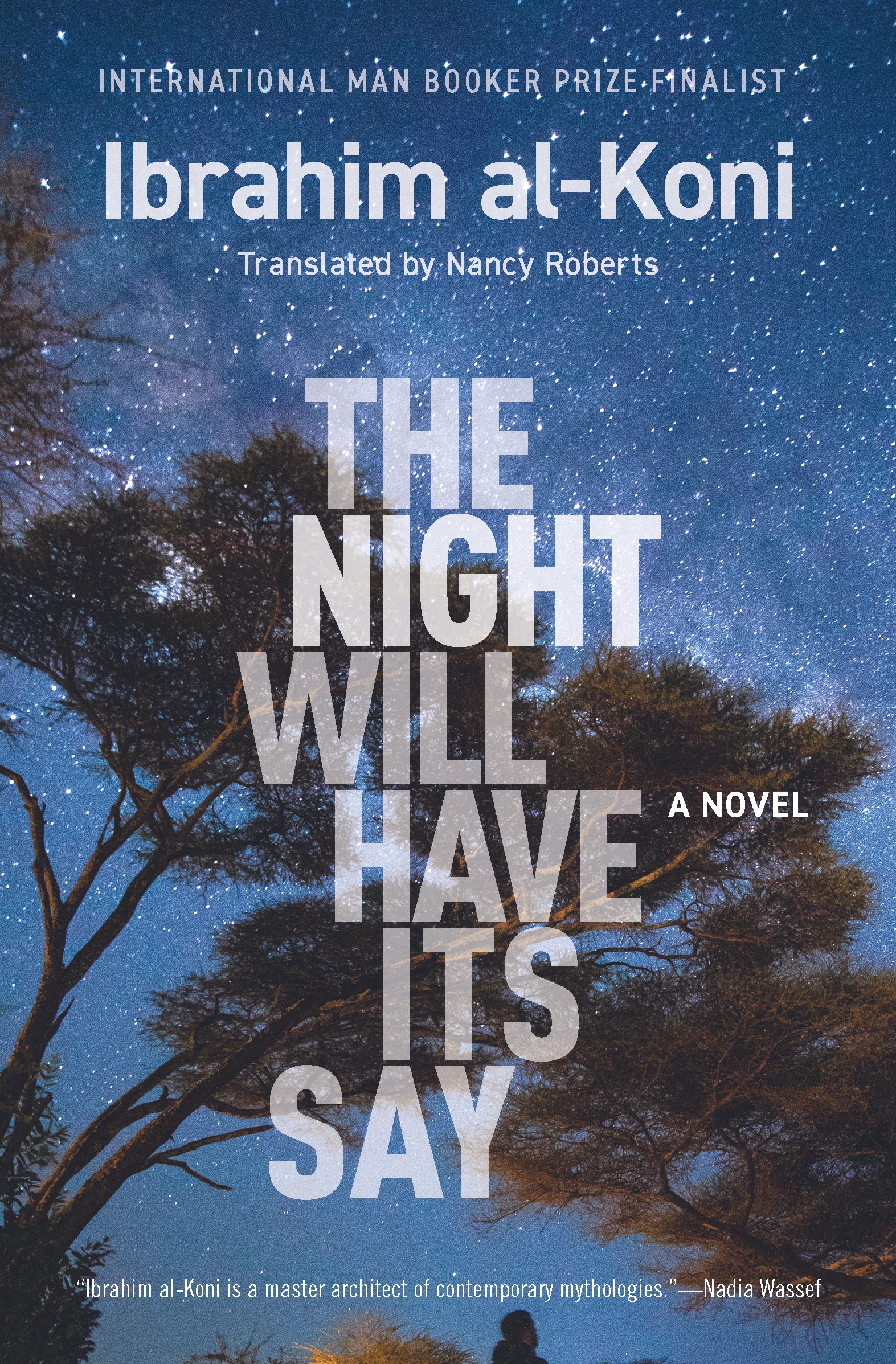 The Night Will Have Its Say
by Ibrahim al-Koni
Translated by Nancy Roberts
Hoopoe Fiction
(imprint of American University in Cairo Press), Cairo, Egypt, 2022.
ISBN: 9781649031860. Pbk, 278 pp, £11.99 / $19.67
Kindle ASIN: B0B6RVRMRY. £8.54 / $9.54
The prize-winning internationally acclaimed Libyan writer Ibrahim al-Koni is famed for his unique novels set in the desert in which, with a lyrical style, he explores many aspects of the human condition. His novel The Night Will Have Its Say, published in Arabic in 2019 by al-Mu’assasa al-‘Arabiyya li-l-Dirasat wa-l-Nashr under the title Kalimat al-Layl fi haqq al-nahar, is an account of the Muslim invasions of North Africa in the late seventh and early eighth centuries CE. Events are seen mainly through the eyes of two main protagonists: the Berber Queen al-Kahina and the Arab Muslim commander General Hassan ibn al-Nu‘man.
Born in 1948 near the Libyan city of Ghadames al-Koni was raised within the culture of the Tuareg, not learning to read and write Arabic until he was 12. After studying journalism at the Gorky Institute in Moscow he worked as a journalist in Moscow and Warsaw. He lived for years in Switzerland before moving to Spain. A prolific author, he has produced more than 80 books in the form of novels, poems, short story collections, and aphorisms, which have been translated into some 35 languages.
In 2015 he was a finalist for the Man Booker International Prize, reflecting his global stature. He won the Mohamed Zefzaf Prize for the Arabic Novel in 2005, and the Sheikh Zayed Award for Literature in 2008.
Al-Koni’s Tuareg background gives him a particularly acute perspective on the events he depicts in his novel, a complex work full of characters, military manoeuvres, theological discussions, shifting allegiances and meditations. Translator Nancy Roberts captures the poetry and richness of the original Arabic and provides an invaluable seven-page ‘Key Terms’ appendix containing biographies of the main players, tribes, places, battles and deities. She also contributes an insightful introduction to her translation, which shows her to be very much in tune with al-Koni’s literary and cultural mission.
The Berber Queen al-Kahina had several other names, including Dahiya/Dihya and Tidhit. She was the successor to Berber leader Kusaila, killed in 688 CE at the Battle of Mamma by Zuhayr ibn Qays al-Balawi who had recaptured Kairouan, the Arabs’ capital in Ifriqiya. In 683 Kusaila had killed the Arab commander Uqba ibn Nafi, founder of Kairouan.
The novel opens in 78 AH/700 CE with al-Kahina in her stronghold in the Aurès Mountains. She is in dialogue, via a translator, with an emissary sent by General Hassan ibn al-Nu‘man. Caliph Abd al-Malik ibn Marwan had sent Hassan to lead the final Arab conquest of Ifriqiya against the indigenous Berbers.
Al-Kahina speaks in the Berber language Amazigh, and in the novel this is transliterated in italics as well as being translated into English. She tells the emissary: “We have our own Scripture! Although we may no longer hold the Scripture in our hands, we have preserved it in our hearts!” She adds: “Besides, our Scripture preceded yours!”
But the emissary disagrees. “That may be so. However, the last word spoken by God dwells in the last religion to be revealed, which means that the last religion revealed abrogates what came before it.”
Al-Kahina retorts: “Our Scripture commands us, saying, ‘Beware of replacing one religion with another!’”
“What harm would it do Her Majesty to recite two confessions which, simple though they are, hold the power to spare both peoples the ravages of war?” persists the emissary. (The “two confessions” refer to the dual testimony by which one enters Islam).
Al-Kahina asks if he has forgotten what the Arabs did to Kusaila and the ill-fated leader of the Garamantes. Later in the novel we learn that when some individuals such as Kusaila and the leader of the Garamantes had “assented to the aggressive demand” in order to avoid bloodshed, they had been betrayed and subjected to all manner of abuse and humiliation. The Arab invaders had cut off the nose of the Garamantes’ venerable leader on the pretext that he was plotting to wage wars on the Arabs, and humiliated Kusaila by forcing him to skin sacrificial animals in front of his servants and followers.
Al-Kahina wraps up her conversation with Hassan’s emissary by saying “I want you to tell me what your Scripture says about . . . about women!” She follows her request “with a mischievous if muffled laugh, at which her ample bosom shook”.
At a later date al-Kahina says in a message to Hassan that she has decided to fight him, partly because of what his emissary had told her regarding “what your Scripture says about women”. She adds: “When you go to war against a people whose Scripture you know nothing about, and which honors women, while promoting a Scripture which takes such a dim view of them – a view which the doltish messenger wasn’t even ashamed to confide to me! – you commit an unforgivable error against your own rule.”
She continues “How dare you come to wage war on me, not knowing that my people’s heritage holds nothing on Earth more sacred than women?”
Al-Kahina is intelligent, witty and visionary, but she is at times headstrong, to the despair of the aged guardian, actually her grandfather, whom she often consults. In particular he takes issue with her scorched earth policy under which she destroys the Berber city of Béjaïa without consulting the people first. She insists that she had received an intuition-revelation from the Realms of the Unseen, and says “the sin of city folks lies in their overly high opinion of walls and everything to do with urban existence”. Her justification is that destruction of the city will deprive the enemy of a hiding place.
Al-Kahina has two sons. Yajay was fathered by a Greek, while the father of Yuhal, was a Berber. The sons were part of her plan to overcome enmity among the world’s peoples by comingling their blood.
A climax of the novel is al-Kahina’s defeat of Hassan at the Battle of Meskiana. The site became known as “The Valley of the Virgins” in tribute to the young women who would be deprived of young men killed in battle. Al-Koni gives a powerful description of the battlefield and the dead and wounded.
Dahiya’s Council of Sages decides that the captives, who included eighty men of noble descent, should be sent back to their commander. Al-Kahina asks to be allowed to keep one of the prisoners, Khalid ibn Yazid, claiming that she had received a vision in her sleep that she should adopt him as her son.
Al-Kahina asks him to teach her Arabic because “I want to read the Scripture that has prompted people to leave their homelands, families, and communities and set out for other lands, determined never to return without having imposed its message on these lands’ inhabitants”. Dahiya had “long understood that the Scripture of the Hebrews, like that of the Europeans from beyond the sea, was in essence the same as her own ancient Scripture, known in the ancestors’ tongue as Anhi. As she would learn later from her adopted son, the Arabs’ scripture was also no different in essence from those that had preceded it.”
Alone in the desert, al-Kahina receives from the stars messages sent by the hidden Realm. She wants to knit the bonds of covenant between her two offspring and the son she adopted. She adapts a Berber ritual to do so. “She sought love so that it could spread everywhere, certain in her belief that as love prevailed, so would peace: peace within families, peace among tribes, and peace among nations.”
She did not believe, nor did she want to believe, that “on their way to her, the invaders had lost sight of their Scripture’s inward truth. However, the mean-spirited among the Arabs had robbed them of their true message and mission by exalting material gain as the purpose of their expeditions.”
After her victory over Hassan, al-Kahina’s downfall is hastened by her decision to eradicate “The Longest Stretch of Shade on Earth” extending from Tripoli to the outskirts of Tangier in the West. This strip was filled with all kinds of trees, and the soil cultivated and irrigated. It was a multi-ethnic urbanised area of luxury. But al-Kahina believes the total destruction of the area – part of her scorched earth policy – will shield her from the Arabs, “who had only come out against her out of greed for a civilization they had forfeited in their homeland.” Delegations from Berber tribes appeal for Hassan’s help to protect them “from the madness of a woman who had finally lost her senses”.
After his defeat at Meskiana Hassan had retreated to the city of Barca, where he spent five years awaiting reinforcements from the caliph in Damascus. He suffered fallout from the rivalry between the Umayyad caliph in Damascus, Abd al-Malik ibn Marwan ibn al-Hakam and his brother, Abd al-Aziz ibn Marwan ibn al-Hakam, the governor of Egypt. The latter was jealous of Hassan’s governorship of North Africa and conspired to hinder the arrival of the reinforcements he needed. In Barca Hassan embarked on building projects in imitations of earlier civilizations whose remains he found in the city.
Hassan remembers the captured solider Khalid ibn Yazid, whom al-Kahina had adopted, and secretly contacts him by messenger. Despite Yazid’s plotting behind al-Kahina’s back she entrusts him with her two sons and asks him to take them with him to Hassan with the plea that he grant them his favour. She has foreseen, and prepares for, her own death.
Al-Kahina and Hassan never meet, but introspective Hassan comes to realise that they share some values. In his ruminations he is critical of his fellow Umayyads, with the amassing of spoils having become the ultimate purpose of their military expeditions. In the “worship of booty” the rulers were even greedier than the “bogus mujahideen” who made up the backbone of the Muslim army.
A main reason for resentment against the Arab invaders was the imposition of the jizya – a tax imposed upon the non-Muslim subjects of a Muslim state, but which was often imposed on indigenous people who had embraced Islam. If they could not pay, their womenfolk might be seized.
It would only be when Umar ibn Abd al-Aziz, regarded as the most just and pious of the Umayyad caliphs came to power in 717 CE that Berber tribal elders would be able to take their grievances directly to the seat of power, as the final section of the novel shows. But Umar’s reign would be cut short in 720.
Several of al-Koni’s books have been featured in Banipal, starting with The Bleeding of the Stone translated by May Jayyusi and Christopher Tingley (Interlink/Arris 2004), reviewed in Banipal 19 in Spring 2004.
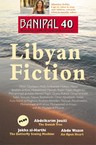
Elliott Colla’s translation of Gold Dust (Arabia Books, 2008) was reviewed in Banipal 33 and was a runner-up for the 2009 Saif Ghobash Banipal Translation Prize. William M Hutchins has translated several of al-Koni’s novels including Anibus: A Desert Novel (AUC Press, 2005, reviewed in Banipal 23) and The Fetishists: The Tuareg Epic (Centre for Middle East Studies at The University of Texas at Austin, 2018, reviewed in Banipal 66). Hutchins also translated The Seven Veils of Seth (Garnet Publishing, 2008), an extract from which appeared in Banipal 25, as well as The Puppet (CMES at The University of Texas at Austin, 2010) and New Waw, Saharan Oasis (CMES, 2014) excerpted in Banipal 40: Libyan Fiction. The same issue of Banipal included an essay by Elliott Colla, “Translating Ibrahim al-Koni”, and Peter Clark’s review of The Puppet.
Nancy Roberts is a distinguished translator of Arabic literature, whose translations have frequently been reviewed in Banipal. She shared first prize of the 2018 Sheikh Hamad Award for Translation and International Understanding, in the category of translation from Arabic into English, for her renderings of Jordanian-Palestinian author Ibrahim Nasrallah’s Gaza Weddings (Hoopoe, 2017), The Lanterns of the King of Galilee (AUC Press, 2015), Time of White Horses (AUC Press, 2012), and Kilimanjaro Spirit (Bloomsbury Qatar Foundation Publishing – now Hamad Bin Khalifa University Press – 2016).
Her translation of Ghada Samman’s Beirut ‘75 won the University of Arkansas Arabic Translation Award which is awarded for the year’s best translation in manuscript. She went on to translate another three of Samman’s novels. The pairing of al-Koni and Roberts as author and translator works particularly well, as The Night Will Have Its Say shows and one hopes it may bear further fruit in the future.
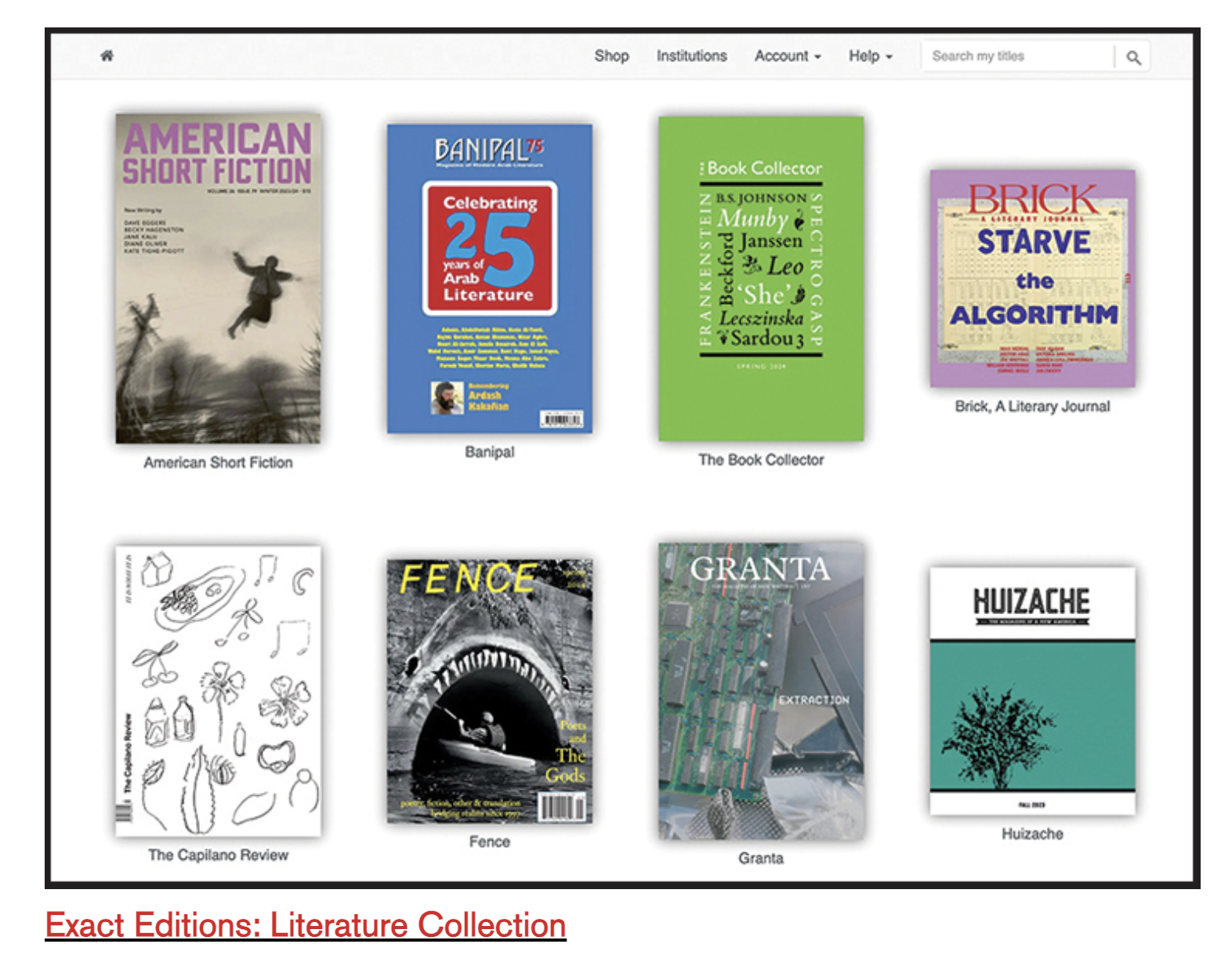
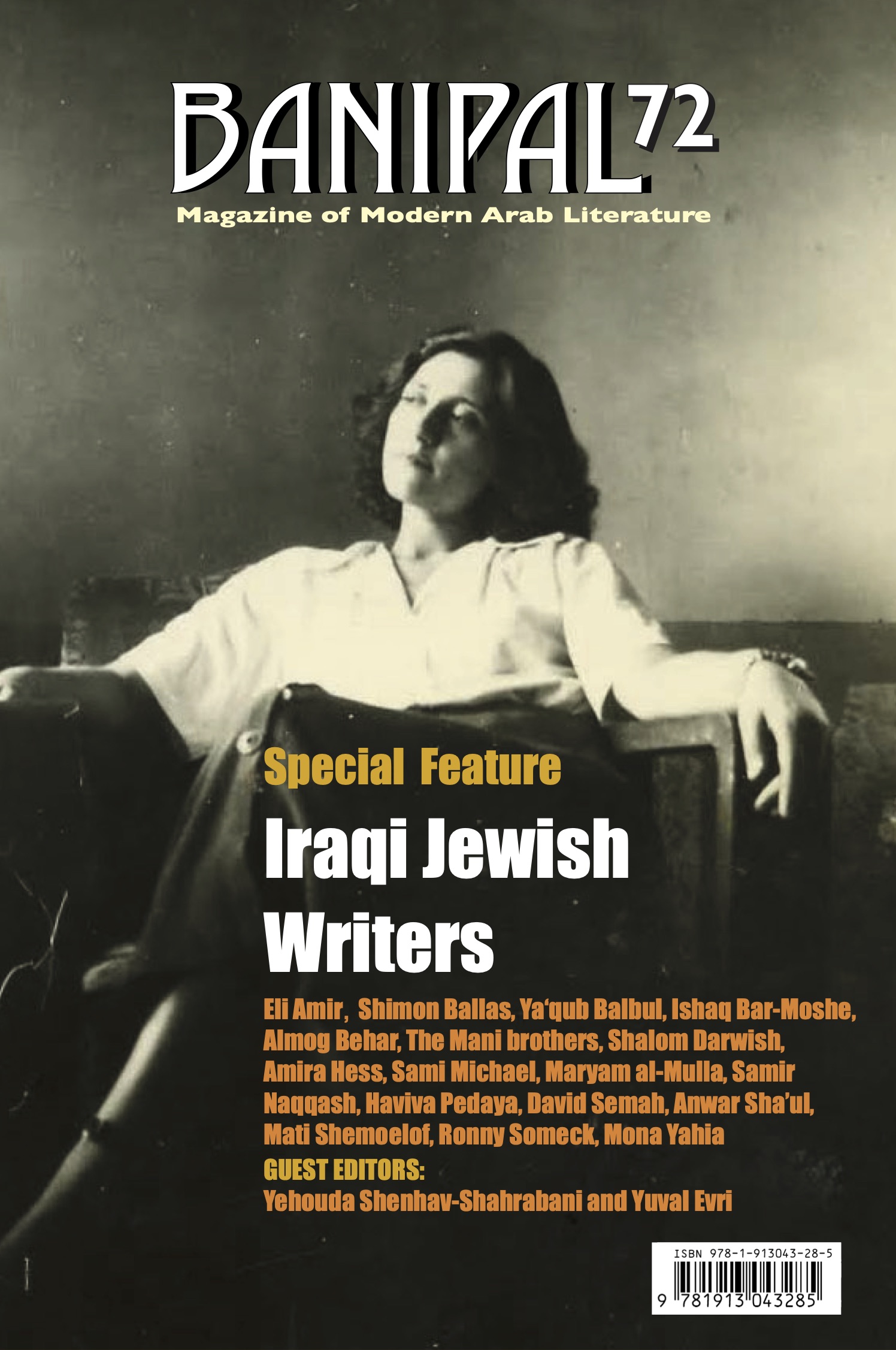
Published in Banipal 75 – Celebrating 25 Years of Arab Literature (pp184-1991)
For news of readings, events and new titles.
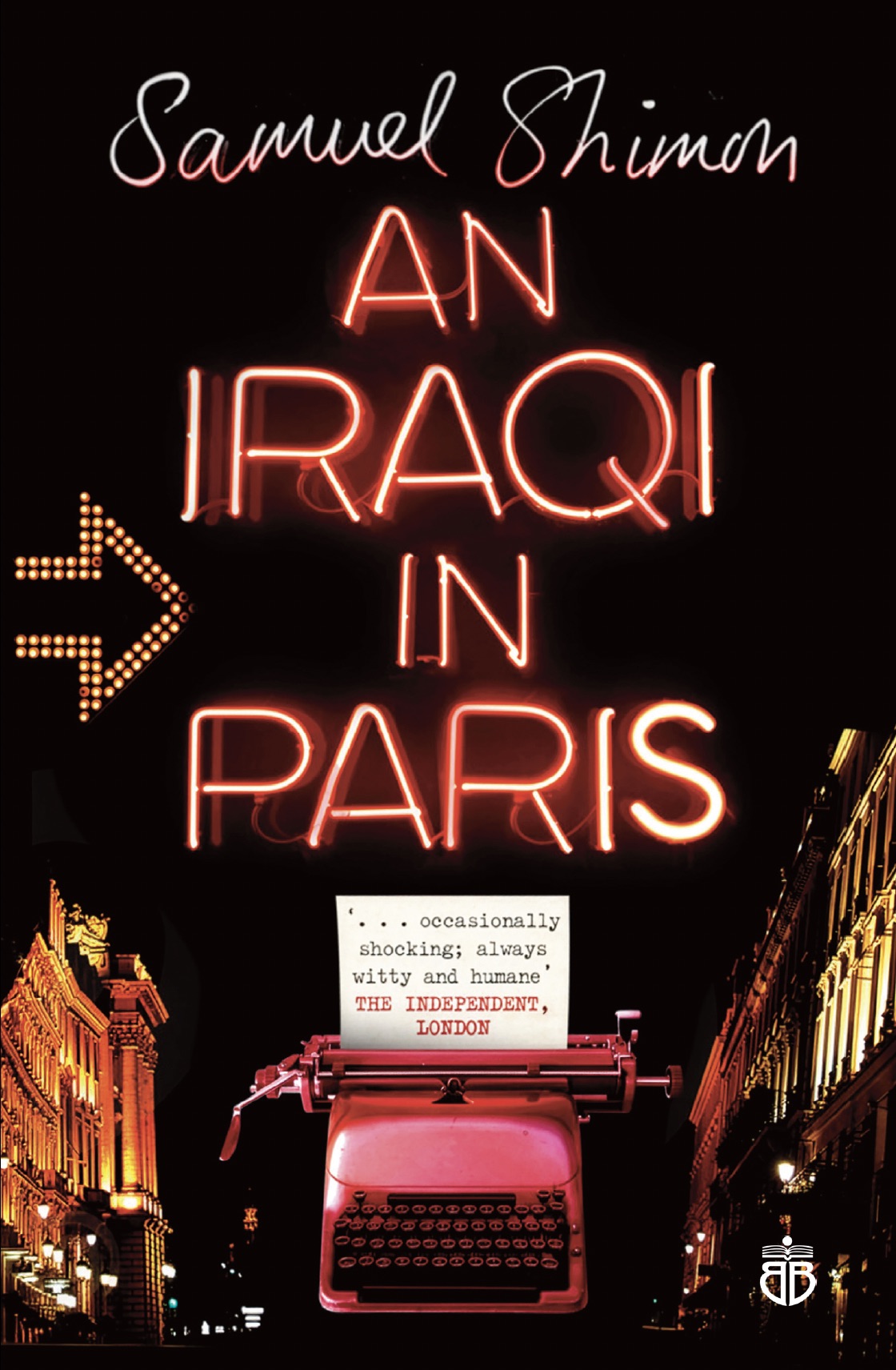
An Iraqi in Paris by Samuel Shimon
The Cinderellas of Muscat by Huda Hamed (Banipal Books, 2025)
The Tent Generations
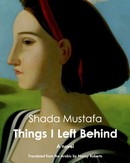
Things I Left Behind by Shada Mustafa, translated by Nancy Roberts
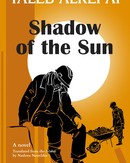
Shadow of the Sun by Taleb Alrefai
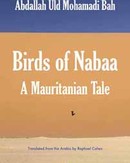
Birds of Nabaa, A Mauritanian Tale by Abdallah Uld Mohamadi Bah
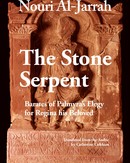
The Stone Serpent, Barates of Palmyra’s Elegy for Regina his Beloved by Nouri Al-Jarrah
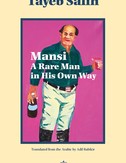
Mansi A Rare Man in His Own Way by Tayeb Saleh (Banipal Books, 2020)
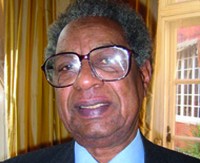
Tayeb Salih
Goat Mountain by Habib Selmi
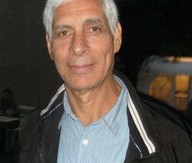
Habib Selmi, author of Goat Mountain and 3 times shortlisted for the IPAF
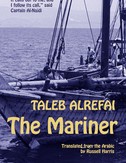
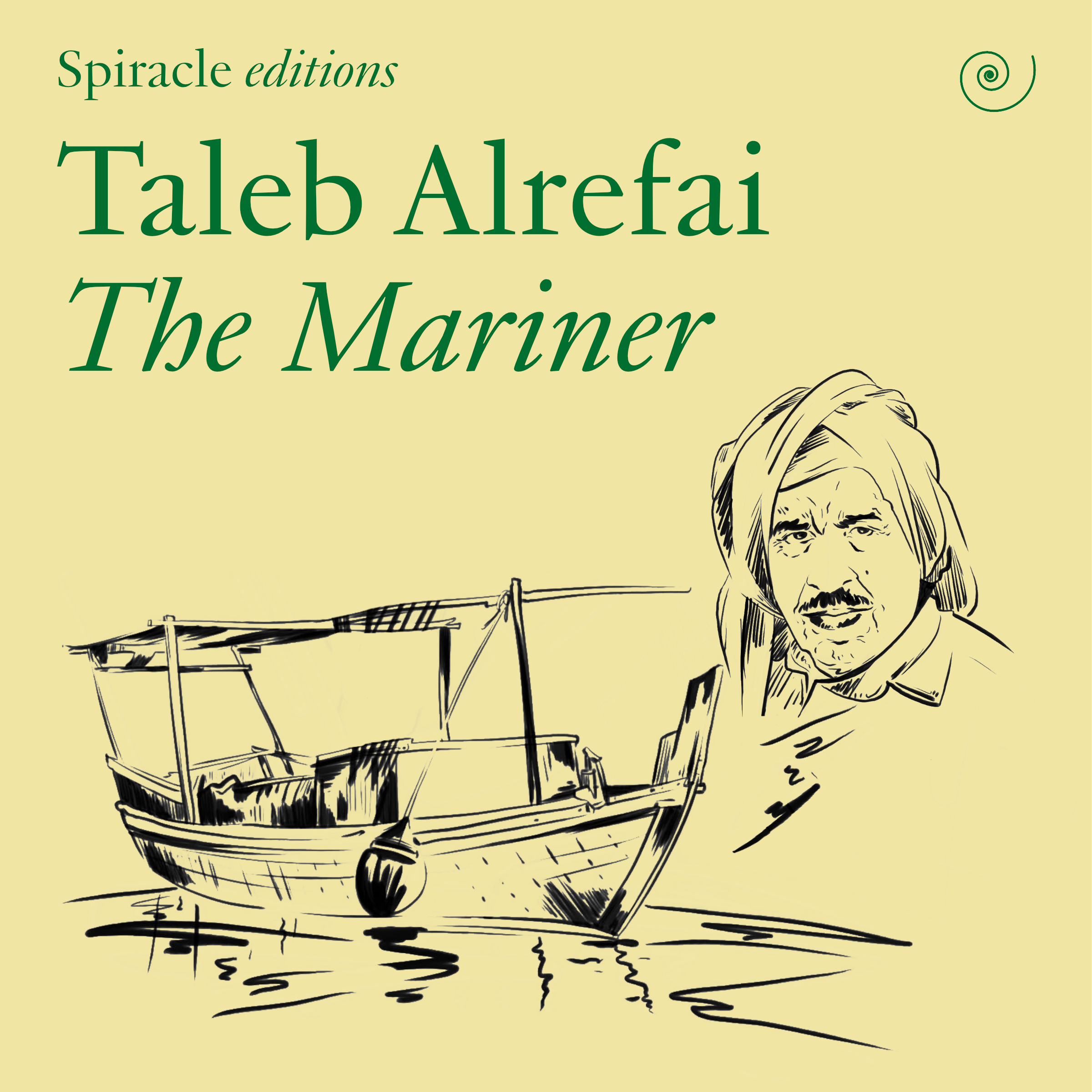
The Mariner by Taleb Alrefai (Banipal Books, 2020)
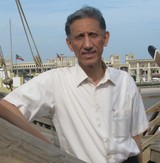
Taleb Alrefai, author of Shadow of the Sun and The Mariner

Fadhil Al-Azzawi's Beautiful Creatures by Fadhil al-Azzawi (Banipal Books, 2021)
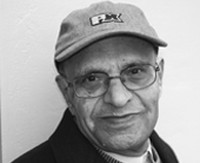
Fadhil al-Azzawi

Poems of Alexandria and New York by Ahmed Morsi (Banipal Books, 2021)

Saïd Khatibi
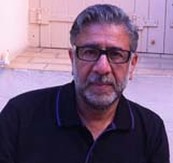
Amjad Nasser (1955–2019)

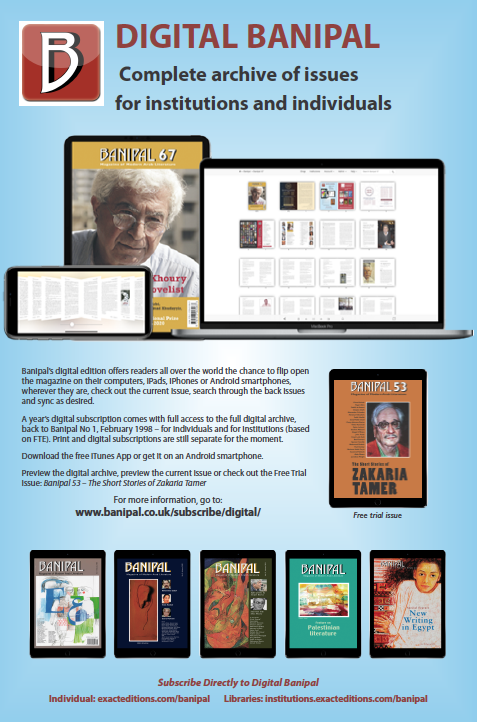
Digital Banipal the full archive
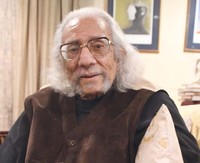
Ahmed Morsi, author of Poems of Alexandria and New York

Sarajevo Firewood
The Madness of Despair


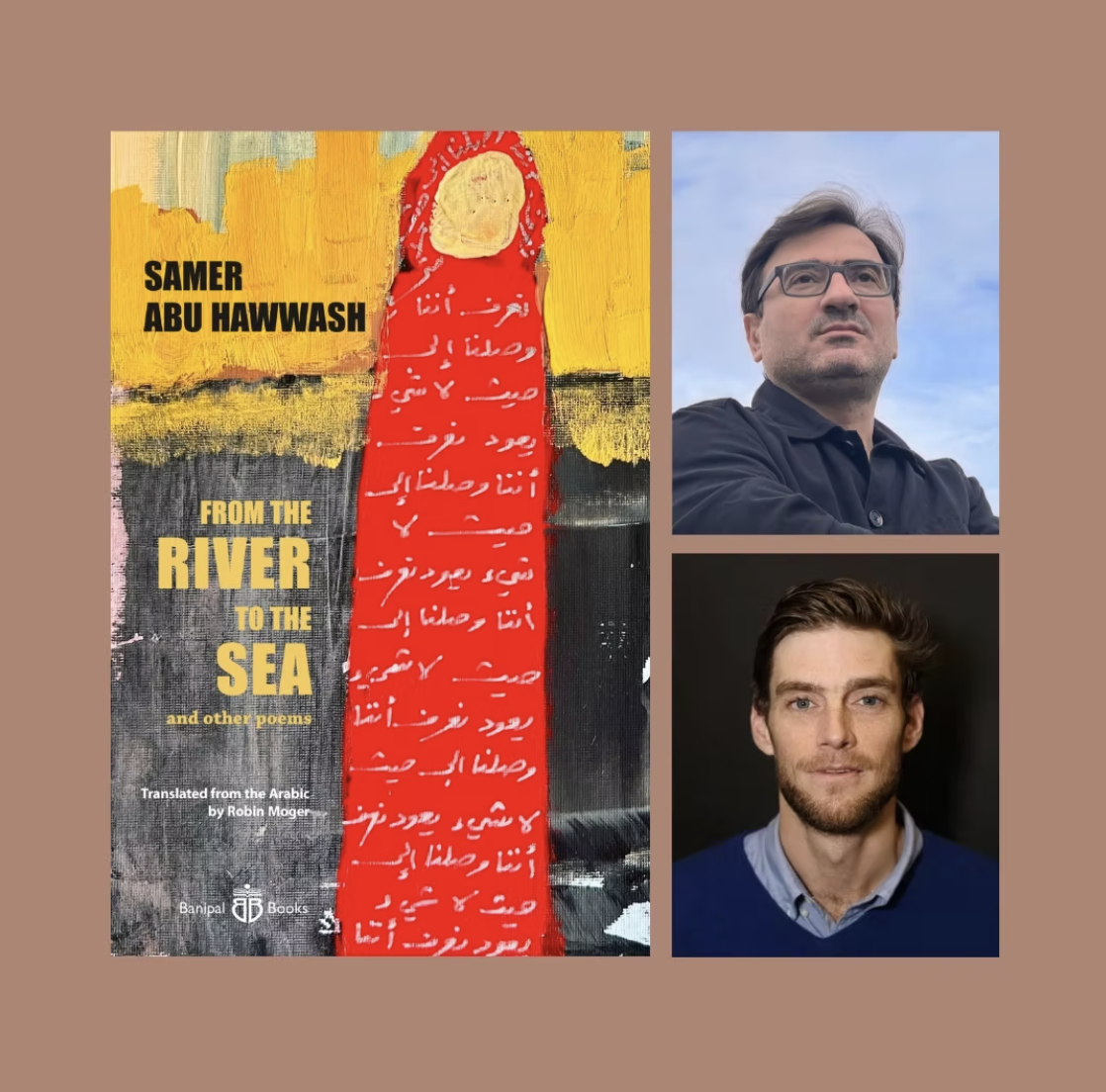
.png)

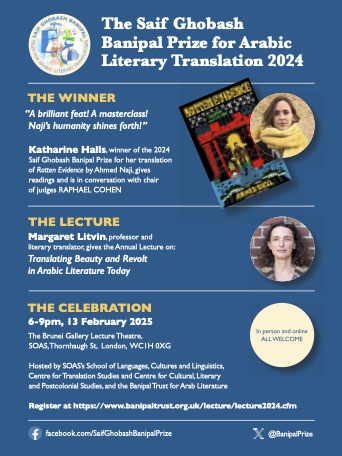

Link to poems by Mosab Abu Toha, published in Banipal 71 (Summer 2021), available to read online
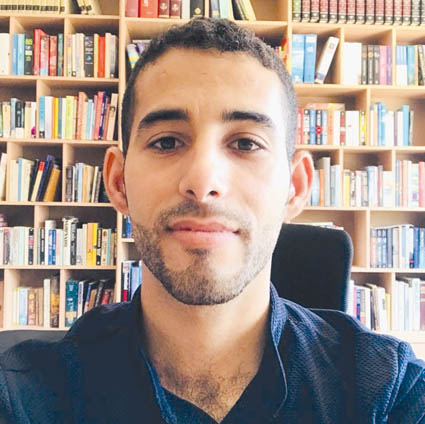
Link to poem by Liana Badr published in Banipal 74, now available as an online selection

















* * *










 Reprint out now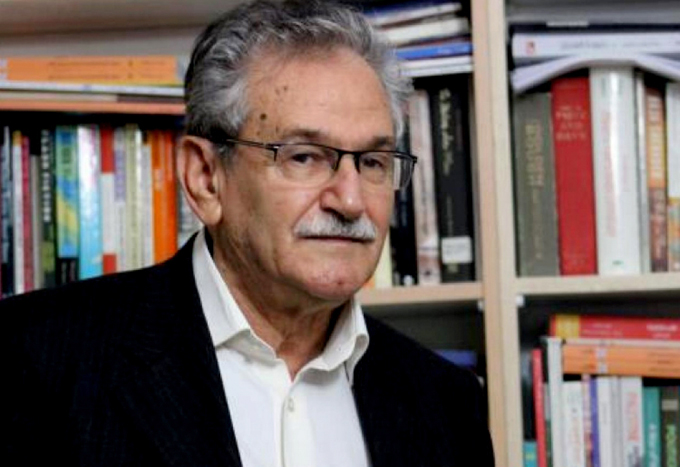
 GRIFFIN PRIZE SHORTLIST 2023
 Banipal's first audiobook