Receive Our Newsletter
For news of readings, events and new titles.

 Hannah Somerville reviews
by Mahmoud Shukair
Translated by Issa J Boullata, Elizabeth Whitehouse, Elizabeth Winslow, Christina Phillips.
Published by Banipal Books, London, 2007
ISBN: 9780954966638
Pbk, 124pp, £7.99 / $15
The best satire tap-dances straight over the boundary line between the plausible and implausible without missing a beat: the type that compels a kind of reflexive self-rebuke on the part of the reader when we invariably realise, miles too late, that we have strayed with perfect guilelessness into the realm of the beyond belief. With tightly-written plots that unfurl amid the grinding clutter of day-to-day existence, exploding out from an always painfully-believable root cause, the satirical stories contained within Mahmoud Shukair’s riotous and winsome collection Mordechai’s Moustache and his Wife’s Cats and other stories exemplify this technique. The tales that follow – fleeting, ethereal, often sad but never moribund, and infused with humanist sensibility – emerge in turn as a love-letter to the short story and individual striving, and a tenderly-written one at that.
The author is now 80 years old and has been a devotee of short-form fiction throughout his prodigious career. In an interview at the close of this small collection, which was first published by Banipal in 2007 and is one of more than 40 books bearing his name, Shukair recalls how he first became infatuated with the genre after picking up a copy of the Jerusalem-based magazine al-Ufuq al-Jadid (New Horizon) in 1961. Nurtured by the Arab novelists of the so-called ‘60s generation, and also by Western household names such as Steinbeck, Camus and Chekhov – whose influences are detectable in parts of Mordechai’s Moustache – Shukair went on to develop a distinctive authorial style of his own, one equally informed by his experiences as a Palestinian resident of Israel (later forcibly displaced to Europe), as a Damascus University graduate in sociology and philosophy, and as a card-carrying citizen of the world.
The first four short stories in Mordechai’s Moustache explicitly bear witness to the absurdity of this first experience. The opening dance, “Shakira’s Picture”, portrays a family engaging in a disastrous gambit by attempting to play off their shared surname – Shakirat – as evidence of their blood relation to the voluptuous Columbian singer. By doing so, they somehow expect to secure travel documents from the Israeli Ministry of Interior. In time these discursive acrobatics give way to certain members of the family believing wholesale in the conspiracy, to the point that Shakira’s picture is hung up on the wall of their home. Nestled amid the ensuing hilarity are steely reminders of real-world issues such as the generational divide, the objectification of women, the tussle between Islamic orthodoxy and brute pragmatism, and most of all, the grotesque injustice that has compelled a Palestinian family to insert itself into this farcical predicament. The result is a tragicomedy to remember.
The other three ‘traditional’ shorts in this volume, “Ronaldo’s Seat”, “Mordechai’s Moustache and his Wife’s Cats” and “My Cousin Condoleezza”, also examine the human impulse toward self-delusion and totemic thinking in times of acute strain. From the mispronunciation of American names to the utter misreading of situations and rooms, the stories are studded with indications that many of these characters do not fully understand the world they are living in; sad, in some ways, that they should have to. Many of Shukair’s protagonists try to assert themselves through gestures: a surprising facial hairstyle, a workshop named ‘Independence Carpentry’, all collapsible and most already in the throes of collapse. The titular story is an ode to masculinist politics and overcompensation: Mordechai, an ageing and obstreperous Israeli with a moustache comical to all but himself, picks up his M16 and stations himself at a border checkpoint in response to perceived inattentions on the part of his wife. The would-be return to glory is positioned as the counterpoint to their vacillating marital relations, a point explicitly mocked by his wife: “If you want to bombard anything, here is the wall in front of you.”
Walls and boundaries are also a central theme of the subsequent three sections, entitled Vignettes. These comprise an array of phantasmic ‘very short stories’: 43 in total, and all beautifully translated by Issa Boullata, Elizabeth Whitehouse and Elizabeth Winslow. Many of the stories deal with gaps in communication and misunderstandings between individuals, and span a series of seemingly discrete scenes in disparate locations – the markets of Cordoba, King Karl’s Bridge in Prague, a backstreet brothel, a hotel breakfast room, rain-soaked city streets – that on closer inspection all appear to be connected with each other, with subtle back-referents allowing the micro-interactions they depict to somehow partly traverse space and time. Enclosed within some of the vignettes are explicit references to the present-day Palestinian condition: “The Martyrs” highlights the indifference of the dead to short-lived mourning, while “A City” gratifyingly satirizes the place-as-a-woman motif that has at times plagued the Palestinian artistic corpus and is despised by this reviewer. In “Vow”, the author summons the ghost of Mahmoud Darwish in a song by Marcel Khalifah playing on the radio as if to remind us that, just like his mother’s coffee, the voice of a generation has now himself become a signature – or perhaps, an anchor.
In contrast to the more elbows-out, declamatory prose style adopted by some of his contemporaries in ‘very short story’ writing, Shukair’s prose is spare and weighted with human dignity. We are afforded just enough material detail to visualise a scene, and simultaneously the narrative space to perceive the stories, just like their protagonists, as somehow dislocated. Atomization and detachment are also a regular theme in parts of Vignettes: notably in “The Bus” and heart-wrenchingly in “A Map”. In the latter, a man and a woman find one another after discarding the ‘maps’ inside themselves – only to be cleaved apart by a bigger ‘map’ that falls between them: one perhaps symbolising the exigencies and obligations of their respective lives, or socio-cultural contingencies, or even the imaginary dividing lines on a real map, such as the one running between Israel and Palestine.
Whatever they may be, in both their structure and content the Vignettes sections stand as a gentle but persuasive argument that interpersonal divisions are conjured-up, grafted-on, opportunistic and inherently unstable – but also harmful, not merely to their intended subjects but to us all. Together with the principal four tales in Mordechai’s Moustache, they are also testament to the power of the short story in the hands of an adept and lifelong craftsman. It is difficult to recommend this collection highly enough.
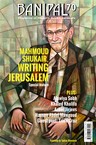
Published in Banipal 70 – Mahmoud Shukair, Writing Jeruasalem
For news of readings, events and new titles.
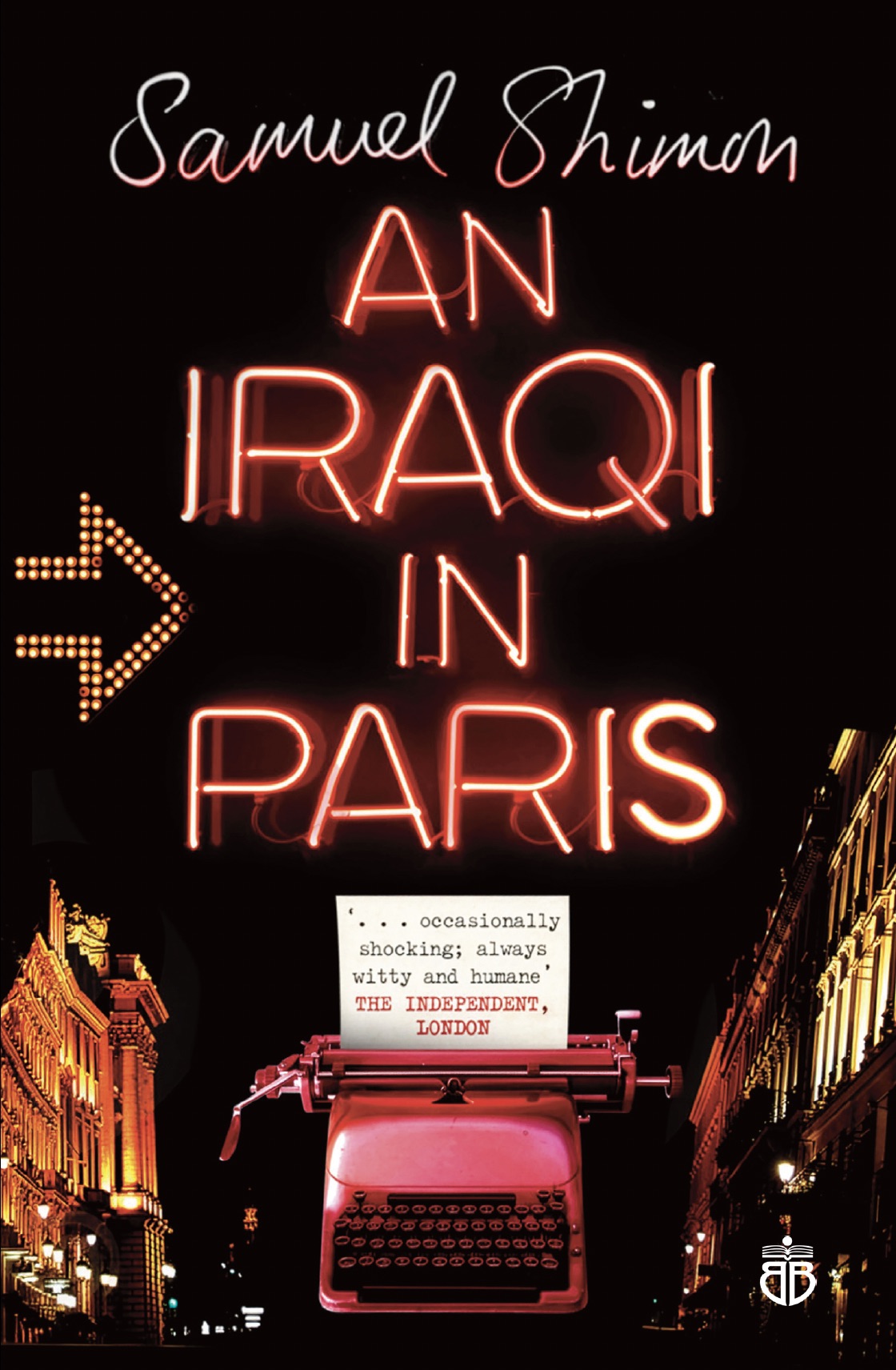
An Iraqi in Paris by Samuel Shimon
The Cinderellas of Muscat by Huda Hamed (Banipal Books, 2025)
The Tent Generations
Things I Left Behind by Shada Mustafa, translated by Nancy Roberts
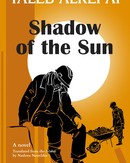
Shadow of the Sun by Taleb Alrefai
Birds of Nabaa, A Mauritanian Tale by Abdallah Uld Mohamadi Bah
The Stone Serpent, Barates of Palmyra’s Elegy for Regina his Beloved by Nouri Al-Jarrah
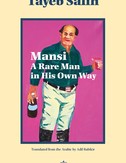
Mansi A Rare Man in His Own Way by Tayeb Saleh (Banipal Books, 2020)

Tayeb Salih
Goat Mountain by Habib Selmi

Habib Selmi, author of Goat Mountain and 3 times shortlisted for the IPAF

The Mariner by Taleb Alrefai (Banipal Books, 2020)

Taleb Alrefai, author of Shadow of the Sun and The Mariner

Fadhil Al-Azzawi's Beautiful Creatures by Fadhil al-Azzawi (Banipal Books, 2021)

Fadhil al-Azzawi
Poems of Alexandria and New York by Ahmed Morsi (Banipal Books, 2021)

Saïd Khatibi

Amjad Nasser (1955–2019)

Digital Banipal the full archive

Ahmed Morsi, author of Poems of Alexandria and New York

Sarajevo Firewood
The Madness of Despair


.png)






Link to poems by Mosab Abu Toha, published in Banipal 71 (Summer 2021), available to read online

Link to poem by Liana Badr published in Banipal 74, now available as an online selection























* * *















 Reprint out now
 GRIFFIN PRIZE SHORTLIST 2023
 Banipal's first audiobook