Receive Our Newsletter
For news of readings, events and new titles.

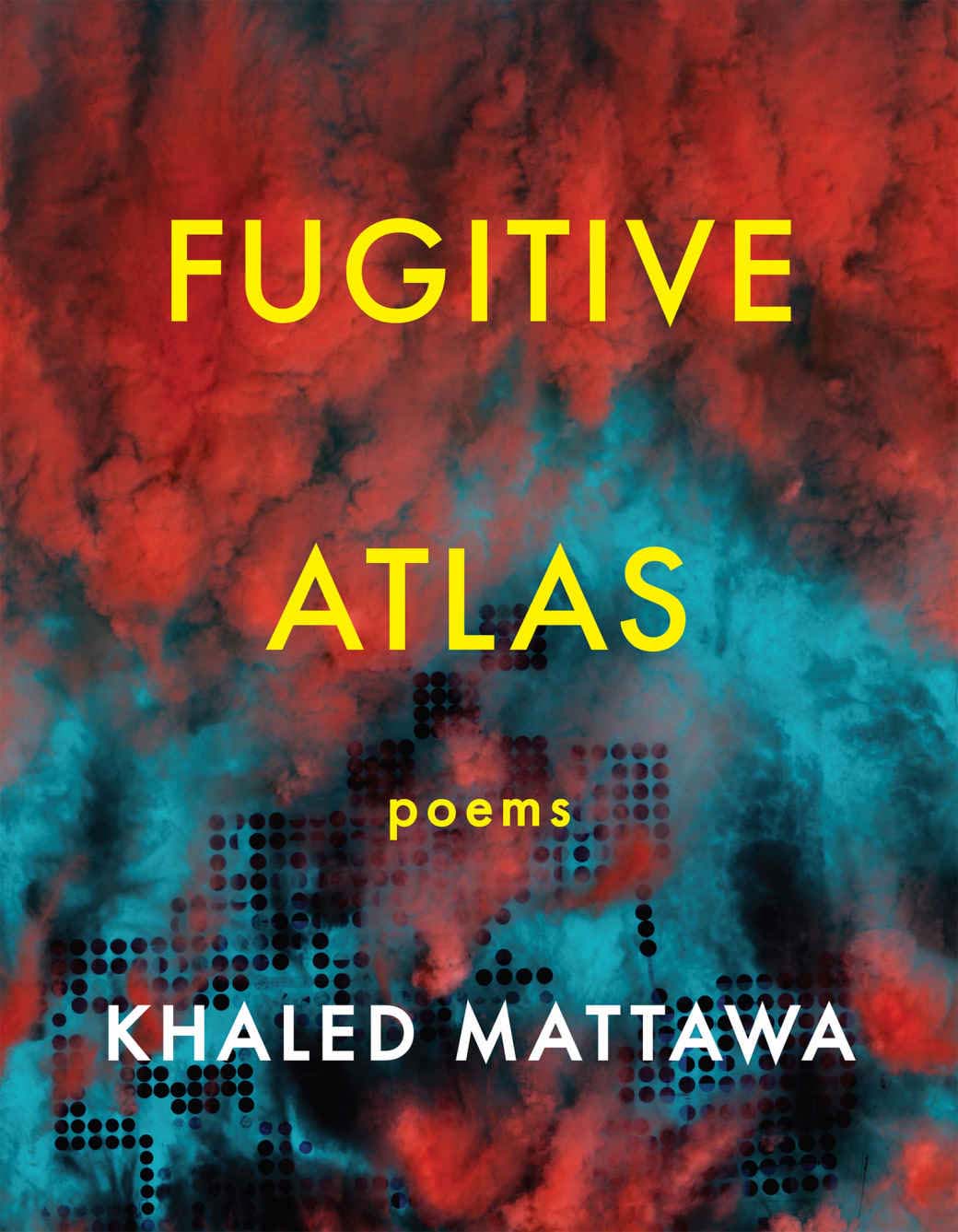
Joselyn Michelle Almeida reviews
Fugitive Atlas: Poems
by Khaled Mattawa
Graywolf Press, USA, 2020
ISBN: 9781644450376,
paperback, 126 pp., $18.00
Khaled Mattawa effortlessly navigates between Middle Eastern, American, and World literary traditions in Fugitive Atlas (2020), his most recent poetic tour de force. Readers of Banipal will be familiar with his ability to harmonize the polyphonous intertextuality in these archives as a poet, translator, and scholar– whether in poetry collections such as Amorisco (2008), Tocqueville (2010), for which Mattawa won the Arab American Book Award (2011), and Mare Nostrum (2019); his translations of Adonis, Fadhil Al-Azzawi and other significant contemporary Arab poets; and several anthologies of Arab American poetry and fiction. His prolific and award-winning work in the field of Arabic literature in English, recognized by awards like the MacArthur Fellowship (2014), make him a leading voice in the current Renaissance of Arab American letters and one of the most significant American poets writing today.
The manifold poetic routes that Mattawa sets in motion across the five sections which comprise Fugitive Atlas interconnect the personal and collective lives of peoples in West and East, and render a deeply elegiac map of humanity’s shared planetary experience in the beginning decades of the 21st Century. Through original and masterful experiments with poetic form, Mattawa constructs a sensibility that inhabits both transnational and translocal imaginaries, engaging the themes of loss, war, displacement, and the longing for return, justice, and restitution. One of the central preoccupations of Fugitive Atlas is the figure of the refugee as both victim and survivor of conflict and displacement, which has personal dimensions. Mattawa’s family fled from Libya in 1923 after the Italian army invaded Misrata, where they lived, and undertook the arduous land journey of 1,000 miles to safety in Egypt before the family’s eventual return to Libya after World War II.
Through religious forms such as the psalm and the hymn, and more classical ones such as the ode, the qassida, and the ‘alam, the acrostic form of the Bedouin elegy, Mattawa brings to life the intersection of mythical, personal, national, and global histories. His virtuosity extends to other Eastern forms, such as the Japanese haibun, a prose meditation that concludes with the more familiar renga. Critic Phillip Metres traces the haibun to Basho, yet the combination of a prose reflection that ends in a poem also shares a Western Counterpart in Dante’s Vita Nuova. Like Coleridge and Borges, Mattawa also experiments with marginalia and bibliographic elements, such as the index form to move poetry beyond the page. The plurality of poetic forms in Fugitive Atlas finds an echo in the diverse sources that inform it. As Mattawa’s notes indicate, these range from the Egyptian Book the Dead (circa 1550 BCE), to Shakespeare’s Sonnets, Percy Shelley’s “Ozymandias”, Walt Whitman’s Song of Myself, T.S. Eliot’s The Wasteland, and Octavio Paz’s “I Speak of the City, as well as Arabic writers such as Amal Dunqul and Abu Bakr Kahal.
This wealth of named and unnamed allusions resonate throughout a work that engages the problem of being human since the creation according to Abrahamic and other world religions in poems such as “A Dream of Adam” and “An Idea for a Short Film”. The long durée of Mattawa’s gaze, however, offers no comfort in this unflinching elegiac meditation on humanity’s shared tragic fate, one that in the present feels unmoored from the stability of the past and traditional understandings of divinity. For Mattawa, man – here a representative of humanity– is “God’s last choice” (p7) after creating the natural world, and nevertheless, a choice that the divine being needs in order to exist. In “Shikwah,” the poet provocatively uses apostrophe to ask the divinity “How / will you fare, alone again in the empty vast” (p9). Can the sublime exist without the human to perceive it? As in Percy Shelley’s “Mont Blanc,” the question remains unanswered.
The indeterminacy that surrounds unanswered questions is one of the few saving graces in Mattawa’s universe, since the answers that human history does yield involve conflict, extinction, and dispossession, “A history enfolding words nourished on blood,” like the poet declares in “Anthropocene Hymns” (p11). The stark truth of power and corruption cuts through any objection that might be posed, as the poetic voice demands indignantly “Don’t tell me we are not who we are” (p13) in a line that both in sense and sound invokes Baudelaire’s acerbic “Hypocrite lecteur / mon semblable, mon frère.” The challenge for humanity is “How to stop thinking of bodies / as worth extinction, worth eating or enslaving – / brought to whip or firing squad” (p13).
Throughout Fugitive Atlas, the poet suggests a continuum of systems of violence that encompass nature and humanity alike. These systems imbricate every aspect of life, as revealed in “Plume” and “Our Neighbors: Poisoned City,” the haibuns on the poisoned water in Detroit and Flint, Michigan, or as catalogued in “Occupation: An Index”. While alluding to the Israeli / Palestinian conflict, the poem also speaks to the experience of those who have been colonized by a foreign power. The narrative voices within the poem alternate between those of colonizer and colonized, and an unnamed historical observer; the poems challenge the reader to examine the terrain between observer and witness. The transnational becomes the translocal in the haibun “Our Cities”, in which the cities of the Middle East “All have their counterpart here in America” (p118).
The landscape of war overshadows the second half of the book, including section IV, the titular section. The poems move between Mattawa’s experience of return to Libya after the death of dictator Muammar Al-Gaddafi, and the plight and extraordinary courage of people trying to flee from the devastation of conflict in the Mediterranean. The poet offers contrasting portraits of return in “After 42 Years” and the more formal “42 Years Revisited,” an ‘alam. The impossibility of returning to a time before the violence of the regime, and recovering the lives and time lost requires a different kind of redemption, “There is no ‘after’ until we pray for all the dead” (p52). Paradoxically, the containment of the ‘alam points towards “more slaughter” and the repetition of the cycle of violence (p55). The tension between form and content in this ‘alam indexes the depth of the wound in the collective and individual national psyche resulting from civil war.
In the context of conflict and its aftermath, the psalm becomes an almost talismanic form in poems like “Psalm for the Medics,” “Psalm on the Road to Agadez”, “Psalm for Crossing Nimroz,” and “Constance Psalm,” where the word becomes a sign of life in the face of extreme danger and terror. His composite poem “With Lines Taken from Walt Whitman” yokes Whitmanian exuberance to the brutal reality facing those who make the terrifying Mediterranean crossing to Europe from North Africa, amplifying the urgency of their plight and the dehumanization they encounter from traffickers, European states, and even well-meaning organizations.
Notwithstanding the wastelands of past and present history that the reader crosses with the poet in Fugitive Atlas, the collection contains flashes that signal other, perhaps more hopeful, potential histories. The invocation of the figure of the mother at the beginning of the book and the poet’s daughter at its closing suggest another world unseen with something like wonder and the possibility of love. In one of the versions of the myth of Atlas, the titan reveals the spheric shape of the world and the constellations to humanity. Mattawa’s Fugitive Atlas similarly gives us the shape of what we are with the consciousness that there is “No place else to go / Nowhere but this earth” (p13) as an urgent challenge to make our world as habitable as humanly possible.
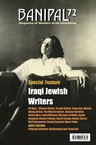
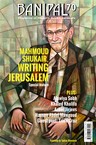
Reviewed in Banipal 70, Spring 2021
For news of readings, events and new titles.
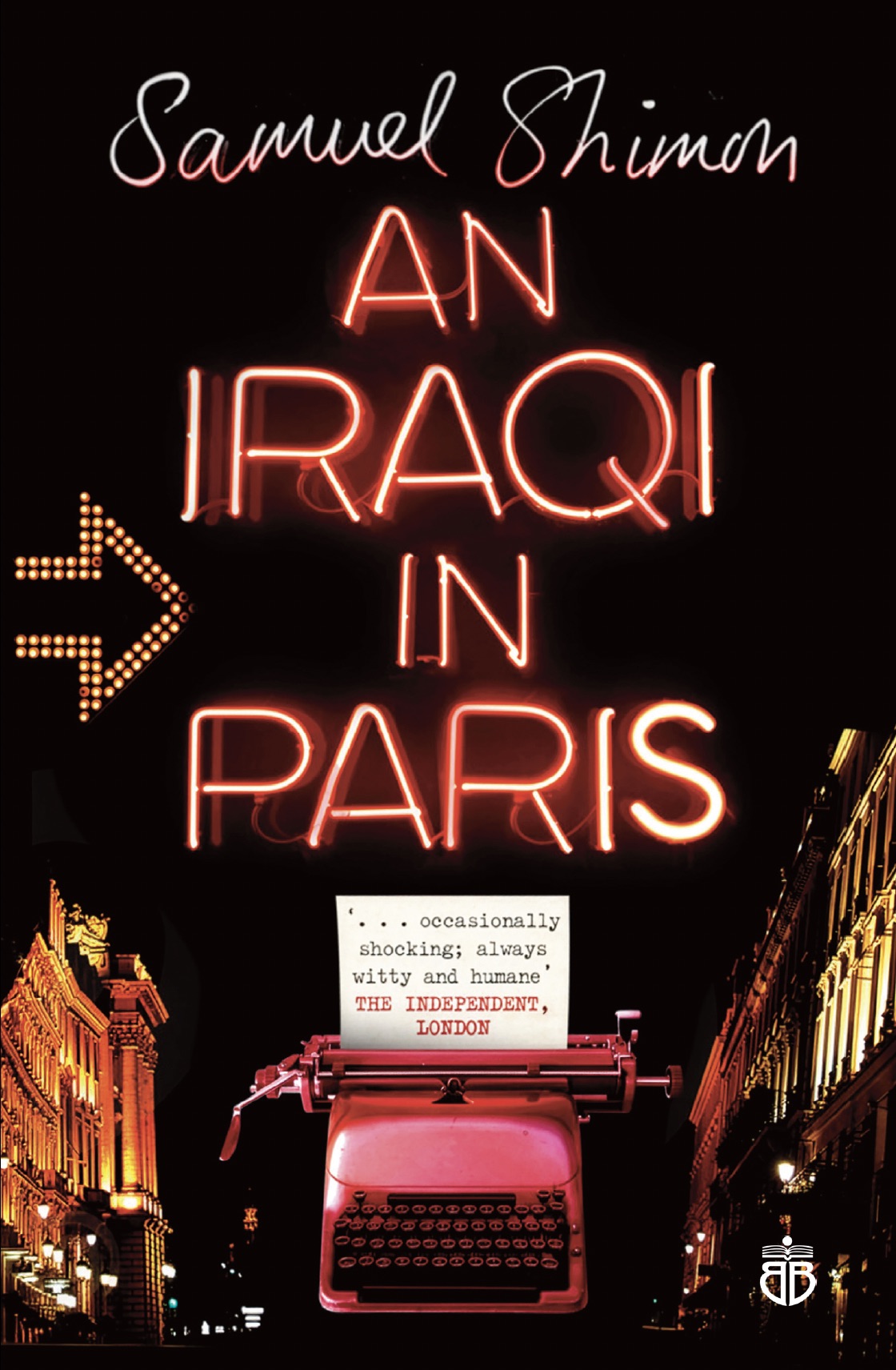
An Iraqi in Paris by Samuel Shimon
The Cinderellas of Muscat by Huda Hamed (Banipal Books, 2025)
The Tent Generations
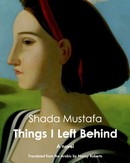
Things I Left Behind by Shada Mustafa, translated by Nancy Roberts
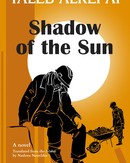
Shadow of the Sun by Taleb Alrefai
Birds of Nabaa, A Mauritanian Tale by Abdallah Uld Mohamadi Bah
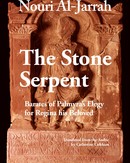
The Stone Serpent, Barates of Palmyra’s Elegy for Regina his Beloved by Nouri Al-Jarrah
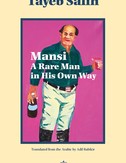
Mansi A Rare Man in His Own Way by Tayeb Saleh (Banipal Books, 2020)
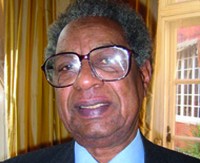
Tayeb Salih
Goat Mountain by Habib Selmi
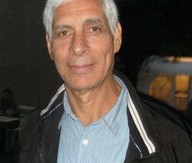
Habib Selmi, author of Goat Mountain and 3 times shortlisted for the IPAF
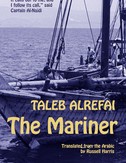
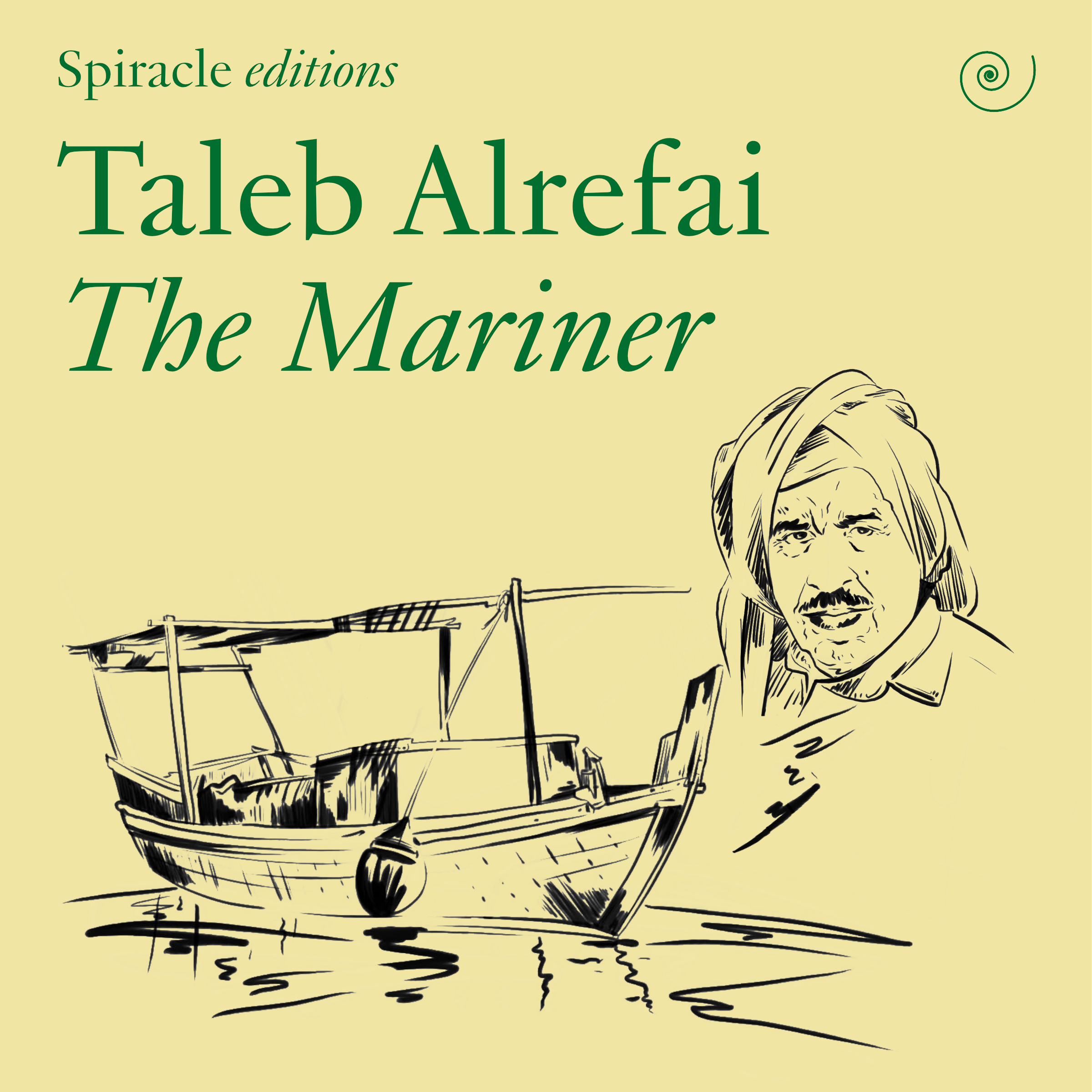
The Mariner by Taleb Alrefai (Banipal Books, 2020)
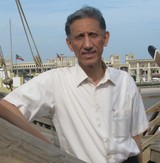
Taleb Alrefai, author of Shadow of the Sun and The Mariner

Fadhil Al-Azzawi's Beautiful Creatures by Fadhil al-Azzawi (Banipal Books, 2021)
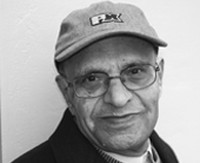
Fadhil al-Azzawi
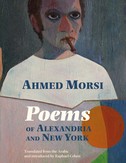
Poems of Alexandria and New York by Ahmed Morsi (Banipal Books, 2021)

Saïd Khatibi
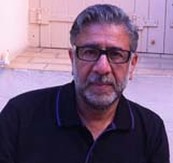
Amjad Nasser (1955–2019)

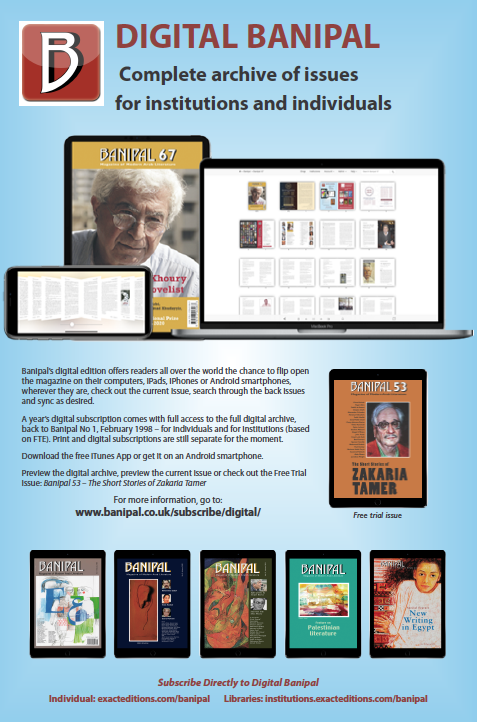
Digital Banipal the full archive
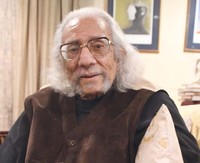
Ahmed Morsi, author of Poems of Alexandria and New York
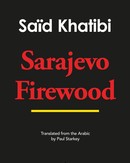
Sarajevo Firewood
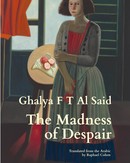
The Madness of Despair


.png)

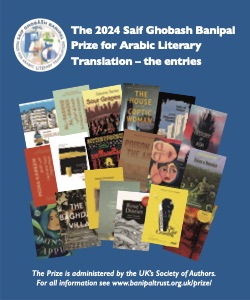
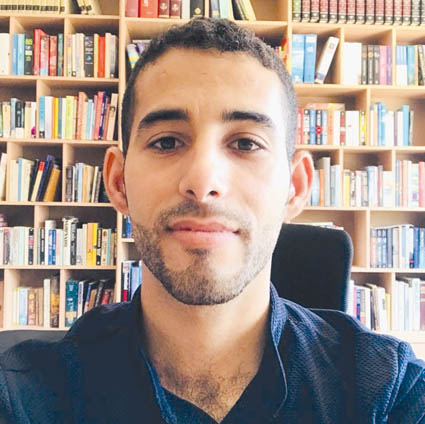
Link to poems by Mosab Abu Toha, published in Banipal 71 (Summer 2021), available to read online
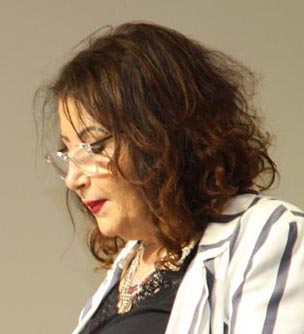
Link to poem by Liana Badr published in Banipal 74, now available as an online selection











* * *

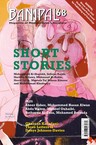
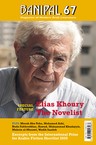
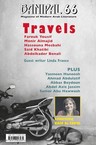
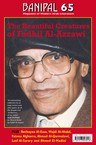
 Reprint out now
 GRIFFIN PRIZE SHORTLIST 2023
 Banipal's first audiobook