Receive Our Newsletter
For news of readings, events and new titles.

 ‘Ush al-Jamr
Zuheir al-Hiti’s fourth novel, ‘Ush al-Jamr (Embers’ Den), is a journey into Iraq’s heart of darkness that explores a process of political, social and cultural descent into a frenzied state of primordial, violent chaos. As in his previous work, particularly Ayam al-Turab (Days of Dust), al-Hiti traces the start of that gradual degradation to the 1958 overthrow of the monarchy and brutal killing of the young king and his uncle – who were dragged through the streets of Baghdad – followed by successive military coups that imposed an intensifying reign of fear and war, and culminating in the US-led invasion that overthrew the military dictatorship and unleashed another wave of collective, mindless, instinctive, pent-up violence.
Al-Hiti’s choice of Za’faran, a young Sabaean-Mandean man, as his protagonist allows him to explore and depict the religious, sectarian and cultural intolerance that he believes has permeated Iraqi society for decades. The narrative is also a strong indictment of the political and financial corruption that runs much deeper than the social and political structures linked to the ruling establishment.
The narrative also depicts the ugly face of a paternalistic, male-dominated society, in which women are repressed and abused, inhabiting a world in which they have to find their own ways of surviving and choosing their destinies.
Za’faran’s journey to southern Iraq as he tries to flee his father’s influence and to fully discover his own authentic identity is linked to the travels and adventures of the legendary Gilgamesh, who is actually invoked in the narrative. Al-Hiti’s choice of a fictional village named Kish as Za’faran’s destination is no coincidence. Kish was an early Sumerian settlement, and its use as the setting for the novel’s main events places them firmly into a context that stretches back to the very beginnings of recorded human history. Early on in his stay at Kish, Za’faran reflects that “Both Kish and the Sabaeans are relics of past centuries. Both have emerged from the depths of history, and both do not fear a death that never comes.” The existence at the edge of Kish of an abandoned archaeological dig that seems to take on a malevolence-tinged, surreal nocturnal life of its own emphasizes Kish’s links to a mysterious mythical past. Further on in the narrative, Za’faran remarks that “Kish is eternity”, and compares it to his own Sabaean religion, which has remained unchanged for centuries.
The plot also takes the shape of a mysterious thriller, keeping the reader hooked in the hope of finding an answer to the mystery that Za’faran encounters when he first arrives in Kish. But it takes a cruel and surprising turn, leaving part of the mystery unanswered and completing the destruction of the protagonist’s remaining illusions as his journey ends in tragedy.
At another level, the narrative takes on an allegorical quality that depicts a return to a prehistoric culture of bloody human sacrifice as the veneer of modern social discipline and structure fall away, a theme which readers may find resounds with that of British author William Golding’s 1954 Nobel Prize-winning novel, Lord of the Flies.
For news of readings, events and new titles.
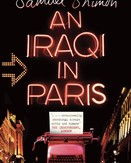
An Iraqi in Paris by Samuel Shimon

The Cinderellas of Muscat by Huda Hamed (Banipal Books, 2025)
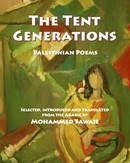
The Tent Generations
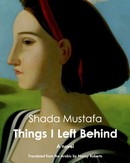
Things I Left Behind by Shada Mustafa, translated by Nancy Roberts
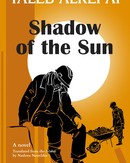
Shadow of the Sun by Taleb Alrefai

Birds of Nabaa, A Mauritanian Tale by Abdallah Uld Mohamadi Bah
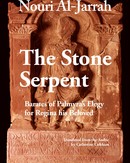
The Stone Serpent, Barates of Palmyra’s Elegy for Regina his Beloved by Nouri Al-Jarrah

Mansi A Rare Man in His Own Way by Tayeb Saleh (Banipal Books, 2020)

Tayeb Salih
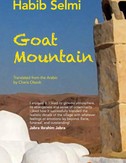
Goat Mountain by Habib Selmi

Habib Selmi, author of Goat Mountain and 3 times shortlisted for the IPAF

The Mariner by Taleb Alrefai (Banipal Books, 2020)

Taleb Alrefai, author of Shadow of the Sun and The Mariner

Fadhil Al-Azzawi's Beautiful Creatures by Fadhil al-Azzawi (Banipal Books, 2021)

Fadhil al-Azzawi

Poems of Alexandria and New York by Ahmed Morsi (Banipal Books, 2021)

Saïd Khatibi

Amjad Nasser (1955–2019)

Digital Banipal the full archive

Ahmed Morsi, author of Poems of Alexandria and New York

Sarajevo Firewood
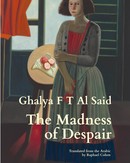
The Madness of Despair



.png)



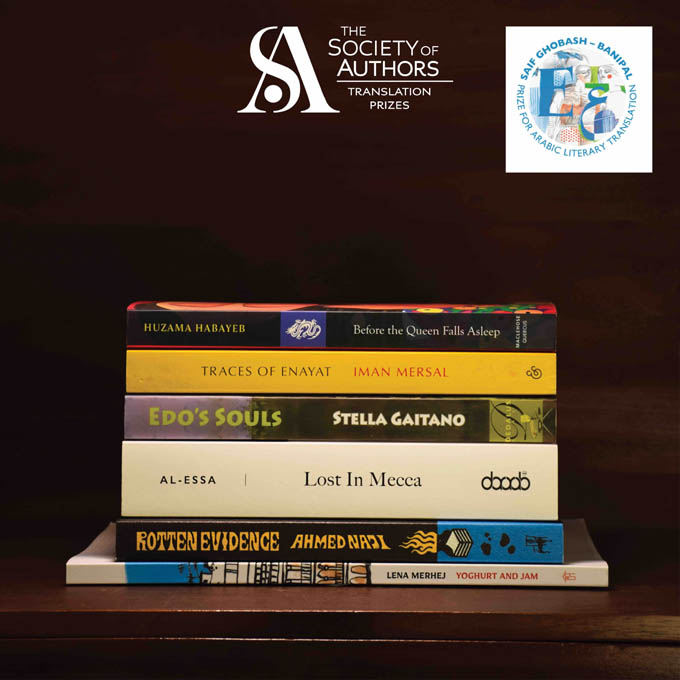



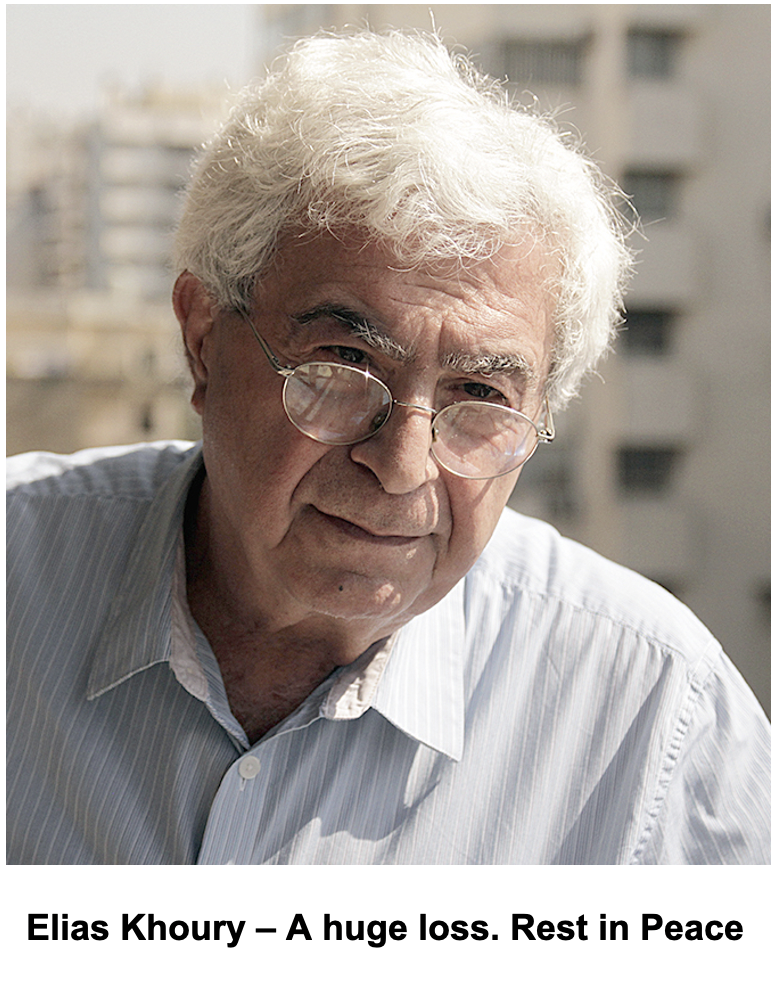



Link to poems by Mosab Abu Toha, published in Banipal 71 (Summer 2021), available to read online

Link to poem by Liana Badr published in Banipal 74, now available as an online selection























* * *
































 Reprint out now
 GRIFFIN PRIZE SHORTLIST 2023
 Banipal's first audiobook