Receive Our Newsletter
For news of readings, events and new titles.
 The Libyan Novel:
In his foreword to The Libyan Novel: Humans, Animals and the Poetics of Vulnerability Professor Rasheed El-Enany, editor of the Edinburgh Studies in Modern Arabic Literature series, writes: “While the Libyan novel has made admirable progress in just a few decades scholarship has lagged behind badly . . . This unsatisfactory condition is what the current monograph, the first in English about the Libyan novel, proffers to correct.”
He adds: “Perhaps one of the most exciting elements in the author’s approach is her focus on the poetics of creaturely vulnerability, an approach rarely used in the study of Arabic fiction, but one to which the Libyan novel freely and rewardingly lends itself, as this study shows.”
Dr Charis Olszok’s book is an insightful and stimulating addition to the Edinburgh Studies in Modern Arabic Literature series, published by Edinburgh University Press. She takes a fresh and original approach in, for example, situating her study of the Libyan novel within the fields of animal studies and ecocriticism.
Olszok is a lecturer in Modern Arabic Literature and Culture at Cambridge University’s Faculty of Asian and Middle Eastern Studies, and also a fellow of Newnham College and a Bye-fellow of King’s College.
She is a talented translator of Arabic fiction. Earlier this year Banipal Books published her translation of Tunisian author Habib Selmi’s 1987 debut novel Goat Mountain (an excerpt appeared in Banipal 59: The Longlist). Prior to this Olszok had translated Eritrean writer Abu Bakr Khal’s 2008 novel African Titanics (Darf, 2014, reviewed in Banipal 52: New Fiction) and – in collaboration with Emily Danby – Sudanese author Amir Tag Elsir’s 2012 novel Ebola ’76 (Darf 2015, reviewed in Banipal 55: Sudanese Literature Today). She has also translated numerous shorter works of fiction.
Her monograph is based on the thesis for which she was awarded a PhD at London University’s School of Oriental and African Studies (SOAS) in 2016. The thesis, “Creaturely encounters: animals in the Libyan literary imaginary”, was focused on Libyan fiction from the 1960s to 2011. The book widens the scope of the thesis, and carries the narrative forwards to the present day.
In The Libyan Novel Olszok traces the constellation of factors that have helped shape Libyan literature. “From its first flourishing in the 1980s, the Libyan novel has but rarely described contemporary life in direct, realist terms,” she writes. Overwhelmingly, it has turned to the past, whether Italian colonisation (1911-43), British Military Administration (1943-51) or the Senusi Monarchy (1951-69).
“From popular resistance to the Italians to the 1960s oil boom, this fiction strives to recover neglected memories, and digest disorienting social transformations. It also, however, indicates the impossibility of speaking openly of anything beyond 1969” – the year Muammar Gaddafi came to power. She calls this “narrative fragility”, or “difficulty of story”, in the genesis of Libyan fiction.
In a literary tradition where every story is problematic, narrative becomes necessarily allusive. “Stories conceal other stories, striving to express human experience in a country that has moved, within a few decades, from nomadic to urban, and from colonisation to dictatorship, in a nation both rentier and ‘rogue’, stateless and authoritarian, and since 2014 caught in the throes of civil war.”
The poetics of the Libyan novel is further rooted in folklore, Sufi traditions, the Qur’an, and the country’s challenging environment with its vast desert, sandstorms, and rugged coastline. Olszok describes a Libyan population “othered” within its own land, whether as second-class citizens under the Italians, or as “stray dogs”, “rats” and “cockroaches”, as Gaddafi labelled them at various times. Writers often faced censorship, imprisonment and exile.
“Together, these dimensions come together in narratives of vulnerability, resistance and solidarity, underpinned by images of flight, homelessness and exposure.”
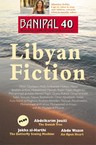
During the 2011 Arab Spring, which started in Tunisia and Egypt and spread to Libya, things seemed set to improve for Libyan writers. By chance the beginnings of Libya’s 17th February revolution coincided with the publication of Banipal 40: Libyan Fiction, containing the magazine’s first-ever special feature on Libyan literature. The 135-page special feature showcased the work of nineteen Libyan writers. Only two of them had experienced success in translation into English: Ibrahim al-Koni, and Ahmed Ibrahim Fagih. It was clear from the titles and content of the short stories and novel excerpts in Banipal 40 that animals feature prominently in Libyan fiction.
In her introduction, Olszok highlights a short story from Banipal 40: Omar el-Kiddi’s 2010 “The Wonderful Short Life of the Dog Ramadan” translated by Robin Moger. The story focuses on a dog taken by a Dutch woman from Libya to the Netherlands. The dog becomes a celebrity when the woman successfully applies for him to be given refugee status.
Following the overthrow of Gaddafi, el-Kiddi reworked the story as the 2013 novel, Hurub Marish wa-Thawratuha al-Thalath (The Wars and Three Revolutions of Marish). The novel introduces new characters, including Gaddafi himself who demands the return of the dog. “The novel suggests the tantalising possibilities for Libyans to enter the realms of fiction, after decades of existing on its margins, in allegorical, veiled narrative,” writes Olszok.
Olszok states that her book primarily tracks the non-realist, structurally fragmented and hybrid novel, anchored in al-Sadiq al-Nayhum’s foundational 1970 novel Min Makka ila Huna (From Mecca to Here) and concluding in 2011, beyond which the literary landscape has profoundly shifted.
In her first chapter she explores animal fable in novels of “survival” as exemplified through the novels of al-Nayhum, Fagih and al-Koni as exemplars of the 1960s generation.
She focuses on the postcolonial ecocritical perspectives of Al-Nayhum’s Min Makka, Fagih’s Homeless Rats (Quartet 2011, translated by Soraya Allam and Christopher Tingley) whose original Arabic first appeared in instalments in 1966 but was not completed and published until 2000, and al-Koni’s 1990 novel The Bleeding of the Stone (translated by May Jayyusi and Christopher Tingley, Interlink, 2002).
In the following chapter she considers al-Nayhum’s al-Qurud (The Primates, 1984), Fagih’s 1991 trilogy Gardens of the Night (Quartet Books 1995, translated by Russell Harris, Amin al-Ayouti and Suraya Allam) and al-Koni’s 2002 novel Anubis (translated by William M Hutchins, American University in Cairo Press 2005). These novels represent a shift from the environmental to the political.
In subsequent chapters, organised roughly chronologically around broad themes, Olszok examines novels by, among others, Abdallah al-Ghazal, Mansur Bushnaf, Muhammad al-Asfar, Ahmad al-Fayturi and Ahmed Yusuf Aqila.
In a chapter entitled “‘Une histoire de mouche’: The Libyan Novel in Other Voices” she explores Hisham Matar’s debut novel In the Country of Men (Viking, 2011) which was shortlisted for the Man Booker Prize, and Kamal Ben Hameda’s 2011 La compagnie des Tripolitaines (Under the Tripoli Sky, Peirene Press, London, 2014, translated by Adriana Hunter). In these novels “the distance of writing in English and French is countered by an intimate evocation of the child’s sensorial and imaginative prescriptions, bound into the natural world around them.”
Women writers have been a growing presence on the Libyan literary scene, despite their struggles against both patriarchy and political oppression. Olszok pays particular attention to Razan Naim al-Maghrabi’s Nisa’ al-Rih (Women of the Wind, 2010 – excerpted in Banipal 40 in translation by William M Hutchins) which was longlisted for the 2011 International Prize for Arabic Fiction (IPAF), and to Najwa Bin Shatwan’s debut novel Wabr al-Ahsina (2006, The Horse’s Hair) narrated mostly by an unborn foetus. Bin Shatwan was shortlisted for the 2017 IPAF for The Slave Yards (translated by Nancy Roberts, Syracuse University Press, April 2020, reviewed in Banipal 68: Short Stories). In 2018 she was the Banipal Visiting Writer Fellow at St Aidan’s College, University of Durham, England.
In her final chapter, “Afterword: Breaking Fevers and Strange Metamorphoses”, Olszok tells of the freedom of expression and publication that initially followed the 2011 revolution. Since then, with the ongoing civil war, “faced with a dark present and uncertain future, alongside the continued pressures of censorship, fiction has retreated, once again, to the margins.”
There are some bright spots however. She gives a fascinating and full preview of Mansur Bushnaf’s new novel al-Kalb al-Dhahabi (The Golden Dog), the sequel to his much praised 2008 novel al-Ilka (Chewing Gum, translated by Mona Zaki, Darf, London, 2014). Al-Kalb al-Dhahabi is scheduled for publication by Dar Fergiani in Cairo in December 2020. The publisher hopes that an English translation will eventually be published.
Olszok’s landmark book is bound to encourage interest in Libyan literature, and is a major contribution to both Libyan and wider Arab literary studies. It is to be hoped it will inspire publishers to translate and publish more works by Libyan writers.
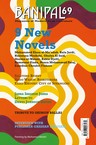
Published in Banipal 69 – 9 New Novels (Autumn/Winter 2020)
Back to all book reviews
For news of readings, events and new titles.
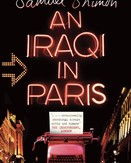
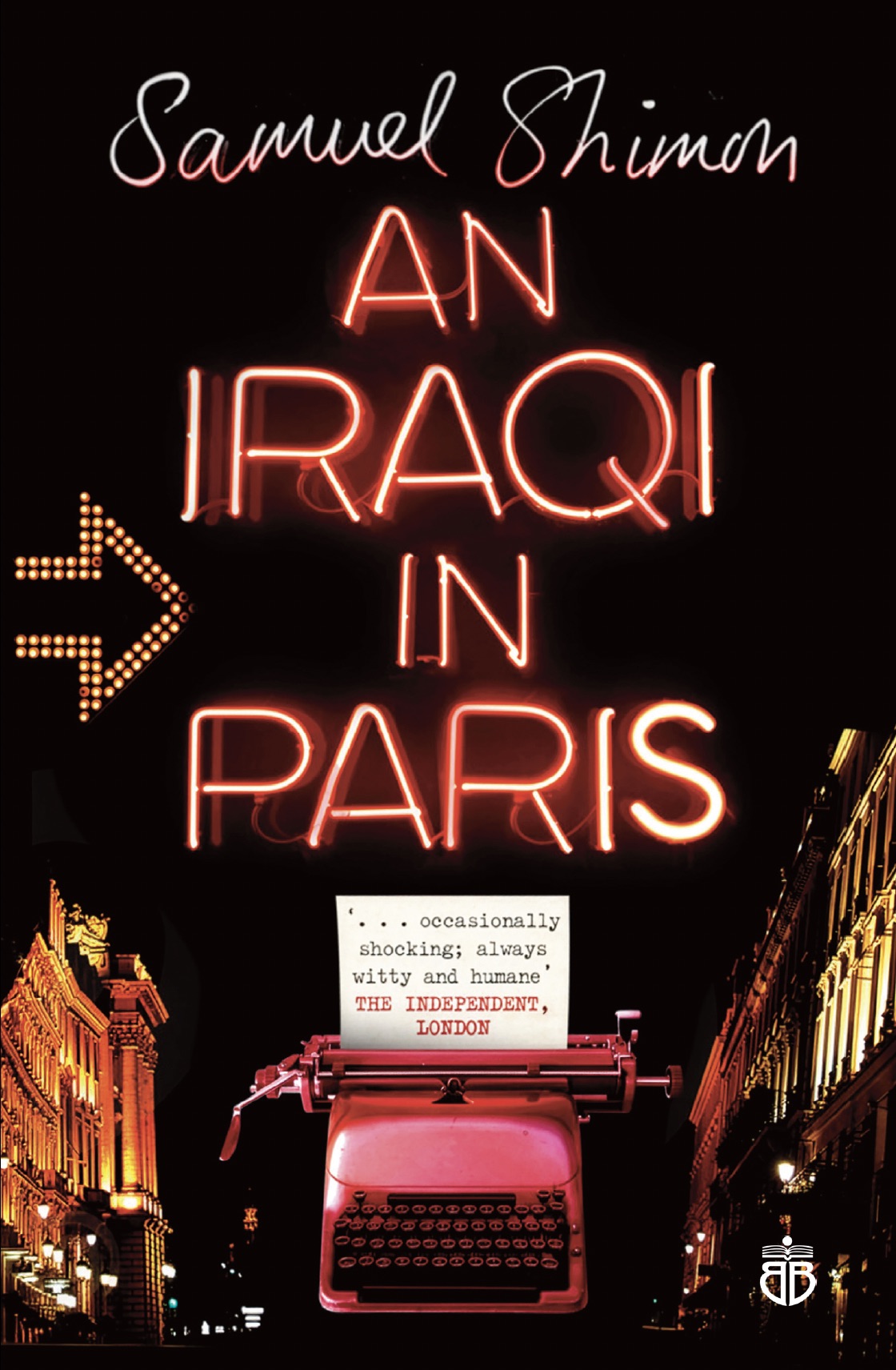
An Iraqi in Paris by Samuel Shimon
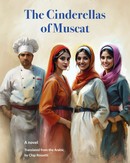
The Cinderellas of Muscat by Huda Hamed (Banipal Books, 2025)
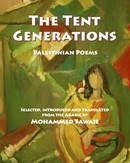
The Tent Generations
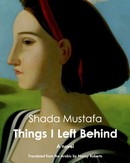
Things I Left Behind by Shada Mustafa, translated by Nancy Roberts
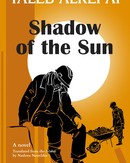
Shadow of the Sun by Taleb Alrefai
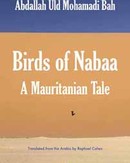
Birds of Nabaa, A Mauritanian Tale by Abdallah Uld Mohamadi Bah
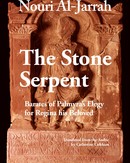
The Stone Serpent, Barates of Palmyra’s Elegy for Regina his Beloved by Nouri Al-Jarrah
Mansi A Rare Man in His Own Way by Tayeb Saleh (Banipal Books, 2020)

Tayeb Salih
Goat Mountain by Habib Selmi

Habib Selmi, author of Goat Mountain and 3 times shortlisted for the IPAF
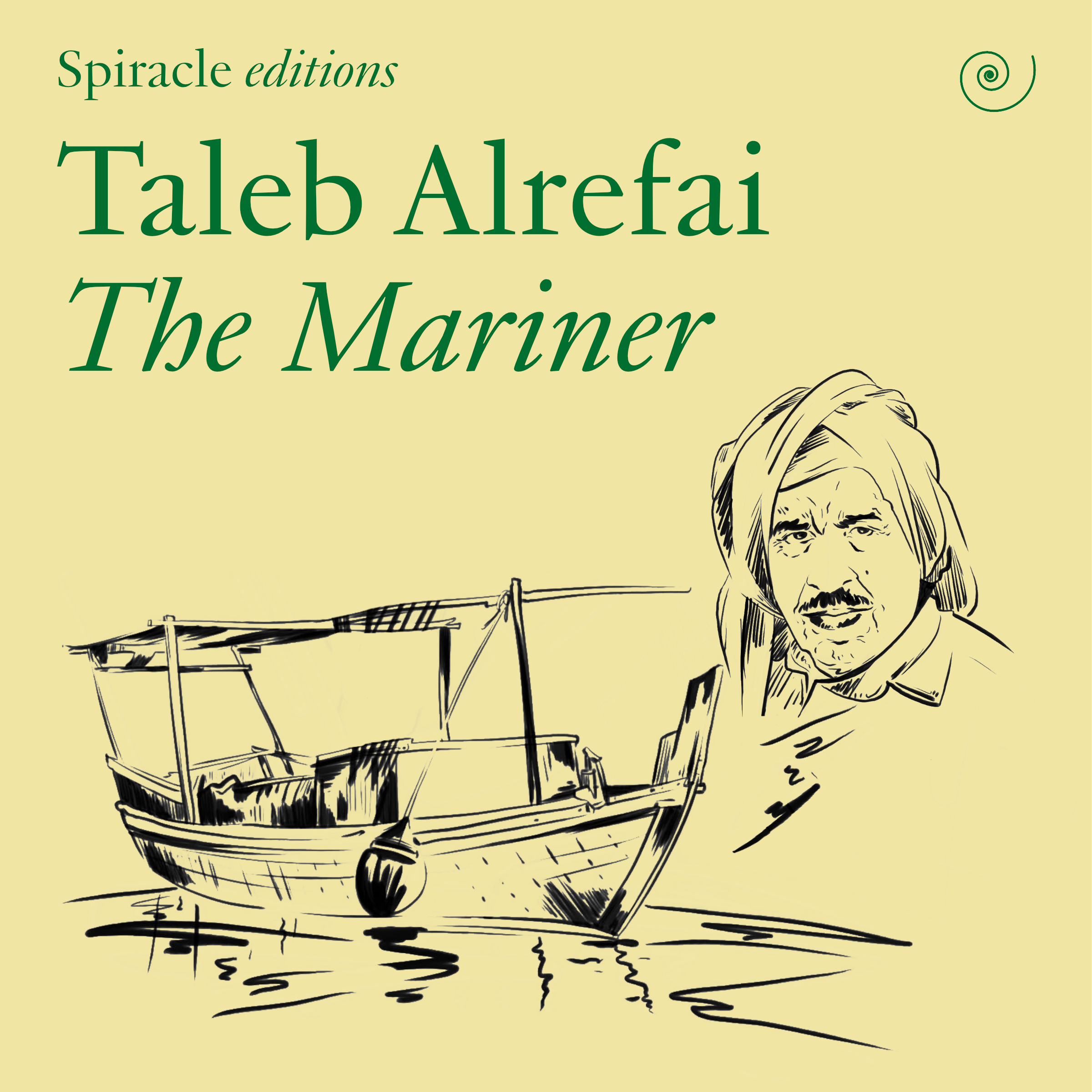
The Mariner by Taleb Alrefai (Banipal Books, 2020)

Taleb Alrefai, author of Shadow of the Sun and The Mariner
Fadhil Al-Azzawi's Beautiful Creatures by Fadhil al-Azzawi (Banipal Books, 2021)

Fadhil al-Azzawi
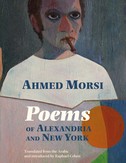
Poems of Alexandria and New York by Ahmed Morsi (Banipal Books, 2021)

Saïd Khatibi
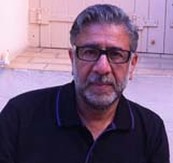
Amjad Nasser (1955–2019)
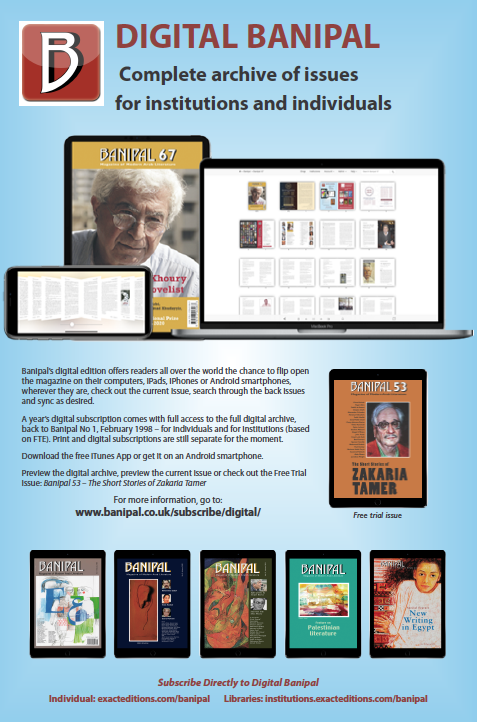
Digital Banipal the full archive
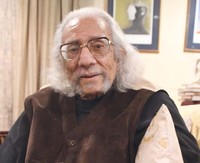
Ahmed Morsi, author of Poems of Alexandria and New York
Sarajevo Firewood
The Madness of Despair

.png)
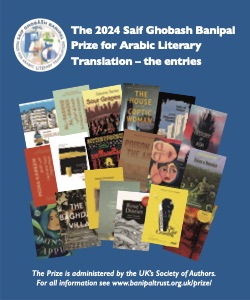
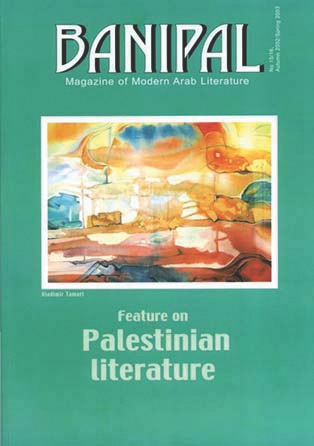
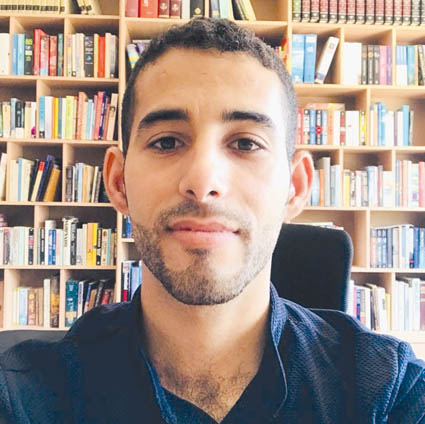
Link to poems by Mosab Abu Toha, published in Banipal 71 (Summer 2021), available to read online
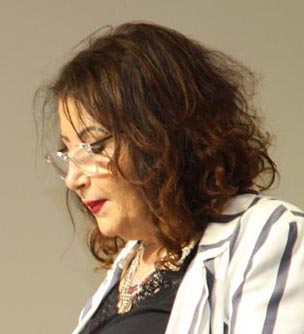
Link to poem by Liana Badr published in Banipal 74, now available as an online selection










* * *

 Reprint out now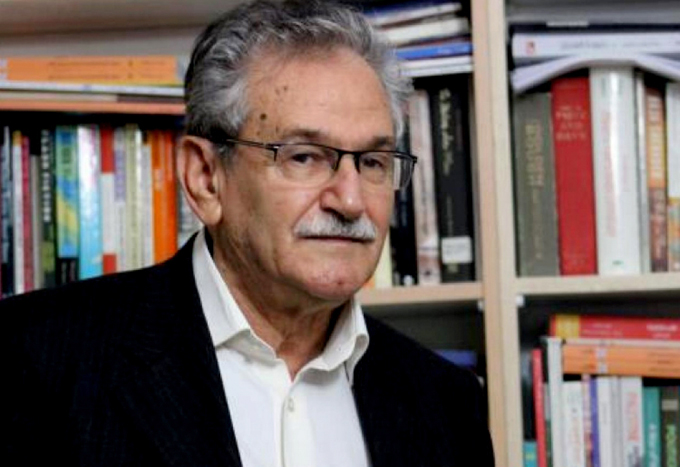
 GRIFFIN PRIZE SHORTLIST 2023
 Banipal's first audiobook