Receive Our Newsletter
For news of readings, events and new titles.

 Chip Rossetti reviews
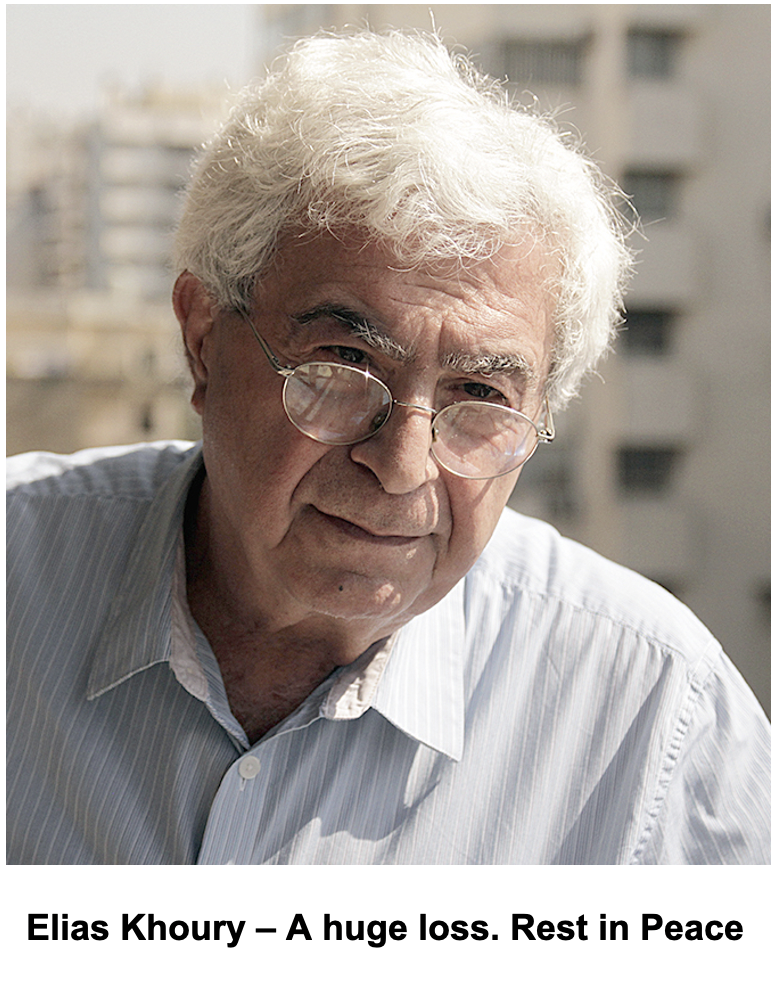
Elias Khoury’s The Kingdom of Strangers
Translated by Paula Haydar
University of Arkansas Press, July 1996
ISBN: 978-1557284334. Pbk, 112pp.
As in many of his other novels, Elias Khoury’s The Kingdom of Strangers wrestles with issues of Lebanese identity and memory, using a fractured, non-linear narrative to reflect the fracturing of society during the Lebanese Civil War. Originally published in Arabic in 1993 as Mamlakat al-ghuraba’, it appeared in English in 1996 in Paula Haydar’s excellent translation. In style and setting, the novel evokes comparisons to his earlier novel Rihlat Ghandi al-saghir (The Journey of Little Gandhi, also translated by Paula Haydar), which is also set during the civil war and evokes the lives of those who died during those years. The eternally recurring present in these novels, in which the same incident is narrated more than once, acts as a counterweight to forgetting by focusing the reader’s attention on it.
The kaleidoscopic array of interlocking narratives in The Kingdom of Strangers reflects the chaos of wartime life: there is a single narrator, who seems to be a stand-in for Khoury himself, but there is no single plot in the conventional sense. Instead, the narrator offers fragments of detail about the lives of individual characters – friends, lovers, Biblical figures, and others – only to second-guess or contradict his account and then shift to another narrative. Each chapter, in fact, begins with the narrator asking himself (or the reader) a variant of “What am I writing?” and this emphasizes the narrator’s own uncertainty about the aim of his storytelling. In his study of Khoury’s novel City Gates, Nouri Gana refers to this technique as Khoury’s “tirelessly sustained experimental style”, reflecting what he calls the “formless form” of contemporary Lebanese literature. Haydar addresses the novel’s unusual structure in her informative preface, noting commonalities between Khoury’s literary style and the postmodernist fiction of contemporary Latin American authors such as Carlos Fuentes, Gabriel García Márquez, and Miguel Ángel Asturias.
 Among the characters whose stories are presented in recurring segments throughout the book are the Naffaa family, a Christian family in Beirut, and a woman known as “white Widad” or simply “the Circassian,” because of her light skin. In the 1920s, the middle-aged businessman Iskandar Naffaa purchases a thirteen-year-old girl named Widad to work as a maid for his family. As we learn later, Widad is in fact originally from Azerbaijan, and had been kidnapped and eventually sold (in what today would be called “human trafficking”) in Alexandria and Beirut. In a disturbing turn of events, Iskandar soon abandons his wife and family to marry the much younger Widad. Despite the circumstances and their age difference, Widad and he remain faithful to each other, and by the time Iskandar dies, several decades later, Iskandar’s grown son George Naffaa has come to feel a filial affection for Widad, a childless widow now without family of her own.
The pain of Widad’s sad story is only dimly hinted at, and Khoury deliberately gives the reader little access to her interior life, while the Naffaa family, including Iskandar, remain mostly incurious about her. They never bother to learn about her past, to the point that she spends her life mislabelled as a Circassian, and in the narrator’s words, “As for Widad . . . no one knows what she felt, or what she thought, or what she wanted”. We are ultimately unknowable to each other, the novel suggests, and thus the world we live in is the “kingdom of strangers” of the book’s title. Only at the end of her life, as a seventy-year-old woman during the early years of the civil war, does Widad’s hidden self resurface, to the surprise of George Naffaa. Falling into dementia, she stops speaking Arabic altogether and her childhood Azeri comes flooding out again, although no one can understand her. She escapes the hospital where she has been committed and three days later, she is found dead on the street – an unwitting victim of the war taking place around her.
Much like Widad, the narrator tells us, Beirut was also in the process of losing its memory, as an effect of the civil war. Khoury expressed a similar idea in a 1993 interview with the Lebanese literary journal Al-Adab (cited by Haydar in her translator’s preface), in which he states that Lebanon has a national tendency to forget its own past, “as if it carried along with it a big fat eraser with which it blotted out its own history”.
A recurring theme of the novel, however, is that history – whether an individual’s life story or the history of a nation – need not be true to be valid. Ultimately, the telling of the story is what matters, not its underlying factual details. When the narrator recalls his meeting with the real-life Arab nationalist military hero Fawzi al-Qawuqji, he points out that the war stories the elderly veteran tells are confused, since he mixes up his exploits in 1936 and 1948. Nevertheless, the narrator happily asks: “Why not believe him? What’s the difference between 1936 and 1948?” The novel presents different versions of characters’ lives not to draw the reader’s attention to an “unreliable narrator”, but to emphasize the malleability of narratives themselves and the relative unimportance of their underlying “truth”. Human history is in fact a collective blending of individual stories or agreed-upon myths that take on a reality of their own, and the narrator proposes that memories “get jumbled together and form into a mixture, into a single story with its roots in all the stories”.
The most striking example of the malleability of storytelling as a form of communal mythmaking is the narrator’s discussion of a Lebanese monk named Jurji Khayri, whom he at one point calls “an Arab folk hero, like Robin Hood”. Jurji Khayri supposedly lived in Jerusalem during the British mandate period, and was found murdered beside the Damascus Gate. However, as the narrator tries to research the facts of the monk’s life – visiting his home village in Lebanon and searching among his relatives, the true story becomes more elusive. The monk’s aged relatives claim not to have heard of him, and the stories about his life vary wildly: he either revolted against British authorities or led a gang of thieves and rapists in the Galilee area, or perhaps targeted Jewish settlers for kidnappings. Even if his existence has passed into legend, the narrator concludes, Jurji “owes his very existence as a story to the popular imagination”.
The dialogic nature of stories is also reflected in the multiple portraits of individual lives presented here, from the Israeli graduate student, Emil Azayev, whom the narrator befriends at Columbia University in New York, to Faysal, an 11-year-old Palestinian boy who survived the 1982 massacre in the Shatila camp by hiding among the dead bodies of his family, only to end up killed by a bullet in 1987, at the end of the years-long siege of the camps, prompting the narrator to ask: “How can I write Faysal’s story when Faysal died before his story ended?”
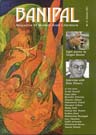
Elias Khoury does not see himself as a recorder of history, as simply bearing witness to the dead. (In fact, in a 2001 interview with Sonja Mejcher in Banipal, he objected to readers’ tendency to approach his fiction as history, even though he acknowledged that histories of Lebanon’s recent past are lacking, since “as a novelist . . . it is not my job to write history”.) Instead, in The Kingdom of Strangers, he suggests that by turning the dead into stories, we betray their historical truth, but ultimately those stories become their own truth. Fittingly, for an author who has long sympathized with the Palestinian cause, Khoury closes the novel with the narrator describing his visit to the mass grave in the Shatila camp where his friend, the Palestinian fighter Ali Abu Tawq, is buried. Like Widad the Circassian or the monk Jurji Khayri, Ali has become a story. In the end, Khoury suggests, the telling of that story is what matters most.
_________________
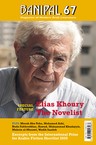
More poems are published in Banipal 67 – Elias Khoury, The Novelist
Back to all Book Reviews
For news of readings, events and new titles.
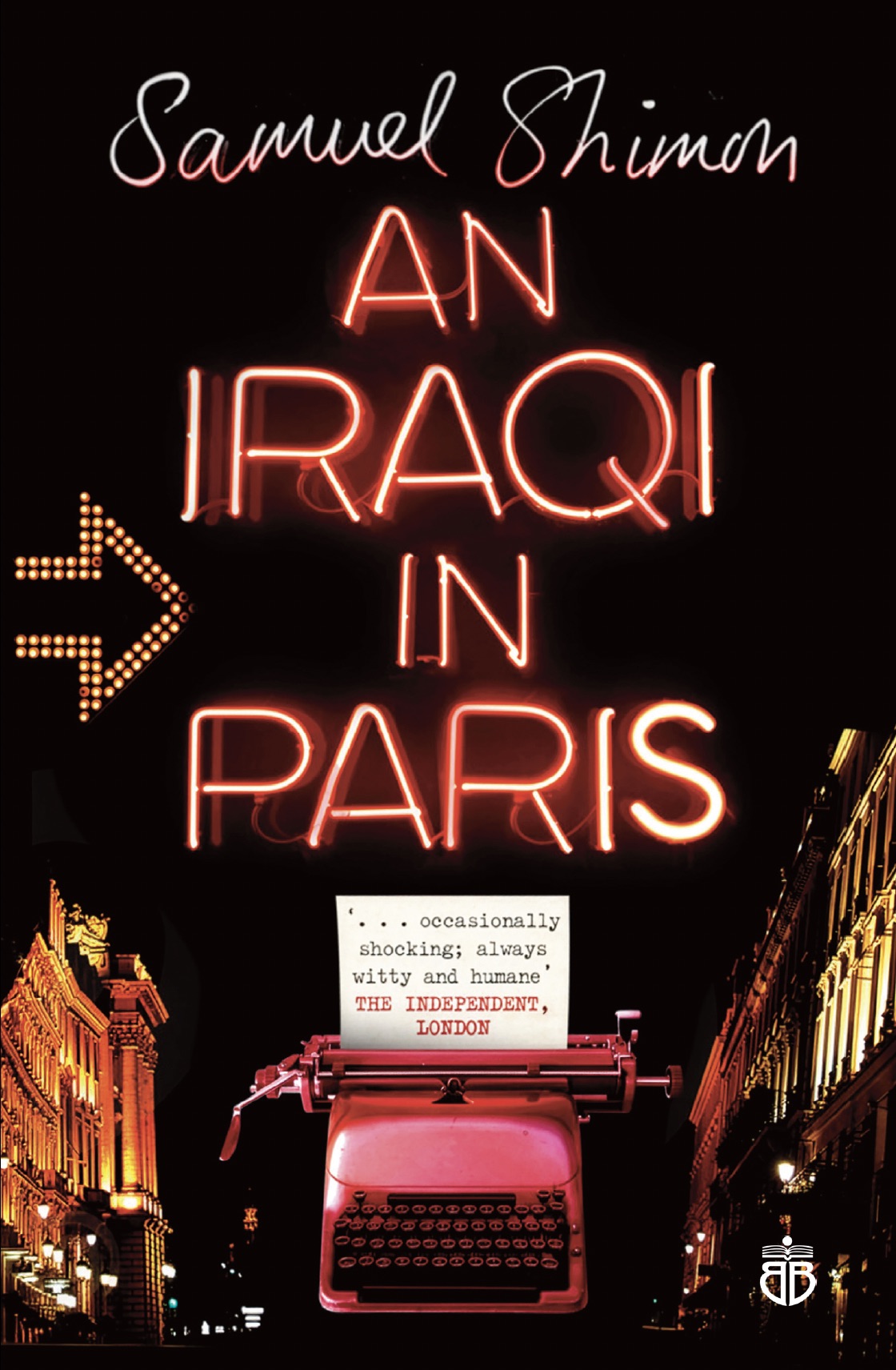
An Iraqi in Paris by Samuel Shimon
The Cinderellas of Muscat by Huda Hamed (Banipal Books, 2025)
The Tent Generations
Things I Left Behind by Shada Mustafa, translated by Nancy Roberts
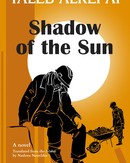
Shadow of the Sun by Taleb Alrefai
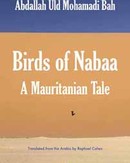
Birds of Nabaa, A Mauritanian Tale by Abdallah Uld Mohamadi Bah
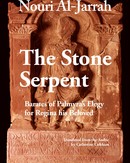
The Stone Serpent, Barates of Palmyra’s Elegy for Regina his Beloved by Nouri Al-Jarrah
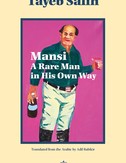
Mansi A Rare Man in His Own Way by Tayeb Saleh (Banipal Books, 2020)
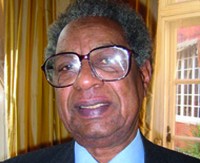
Tayeb Salih
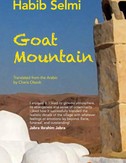
Goat Mountain by Habib Selmi
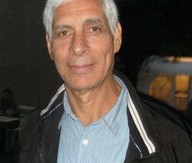
Habib Selmi, author of Goat Mountain and 3 times shortlisted for the IPAF
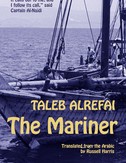
The Mariner by Taleb Alrefai (Banipal Books, 2020)
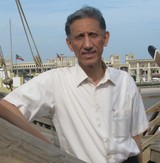
Taleb Alrefai, author of Shadow of the Sun and The Mariner

Fadhil Al-Azzawi's Beautiful Creatures by Fadhil al-Azzawi (Banipal Books, 2021)
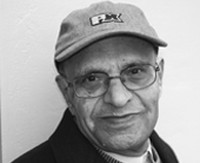
Fadhil al-Azzawi
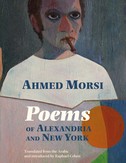
Poems of Alexandria and New York by Ahmed Morsi (Banipal Books, 2021)

Saïd Khatibi
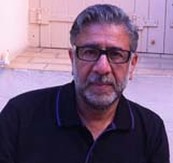
Amjad Nasser (1955–2019)

Digital Banipal the full archive
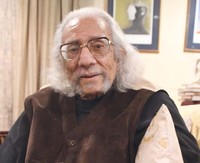
Ahmed Morsi, author of Poems of Alexandria and New York
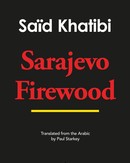
Sarajevo Firewood
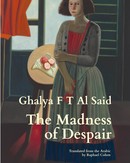
The Madness of Despair


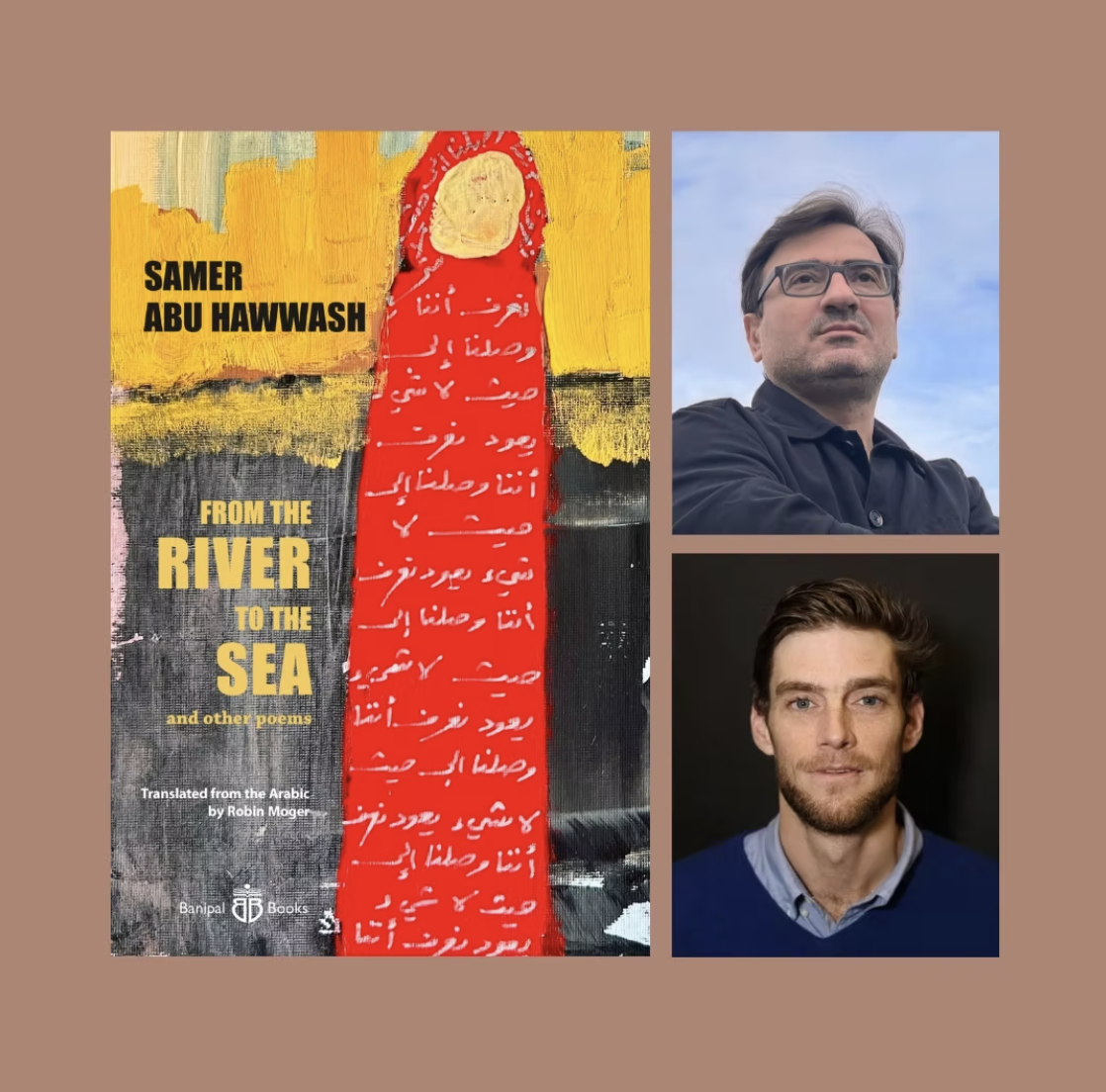
.png)


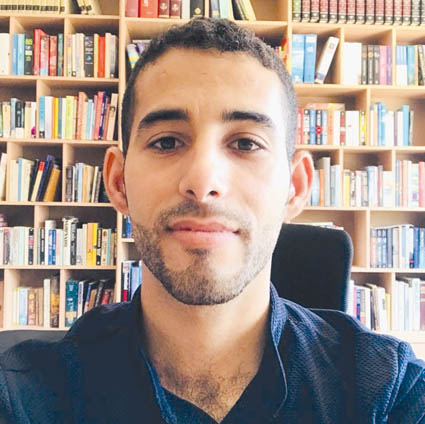
Link to poems by Mosab Abu Toha, published in Banipal 71 (Summer 2021), available to read online
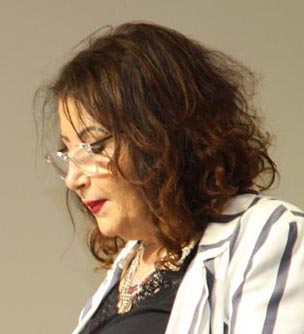
Link to poem by Liana Badr published in Banipal 74, now available as an online selection



















* * *


 Reprint out now
 GRIFFIN PRIZE SHORTLIST 2023
 Banipal's first audiobook