Receive Our Newsletter
For news of readings, events and new titles.

De Niro’s Game
by Rawi Hage v
Anansi Press, Canada, 2006, 256 pp.
ISBN: 978-0-88784-196-5
LIVING WITH CIVIL WAR
Rawi Hage is a upcoming and talented Lebanese-Canadian author. As a photographer and curator, he makes clever use of visual imagination in his fiction writing, along with a realistic descriptive style that inspires the reader’s own imagination. De Niro’s Game is his debut novel and has been acclaimed by both the general public and literary critics across Canada, where he now lives. In 2006 Rawi Hage was awarded the Paragraphe Hugh MacLennan Prize for Fiction and this year De Niro’s Game is shortlisted for the Rogers Writers’ Trust Fiction Prize and the Best First Book of the Commonwealth Writer’s Prize.
Rawi Hage has previously published works in several North American magazines. He employs fragments of writings in his visual work, which combines reality with fiction turning realistic photo-images into proto-postcards. This influence is well expressed, for example, in his print entitled (Care of Raymonde (Canadian Museum of Civilization Corporation, 1997)). In both his photographs and his writings Rawi Hage deals mainly with war, immigrants, refugees and racism, enveloping the harsh reality in a cloud of dreams and imagination.
De Niro’s Game is a touching story of two childhood friends, both Christians, Bassam and George. who live a life of hardship in civil-war Beirut. Narrated from Bassam’s point of view, the novel is a statement of a young man caught in the midstream of fratricidal conflicts and killings who is forever trying to escape the war by emigrating to Europe. Bassam and George have very different life philosophies and attitudes.. Being a pacifist, all Bassam really wants to do is to leave Beirut for his dream city, Rome, in the hope of finding a peaceful life. He refuses to let his life be driven by the war and bombings, and even refuses to take shelter in the basement of the apartment building where he lives with his widow mother. Little by little he becomes disillusioned by life as well as the attitude of his friend George who, having joined the Christian militia of East Beirut, turns into a would-do-anything-to-survive guy. When Bassam’s mother dies in a bomb blast in their apartment, he feels relief, as he can finally start making arrangements for his departure to Europe.
George, on the other hand, becomes more and more involved in the activities of East Beirut Christian militia and through petty crimes and drug dealing grows into a fighter who takes part in the Sabra and Chatilla massacre. To survive in Beirut becomes for Bassam a game of handling power and following nobody except his own instincts. And even though he finally manages to board on a ship leaving for Marseilles, George’s shadow continues to pursue him in France. To free himself, he leaves Paris and catches a train to his dream destination Rome.
De Niro’s game is written with great attention for detail and a witty plot. Details that may seem unnecessary at first prove to be important as the reader makes their way through the pages. Rawi’s talent for catching the reader’s imagination with his descriptive style and ability to write enthralling prose can be noticed on every page. His description of a Beirut neighbourhood is a good example of this:
“When George came, we drove to Surssok, an old bourgeois neighbourhood with maids who served rich housewives wearing chic French dresses and possessing walk-in closets filled with leather shoes. They had apartments in Paris, and husbands who imported cigarettes, containers and car parts, who coughed in Swiss banks at wooden mahogany desks occupied by nephews of chocolate factory owners, grandsons of landlords of African cocoa fields dotted with workers with bruised fingers, who worked under many suns, who worked on Sundays and Fridays.”
Not only does Hage convey the physical description of places, buildings and people, he recreates the atmosphere of those places and events. He also uses refrains to demonstrate the monotony and regularity of bombings whilst life continues in the background. The mood of sad and terrifying feelings is sometimes strengthened by playing with the sounds of words, as for example when Bassam and his mother are lying on the kitchen floor waiting for the bombing to stop:
“Here in that kitchen my father had died; hers had died farther north.”
And at the end of chapter three, Hage describes in just two simple sentences, the feeling of danger: “Everyone was asleep. Beirut, the city, was safe for now.”
De Niro’s Game is an engrossing novel, seeming to transport the reader into the place, time and atmosphere of the Lebanese civil war. It is a fiction but treats very serious human issues, allowing the reader’s imagination bring the action, places and characters to life.
From Banipal 28 - Spring 2007
Rawi Hage did a reading at the South Bank Centre, London, 10 July 2008
WHAT: TORONTO STORIES (Tales of the City)
WHERE: Purcell Room, Queen Elizabeth Hall, South Bank Centre, London
WHEN: Thursday, 10 July, 7.45pm, £9
Part of the London Literature Festival (July 5 to 19), Toronto Stories
features a reading from IMPAC Dublin Literary Award-winning author Rawi
Hage. He will be joined by a dazzling line-up of Canadian literary and
musical talent whose broad ranging immigrant backgrounds and distinct
biographies reflect Toronto and Montreal's unique multi-cultural
landscapes.
Back to top
For news of readings, events and new titles.
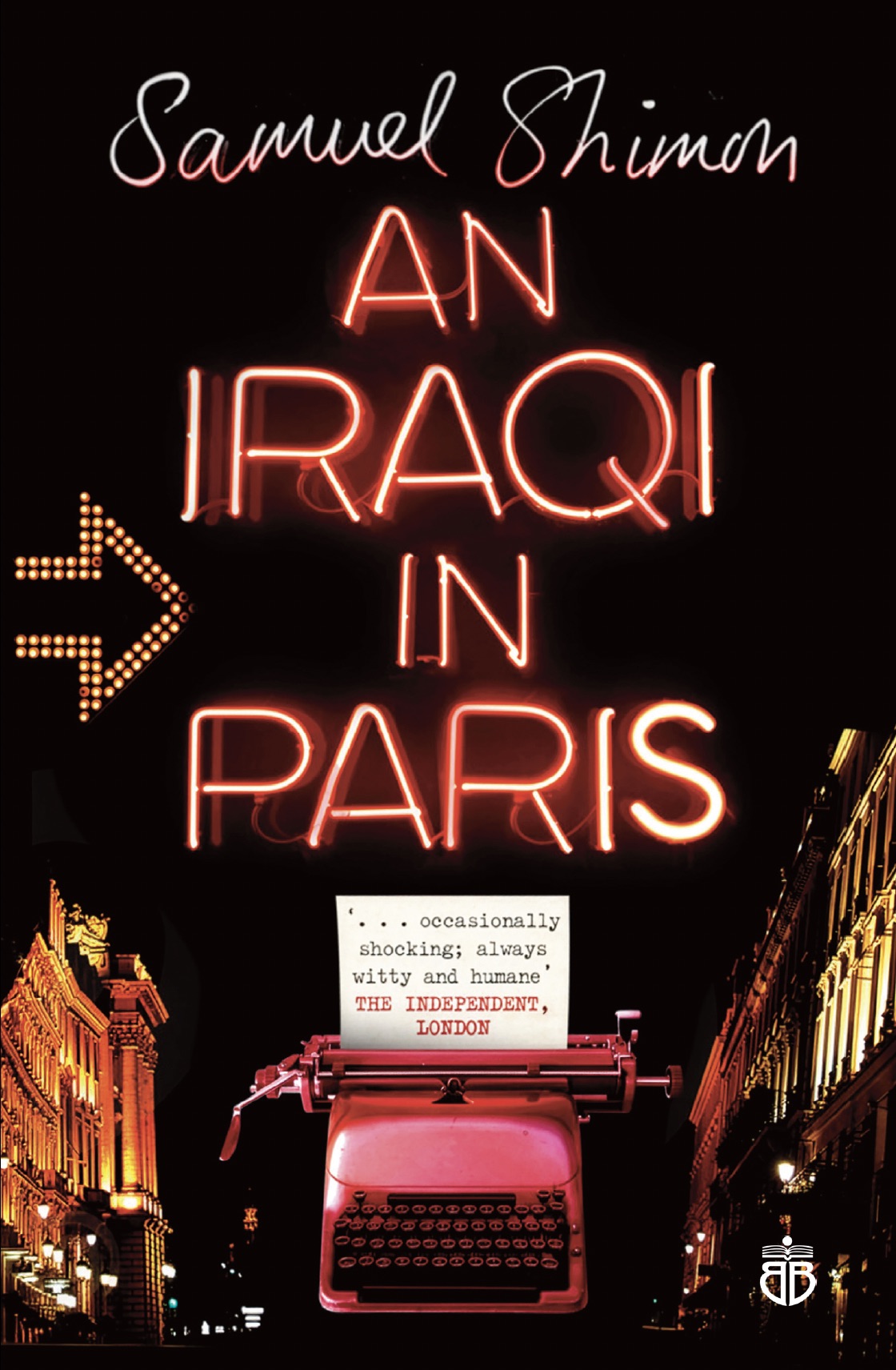
An Iraqi in Paris by Samuel Shimon
The Cinderellas of Muscat by Huda Hamed (Banipal Books, 2025)
The Tent Generations
Things I Left Behind by Shada Mustafa, translated by Nancy Roberts
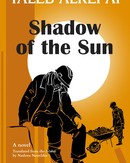
Shadow of the Sun by Taleb Alrefai
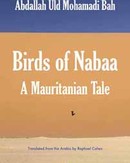
Birds of Nabaa, A Mauritanian Tale by Abdallah Uld Mohamadi Bah
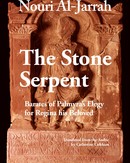
The Stone Serpent, Barates of Palmyra’s Elegy for Regina his Beloved by Nouri Al-Jarrah
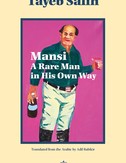
Mansi A Rare Man in His Own Way by Tayeb Saleh (Banipal Books, 2020)
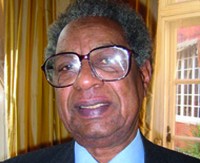
Tayeb Salih
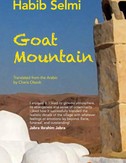
Goat Mountain by Habib Selmi
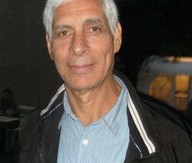
Habib Selmi, author of Goat Mountain and 3 times shortlisted for the IPAF
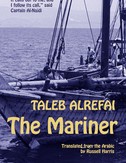
The Mariner by Taleb Alrefai (Banipal Books, 2020)
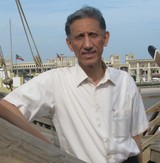
Taleb Alrefai, author of Shadow of the Sun and The Mariner

Fadhil Al-Azzawi's Beautiful Creatures by Fadhil al-Azzawi (Banipal Books, 2021)
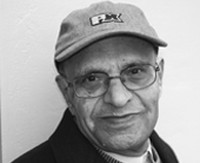
Fadhil al-Azzawi
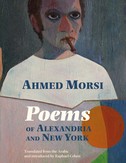
Poems of Alexandria and New York by Ahmed Morsi (Banipal Books, 2021)

Saïd Khatibi
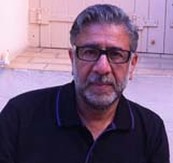
Amjad Nasser (1955–2019)

Digital Banipal the full archive
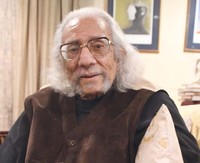
Ahmed Morsi, author of Poems of Alexandria and New York
Sarajevo Firewood
The Madness of Despair


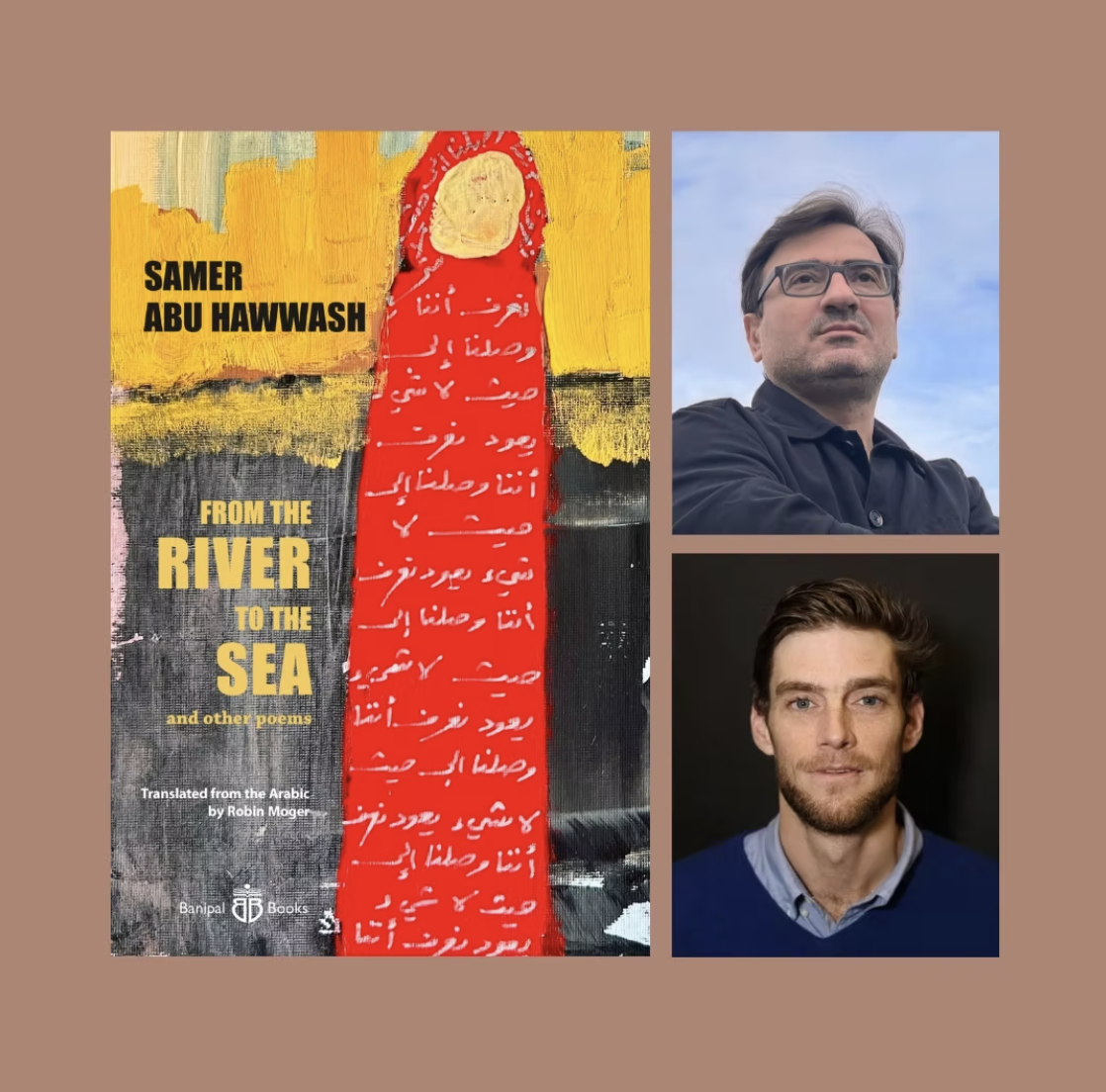
.png)


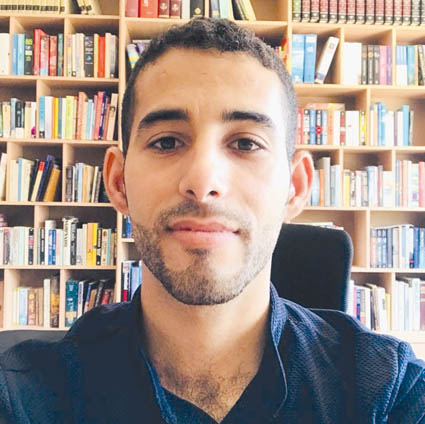
Link to poems by Mosab Abu Toha, published in Banipal 71 (Summer 2021), available to read online
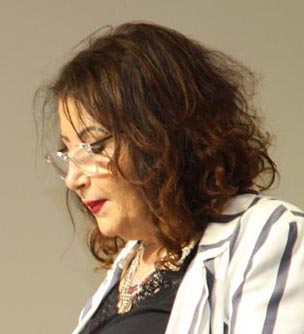
Link to poem by Liana Badr published in Banipal 74, now available as an online selection























* * *





 Reprint out now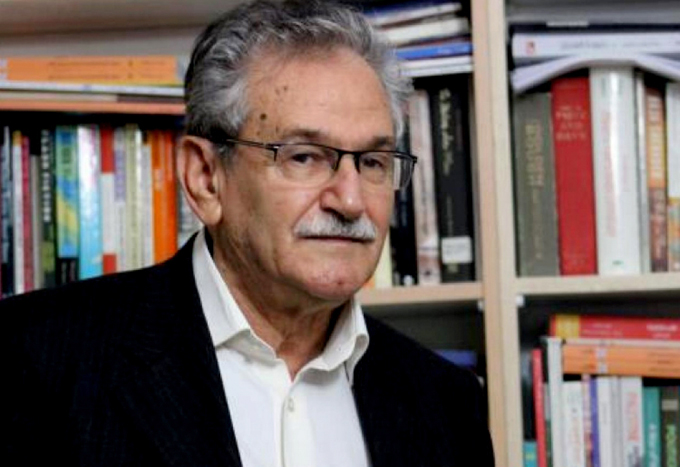
 GRIFFIN PRIZE SHORTLIST 2023
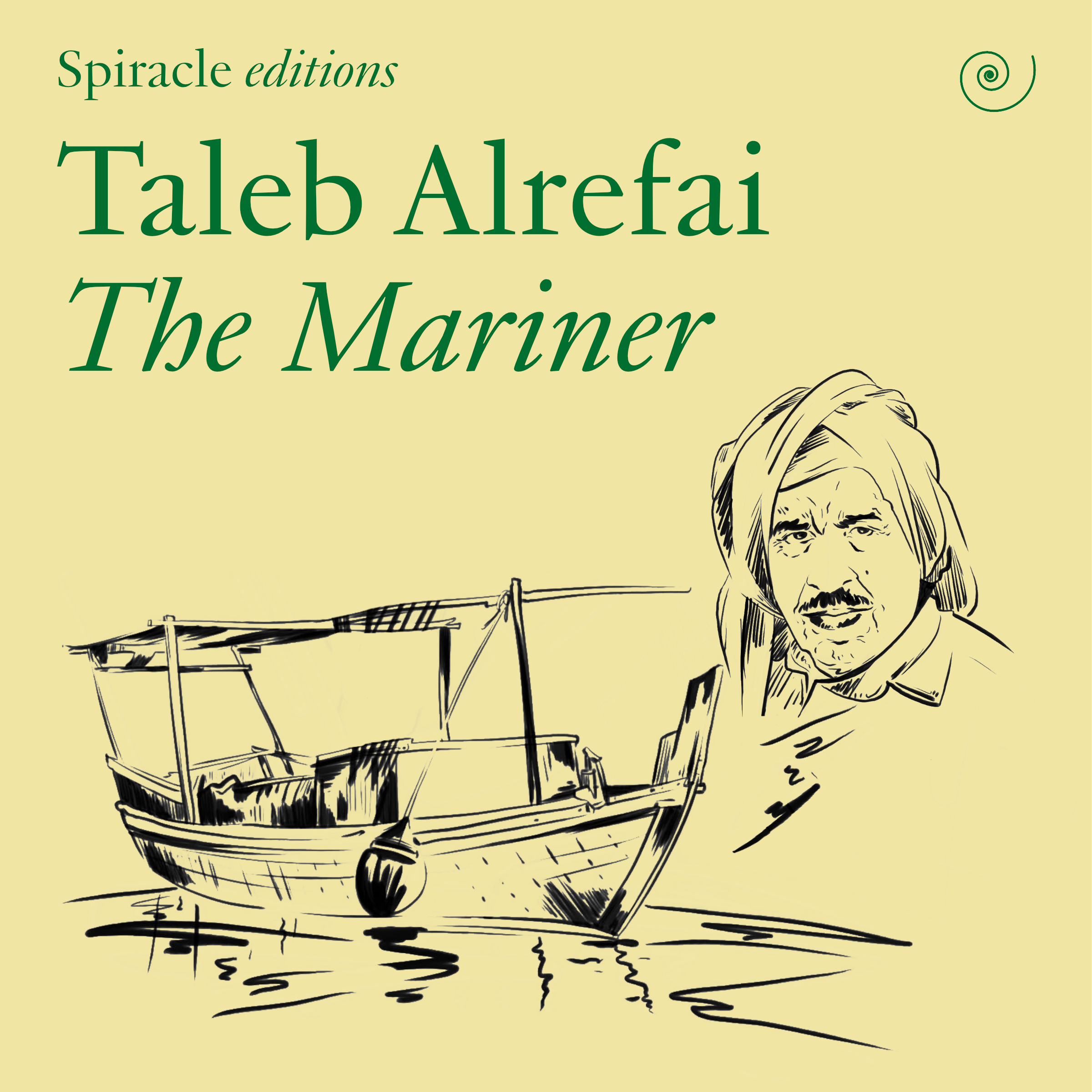 Banipal's first audiobook